3A Expertise - "Innovative Process Engineering" Course

Main image
Visual expertise 3A Innovative Process Engineering Angers
Headline

Grande Ecole Engineering Programme, student curriculum, 3rd-year specialization in Innovative Process Engineering (IPI). This specialization can be pursued through a a professional training contract.

Main body text

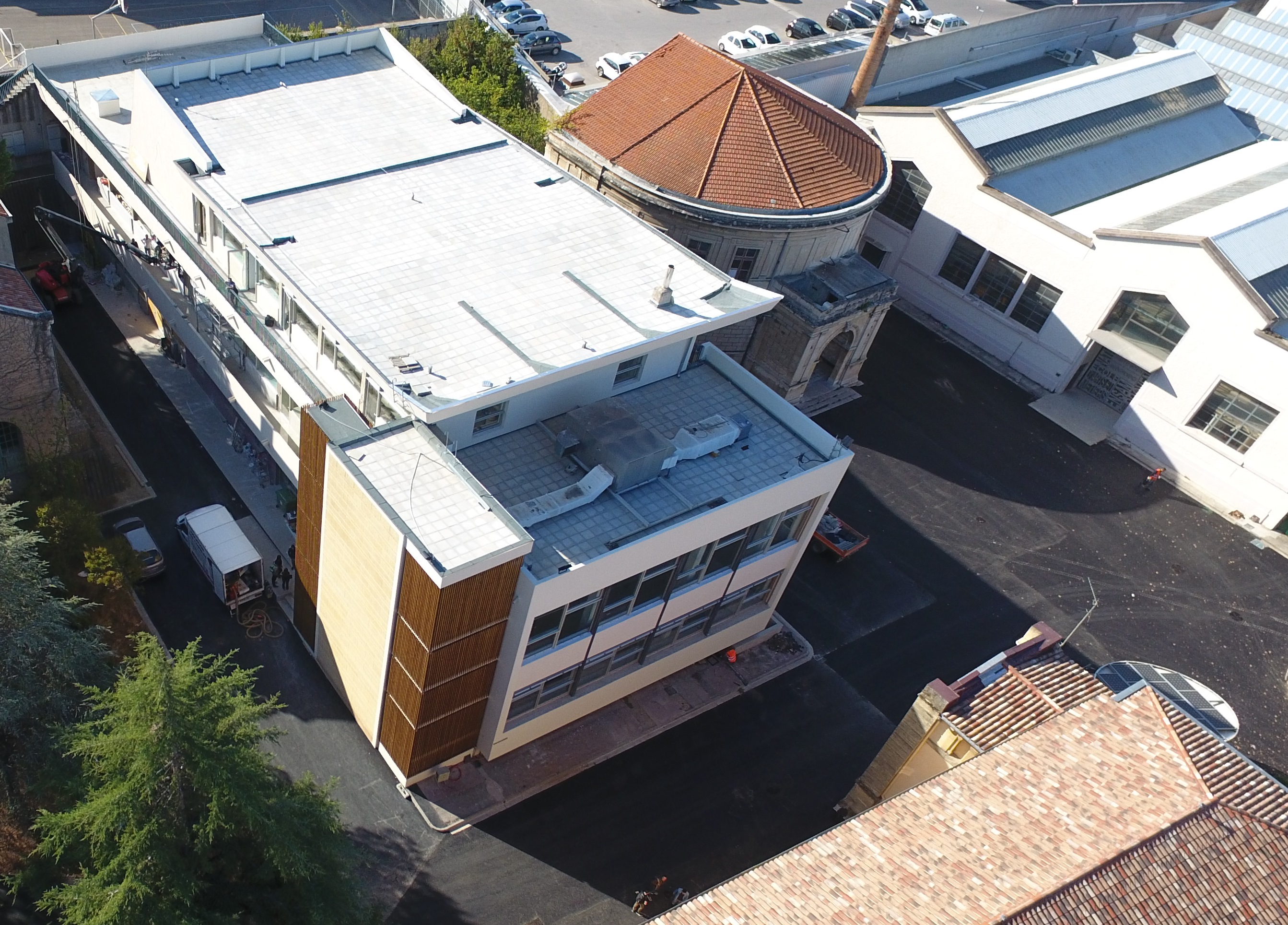
Campus

Arts et Métiers Campus Arts et Métiers
2, boulevard du Ronceray - PO Box 93525 - 49035 ANGERS Cedex 01

Objectives

Arts et Métiers generalist engineers whose vocation is to work in the design and production of products and production systems. Arts et Métiers engineers Arts et Métiers recognized as pragmatic engineers, combining technological knowledge, practical experience, and team spirit. The expertise offered here in the third year reinforces the engineering student's knowledge in a specific area of expertise: "Innovative Process Engineering" (IPI).

This IPI expertise fits perfectly within the European development program Factories of the Future (H2020) and the national Industry of the Future plan. It introduces future engineers to the possibilities and challenges of emerging processes that will be used in the factory of the future.

Teaching methods

This team of experts consists of Arts et Métiers engineering students Arts et Métiers their third year as students, apprentices, or professional contract. The training is therefore divided into different periods. There are four main periods at the school, interspersed with industrial periods.
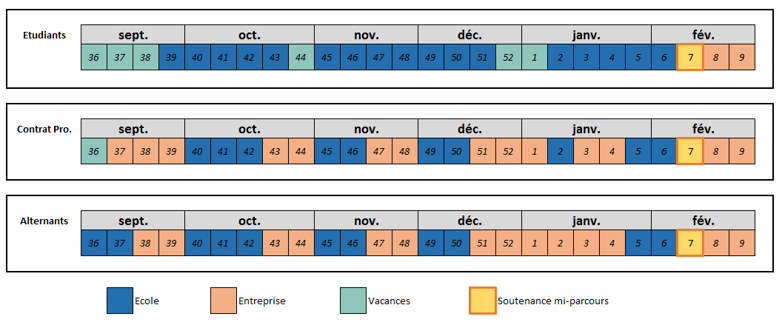
IPI industrial periods calendar

During industrial periods, students enrolled in the program are assigned an industrial or research project of their choice within the theme of "Innovative Processes."

Program

During the four periods at school, expertise sequences take place, consisting of theoretical input and practical work. Each period revolves around a separate theme:

Period 1 – Fabrication Additive et Usine du futur

  • Metal additive manufacturing
  • Polymer additive manufacturing
  • Robotics – Robotics
  • Topological optimization

Period 2 - Machining Assistance and Smart Machines

  • Behavior of materials under extreme conditions
  • Cryogenic and high-pressure assistance
  • Scientific simulation of machining assistance
  • Intelligent Machine

Period 3 – Forming of biocomposites and service life

  • Biocomposites
  • Thermoforming of composites
  • Fatigue and impact

Period 4 – Metal forming and experimental techniques

  • Product durability
  • Foundry business simulation
  • Hot Forming Processes – Superplasticity

Key scientific and educational leaders in the field

  • Amine Ammar, professor of numerical methods
  • Julien Artozoul, typesetting and foundry teacher
  • Yessine Ayed, teacher-researcher in machining
  • Aude Caillaud, foundry and materials teacher
  • Guénaël Germain, machining instructor and researcher
  • Laurent Guillaumat, Professor of Composites & Sustainability
  • Etienne Pessard, lecturer and researcher in fitness and sustainability
  • Svetlana Terekhina, professor and researcher in polymers and composites
  • Idriss Tiba, materials lecturer and researcher
  • Simon Richir, professor of virtual reality and augmented reality

Related technology platform

Angevin Laboratory of Mechanics, Processes, and Innovation

Angers Industrial Foundry Laboratory

Assessment methods

Project-based evaluation of applications during each period

Benefits of the training

The training program has a strong practical component, in addition to presentations by industry professionals and specialists on topics related to innovative manufacturing processes.

Career opportunities

  • R&D Engineer
  • Methods Engineer
  • Process engineer
  • Manufacturing Process Engineer
  • Methods Engineer
  • Industrialization Engineer

Partners

Practical information

  • Required level: 2nd year Arts et Métiers
  • Equivalent international level: Master of Science )
  • Course language: French
  • Period: October - February
  • Number of hours: 150 hours
  • ECTS credits: 13

Contacts

Julien ARTOZOUL

Additional information

Engineering students can pursue this expertise as students, apprentices, or under a professional training contract.

Keywords

#technology, #processes, #FactoryOfTheFuture
3A Expertise - "Industrial Management" Course

Main image
Li-U-Line
Headline
Main body text

Campus

Arts et Métiers Campus Arts et Métiers Lille 

8 Boulevard Louis XIV - 59046 Lille Cedex

Objectives

This expertise aims to train engineers capable of planning and managing complex systems characterized by strong interaction between technological, organizational, financial, and human variables.

Industrial management engineers will have an integrated view of industrial and manufacturing realities, enabling them to work in technology and business management in a competitive and constantly changing environment. They will have a set of skills based on quantitative methods that will enable them to model, analyze, and solve interdisciplinary, organizational, and economic technological problems, as well as communicate their findings.

Engineers will be made aware of the transition to the industry of the future , which affects all areas of production.


SPECIFICITY – 2 possible courses of study – PROFESSIONAL TRAINING CONTRACT and STUDENT status

This training can be carried out:

  • in the form of a 12-month professional training contract.During this period, the learner is therefore employed by a company (at a minimum of 80% of the minimum wage) and alternates between periods at the School and in the company (on average, 2 days in the company + 3 days at the School per week in S9, then full-time in the company in S10).
  • as a student

Program

Module M1: Financial Management

The success of a company's activities requires a mastery of economic and accounting information so that it can be used in financial and operational decision-making. Decision-making on investment projects requires an analysis of their economic and financial viability.

This module will cover the following points:

  • Financial accounting
  • Cost analysis of the product, process, or activities
  • Investment project: planning, budget, and financing

Module M2: Production Support Functions

Support functions provide assistance to industrial activities. Their objectives are to improve and optimize manufacturing. They mainly concern industrialization, quality management, and facility maintenance.

This module will cover the following points:

  • Improvement of industrialization and adaptation of production equipment: Continuous improvement .
  • Implementation of the quality approach, monitoring and control of quality indicators
  • Process maintenance plan, processes, and maintenance activity management

Module M3: Decision Support Methods

Industrial challenges are becoming increasingly complex, leading organizations to rely on mathematical analyses and tools to make decisions that were previously largely basedon on the manager's intuition. Decision support tools provide relevant answers to production issues involving several possible choices and facilitate strategic or operational decision-making in imprecise and/or uncertain environments.

This module will cover the following points:

  • Operational research for the management of complex systems
  • Production flow modeling and simulation
  • Cross-functional technologies

Key scientific and educational leaders in the field

Manager: Nathalie Klément 

Teaching team: Olivier Gibaru; Anthony Quénehen; Stéphane Clenet, Richard Béarée

Assessment methods

Continuous assessment, exams, individual and team projects.

Advantage of training

  • Creation of a training chair based on this expertise starting in the 2021 academic year: a special relationship with industry partners who will speak to students throughout the semester and who will propose and supervise study projects. More information about the chair.
  • Green Belt certification will be offered to students in the program thanks to the new partner of the Training Chair.

Related technology platform

Industry of the Future

Partners

Strong partnerships with the local industrial fabric

Career opportunities

All sectors in industrial management

Targeted companies

Industrial sector companies (large groups, SMEs, production sites, creation of innovative products, etc.)

Examples of end-of-study internships completed

  • TOYOTA : improvement of internal logistics flows
  • RENAULT : analysis of the functionalities of the control system for Renault's assembly plants
  • FAURECIA : continuous improvement in the field of logistics
  • Schneider Electric Industries : adapting Big Data techniques to a production line
  • AIRBUS HELICOPTERS : continuous improvement in production costs for the H175 program
  • Zodiac Aerospace : study of the implementation of preventive maintenance
  • HERMES : optimizing workflow and securing supplies inventory in the watchmaking workshop

Practical information

  • Required level: M1
  • International equivalent level M2
  • Course languages: French / English (10%)
  • Period: Fall
  • Number of hours: 150 hours
  • ECTS credits: 13


Contact

nathalie.klement@ensam.eu

Keywords

Financial management, continuous improvement, quality, operational research, flow simulation

SPECIALIZED MASTER'S® ASPM - AERONAUTICAL AND SPACE PROJECT MANAGER

Main image
MS Aero
Headline

The result of a collaboration between leading universities in Bordeaux, the Specialized Master’s® in “Aeronautical and Space Project Management” trains operational executives, combining technical and managerial skills that meet the expectations of companies in the aerospace sector.

Main body text
Download the training brochure - Arts et Métiers

PROGRAM

Academic sequence (45 ECTS)

Approximately 400 hours of classes and case studies, divided into 3 modules:

Architecture and operation of aerospace vehicles

  • Aircraft
  • Autonomous vehicles: Missiles, launchers, drones
  • Common thread project

Management of aeronautical and space applications

  • Structure of the aerospace sector
  • Marketing and Strategic Development
  • Supply chain and strategy
  • Management and finance
  • Innovation and new applications
  • Team and project management

Life cycle process

  • Design
  • Consideration of human factors
  • Consideration of operational safety
  • Integration and ground-to-flight testing
  • Production
  • Industrial organization
  • Support
  • Operation and maintenance

Conferences and themed tours.

Industrial Sequence (30 ECTS)

  • Career guidance
  • 6-month internship in a company

CALENDAR

  • Duration: 400 hours of training
  • Teaching period: September/March
  • Professional period: April/September

ASSESSMENT METHODS

Individual written and oral exams on a feasibility and viability study for an aerospace project; a written exam on a quality management and project certification plan; individual written and oral exams on project specifications; a written exam on an industrialization management dossier; …

KEY FEATURES 

  • Highly technical industrial and managerial courses taught by professionals and experts from the aeronautics sector
  • A high-level common theme project
  • Six months of professional experience
  • Easier entry into the workforce: more than 90% of graduates have a management position related to their certification six months after graduation.
  • A strong industrial partnership (80% of stakeholders are industrialists), ensuring that training meets the needs of businesses.
  • Ranked No. 2 in the National Aeronautics and Space Management program in the Eduniversal 2026 rankings for the aeronautics and space category

OUTLETS

Professions

The Master's program trains senior operational managers for aircraft manufacturers, engine manufacturers, equipment suppliers, and subcontractors in the aerospace sector, preparing them for a variety of roles, including design, production, procurement, and sales. It also provides opportunities for students to join companies seeking to develop applications derived from aerospace technology.

The targeted career paths combine technical and managerial skills in the aerospace sector as well as in related fields that benefit from its applications: Aerospace Project Manager, Aerospace Project Engineer, Aerospace Systems Integration Engineer, Aerostructure Engineer, Aerodynamics Engineer, Aerospace Integration and Test Engineer, Aerospace Supply Chain Engineer, Aerospace Customer Support Engineer, Aeronautics and Space Methods and Industrialization Engineer, Aeronautics and Space Production Engineer, Aeronautics and Space Quality Engineer, Aeronautics Contract Monitoring Engineer, Design Engineer: Mechanical Systems, Design Engineer: Avionics Systems, Aerospace Business Engineer

Industrial partners (educational activities, hosting interns, visits to industrial sites)

AES, Airbus, Ariane Group, Air France, Armed Forces (Air Force, Navy, Army) Bordeaux Aéroparc, Bordeaux Aquitaine Aéronautique & Spatial (BAAS), Bordeaux Technowest, CEA, CNES, Dassault Aviation, DGA, Jet Cut Aviation, Sabena technics TAT Group, Sabena technics training, Safran Helicopter Engines, Stelia Aerospace, Thales, Union des Industries et Métiers de la Métallurgie (UIMM), U-Space

STUDENT RESULTS AS OF SEPTEMBER 2025*

• Graduation rate: 100%
• Exam participation rate: 100%
•    Extension rate (additional time to acquire missing skills): 0%
• Dropout rate due to changing companies: 0%
• Notification rate of program completion or interruption during training: 0%
• Rate of continuing education: Figures to be released
• Employment placement rate: 90%

* Find data on past promotions on the Data Observatory page at
https://artsetmetiers.fr/fr/observatoire-des-donnees 

Academic partners

SKILLS ACQUIRED

From an industrial and managerial perspective, the master's program allows students to acquire and consolidate:

  • MODULE 1 - Leading the feasibility study for a civil or military aerospace project
  • MODULE 2 - Overseeing the Quality Management Plan for Civil or Military Aerospace Projects
  • BLOCK 3 - Manage the operational design activities for civil or military aerospace projects
  • MODULE 4 - Leading a product/service industrialization project in the civil or military aerospace sector

ADMISSION REQUIREMENTS AND PROCESS

PUBLIC

  • Employees
  • Students
  • Job seekers

PREREQUISITES

  • Engineering or university degree (5 years of higher education)
  • Bachelor's degree with at least 3 years of professional experience
  • Equivalent foreign degree
  • Possible exemption

ADMISSION PROCESS

Teaching methods

In-person, 6 months of theoretical training and 6 months of immersion in a company through an internship or professional training contract, when conditions allow.

Accessibility

This training course may be accessible to people with disabilities. If you are affected, please contact us to see if specific support can be provided.

Bridge program and/or equivalency

Graduates can continue their studies at the doctoral level.

TRAINING COSTS

  • €12,500 not subject to VAT
    These fees include classes, written materials, and educational support.
    Application fee: €75
  • Training may be eligible for funding depending on the trainee's situation and various criteria.
    Several solutions are available: Professional training contract, Transition Pro, CPF, Pôle emploi, etc. To find out what funding you are eligible for and how to access it, please contact us by email at:ContactAMTALENTS@ensam.eu

Program language: French

ECTS credits: 75

Contacts

  • Director of the MS (Arts et Métiers): Jérôme Pailhès:Jerome.pailhes@ensam.eu, Tel. +33 (0)5 56 84 53 79
  • Administrative Coordinator (Arts et Métiers): Hélène Kintzig:helene.kintzig@ensam.eu, Tel. +33 (0)5 56 84 53 79
  • Address: Esplanade des Arts et Métiers 33405 - TALENCE

logo am talents arts and crafts specialized master's degrees
Remote video URL
Remote video URL