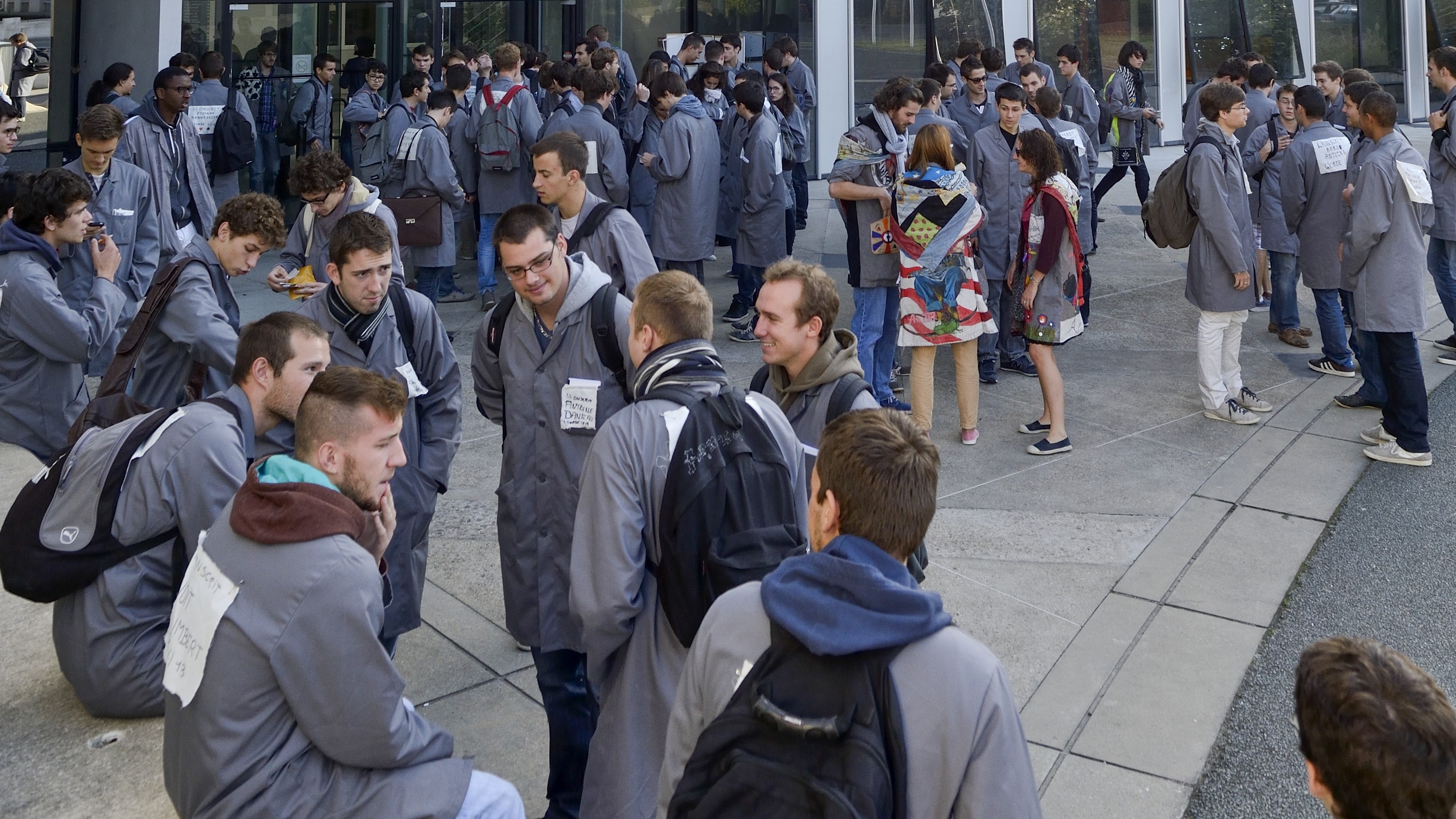
Over the years, Arts et Métiers forged special relationships with nearly 152 universities in 39 countries.
StudentsArts et Métiers partner institutions benefit from academic and cultural immersion abroad, allowing them to engage with other areas of expertise in engineering and technology.
Research teams also develop numerous collaborative projects on a global scale.
EUROPE
Germany
- Mannheim University of Applied Sciences
- University of Karlsruhe –TH
- University of Kassel
- Technical University of Munich
- RWTH Aachen University
- Saarland University of Applied Sciences
- Technical University of Dresden
Belgium
Bulgaria
Spain
Greece
Hungary
Ireland
Italy
- Bari Polytechnic University
- Milan Polytechnic
- Polytechnic University of Turin
- University of Naples Federico II
- University of Pisa
- University of Modena and Reggio Emilia
- University of Rome – Foro Italico
- University of Trento
- University of Salento
Latvia
Norway
Poland
Portugal
Czech Republic
Romania
- Politehnica University of Bucharest
- Polytechnic University of Timisoara
- Stefan cel Mare University of Suceava
- Transylvania University of Brașov
- Lucian Blaga University of Sibiu
United Kingdom
- Imperial College
- University of Bristol
- Cardiff University
- Heriot-Watt University
- Lancaster University
- Loughborough University
- University of Sheffield
- University of Southampton
- University of Strathclyde
- Cranfield University
Russia
Sweden
Turkey
AFRICA
Morocco
- Hassania School of Civil Engineering
- National School ofArts et Métiers Meknes
- Hassan II University of Casablanca
- Arts et Métiers School of Arts et Métiers
Tunisia
AMERICA
Argentina
- Buenos Aires Institute of Technology
- Austral University
- University of Buenos Aires (UBA)
- National University of Cordoba
- National University of Cuyo
- National University of the Littoral
Brazil
Canada
- Montreal Technical College
- Montreal Technical College, ETS
- Laval University
- University of Sherbrooke
- University of Quebec at Rimouski
- Polytechnique Montreal
- University of Toronto
Chile
Colombia
- EAFIT University
- Antioquia School of Engineering
- University of Los Andes
- University of the North
- El Bosque University
- Free University
- National University of Colombia
- Pontifical Bolivarian University
- Pontifical Xavierian University
- Pereira University of Technology
United States
Mexico
- Autonomous University of Yucatán
- University of Guadalajara
- University of Guanajuato
- National Polytechnic Institute
- Guadalajara | Monterrey Institute of Technology
- Ibero-American University
Panama
Venezuela
ASIA
China
- Harbin Institute of Technology
- Beihang University
- Chongqing University
- Nanjing University of Aeronautics and Astronautics
- Shanghai Jiao Tong University
- SouthEast University
- Tongji University
- Xi'an Jiaotong University
South Korea
India
Iran
- Iran University of Science and Technology
- Guilan University
- University of Tehran
- Sharif University of Technology
- Amikabir University of Technology (Tehran Polytechnic)
- K.N. Toosi University of Technology
Japan
Malaysia
Vietnam
OCEANIA
New Zealand
Australia
- Queensland University of Technology
- The University of Melbourne
- University of New South Wales
- University of Queensland
Arts et Métiers KIT: enhanced cooperation for the benefit of the industry of the future
Wolfgang Seemann, Director of the Institute of Mechanical Engineering at the Karlsruhe Institute of Technology, co-head of the cooperation program with Arts et Métiers
Why didArts et Métiers the Karlsruhe Institute of Technology form a partnership more than 20 years ago?
The initiative came from the alumni association, which had certainly noticed that French and German engineers both enjoyed an excellent reputation worldwide, despite their different training backgrounds. It took shape in the form of a program aimed at training Franco-German engineers capable of working together on cross-border projects, such as Airbus or the cooperation between SNCF and Deutsche Bahn.
The Franco-German dual degree program is at the heart of the partnership. What are the main advantages of this program?
Engineering programs are very different in the two countries: at a technical university in Germany, at a grande école in France. It always takes time to adapt to new ways of working and to appreciate them. Immersing oneself in the partner's education system for several years is a decisive factor in the training of Franco-German engineers. Students pursuing dual degrees are not only mobile because they move between France and Germany: they also act with greater flexibility of mind. This experience allows them to adapt more easily to different environments and ways of working. Added to this, of course, is mastery of the partner country's language, whether it be everyday language or technical language related to engineering. These are all advantages that are considerable in Europe and can be transferred to the globalized job market.
The partnership also involves research activities: what have been the main activities carried out to date?
In order to bridge the gap between education and Franco-German research, several summer schools have been held on the topics of materials (2007, 2009) and robotics (2011). In addition, the dual degree also leads to jointly supervised theses between the KIT Faculty of Mechanical Engineering and Arts et Métiers. Doctoral students spend several months in the partner country and defend their thesis before a Franco-German jury.
The two institutions are currently working on setting up a Franco-German institute for the industry of the future. What does this project involve? What challenges is it seeking to address?
The main objective of this project is to establish a Franco-German technology platform for research and industrial relations for the industry of the future—or Industry 4.0. This institute focuses on education, research, and innovation. Our common challenge is to work together to train the engineers who will shape the industry of tomorrow, to cooperate on research projects while integrating binational industries to better respond to technological challenges. During the two previous workshops, the various areas of joint research were defined: robotics, production systems, virtual and augmented reality, and advanced manufacturing processes.