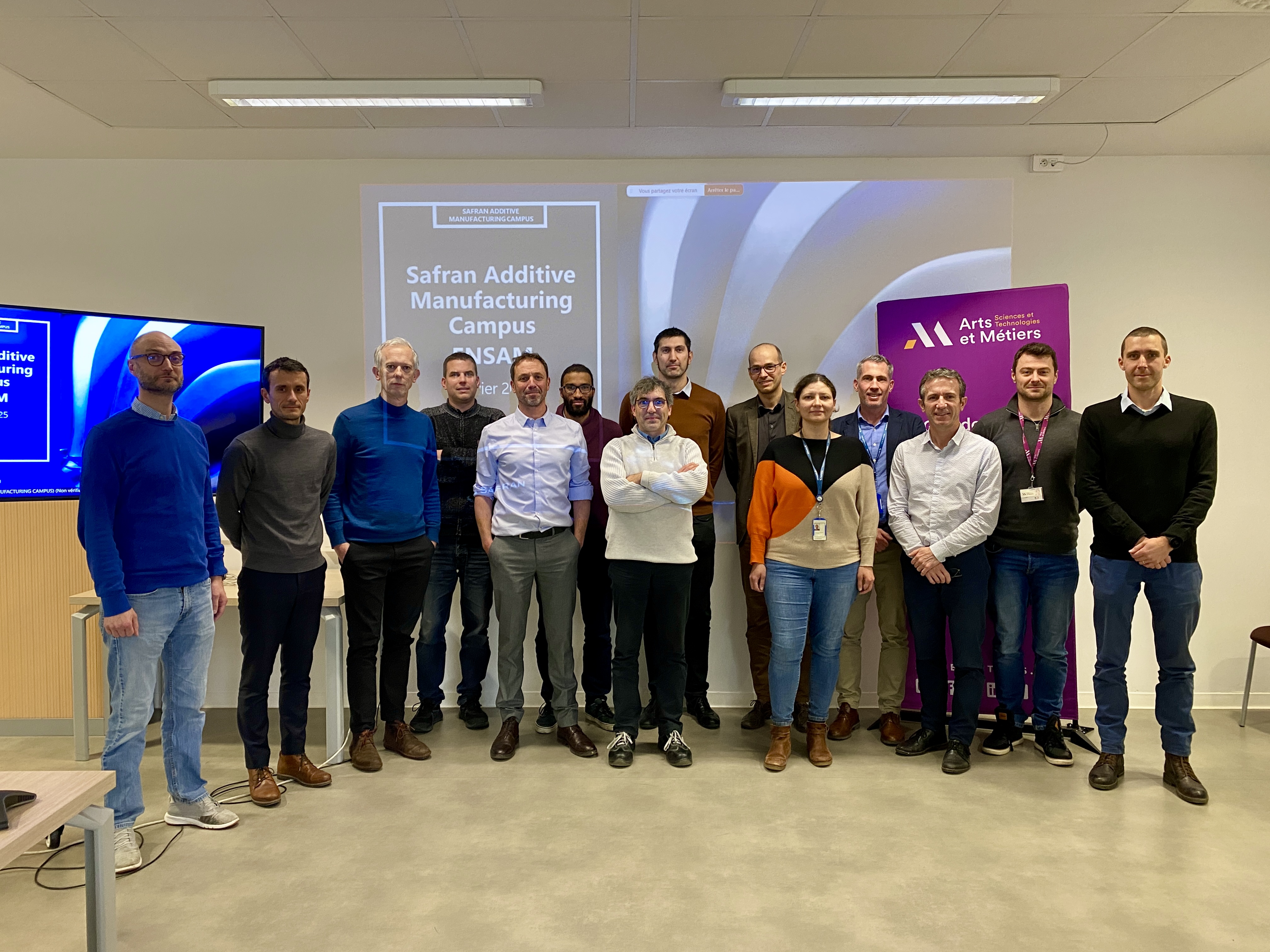
The fifth steering committee meeting of LabCom CLAS
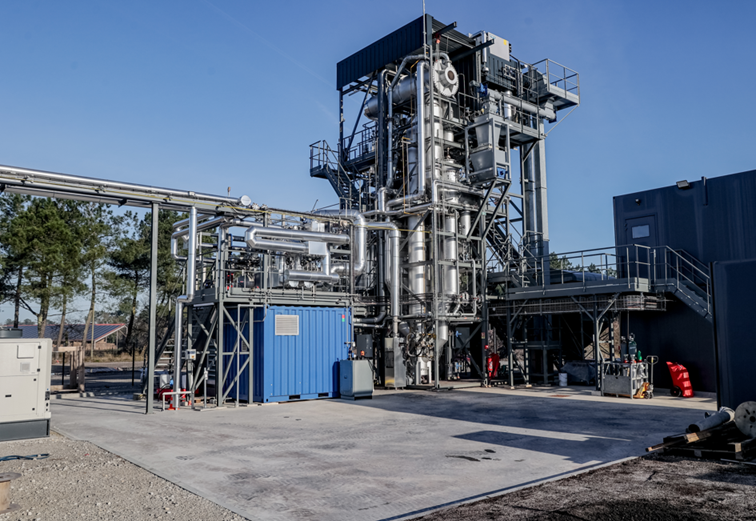
LabCom CLAS is a laboratory that brings together the Safe Metal steel foundry group and theArts et Métiers Cluny research laboratory (LaBoMaP) to conduct advanced research on cast steels.
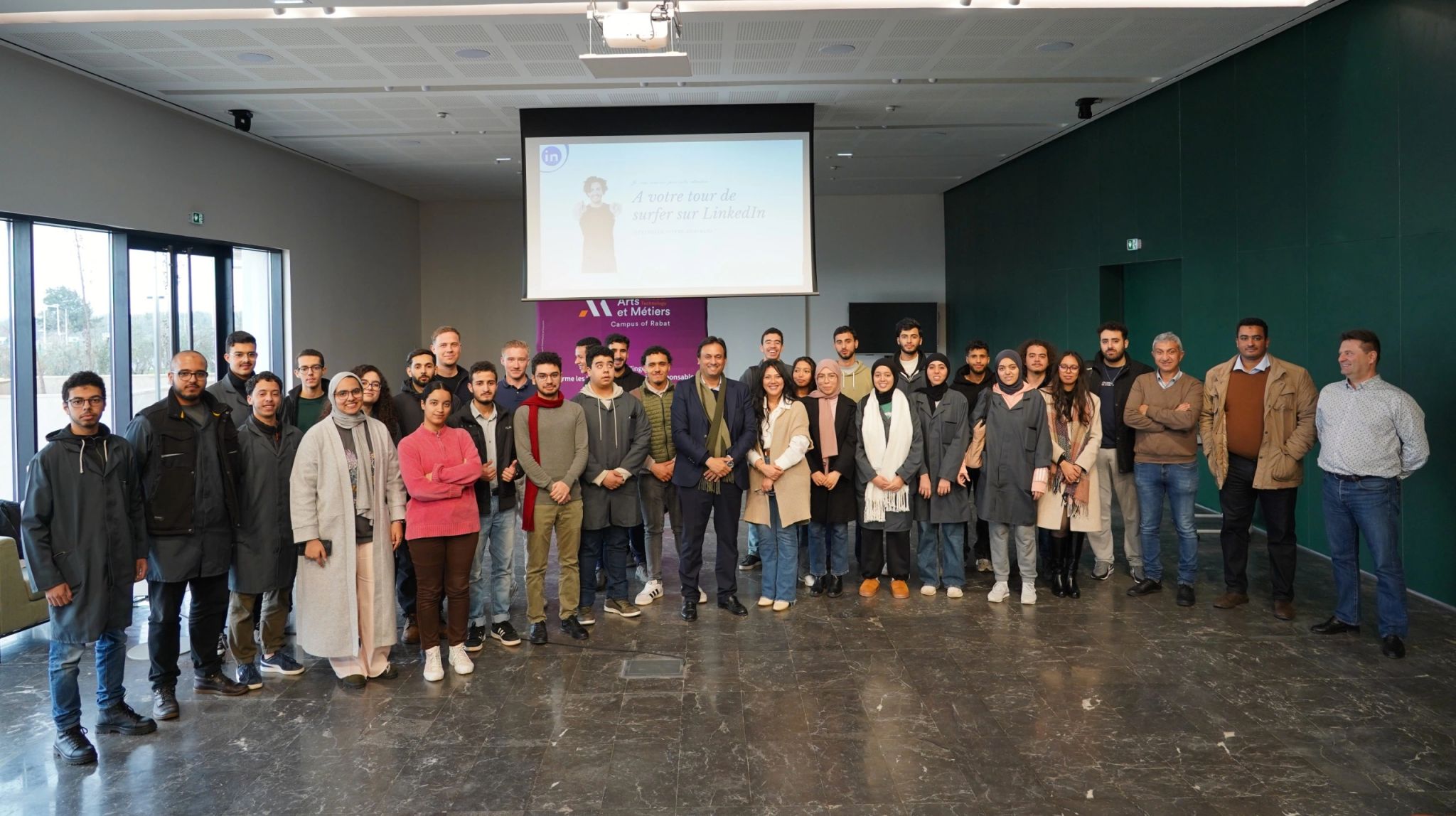
Eleven corporate sponsors and partners Arts et Métiers to meet students at the Lille campus.
How to write your resume, ace your job interview, and understand the recruitment process... the Arts et Métiers recruitment team has some tips Arts et Métiers !
As a true showcase of your professional identity, here are a few tips to help you stand out:
The recruitment officer will contact you to get to know you and discuss your expectations – 10/15 min
You will meet with the N+1 and a team member/business expert to discuss the technical and operational aspects of the position – 45 min/1 hour
We will discuss your motivations/expectations regarding the position and the company – 45 min/1 hour
Any questions? Contact the recruitment team at jecandidate@ensam.eu
On November 13 and 14, 2024, students from the Grande École Program at the Châlons-en-Champagne campus mobilized for 24 hours to carry out community service projects for the city, combining creativity and teamwork.
Did you know that for the past 12 years, a student studying the "Wood: a local resource for sustainable construction" course has received an award? This award recognizes academic excellence and commitment to the wood industry at the Cluny campus.
Arts et Métiers its commitment to ecological transition and social responsibility and structures the actions already initiated in these different areas of activity by adopting its DDD&RS action plan. The plan is based on the five pillars of the DD&RS label, in line with the objectives of the French government's energy efficiency plan, the Convention for the Transition of Higher Education Institutions (CTES), the Ademe framework, and the United Nations' 17 Sustainable Development Goals.
Find out more about priority 5, "Social policy."
True to its values, Arts et Métiers its commitment to ensuring equal opportunities in training, research, and human resources. To this end, the institution is continuing to roll out initiatives promoting diversity and social inclusion, combating gender-based and sexual violence, and promoting gender equality in the workplace and disability awareness, and is implementing a plan to this effect.
The SD&RS action plan aims to contribute, together with all internal and external stakeholders at the local, national, and international levels, to building a responsible society. It also continues to support staff training on the integration of environmental and societal issues.
The institution's human resources policy incorporates issues of gender equality, inclusion, and anti-discrimination. Arts et Métiers changes in the gender distribution by job category in order to implement its policy of equality and anti-discrimination.
A commission has been set up to support the continued employment of people with disabilities and/or serious illnesses. The number of people with disabilities increased by 56% between 2017 and 2022.
Finally, combating discrimination and gender-based and sexual violence is a major concern for the institution. A reporting platform was set up in 2022. Student and staff representatives are appointed on each campus.
Arts et Métiers its commitment to ecological transition and social responsibility and structures the actions already initiated in these different areas of activity by adopting its DDD&RS action plan. The plan is based on the five pillars of the DD&RS label, in line with the objectives of the French government's energy efficiency plan, the Convention for the Transition of Higher Education Institutions (CTES), the Ademe framework, and the United Nations' 17 Sustainable Development Goals.
Find out more about priority 4, "Environmental management."
With its first carbon assessment carried out in 2011, Arts et Métiers a pioneer in this field. With its 2023-2027 action plan, the institution is committed to a large-scale project: reducing its carbon footprint and improving the energy efficiency of its sites. A new carbon footprint assessment, carried out at the institutional level, will enable the formalization and implementation of a comprehensive policy. This policy involves a dual financial and carbon accounting approach to projects. It drives individual and collective behavioral change.
In line with the actions already carried out on its sites, Arts et Métiers seized the opportunities offered by the France Relance plan and resilience plans to accelerate the programming of its energy improvement works and the deployment of energy management and control tools. A sustainability plan, including audits and energy master plans based on ADEME expectations, was launched in 2022 to prioritize work to improve the environmental performance of its buildings.
Work on the real estate portfolio is accompanied by a sustainable green space management plan. The institution is committed to a policy of maintaining or increasing green spaces and developing a biodiversity charter.
Developing a policy to reduce emissions and resource consumption requires a commitment on multiple levels: energy efficiency, waste reduction, research equipment, sustainable food, the impact of digital technology, changing the vehicle fleet, etc.
Many actions are already in place. Waste sorting has been implemented at all sites. A responsible purchasing policy has been launched and will be formalized in a charter. The institution, which already promotes soft mobility, notably with bicycle shelters installed at all sites and carpooling partnerships, will further promote these initiatives through a mobility plan. The KDS platform, dedicated to travel purchases, already allows the carbon footprint of trips to be measured.
Environmental commitment is both an individual and a collective issue. The institution supports staff, teachers, and students in changing their behavior and assessing greenhouse gas emissions, and supports their initiatives.
Arts et Métiers its commitment to ecological transition and social responsibility and structures the actions already initiated in these different areas of activity by adopting its DDD&RS action plan. The plan is based on the five pillars of the DD&RS label, in line with the objectives of the French government's energy efficiency plan, the Convention for the Transition of Higher Education Institutions (CTES), the Ademe framework, and the United Nations' 17 Sustainable Development Goals.
Find out more about Priority 3: "Research and Innovation"
Today, the research projects in which the institution is involved increasingly incorporate impacts in terms of sustainable development. The action plan reinforces this momentum. The direct or indirect impacts on the achievement of national and international sustainable development goals will guide the themes chosen. Emerging research topics that are essential to sustainable engineering will thus be developed. The direct impacts of research will also be assessed and controlled. Finally, a system for ethical reflection has begun to be put in place.
The institution pursues a sustainable development policy in its research activities. A comprehensive mapping of these activities is currently underway. All European projects currently underway and submitted under the Horizon Europe program comply with the European Commission's expectations in terms of environmental impact. All European and ANR projects submitted since 2020 include an analysis of the project's contribution to gender equality. All chairs held by the institution or its commercialization subsidiary have applications in sustainable development. Laboratories are beginning to analyze the environmental impact of their activities and are invited to follow and participate in the actions of the Labos 1.5 collective. Arts et Métiers now integrates sustainable development and social responsibility into its research and innovation strategy.
Arts et Métiers is a signatory to the French charter of ethics for research professions. Several members of the institution were already involved in this area. A genuine dynamic of compliance and support has been established with the appointment in February 2023 of a Scientific Integrity Officer, who will be supported in the coming months by the creation of a Research Ethics Committee. This policy aims to support researchers so that they can comply with legislative and regulatory provisions; produce research work whose reliability can be verified; communicate appropriately; be neutral and independent in their evaluation and expertise activities; comply with the rules on multiple activities; and integrate ethical rules into the training courses in which they participate.
The institution has pursued an open science policy well before any contractual obligations. It has had its own open archive (SAM) since 2013. The resources deployed have enabled major achievements such as the creation of a doctoral program, a publications charter, an open science charter, and support for diamond-model publishing in the International Journal of Virtual Reality. In 2021, the open access rate for publications and theses was 73% and 88% respectively, well above the national averages (67% and 71%). The goal is to achieve 100% open access publications by 2030.
Arts et Métiers its commitment to ecological transition and social responsibility and structures the actions already initiated in these different areas of activity by adopting its DDD&RS action plan. The plan is based on the five pillars of the DD&RS label, in line with the objectives of the French government's energy efficiency plan, the Convention for the Transition of Higher Education Institutions (CTES), the Ademe framework, and the United Nations' 17 Sustainable Development Goals.
Find out more about priority area 2, "Education and training."
With a view to building resilient infrastructure and promoting responsible and sustainable industrialization, Arts et Métiers adopted a proactive and forward-thinking approach. A policy to integrate SD&S issues into training was voted on in September 2022. Its ambition is to promote the skills needed to develop all possible technological trajectories in order to train the actors of technodiversity.
Since the start of the 2022-2023 academic year, ADEME's four transition scenarios have been integrated into the curriculum as a means of considering possible futures in this period of transition. With this framework, Arts et Métiers train engineering specialists who can mobilize scientific and technical knowledge to build and respond to possible futures and enable adaptation to any type of situation. They will be able to mobilize green technologies for society, developing approaches to regional cooperation where technological autonomy, reuse, and low-tech solutions are central concerns. In the projects they develop, students must position their proposals within one of these four scenarios. This positioning will contextualize the many applied activities and projects that punctuate their training. The aim is to develop engineering practices and skills, based on solid scientific and technical fundamentals, within a new paradigm adapted to the challenges and a changing and variable environment. This will give students the means to take concrete action in their profession.
The action plan is based on a participatory and collective approach to testing this framework. This integrative process, based on the diversity and innovative capacity of the institution, will enable us in year 1 to define the support provided to trainers, clarify the positioning of training courses, and measure technodiversity and the capacity to cover all possible scenarios.
In the medium term, training courses will be adapted to develop skills for taking a holistic approach, developing forward-looking analysis and a reflective approach, co-constructing diagnoses and solutions, implementing transitions, acting responsibly, and positioning oneself in a debate. In the longer term, the objective is to integrate educational achievements around different technical trajectories into the Evolutive Learning Factories. This will enable us to continue to fulfill one ofArts et Métiers missionsArts et Métiers to develop support and transfer initiatives with socio-economic actors and to support regional development.
In order to remain attractive and competitive, companies must take into account major systemic risks related to the environment at the heart of their strategies. We find this ambition at AMTalents, a subsidiary of FC arts et métiers offers a complete segment of its training catalog dedicated to implementing environmental transition.
By developing short inter- and intra-company training courses lasting between 1 and 5 days, AMTalents enables employees to initiate the changes needed to make their activities more sustainable.
The catalog offers training courses such as "Eco-Innovation, Challenges and Specificities," "Discovering and Implementing an Eco-Design Approach," and "Recycling Channels: Definitions and Overview," enabling participants to achieve a variety of objectives ranging from mastering the culture and basic concepts of CSR to implementing case studies. In addition to these initiatives, AMTalents offers customized training courses tailored to the needs of companies on these topics.
https://www.linscription.com/pro/catalogue-de-formation-arts-et-metiers.php
After earning a degree in Physical Measurements, Rita entered Arts et Métiers the AMbition Ingénieur competition launched last year.