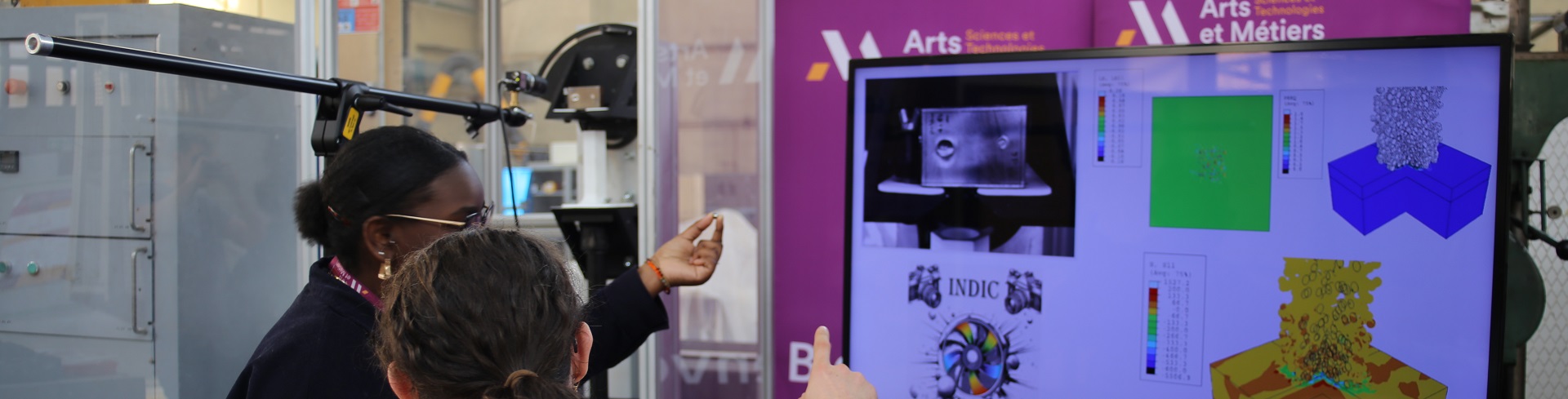
The ANR Young Researchers INDIC project, led by Jean-Patrick Goulmy, lecturer and researcher at the MSMP laboratory, will strengthenArts et Métiers expertiseArts et Métiers the field of surface treatments. It aims to use Digital Image Stereo Correlation to improve real-time control of surface treatments.
" This project will contribute to the development of a mechanical surface treatment platform that can be used in a wide range of research and educational activities," explains Jean-Patrick Goulmy, project leader at the MSMP laboratory in Aix-en-Provence.
An innovative methodology for surface treatment control
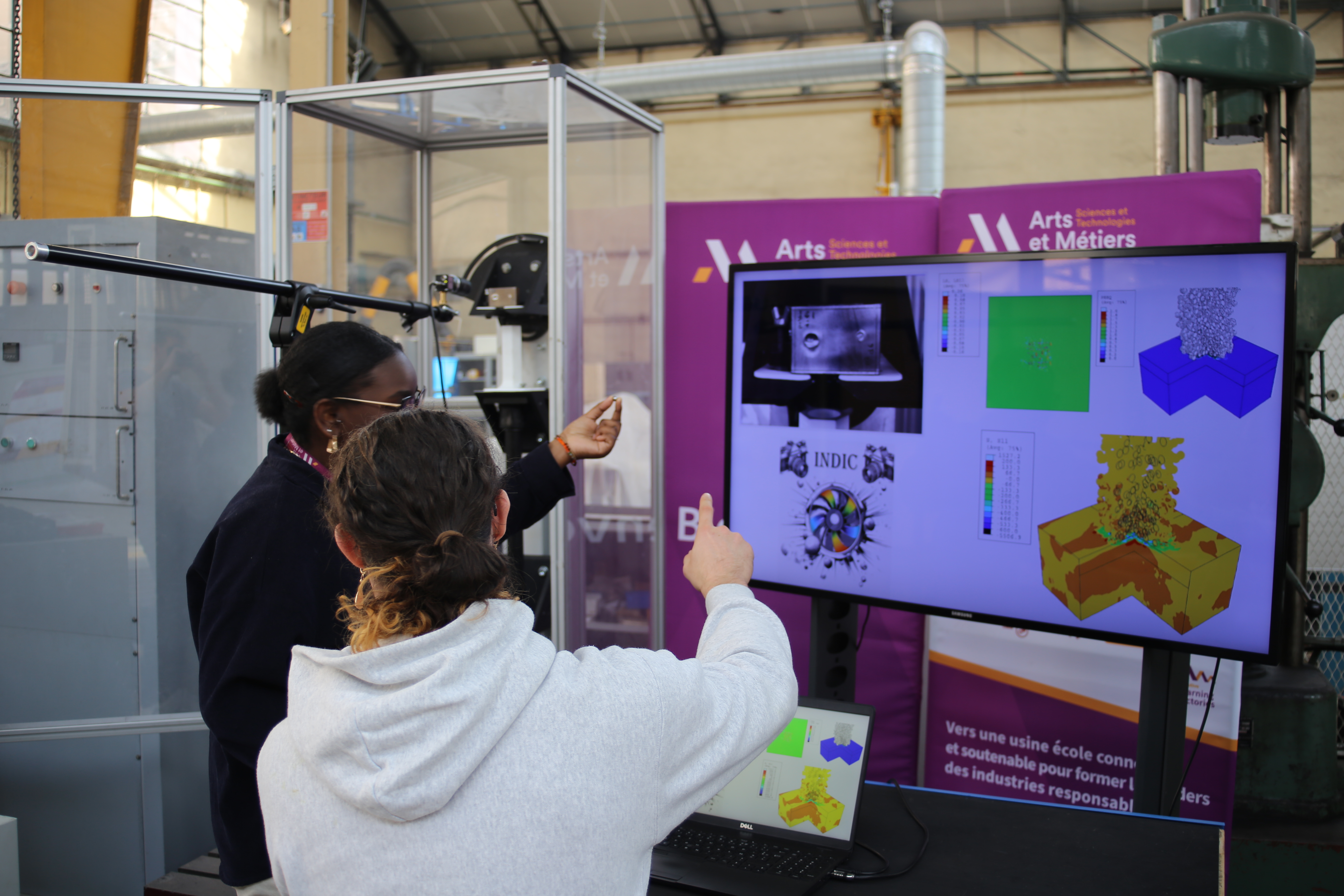
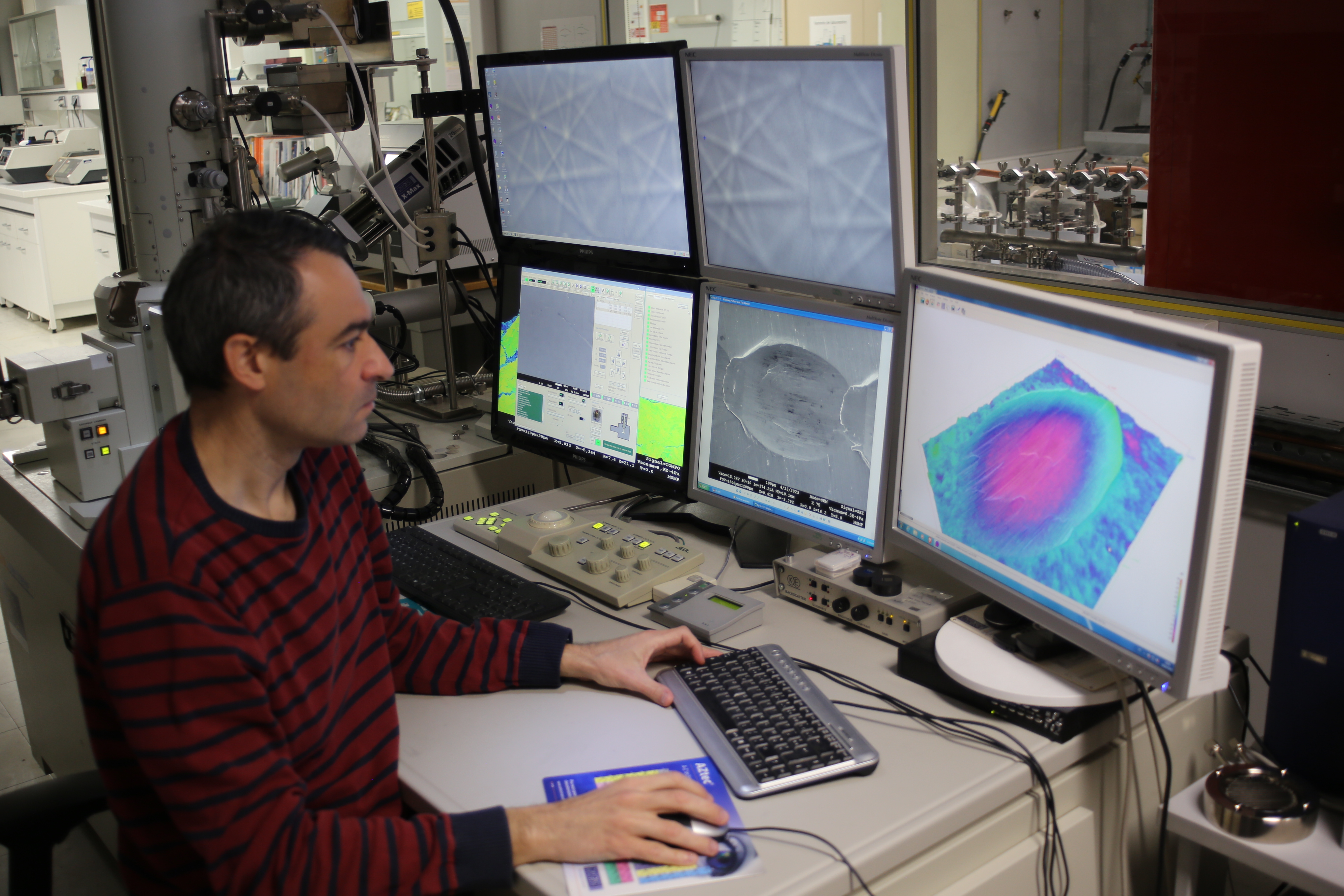
Scheduled for April 2025, the INDIC project aims to develop an innovative methodology based on Stereo-Correlation of Digital Images (S-CIN). This approach will enable real-time analysis of deformations induced by mechanical surface treatments.
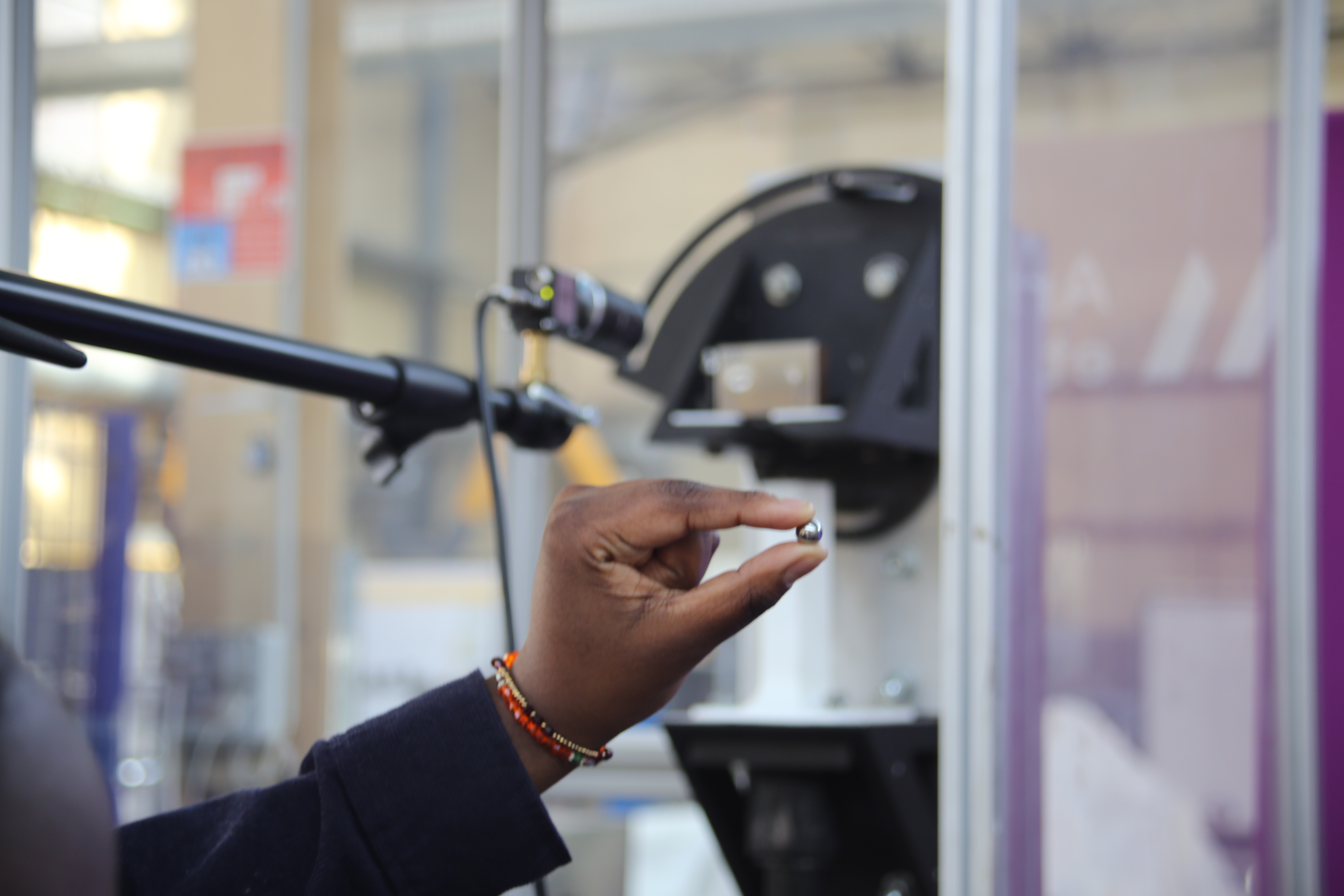
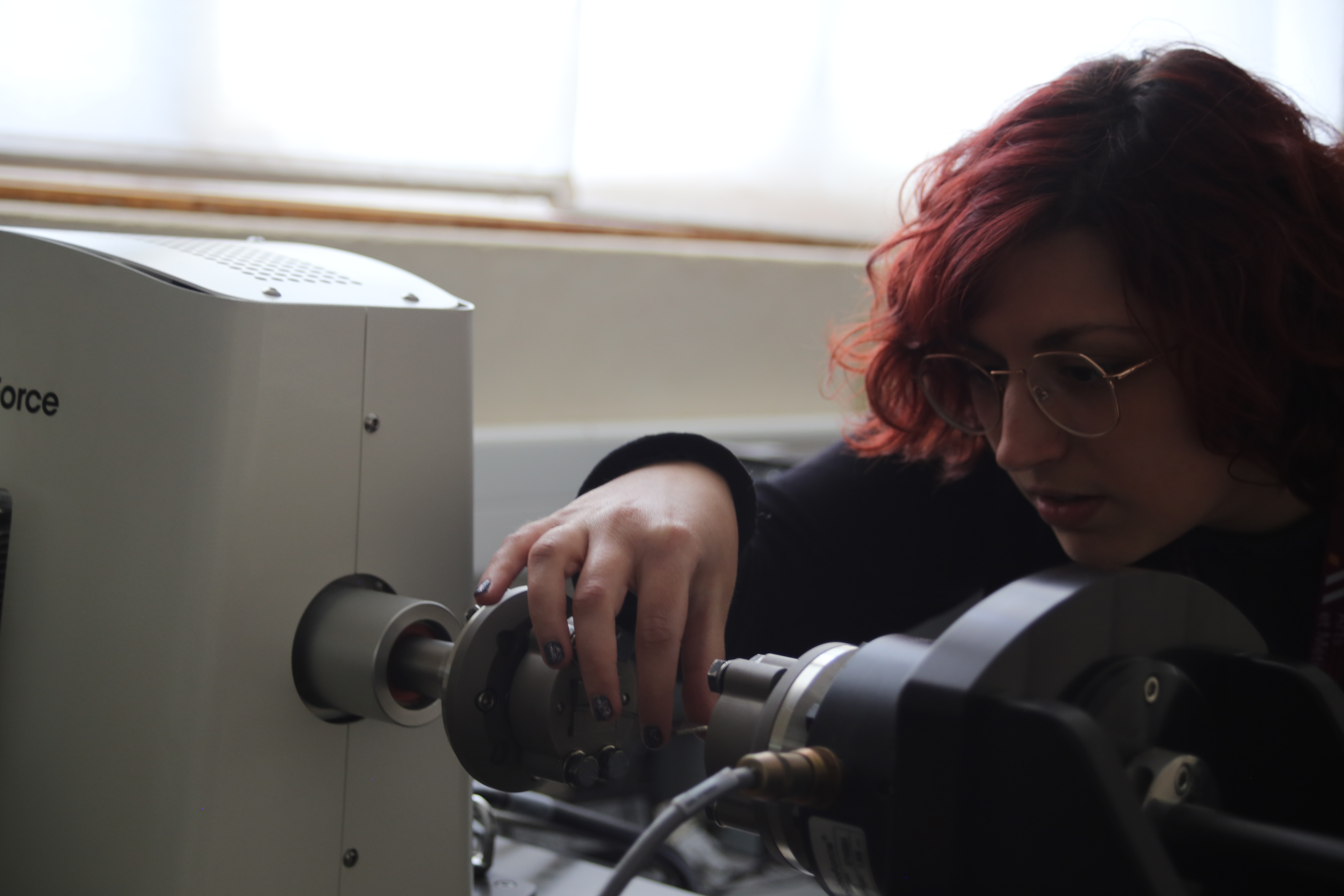
Mechanical surface treatments such as shot peening, hammering, or roller burnishing are widely used in industry (aerospace, automotive, nuclear). By introducing residual stresses or eliminating previous manufacturing defects, the main objective of these treatments is to improve the fatigue resistance of the treated parts.
The MMS team at the MSMP laboratory has been working for several years on this type of surface treatment to better understand the relationship between microstructure and usage properties and to optimize the technological parameters.
The INDIC project is part of this approach. It aims to develop an innovative methodology using S-CIN to measure the deformations generated by surface treatments. This method is non-contact and can be used in laboratories or in industry. Recent advances in the optimization of S-CIN algorithms mean that it can now be used in a process optimization loop. Real-time knowledge of deformations could significantly improve process control, modeling, and understanding of the impact of mechanical state on part performance.
Technical challenges to be overcome
Several challenges must be overcome before the S-CIN method can be used in this context.
- Most surface treatments can cause significant deformation that is difficult to measure using S-CIN.
- It can be difficult to maintain the position of the marker used for S-CIN when external forces are applied to the surface.
- The speeds at which the process is carried out may require the use of high-speed cameras, which have a lower resolution than conventional cameras and may result in a loss of spatial information.
- Real-time process correction is only possible with the implementation of methods that limit computation time.
Using AI as a lever
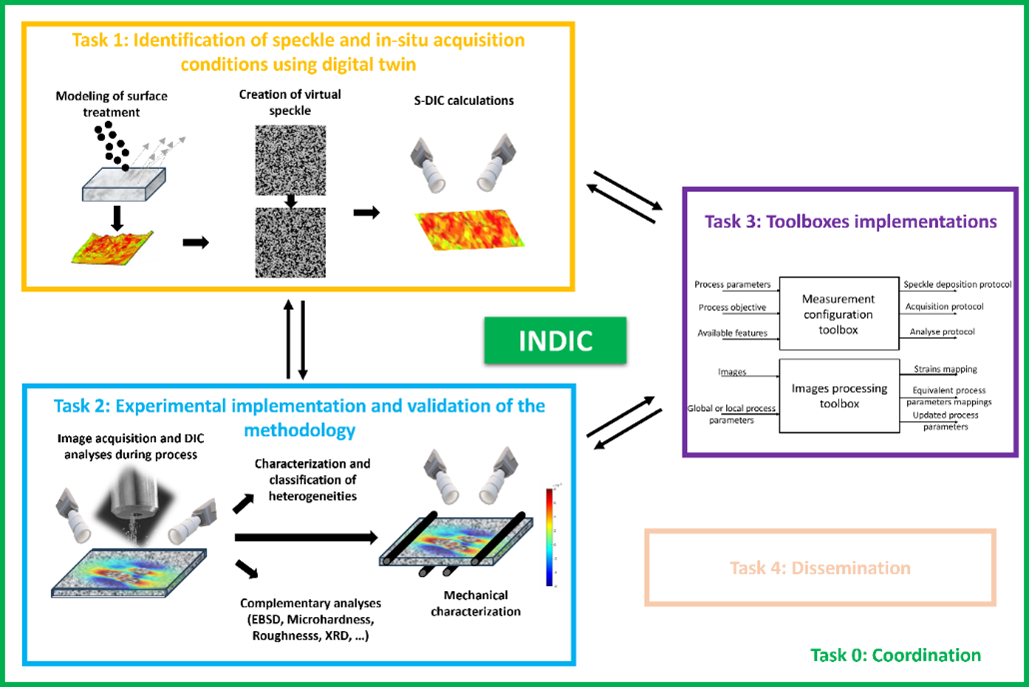
To overcome these obstacles and meet these challenges, the INDIC project will combine experiments, modeling, and the use of artificial intelligence (AI).
Tools will be created to facilitate the implementation of S-CIN during manufacturing processes and the interpretation of results. The deformation maps obtained can be linked to fatigue properties, and the detection of surface heterogeneities can provide interesting data on initiation mechanisms. The use of AI will make it possible to identify updated process parameters so that defects can be corrected in real time.
Educational applications
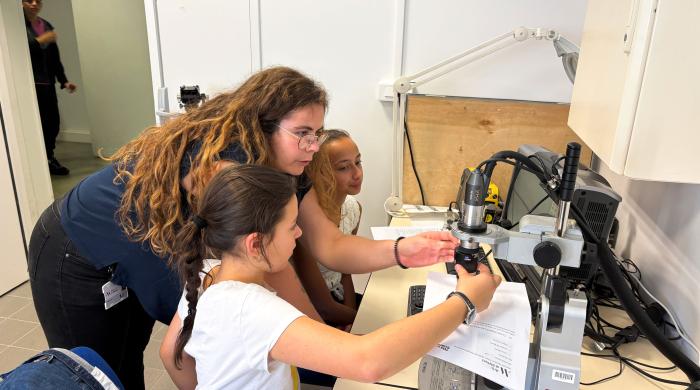
At the same time, students atArts et Métiers Grande Ecole Engineering Programme and Master of Science degree) will be involved through educational projects.
Second-year capstone projects will be offered to students in the Grande Ecole Engineering Programme the duration of the project. These projects will aim to foster research among students and contribute to the project’s progress.
INDIC may also be integrated into the Evolutive Learning Factories (ELF).
“INDIC will be based primarily on a doctoral thesis and a postdoctoral fellowship. It will also involve various permanent staff members of the MSMP laboratory (faculty researchers, research engineers),” adds Jean-Patrick Goulmy.
Funding of €300,000
With €300,000 in funding from the ANR, this strategic project will significantly strengthenArts et Métiers expertiseArts et Métiers the field of surface treatments and the industry of the future.
Contacts
• Project leader: Dr. Jean-Patrick GOULMY
• Permanent Arts et Métiers team Arts et Métiers : Prof. Laurent BARRALLIER, Dr. Régis KUBLER, Fabrice GUITTONNEAU, research engineer
• Laboratory director: Prof. Mohamed EL MANSORI