3A Expertise - "Innovation Management (MANAGINOV)" course

Main image
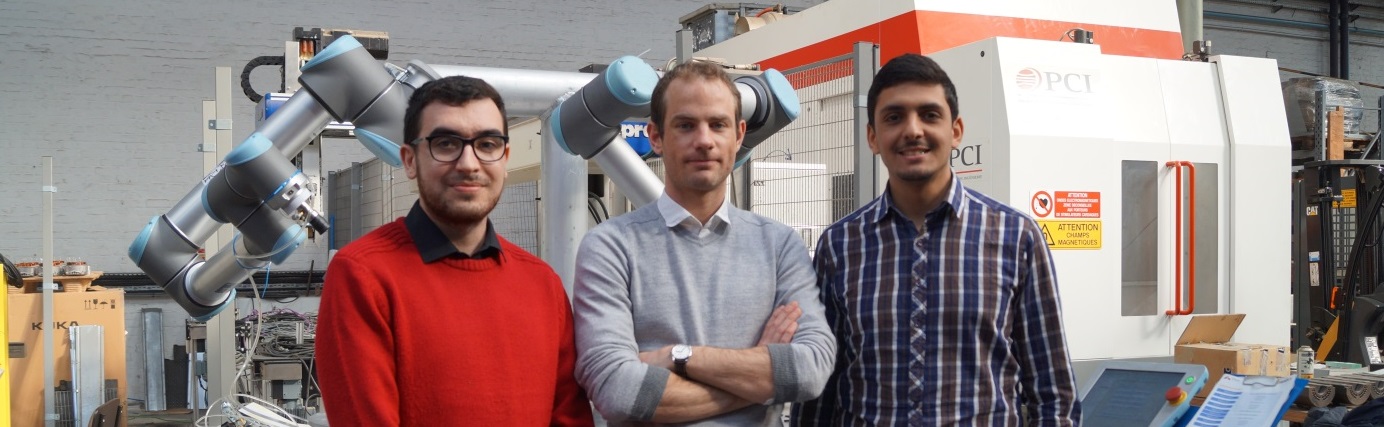
MANAGINOV Angers expertise visual
Headline

Grande Ecole Engineering Programme, undergraduate program, third-year specialization in Innovation Management. This specialization can also be pursued through a professional training contract.

Main body text

Campus

Arts et Métiers Campus in Arts et Métiers

Objectives

Thanks to its innovative three-pronged approach— management, design processes , and mastery of new technologies— MANAGINOV's expertise enables you to acquire dual technological and managerial skills, allowing you to:

  • develop the ability to adapt to technological or organizational changes
  • integrate or create innovative companies that will be tomorrow's leaders
  • learn how to find the latest technologies to stay at the forefront of innovation

Module 1: Design and Innovation

Recent methods and theories of product or process design, innovation theories and strategies: co-creation and living labs // eco-design and sustainable development // design and innovation processes // ergonomics, human-machine interfaces & uses // foresight // digital technologies // digital transformation // digital innovation // digital marketing // digital communication // digital marketing // digital communication // digital marketing // digital communication // digital marketing // digital communication // digital marketing // digital communication // digital marketing // digital communication // digital marketing // digital communication // digital marketing //co-creation and living labs // eco-design and sustainable development // design and innovation processes // ergonomics, human-machine interfaces & uses // foresight

Module 2: New Technologies and Virtual Reality for Design

New technologies in product design, process, and service development: reverse engineering, 3D scanning // 3D printing and additive manufacturing // virtual reality, augmented reality // PLM (Product Lifecycle Management) and collaborative engineering

Module 3: Entrepreneurship and Management

Project engineering tools, new role of managers within teams: management and project management methods // business creation – entrepreneurship // industrial property and scientific promotion // professional integration and career plans // the new manager

Core curriculum and modern languages

Lean, strategic management, risk management, project management, ergonomics, supply chain management, optimization methods and tools. Modern languages.

Key scientific and educational leaders in the field

Rémy Eynard : Trained as a Human-Computer Interaction Designer and holder of a doctorate from Arts & Métiers focused on "user experience in virtual reality."

Issues related to " design thinking," industrial uses of virtual technologies, creativity. Project management.

Simon Richir : Co-founder and Scientific Director of Laval Virtual, he heads the Institut Arts et Métiers Laval, the LAMPA “Presence & Innovation” research team, and the Master of Science Management of Interactive 3D Technologies” at Laval.

Ranked among the "100 Digital Leaders" by Usine Nouvelle in April 2012, the "100 Gadz'Arts who shape industry" by Arts & Métiers Magazine in April 2016, and the "53 who shape Mayenne" by Courrier de la Mayenne in March 2017.

Technological innovation, product design, ideation, management, leading innovative projects, and new uses for new technologies such as virtual reality, augmented reality, and connected objects.

Related technology platform

MANAGINOV benefits from two cutting-edge technology platforms at the Angevin Laboratory of Mechanics, Processes, and Innovation /

  • Fatigue and durability, characterization of metallic and composite materials, testing ( Arts et Métiers campus Arts et Métiers )
  • Virtual and augmented reality, design, innovation, new uses, user experience (Laval Institute Arts et Métiers )

Assessment methods

Continuous assessment

Teaching methods

350 hours of classes and supervised educational activities - 62 ECTS credits over the year

Project-based learning: serious games, Capgemini Consulting seminar, student business creation marathon, S9 Project, SFE S10.

Benefits of the training

MANAGINOV engineers acquire specific skills:

  • Managing industrial and technological projects, R&D, and design
  • Driving the transition from R&D to market
  • Be involved in defining the strategic priorities of companies
  • Create and develop innovative businesses and activities
  • Carrying out technological, economic, strategic, and forward-looking monitoring in sectors of the future

Career opportunities

All areas of activity: transportation, energy, services, construction and sustainable building, information technology, new technologies, startups, research, consulting and auditing in the agri-food sector, chemical industry, luxury goods industry, etc.

Examples of assignments in SFE or professional contracts, positions offered

Continuous improvement engineer, SAP planning consultant, design engineer, production cell engineer, R&D and/or innovation engineer, etc.

Partners

Practical information

  • Required level:Arts et Métiers second year ofArts et Métiers
  • Course language: French
  • Period: S9 at school or in work-study program, S10 in company

Contact


Additional information

This expertise consists of Arts et Métiers engineering students Arts et Métiers are in their third year as students or on professional training contracts.

3A Expertise - "Energy Efficiency and Ecological Transition for Industry" Course

Main image
Visual expertise 3A EFFIGENIE 2026
Headline

General engineer, studentorprofessional training contract, third-year expertise in energy efficiency and ecological transition for industry: EFFIGENIE.

Main body text

Campus

Arts et Métiers Campus Arts et Métiers Lille

Objectives

  • Educational and scientific

EFFIGENIE's expertise aims to bring you to a level of expertise that will enable you to make informed decisions on issues relating to the design and management of energy systems in the context of the ecological transition applied to industry. 

Thanks to this expertise, engineering students will be able to propose solutions that reduce energy consumption and minimize environmental impact for both industry (from SMEs to multinationals) and housing. They will acquire skills in understanding, designing, and implementing solutions that address multi-domain and coupled energy challenges (electrical, thermal, and fluid mechanics). 

The L2EP (Laboratory of Electrical Engineering and Power Electronics) and LMFL (Laboratory of Fluid Mechanics) in Lille naturally joined forces to contribute their complementary expertise, which is essential for mastering this type of complex issue.

While primarily geared toward industry, this program also offers the opportunity to pursue a doctoral degree.

SPECIFICITY – 2 possible courses of study – PROFESSIONAL TRAINING CONTRACT and STUDENT status

The assessment can be carried out:

  • in the form of a 12-month professional training contract. During this period, the learner is employed by a company (at a minimum of 80% of the minimum wage) and alternates between periods at the School and in the company (on average, 2 days in the company + 3 days at school per week in the 9th semester, then full-time in the company in the 10th semester).
  • as a student.

Program

  • Detailed description of the modules

The program consists of three specific modules: the first module focuses on the tools and technological resources needed for the energy transition. The second applies energy concepts in industrial and urban environments in the context of the ecological transition. The third module is devoted to energy management and optimization.

Module 1 - Tools and technological resources for the energy transition

  • Wind power / Tidal power
  • Solar thermal and photovoltaic
  • Nuclear
  • New carbon sources
  • Transportation and electrical distribution networks
  • Energy Storage and System Services
     

Module 2 – Energy applications in industrial and urban environments

  • Positive energy buildings (BEPOS)
  • Energy solutions for industry
  • Carbon footprint assessment / Life cycle assessment (LCA)
  • Environmental regulations and standards
     

Module 3 – Energy Management and Optimization

  • Energy management
  • Modeling and optimization tools
  • Energy savings of projects
  • Energy transition strategies
  • EN 16247-1 normative energy diagnosis and ISO 50001 method
     

Key scientific and educational leaders in the field

Marcello MELDI, François GRUSON, Thomas ROILLET, Antoine DAZIN, Sophie SIMONET, Eric SEMAIL, Xavier KESTELYN

Related technology platform

Part of the training is based on the "EPMLab" (Electrical Power Management Lab) technology platform at the Lille campus, in association with L2EP. This platform provides innovative industrial resources (real-time network simulator, converters, etc.). 

Target sectors and jobs

  • Energy industry (producers, network operators, storage)
  • Sustainable building and construction
  • Local authorities and urban planning
  • Energy transition and environmental consulting
  • Startups and innovative companies in cleantech

Examples of occupations

  • Energy efficiency engineer
  • Energy Transition Project Manager
  • Carbon footprint consultant
  • Energy manager in a local authority or company
  • Smart Energy Systems Engineer

Some of the courses are shared with the Specialized Master's Degree in New Energy Management (SYSPEC), which benefits from contributions from industry players and organizations such as EDF, RTE, SAFRAN, INNOVENT, and ADEME.
 

Partners

EDF, RTE, Enedis, Safran, Engie, CWS, GE, Schneider Electric, Innovent – the MEDEE research cluster on Energy Management in Electric Drives

Practical information

  • Required level: Knowledge of energy engineering/electrical engineering/maths and IT at M1 level (first year of Master's 2/second year Arts et Métiers)
  • Level: Graduate
  • Course language: French
  • Period: Semester 9
  • Number of hours: 150
  • ECTS credits: 13

Contacts

Remote video URL

3A Expertise - "Polymer and Composite Parts Development" Course

Main image
Li-U-Line
Headline

General engineer, student curriculum, third-year expertise in polymer and composite parts development.

Main body text

Campus

Arts et Métiers Campus Arts et Métiers Paris

Objectives


In 2017, polymers and composites were the most widely processed materials (by volume) in the world (300 million tons/year). Composites now account for the majority (by weight) of materials used in aircraft such as the Airbus A350 XWB. In the European Union, the plastics sector employs around 1.5 million people, 90% of whom work in production.

The objective of this unit of expertise is therefore to train generalist engineers specializing in the life cycle of polymers and composites, and in particular in the design and manufacture of parts.

Teaching staff

  • Katell DERRIEN
  • Bruno Fayolle
  • Albert LUCAS
  • Laurent GUILLAUMAT
  • Alain GUINAULT
  • Gilles REGNIER
  • Emmanuel RICHAUD
  • Sebastien ROLAND

Program

1. Presentation and selection of polymers

2. Implementation processes

3. Characterization                 

4. Mechanical properties of composites

These courses are illustrated by guest lectures (in 2017-2018: Airbus, 3P Performance Plastics Products, Areva, IFREMER , etc.).

They are applied during practical work, carried out using the equipment of the PIMM and CNAM. The courses are also put into practice during mini-projects, carried out in partnership with manufacturers who have proposed the problem:

In 2017-2018: selection of a new resin for a nuclear application and study of the failure of a clip-on connector.

Key scientific and educational leaders in the field

Emmanuel RICHAUD

Related technology platform

  • PIMM laboratory
  • CNAM

Assessment methods


Each module leads to a test. Mini projects are graded. Practical work is graded.

Benefits of the training

This program trains engineers with theoretical and practical knowledge of transformation processes, enabling them to best meet industry expectations.

Career opportunities

In 2016-2017, the majority of students who completed internships related to the subject were offered a permanent contract or a VIE (international volunteer program) to ensure their continued employment.

Partners

  • Manufacturers: Safran, Airbus, Areva TN, Hutchinson, 3P Performance Plastics Products, Delphi
  • Institutions: IFREMER

Targeted companies

Manufacturers in the aerospace, automotive, and packaging industries

Examples of internship opportunities offered / projects carried out

  • Safran Composites: characterization of composites
  • Dassault: Optical deformation measurement device
  • ONERA: characterization of degraded epoxies
  • Airbus; Structural damping materials
  • Plastic Omnium: Durability of bonded assemblies
  • PolyOne: Designing new self-sealing packaging
  • Loma innovation: development of new products
  • Hutchinson: implementation of FKM

Practical information 

  • Education: French
  • October – end of January
  • 150h

Contacts

Manager: Emmanuel Richaud

Keywords

#Polymers #Composites #Processes

Advanced materials and processes for energy and nuclear applications

Main image
Li-U-Line
Headline

General engineer, student curriculum, third-year expertise in advanced materials and processes for energy and nuclear power.

Main body text

Campus

Arts et Métiers Campus in Arts et Métiers

Objectives

  • Understanding current and future energy issues, particularly nuclear power
  • Acquire skills in selecting and usin d manufacturing materials and processes in the field of nuclear system design, which can be transferred to industrial fields involving value-added parts optimized in terms of advanced manufacturing.
  • Develop a cross-disciplinary approach combining materials, mechanics, and processes in the context of technologies used in energy production, taking into account economic and regulatory aspects.
  • Understand the tools for optimizing the design of structures and high value-added parts used in the nuclear industry, taking into account specific constraints.

The aim is to train engineers who are receptive and responsive to current industrial issues in terms of technical, economic, and ecological innovation, for the complementary choice of a manufacturing process or set of processes.

Related technology platform

Mechanics, Surfaces and Materials Processing (MSMP) Research Laboratory

Teaching methods

From October to February:

  • 150 hours of specialized classes
  • 128 project hours

February to September: internship in partnership with the MSMP laboratory

Doing an internship in Bristol

Second-year engineering students interested in this area of expertise have the opportunity to complete their internship in Bristol, UK.
The allocation of these internship offers is conditional on the choice of expertise for the 2018 academic year.
The assignment schedule is as follows:
- April 9 to May 13, 2018: submission of preferences
- May 31, 2018: assignment decisions
The final choice of internship must therefore be made after the assignment decision.
Contact: Mohamed El Mansori, professor and researcher

Targeted companies

Companies belonging to the nuclear, aerospace, automotive, ophthalmic, and other sectors.

Examples:

Contacts

Agnès Fabre - Senior Lecturer

Keywords

#Materials #ManufacturingProcess #Surface #Fabrication #Nitriding #ShotBlasting #Machining #Stamping #Casting #Polishing #Nanoindentation #Microgeometry #Microstructure #XRD #SurfaceFatigue

3A Expertise - "Factory of the Future 4.0: From 3D Prototyping to UGV (PROTeUS)" course

Main image
CL-Exp-UGV
Headline

Thisthird-yeargeneral engineering course, taken as part ofa professional training contract or student program, will teach you techniques for machining difficult materials and complex surfaces.

Main body text

VIDEO EXPERTISE 

Remote video URL

WHAT BECAME OF THEM AFTER THE EXPERTISE 

ADVANTAGES OF THE TRAINING PROGRAM

  • Training focused on the Factory of the Future / Industry 4.0
  • As part of their projects and training, students will have access to a technical platform with manufacturing and experimentation resources.
  • Possibility of doing an internship abroad and validating international mobility at the same time
  • Testimonials from industry professionals (30% of the training)

CAREER OPPORTUNITIES

Some examples of career paths taken by our recent graduates:

  • Fellowship in mechanical engineering at CERN (Switzerland)
  • Project Manager at Airbus Defense and Space
  • Doctoral thesis in additive-subtractive manufacturing at KU Leuven LOUVIN (Belgium)

EXAMPLES OF INTERNSHIP OFFERS PROPOSED / PROJECTS CARRIED OUT

The internships offered take place in France and internationally in direct collaboration with leading companies in the fields of transportation, aeronautics, energy, and biomedicine:

  • Cutting of superalloy castings (turbine casting) in France         
  • Optimization of a technological process on a machining center (AIRCRAFT INDUSTRIES) in the Czech Republic
  • The use of additive manufacturing in the medical field for the production of knee implants (MISAN) in the Czech Republic.
  • Study and modeling of the influence of oxidation on the fatigue behavior of composite materials (Arts et Métiers )
  • Implementation of AMC3 software and COM methods with the aim of creating a methodology for qualifying the machinability of alloys (Snecma)
  • Continuous improvement for industrial performance management (Airbus Defense and Space)

PARTNERS

The expertise benefits from the partners of the Burgundy Laboratory of Materials and Processes (LaBoMaP) and the International College for Research in Production Engineering (CIRP) for the organization of internships:

  • In leading companies (France and internationally): Safran Group, Airbus, Turbine Casting, Alstom, Seco Tools, etc.
  • In research centers in Germany, England, the Czech Republic, Portugal, Switzerland, Canada, and the United States.

KEY SCIENTIFIC AND EDUCATIONAL LEADERS OF THE EXPERTISE

Head of expertise:Fabien Viprey

Arts et Métiers teaching team 

Arts et Métiers teaching team

External faculty members: Emmanuel Duc (SIGMA Clermont), Ferdinando Salvatore (ENISE)

Industry experts: Vincent Dessoly and Mickael Rancic (SAFRAN Group), Théo Dorlin (RENAULT), Cosme de Castelbajac (MITIS), Frédéric LeMaître (MBDA), and Lamice Denguir (Faurecia Clean Mobility)

TWO POSSIBLE ROUTES 

CONTENTS

  • Prototyping and Additive Manufacturing
  • Green manufacturing: responsible and sustainable production
  • Design and structure of production facilities
  • Realistic geometric modeling of the material removal process
  • Ordering and management of production resources
  • Product and process industrialization
  • Management: marketing, strategy, CSR, occupational health and safety, ergonomics (30 hours)
  • Supply chain and collaborative approaches (30 hours)
  • Engineering & society: Risk management, change management, decision-making (30 hours)
  • New approaches to industrial management: Project management, Maintenance, Industry 4.0
  • Modern languages (Engineering and the world)
  • Professional support for students

PRACTICAL INFORMATION

Training

  • Required level: Graduate
  • Course language: French
  • Period: Fall
  • Number of hours: 150 hours
  • ECTS credits: 13
  • Assessment methods: Continuous assessment

Related technology platform 

Location  

KEYWORDS

#HighSpeedMachining, #FactoryoftheFuture, #DifficulttoMachineMaterials, #LeanManufacturing