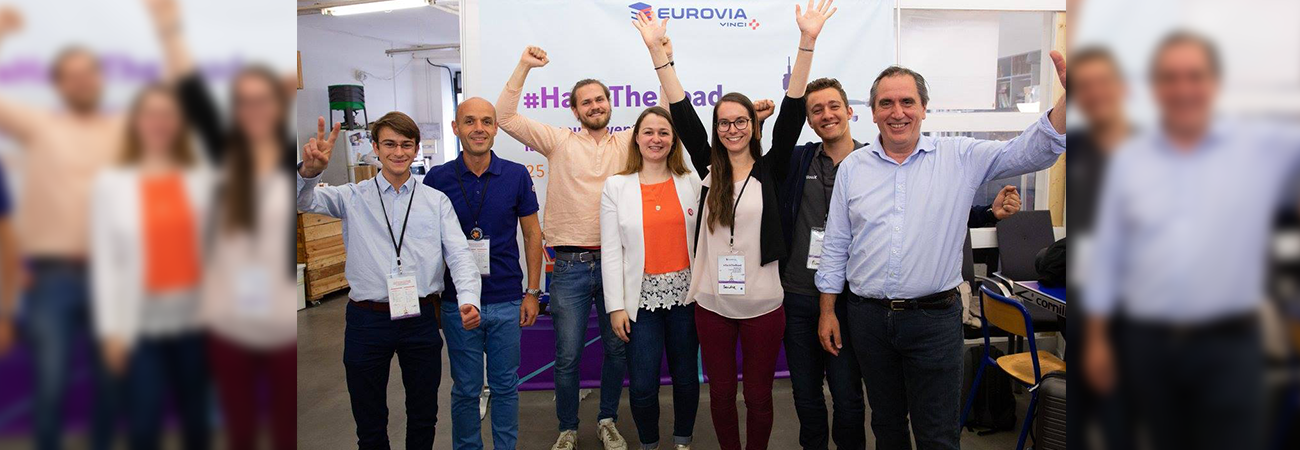
ColRobot: A European collaborative robotics project led by Arts et Métiers

The European Colrobot project led by Arts et Métiers

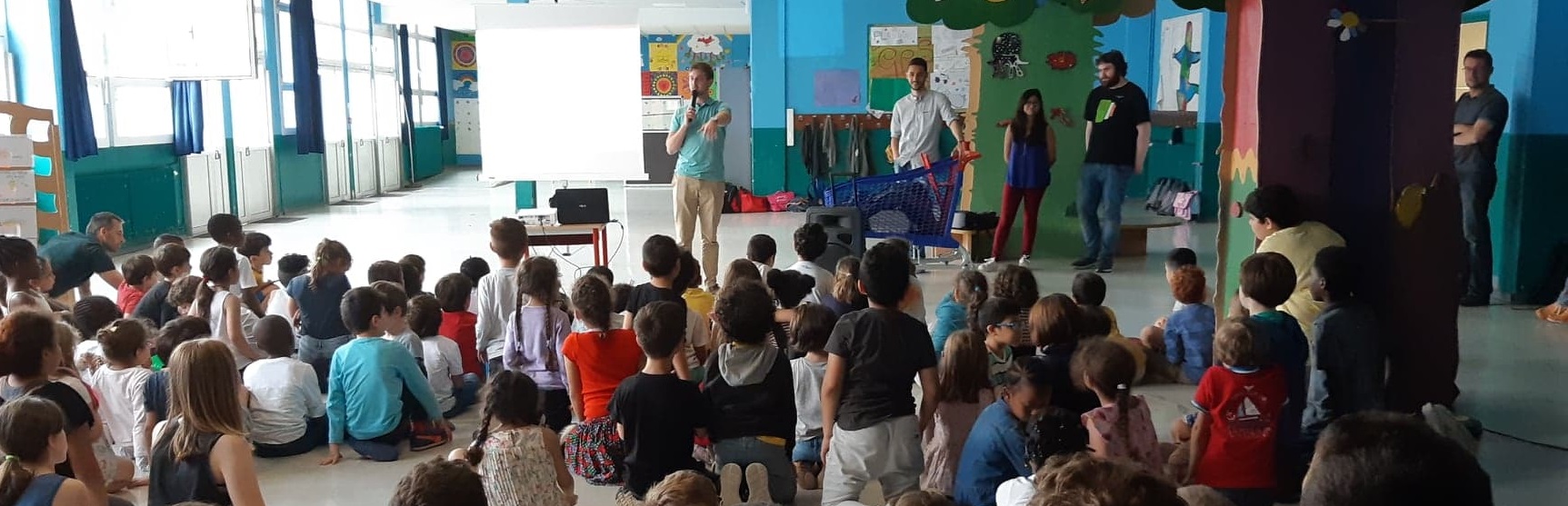
The European research project ColRobot combines the latest European technological requirements in robotics in the fields of assembly processes in the automotive and aerospace industries to create an integrated collaborative robotics system. Led by Arts et Métiers, it brings together a consortium of 11 partners. After two years of R&D, the first demonstrators are now seeing the light of day.


Master of Science KIMP APS - Knowledge Integration in Mechanical Production – Advanced Production Systems

Main image
Visual MR KIMP Advanced production systems
Headline

Master of Science (MoS) Master of Science Knowledge Integration in Mechanical Production – Advanced Production Systems (KIMP – APS) 

Main body text

Campus

Arts et Métiers in Lille

Program description

This program consists of one semester of courses taught in English and held on the Lille campus, and one semester dedicated to completing the Master of Science . This Master of Science involves full-time work in a laboratory or at a company, either in France or abroad.

The first semester is divided into two quarters, one quarter of core courses (shared with all KIMP tracks) and one quarter of specialized courses.

  • Fall Semester: Courses.
  • Spring Semester: Master of Science .

Core courses:

  • Methods and models for the integration of both product and manufacturing process parameters
  • Tools for integration Example on the generation of Machining process by using AI approaches (expert system, Constraint Satisfaction Problem, Fuzzy Logic, AHP)
  • Modeling and control of mechatronic devices
  • Manufacturing process management
  • Literature Review
  • French language and culture (Foreign language for French speakers)

Specialized Courses:

  • Modeling and Analysis of Dynamic Mechanical Systems
  • Control of Dynamic Systems
  • Advanced Mechatronics
  • Robotics
  • Team Building and Management

We use RoboDK for offline simulation and programming of industrial robots.

Objectives

Design and integrate agile (flexible and rapid) production systems for modern and competitive manufacturing industries.

Learning outcomes

Identifying and formalizing knowledge based on a scientific approach to modeling and designing advanced production systems. The KIMP-APS program provides training for further PhD studies, research activities, or positions in industry as an expert with international experience gained by working in an international and multicultural context.

Laboratory and technological platform

All information available on LISPEN's YouTube channel 

Partners

Internships and projects

  • Contribution to the creation of the Digital Twin of a robotic workstation in an assembly line

    Remote video URL
  • Design of Collaborative Robotic Cell for the Assembly of Car Engines.
  • Design of a Mixing and Printing Head for the Continuous Bioprinting of Hydrogels
  • Nonlinear vibration of a cyclic symmetric structure Implementation of Machine Learning Algorithms for Solving SLAM Problem of Mobile Robots
  • Supply chain integration and its effect on both the performance of the supply chain and the quality of the product
  • Data Mining on SCADA Event Codes for Predictive Maintenance of Wind Turbines

Practical Information

  • Required degree: For Arts et Métiers : selection is based on the 2A and 2B selection processes. For international students: a degree equivalent to the M1 (first year of Master of Science program)
  • Teaching language: English
  • Period: One year (begins with the fall semester in October)
  • Teaching hours: approximately 200 hours of face-to-face classes
  • ECTS credits: 30 per semester (a total of 60 credits)

How to apply online?

If you are applying for the first time and do not have an account ⇒ register online to receive a password to apply
If you have an account ⇒ go to the online application portal

Contacts

Adel OLABI - adel.olabi@ensam.eu 

Key words

#Industry40 #KnowledgeIntegration #MechanicalEngineering #riskAnalysis #IndustrialRobotics #MachineLearning #Mach

IMS Program - Materials and Surface Engineering

Main image
IMS Program - Materials and Surface Engineering (IMS) (banner)
Headline

National Master of Science Degree Master of Science DNM) in Materials and Surface Engineering (IMS)

Main body text

Campus

Arts et Métiers campus Arts et Métiers : Cluny, Lille, Paris

Partner websites: ENSAIT Roubaix, ECAM Lyon and University of Burgundy – Dijon campus

Objectives

  • Delve deeper into the essential steps of a typical scientific project management approach
  • Provide the tools necessary for understanding multiphysical phenomena and modeling with the aim of improving the usage properties of materials. Particular attention is paid to surface functionalities and their integrity.
  • Deepen basic knowledge of materials, mechanics, forming and thermal processes, as well as methods for analyzing and characterizing materials, surfaces, and interfaces.
  • Develop a multidisciplinary approach that addresses the development and implementation of materials, their physical, chemical, and mechanical properties, and their industrial uses.
  • Addressing the aspects of "Manufacturing Processes – Microstructure – Mechanical Properties" based on modeling and concrete industrial examples.

Targeted skills

Upon completion of this research-based training, graduate students will be expected to:

  • Have acquired high-level scientific knowledge in the field of various materials (metals and metal alloys, polymers and biopolymers, composites, textiles)
  • Have acquired high-level scientific knowledge in the field of manufacturing processes (textiles, CVD-PVD coatings, thermochemical treatments, polymers and composites, etc.).
  • Have acquired high-level scientific knowledge in the field of surface and interface functionality and integrity (mechanical and chemical role of a part's surface).
  • Acquire scientific project management skills and related tools
  • Acquire, practice, and deepen your knowledge of scientific research communication methods in English and French.
  • Know and understand the main classes of thermomechanical behavior of materials, their modeling at the macroscopic scale, and their industrial applications.
  • Be able to design and conduct a campaign of experimental tests using appropriate and controlled techniques and instruments.
  • Be able to explain the link between the presence of defects and heterogeneities and the thermomechanical behavior of materials.
  • Be able to improve surface properties by selecting the appropriate treatment process for the intended application.

Program

The academic portion of this program begins each year in late January or early February and ends in mid-May. It is followed by a research internship (project) lasting a minimum of four months and a maximum of six months. Certain partnerships (ENSAIT Roubaix, ECAM Lyon) may require students to begin their internship/research project before the academic portion of the program.

The academic component of this Master of Science of 7 course units (CUs):

  • (UE1) Project Management and Introduction to Research (6 ECTS) – Cluny
  • (UE2) Organic Polymers and Implementation (4 ECTS) – Paris (ATHENS week)
  • (UE3) Composite Materials (4 ECTS) – Paris and Roubaix
  • (UE4) Experimental Techniques (6 ECTS) – Lille
  • (UE5) Surface Treatments (6 ECTS) – Cluny
  • (UE6) Powder Metallurgy (4 ECTS) – Dijon
  • (UEA)* Adaptation: metallurgy and mechanics of continuous media – Cluny 

*UEA: optional (and ungraded) teaching unit

Please note: approximately 20% of courses are currently taught in English, with plans to significantly increase this percentage in the coming years. The materials and documents provided to students are mostly in English.

Key scientific and educational leaders in the field

  • Sorin IGNAT (Arts et Métiers ) – Academic Director of the Master of Science program Master of Science UE1
  • Abbas TCHARKHTCHI (Arts et Métiers ) – Head of UE2
  • Juan-Pablo MARQUEZ COSTA (Arts et Métiers ) – co-head of UE3
  • Xavier LEGRAND (ENSAIT Roubaix) – co-head of EU3
  • Adrien VAN GORP (Arts et Métiers ) – Head of UE4
  • Corinne NOUVEAU (Arts et Métiers ) – Head of UE5
  • Maria-Rosa ARDIGO-BESNARD (University of Burgundy Europe) – Head of EU6

Related technology platform

Validation procedures

These teaching units are assessed through continuous assessment, tests, and/or oral examinations, depending on the teaching unit.

Teaching methods

Courses are delivered through lectures, practical exercises, or projects. An internship or research project, conducted in a company or laboratory, lasting a minimum of 4 months and a maximum of 6 months, must be completed and validated through a report and a defense before a committee. This internship may be completed in France (paid in accordance with applicable laws) or abroad, on a topic Master of Science the Master of Science program team or identified by the student (subject to approval by the Master of Science program’s academic director).

Benefits of the training

This training provides:

  • A broader view of materials, processes, and the influence of surfaces and interfaces
  • A complementary approach combining experimentation (high-level equipment and methodologies) and modeling (multi-physics and multi-scale)
  • A project management approach in general and scientific in particular

Career opportunities

This Master of Science students for further study in doctoral programs and trains experts in the fields of Materials Science and Manufacturing Processes. The multidisciplinary approach offered opens doors to research and development positions in major institutional or industrial groups such as the CEA, EDF, Renault, AREVA, APERAM, SAFRAN, etc. More than one-third of students go on to pursue a doctoral thesis (usually supported by a CIFRE contract), typically in partnership with one of these companies.

Some areas of application:

  • Structural materials: thermomechanical and surface treatments of these materials are designed to improve their performance properties, corrosion or wear resistance, and durability, while also making structures lighter.
  • Composite materials and multi-materials: used, for example, in the automotive industry to make structures lighter while maintaining their rigidity.
  • Engineering and high-performance polymers: Liner for ultra-high-pressure hydrogen tanks (700 bar operating pressure) for automobiles
  • Smart materials: shape memory metals or polymers
  • Materials with gradient properties: enable local improvements to mechanical parts in the most heavily loaded areas, leading to optimal solutions from both an economic and mechanical standpoint.
  • Materials with specific functional surfaces: with the aim of minimizing or maximizing friction, gloss, dimensional tolerance, creation of hydrophobic or hydrophilic surfaces, resistance to contact fatigue, etc.
  • Coated materials: painting, galvanization, chrome plating, nickel plating, plasma torch spraying, PVD, CVD, etc.
  • Biomaterials: bone-biomaterial interface, biocompatibility of the interface, cell adhesion, biointegration, wear and particle release, biocorrosion, degradation of biomaterials for orthopedic prostheses, etc.
  • Materials for food use: bioneutrality, impact resistance, thermal resistance, adhesion, cleaning, aging, etc.

ADMISSION

Admission criteria

  • Academic level (in general, but also specifically in fields related to the Master of Science program)
  • Motivations
  • Career plan (alignment with the content and objectives of the training program)
  • Proficiency in French
  • Proficiency in English
  • Recommendations
  • A minimum (eliminatory) level for each of these criteria may be required.

Application deadline(s)

  • For Arts et Métiers students Arts et Métiers internal procedure
  • For students from partner institutions (ENSAIT Roubaix and ECAM Lyon): internal procedure
  • For students pursuing a dual degree with the University of Tehran: internal procedure
  • For other applicants: Applications are accepted from May to September each year. An initial selection process takes place in late June/early July. A second review of applications may take place, if necessary, before mid-September.

Applications 

  • Applications must be submitted online only.

Partners

Manufacturers

Airbus Helicopters, PSA, EDF, CEA, SAFRAN, Airbus Group, AREVA, BODYCOTE, SAFE Metal, BMI Industrial Ovens, SECO Tools, Delphi, Air Liquide, Total, ASCO-Forge, APERAM, A2C, Sandvik, COROMANT, etc.

Institutional

Scientific support is primarily provided by the laboratories to which the Master of Science faculty members are affiliated. Students can complete their internships there, or receive scientific and experimental assistance when their internships take place at a company.

Academics

Our international partners (Institute of Materials Science and Engineering in Łódź, Poland, Swiss Federal Institute of Technology in Lausanne (EPFL) Switzerland, EMPA - Swiss Federal Laboratories for Materials Testing and Research in Thun, Lomonosov Moscow State University, Russia, KIT Karlsruhe Institute of Technology—Germany, IUST, University of Gilan, and University of Tehran, etc.) offer internships to students outside the Master of Science program Master of Science during their thesis project.

Targeted companies

Eurocopter, PSA, EDF, CEA, SAFRAN, EADS, AREVA, BODYCOTE, ECM, SECO Tools, Delphi, Air Liquide, Total, ASCO-Forge, APERAM, etc.

Examples of internship opportunities offered / projects carried out

Here are some examples of projects carried out in previous years:

  • Development of protective deposits on cutting tools during cryogenically assisted machining of Ti6Al4V
  • Characterization of martensitic stainless steel grades under thermomechanical stress of the braking type (automotive)
  • Study of wear on steam generator tubes in pressurized water nuclear reactors
  • Study of thin film growth mechanisms for the development of a substrate carrier for PVD deposition
  • Characterization and study of the crystallinity/thermal expansion of the liner of a high-pressure hydrogen tank for automobiles with a view to certification
  • Fracture toughness of YFSZ zirconia, a model material for uranium dioxide UO2
  • Study of the micromechanics of a composite material (SMC)
  • Optimization of the deposition of organized fluorescent molecules on (111) surfaces of noble metals
  • Modeling of rapid austenitization using the cellular automaton method
  • Characterization and modeling of composite aircraft connecting rod material

The annual catalog of internship and thesis opportunities at the CEA Valduc is made available to students on a regular basis. The laboratories affiliated with this Master of Science many partner companies also offer internship and thesis opportunities every year.

Additional information

Travel expenses incurred by students as part of the training program to other Arts et Métiers campuses Arts et Métiers institutions are covered by Arts et Métiers.

Keywords

#Materials #Surfaces #SurfaceTreatments #Composites #Textiles #Polymers #Manufacturing #Metallurgy #ProjectManagement #ImplementationProcesses

Additional body text

Contact

 
Sorin IGNAT, Director of the Master of Science

  • By email: sorin.ignat@ensam.eu
  • By mail: Arts et Métiers , Rue Porte de Paris, 71250 – Cluny, FRANCE