Clunisois FabLab

Headline

The FabLab is a workshop on the Arts et Métiers campus Arts et Métiers Cluny.
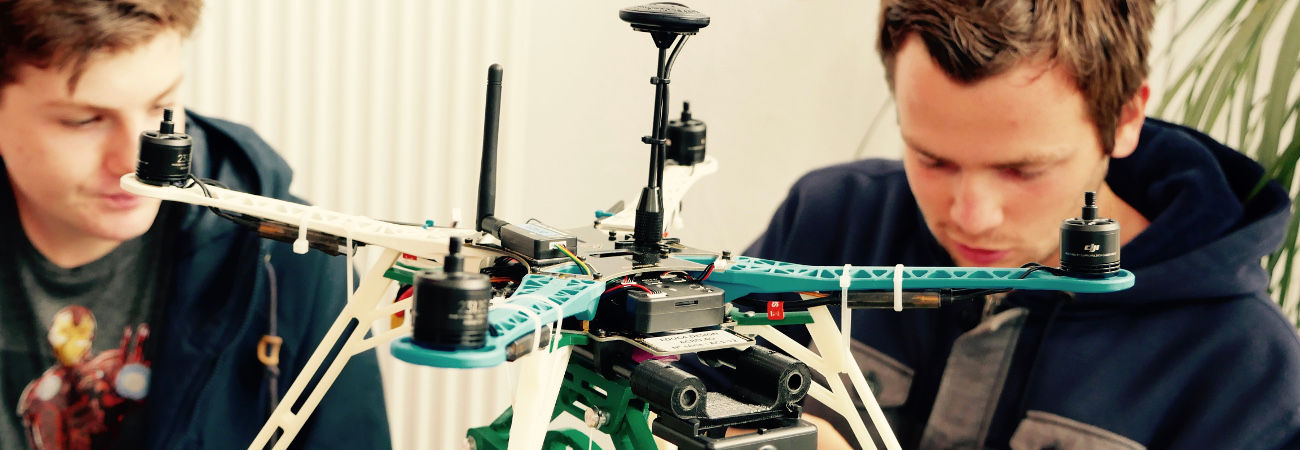
It has unconventional manufacturing tools and machines such as 3D printers.
It was created in January 2016 and opened its doors to the public in January 2017.
It is a self-managed workshop accessible to the public under certain conditions.

Main body text

The FabLab concept (CC BY-SA 3.0)

The FabLab concept was created by Neil Gershenfeld, a professor at MIT, in the late 1990s and launched at the university's Media Lab, in collaboration with the Grassroots Invention Group and the Center for Bits and Atoms (CBA), also at MIT.

He began by exploring how the content of information relates to its physical representation, and how a community can be made more creative and productive if it has access to technology at the local level.

While the Grassroots Invention Group is no longer part of the Media Lab, the Center for Bits and Atoms consortium is still actively involved in pursuing research in areas related to description and fabrication, but it does not operate or maintain any of the fab labs around the world, except for the mobile fab lab.

The Fab Lab concept also stems from two very popular courses at MIT: MAS.863, entitled "How To Make (Almost) Anything," and MAS.S62, entitled "How To Make Something That Makes (Almost) Anything." These highly sought-after courses are still open to students during the fall semester.

In France, the first initiatives were launched in 2009: Artilect FabLab Toulouse in 2009, then Ping, Nybi.cc, and Net-iki in 2011, the FabLab at the University of Cergy-Pontoise, the LabFabs in Rennes5, Lannion, and Montpellier in 2012, and so on.

The FabLabs Charter

The FabLabs Charter

> Image credit CC-BY license
> The original charter in English

Equipment

The Clunisois FabLab has many manufacturing resources similar to those found in other FabLabs. We have 3D printers using three different technologies: wire deposition, resin polymerization, and polymer powder bed fusion. We are also able to cut most materials except metals using our laser cutter. Machining is also available at the FabLab with two CNC milling machines, a CNC lathe, and a drill press. We also have workshop tools, sewing equipment, and electronic equipment.

To discover them, click here

Our partners

Our schedule

Find the Clunisois FabLab calendar via Google Calendar

Our contacts and address

Campus Arts et Métiers Cluny
13 rue Porte de Paris CS 80002
71250 CLUNY CEDEX
Facebook page
fablabclunisois@gmail.com

The FabLab team

Founder: Laurent Laboureau (2016–2017)

Those responsible:

  • Fabien VIPREY (2017-2024);

  • Jean-Baptiste GUYON (2024-...);

FabLab support:

  • Richard BRUN;

  • Patrick GHIDOSSI;

  • Certified members, in their second year of study at the Arts et Métiers campus Arts et Métiers Cluny

Getting to the Clunisois FabLab

Discover the accessibility of our establishment: pictoaccess

Additional images
CL-FabLab 2

Virtual Human Project: The Unity toolkit for avatar animation

VIRTUAL HUMAN PROJECT

How can you imagine a good virtual reality immersion without a sense of social presence with the virtual characters populating the environments? For Geoffrey Gorisse, a lecturer and researcher atthe Arts et Métiers institute Arts et Métiers Laval, the visual and behavioral consistency of avatars is crucial to promoting social interaction effects in a virtual reality application.

Master of Science CPSE - Cyber-Physical Systems Engineering

Main image
MR CPSE visual
Headline

Master of Science MoS) Master of Science Cyber-Physical Systems Engineering (CPSE)

Main body text

RENTAL

Arts et Métiers Campus inArts et Métiers

PROGRAM

Teaching language: English
ECTS credits: 30 credits/session (60 ECTS for the M2)

Learning outcomes are achieved through a well-balanced training program that combines theoretical and practical learning sequences, during which students are placed in both academic and real-life industrial settings, in order to develop multiple cross-disciplinary skills.

  • From September to January (courses): 4 professionalizing and 6 scientific modules, a language module (24 hours), a long multidisciplinary project (128 hours). This project aims to further investigate the concepts introduced in the various modules and to further interact with state-of-the-art methods, models, and tools through real-life industrial projects.
  • From February to September: Master of Science in academia or industry, in France or abroad.

The four professionalizing modules are as follows (48 hours):

  • Research methodology (12 hours)
  • Artificial Intelligence and Data Analytics (12 hours)
  • Industry 4.0: concepts, survey, and future trends (12 hours)
  • Digital factory and supply chain management (12 hours)

The 6 scientific modules are as follows (144 hours):

  • Digital Mock-Up for CPS modeling and advanced engineering (24 hours)
  • Reverse engineering and digital prototyping of CPS (24 hours)
  • Continuity for CPS engineering in a heterogeneous context ( 24 hours)
  • Supervision of CPS during the engineering and operation phases (24 hours)
  • Advanced robotics (24 hours)
  • Mechatronics, advanced control, identification, and fault detection for CPS (24 hours)

We use RoboDK for offline simulation and programming of industrial robots.

KEY STRENGTHS

  • Deep theoretical knowledge of the mainstream concepts, methods, models, and tools involved in CPS engineering and Industry 4.0 technologies and processes
  • Extended practical skills for the definition of multidisciplinary technical solutions for CPS engineering
  • Deep understanding of the overall value chain, strategic management, and supply chain management
  • Structured research methodology to address a wide range of Industry 4.0-related research challenges
  • Transversal skills gained when confronting both academic and industrial multidisciplinary projects
  • International exposure through courses taught in English and exchanges with foreign students

CAREERS

  • PhD in a field related to Industry 4.0 and CPS, in academia or in industry (CIFRE), to become a recognized expert in an area of Industry 4.0.
  • R&D in large companies or startups, in numerous sectors (manufacturing, construction, services, consultancy, etc.) and fields (automotive, aerospace, health, IoT, etc.).

ADMISSION

Prerequisites 

  • First year of a Master of Science degree or an equivalent foreign degree
  • For Arts et Métiers : through the 2A and 2B selection processes

PREREQUISITES 

  • First year of a Master of Science degree or an equivalent foreign degree
  • For Arts et Métiers : through the 2A and 2B selection processes

PROCEDURE 

Applications end mid-June
. The admission process includes an oral presentation to evaluate the motivations and level of English.

==> Apply online

COST OF MSc

Tuition fee for EU/EEA and non-EU/EEA citizens: around €250/academic year and it must be paid on the registration day, at the latest. There is no application fee.

PARTNERS

  • Academic partners: MAP Laboratory, Marseille (France), IMATI-CNR, Genoa (Italy), ETS Montreal, Quebec (Canada), LURPA Laboratory, ENS Cachan (France)
  • Industrial partners: Polyshape, SAFRAN, PSA, Cap Gemini, Airbus, Cetim
  • Sponsor: RoboDK (we use RoboDK for offline simulation and programming of industrial robots)

CONTACTS

Outstanding Achievement Award presented to Nicolas Perry for his closed-system tracheal valve project

Outstanding Action Award Ceremony

On Tuesday, September 22, Nicolas Perry received the Outstanding Action Award at the Health Innovation Forum in Bordeaux. This award, presented by the newspaper La Tribune, recognizes the project launched during lockdown by the Bordeaux professor and researcher, which aims to design closed-system tracheal valves for COVID-19 patients in intensive care.