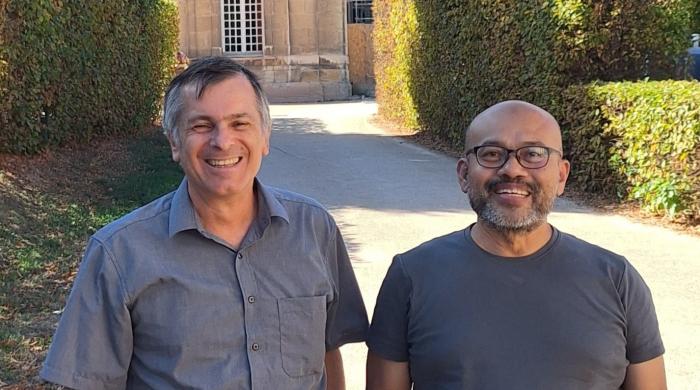
Continuing their work on the impact of electric vehicle charging on building electricity consumption, Thomas Roillet and Daniel Marin, research engineers at L2EP, have launched a project dedicated to smart fast charging in collaboration with the manufacturer DBT. One year after the launch, what are the initial advances?
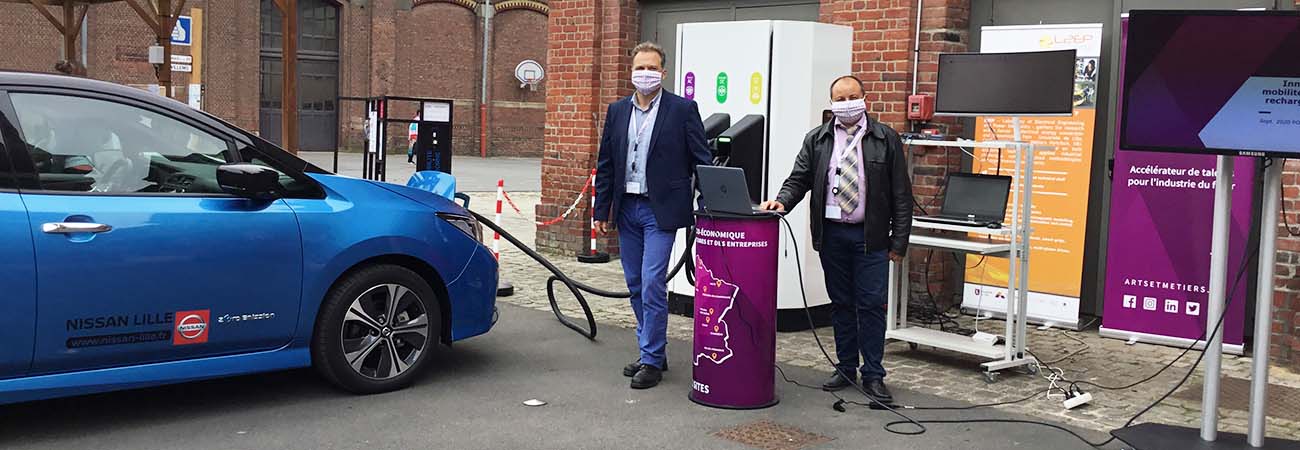
" Today, we need to develop high-power charging stations that can quickly recharge a vehicle, for example, in 20 minutes, you can recover 300 km of range! Based on this observation, Daniel Marin and Thomas Roillet, research engineers at L2EP, are studying the technical, economic, and environmental impacts of fast charging on building energy consumption as part of the B2RI project. To this end, a full-scale demonstrator has been installed on the Arts et Métiers campus Arts et Métiers Lille, which will enable DBT to characterize the behavior of these high-power stations and optimize their use.
For L2EP, the applications are straightforward because they will enable real-world testing of fast EV charging in relation to building consumption. "We will create a real-world vehicle charging database and improve our charging models in relation to the characteristics of the electrical grid ," explains Thomas Roillet.
The scenarios proposed by Thomas and Daniel in this project will thus enable users to choose when to fast charge their vehicle:
- To reduce the bill
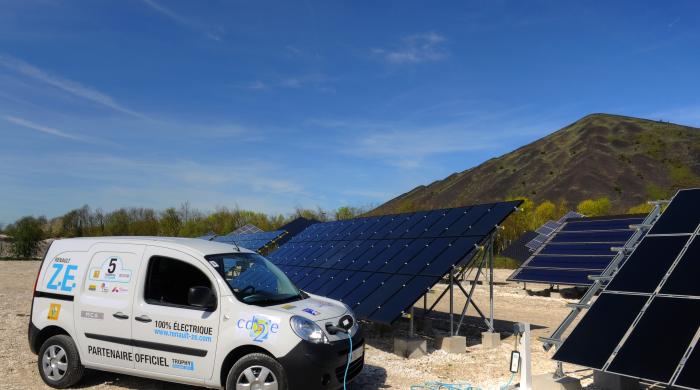
- Reduce environmental impact by coupling with renewable energy production.
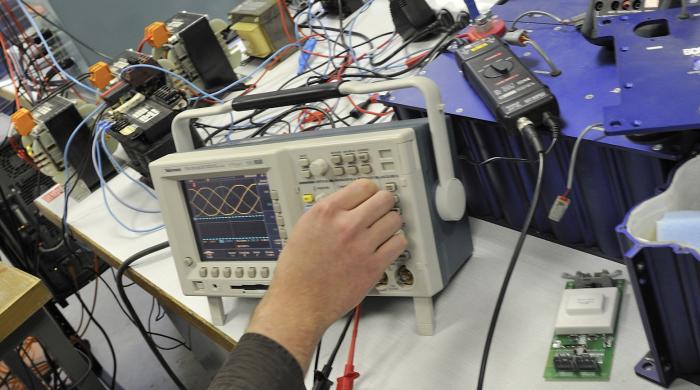
The project will continue until summer 2021. High-power electric vehicle charging tests are being carried out. More than 10 models have been tested! At the end of the project, models for fast charging in connection with the building will be proposed to the manufacturer DBT in order to optimize its charging stations and offer new services to its customers.