Agile Production

Main image
Industrial management: agility and augmented humans - Evolutive Learning Factory
Headline

Find out more about the "agile production" project, one of the nine major Evolutive Learning Factory projects. 

Main body text

ORGANIZING AGILE PRODUCTION AND EXPERIMENTING WITH AUGMENTED HUMANS

Capturing data to manage flows, integrating concepts of augmented humans

Manufacturers must reconfigure their production lines to meet growing demand for products tailored to a country's culture or a customer's needs (customized/usage-oriented). 

This reconfiguration to be agile and fast must be based on a comprehensive view of the state of the production system and digital simulations in order to identify the optimal scenario. This involves capturing and processing data from the production line. 

This agility will be enhanced by new technologies that assist operators in their work, such as artificial intelligence, augmented reality, and cobotics. 

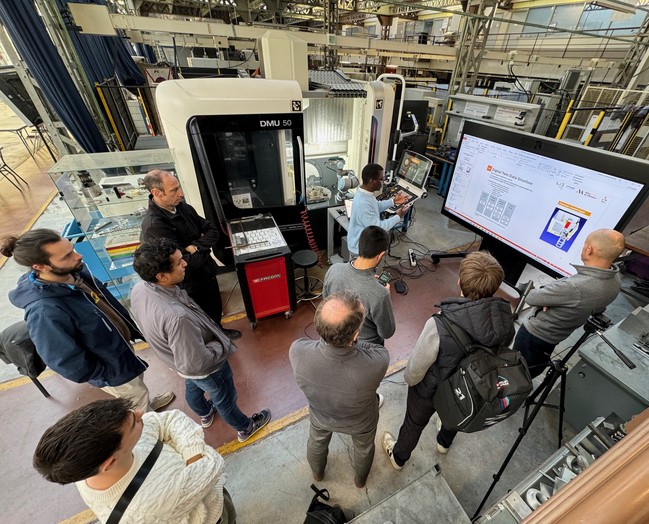
Arts et Métiers assembly lines, methods, and tools used to learn how to organize a production line and experiment with this organization in order to analyze the differences between theory and practice.

The novelty of this project consists of:

  • On the one hand, to capture data at the assembly line and production line levels on the ELF of a campus. This data capture will be used to manage material and parts flows and to adapt the organization of the production line by integrating machines undergoing maintenance. It will also be used to feed models for digital twins.
  • On the other hand, to integrate the concepts of human augmentation through cobotics, artificial intelligence, and mixed reality into the production process, with analyses of improvements in operator performance and working conditions.

How?

Each campus has established a multi-year plan to gradually develop real and/or virtual assembly lines on the one hand, and to integrate an ELF-scale production line into industrial management training on the other.  

The campuses in Aix-en-Provence, Bordeaux, Cluny, Lille, and Metz already have an assembly line. The ELF program will help them equip their line with instruments (high-speed cameras, sensors, etc.) and develop the digital twin in 2024 and 2025. 
The Bordeaux and Lille campuses, meanwhile, want to develop disassembly to address the challenges of end-of-life product management and recyclability. 
The Paris campus has a Factory 4.0 platform that provides an initial approach to industrial management on the scale of a small training factory, integrating machining and additive manufacturing resources.
The Châlons-en-Champagne and Angers campuses will develop either real or virtual assembly lines in 2025 and 2026. 

Finally, all campuses are considering rolling out industrial management training across the ELF.

FINANCING NEEDS

  • Total project cost €660k, including €300k in financing requirements

>>> Would you like to make a donation as an individual? individual ? Click HERE

>>> Would you like to make a donation as a professional ? Click HERE

DETAILS

Assembly and inspection

> Human 5.0

  • Project cost: €370k
  • Partners: Caisse des Dépôts et des Consignations, including alumni sponsorship via the Arts et Métiers Foundation

> Use case: marine propulsion systems

  • Project cost: €100k, including €50k in sponsorship requirements

Augmented Reality (AR)/Virtual Reality (VR) for maintenance

  • Campus: Bordeaux
  • Project cost: €50k, including €25k in sponsorship requirements
Remote video URL

Cobotized assembly line

  • Campus: Lille
  • Project cost: €130k
  • Partners: Alumni sponsorship via the Arts et Métiers Foundation

Real-time flow management

  • Campus: Lille
  • Project cost: €47k, including €24k in sponsorship requirements


Automation and AGVs

  • Campus: Angers
  • Project cost: €108K, including €44K in sponsorship requirements

Lean 5.0

  • Campus: Aix-en-Provence
  • Project cost: €236K, including €28K in sponsorship requirements

Lean tray

  • Campus: Cluny
  • Project cost: to be announced

Digital twins

Main image
Digital Twins - Evolutive Learning Factory
Headline

Find out more about the "digital twins" project, one of the nine major Evolutive Learning Factory projects. 

Main body text

PERFECTING INDUSTRIAL PROCESSES THROUGH DIGITAL TWINS 

Ensuring total control over industrial innovation

The use of digital twins in industry is becoming increasingly widespread, particularly in the design, production, maintenance, and recycling phases. These digital tools are used for the design, adaptation, analysis, prediction, and optimization of processes and the management of industrial activities. They promote the emergence of assistance devices for production and maintenance operations. 

In addition, they play a crucial role in training operators in new processes and practices using immersive and interactive technologies.

This progress is based on four pillars that integrate models and reality:

  • digital representation: generally in 3D, it provides an accurate visualization of the object being studied, merging data to create a complete image.
  • Integration of physical or data-based models via Artificial Intelligence: this integration makes it possible to realistically simulate the behavior of the digital twin by bringing the model closer to physical reality.
  • user interactivity: users interact with models in an immersive environment, bringing the virtual world closer to the real experience.
  • Connectivity: ensuring synchronization between the digital twin and the physical twin, this connectivity is adjusted in frequency and precision as needed, reinforcing consistency between the model and reality.

How?

This five-year project, involving all eight campuses, offers remarkable diversity that is unmatched in the academic world in terms of methods and tools for design, production, and quality control. Each campus has developed a multi-year schedule for the gradual development of digital twins corresponding to various real-world components and equipment.

FINANCING NEEDS

Total project cost: €7,755,000, including €819,000 in sponsorship requirements

>>> Would you like to make a donation as an individual? individual ? Click HERE

>>> Would you like to make a donation as a professional ? Click HERE

DETAILS

JENII - Immersive and Interactive Digital Teaching Twins :

  • Recruitment of an industrial IT engineer for the IT Services Department
  • Deployment and development of eight new Digital Twins for teaching technologies related to connected manufacturing
  • Campus: all campuses
  • Project cost: €5,700,000
  • Partners: France 2030, CEA-List, Cnam, CESI

Digital twins in machining

  • Campus: Aix-en-Provence
  • Project cost: €411k
  • Partners: National Research Agency, I-MC

Mixed Reality Design

  • Campus: Cluny
  • Project cost: €44k, including €19k in sponsorship requirements

Augmented Reality (AR)/Virtual Reality (VR) spaces*

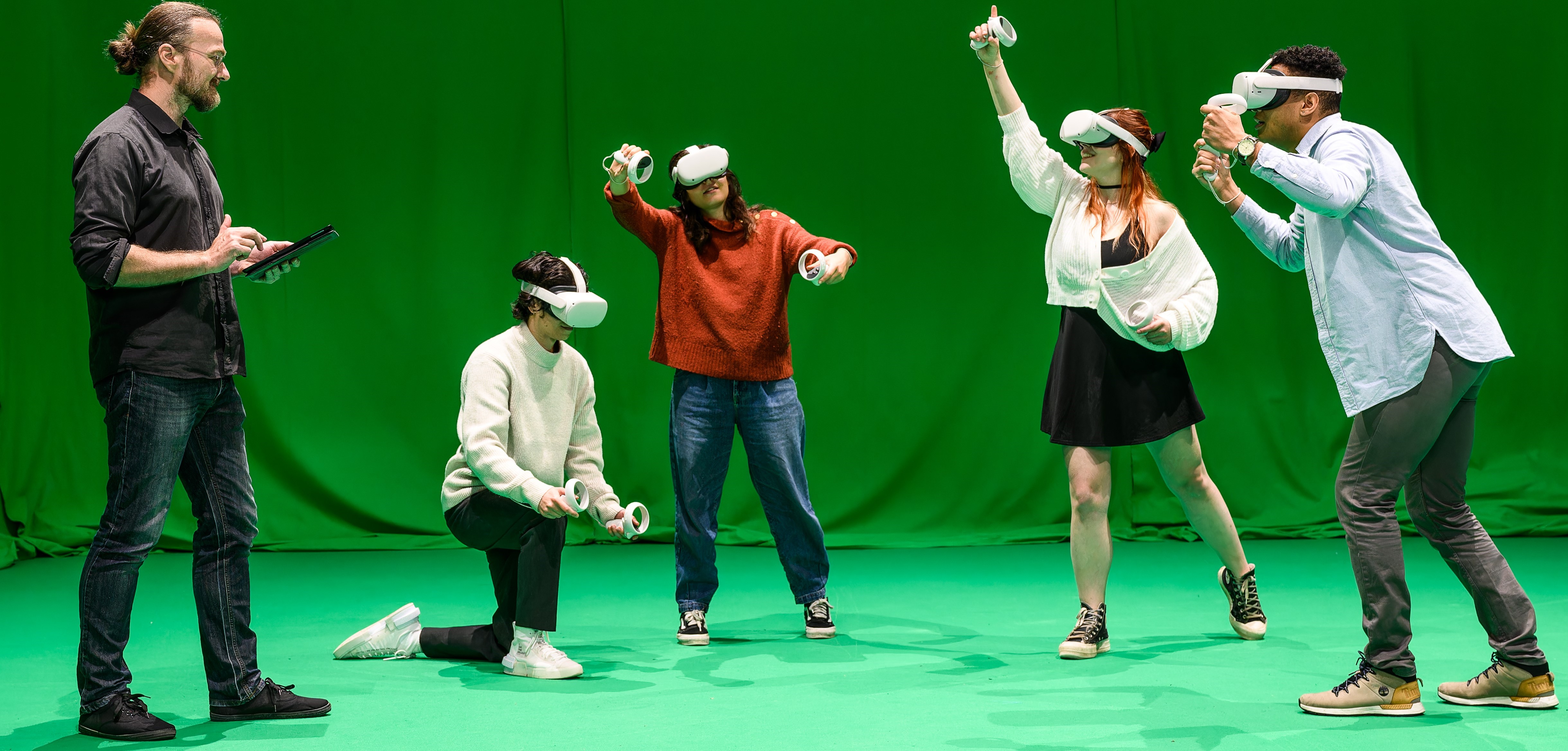
This project aims to equip all campuses with virtual and augmented reality headsets. These headsets will enable the use of digital twins in immersive mode. Beyond the necessary knowledge of this equipment, which exists in the industrial world, these headsets facilitate the understanding of complex systems, which is useful from an educational standpoint.

  • Campus: all campuses
  • Project cost: €1,000,000, including €500,000 in sponsorship requirements
Remote video URL

* Priority for 2024

Connected manufacturing

Main image
Connected Manufacturing - Evolutive Learning Factory
Headline

Find out more about the "connected manufacturing" project, one of the nine major Evolutive Learning Factory projects. 

Main body text

OPTIMIZING MANUFACTURING PROCESSES BY CAPTURING AND PROCESSING DATA USING AI

Introduce systematic instrumentation 

The connectivity of manufacturing processes is a major challenge for industry. It enables production processes to be monitored by interconnecting all means of production (connected objects: machines, robots, digital twins), establishing performance indicators for decision-making, and improving productivity and quality.

In addition, measuring energy consumption prevents overconsumption and promotes energy efficiency.

Arts et Métiers numerous manufacturing processes—metallurgy, plastics/composites, forming, assembly—which are partially instrumented.

The novelty lies in introducing systematic instrumentation to build a database processed by Artificial Intelligence (AI) tools. It also involves implementing performance indicators and real-time monitoring of the manufacturing and inspection of the part. The aim is to respond immediately to any deviations observed. 

The implementation of a predictive model for defects (for example) will enable the creation of a digital twin of the process (Digital Twins project).

How?

The project is scheduled to run for five years across eight campuses covering an exceptional and unique range of manufacturing and quality control processes in the academic world. Each campus has established a multi-year plan to gradually connect its various manufacturing processes.

Need for financing

  • Total project cost: €1.9 million, including €900,000 in sponsorship requirements

>>> Would you like to make a donation as an individual? individual ? Click HERE

>>> Would you like to make a donation as a professional ? Click HERE


Priority projects for 2025

Materials Unit

This project will enable the Materials Unit at the Bordeaux campus to acquire a state-of-the-art mechanical testing machine (tension, compression, bending, etc.) connected for the development of digital twins of tests for their preparation and data processing. This equipment will be used by all students on campus in several courses on Materials, Structures, and Transformation Processes, as well as in numerous cross-disciplinary projects (hackathons, educational projects, junior enterprises, etc.).

  • Bordeaux campus
  • Project cost: €90k, including €45k in sponsorship requirements

Machining cell

This project aims to digitize and connect the machining cell to control production by monitoring machining processes. The investments will make it possible to assess the wear and tear of cutting tools, the condition of the surface generated at the micro level, and vibrations during machining. Compared to digital twins, this will help to understand material cutting phenomena and optimize process parameters. The aim of monitoring is to obtain intelligent machines capable of modifying parameters autonomously and helping operators make strategic decisions. This project involves various teaching units from the Grande Ecole Program and the Specialized Engineering Program.

  • Châlons-en-Champagne Campus
  • Project cost: €196k, including €34k in sponsorship requirements

Machining cell

  • Campus: Angers
  • Project cost: €585k, of which €292k requires sponsorship
  • Acquired with InUse: connectivity and data:
Remote video URL

Machining cell

This project aims to acquire a new 5-axis machining center to teach manufacturing using state-of-the-art equipment, introducing students to new technologies (monitoring, supervision, digital twins, material and energy flow management, etc.) and the integration of robotics. This cell will be connected to an inter-workshop robot (see Robotic Manufacturing/Collaborative Robots project) to link the manufacturing of products in teaching.

  • Campus: Cluny
  • Project cost: €918k, including €170k in sponsorship requirements


Completed projects

Foundry unit / Materials testing unit

  • Campus: Châlons-en-Champagne
  • Die casting: project cost: €4,000k
  • Melting and holding furnace: project cost €123k, including €62k in sponsorship requirements
  • Partners: Grand Est Region, OPCO-2I
Remote video URL

Remote microscopy

The project involves making a scanning electron microscope (SEM) remotely operable. This will enable real-time demonstrations as part of materials science teaching across the eight campuses. Researchers will also be able to access this equipment from their own campuses.

  • Campus: Aix-en-Provence
  • Project cost: €18k, including €10k in sponsorship requirements


Projects currently underway

Foundry unit

  • Campus: Angers
  • Project cost: €238k, including €119k in sponsorship requirements

Forging cell

  • Campus: Angers
  • Project cost: €118k, including €59k in sponsorship requirements

Composite cell

  • Campus: Angers
  • Project cost: €244k, including €122k in sponsorship requirements

Wood cell

The project involves installing a digital wood lathe/milling machine in the foundry workshop. This will enable a complete digital chain to be established between the design/manufacture of foundry models and the machining of raw materials. This equipment will mainly be used for teaching purposes.

  • Campus: Cluny
  • Project cost: €193k, including €77k in sponsorship requirements

Forging cell

  • Campus: Cluny
  • Project cost: €94k, including €47k in sponsorship requirements

Modernization of the Vulcain platform

The Metz campus plans to modernize the forging facility to reduce energy consumption and noise levels and to show students how modern equipment can be used. This will allow for a wider range of working speeds (currently, the working speed is fixed). Modulating the working speed will allow students to see how speed affects the shaping of materials.

  • Campus: Metz
  • Project cost: €800k, including €200k in sponsorship requirements

Robotic manufacturing

Main image
robotic manufacturing - Learning Factory
Headline

Find out more about the "robotic manufacturing" project, one of the nine major Evolutive Learning Factory projects. 

Main body text

Improve productivity and process flexibility through robotic manufacturing or by robotizing manufacturing.

Introducing robotics into manufacturing

The robotization and automation of manufacturing processes is a major challenge for industry in order to increase productivity.

The automation of tool changes provides great flexibility in manufacturing management (autonomous night work, introduction of urgent parts to be manufactured into the schedule, on-demand production without batches).

Arts et Métiers numerous manufacturing processes—metallurgy, plastics processing, machining, assembly—but these are not currently robotized.

The novelty lies in introducing robotization into manufacturing: loading, unloading, and transporting parts as well as tools in order to make the cells highly responsive in small-batch production.
This structure also ensures quality control of the part (geometry and material) with immediate feedback.

How?

The project is scheduled to run for five years across eight campuses covering an exceptional and unique range of manufacturing and quality control processes in the academic world. Each campus has established a multi-year plan to gradually automate its various manufacturing processes.

Need for financing

Total project cost €3,100,000, including €1,100,000 in sponsorship requirements

  • Would you like to make a donation as an individual? individual ? Click HERE
  • Would you like to make a donation as a professional ? Click HERE

More information

Agile machining cell, 4-axis micro machining center for producing all types of parts*

The objective is to install a cell comprising a 3-axis CNC lathe, a 4-axis micro machining center, a robot, sensors, and a computer. Beyond the conventional use of these machines, it will be possible to develop skills in automated manufacturing with machine interface and machine-to-machine connection issues, as well as robot control. In the longer term, with the help of the Laval Institute, this cell will integrate digital twins for the control and self-adaptation of the machine during machining and real-time data display using augmented reality to improve machine control.

  • Campus: Angers
  • Project cost: €304k, including €147k in sponsorship requirements

Agile machining cell with metrological assistance (modernization, loading robot, three-dimensional measuring machines (thermal drifts and measurements)*

Various industrial activities (aeronautics, medical, SMEs, etc.) require small production runs. To be profitable, these must be carried out using equipment that allows for very rapid configuration changes (tools, tool holders, parts, etc.) in order to keep costs low. The objective of this project is to install a cell comprising a 5-axis machining center with a robotic environment allowing rapid changes of workpiece holders. Students are thus trained in the possibilities of short series production in machining.

  • Campus: Lille
  • Project cost: €550k, of which €420k requires sponsorship

FabAddRobotized Cell (robotization, residual stress control, 3D geometry control)

  • Campus: Bordeaux
  • Project cost: €437k, including €212k in sponsorship requirements

Flexible multi-process cell

  • Campus: Metz
  • Project cost: €450k, including €200k in sponsorship requirements

Collaborative robots*

The objective of this project is to install a collaborative robot (cobot), a heavy-load transport robot (AMR: Autonomous Mobile Robot), and a third robot, which will be assembled on campus, in the machining workshop. This equipment will enable the reproduction of real-life situations involving the robotization of mechanical manufacturing units.

  • Campus: Cluny
  • Project cost: €180k, including €102k in sponsorship requirements
Remote video URL

Additive Manufacturing Unit

  • Campus: Aix-en-Provence
  • Project cost: €1,120,000, including €40,000 in sponsorship requirements

* Priority for 2024

The 9 major Evolutive Learning Factory projects

Main image
banner 2 ELF
Headline

Find out more about the 9 major Evolutive Learning Factory projects 

Main body text

Axis 1: Digital and technological revolution in industry  

Robotic manufacturing

Agile machining cell, 4-axis micro machining center for producing all types of parts

  • Campus: Angers
  • Funding requirement: €148k out of €304k

Agile machining cell with metrological assistance (modernization, loading robot, three-dimensional measuring machines (thermal drifts and measurements)

  • Campus: Lille
  • Funding requirement: €400k out of €530k

FabAddRobotized Cell (robotization, residual stress control, 3D geometry control)

  • Campus: Bordeaux
  • Funding requirement: €212k out of €450k

Robotic cutting and welding cell

  • Campus: Metz
  • Funding requirement: €200k out of €450k

Collaborative robots

  • Campus: Cluny
  • Funding requirement: €92k out of €186k

FabAdd Unit

  • Campus: Aix-en-Provence
  • Funding requirement: €40k out of €500k

Connected manufacturing

Foundry unit / Materials testing unit

  • Campus: Châlons-en-Champagne

Remote microscopy

  • Campus: Aix-en-Provence
  • Funding required: €9k out of €20k

Foundry Unit

  • Campus: Angers
  • Funding requirement: €199k out of €238k

Forging cell

  • Campus: Angers
  • Funding requirement: €188k out of €59k

Composite cell

  • Campus: Angers
  • Funding requirement: €59k out of €118k

Machining cell

  • Campus: Cluny
  • Funding requirement: €292k out of €585k

Wood cell

  • Campus: Cluny
  • Funding requirement: €77k out of €183k

Forging cell

  • Campus: Cluny
  • Funding requirement: €47k out of €94k

Modernization

  • Campus: Metz
  • Funding requirement: €200k out of €442k

Digital twins

JENII - Immersive and Interactive Digital Teaching Twins :

  • Recruitment of an industrial IT engineer for the IT Services Department
  • Deployment and development of new JNs in connection with connected manufacturing
  • Campus: all campuses
  • Funding requirement: €5,300,000

Mixed Reality Design

  • Campus: Cluny
  • Funding requirement: €19k out of €44k

Augmented Reality (AR)/Virtual Reality (VR) Spaces

  • Campus: all campuses
  • Funding requirement: €300k out of €600k

Industrial management: agility and augmented humans

Assembly and inspection

  • Campus: Bordeaux
  • Funding requirement: €50k out of €100k

Augmented Reality (AR)/Virtual Reality (VR) for maintenance

  • Campus: Bordeaux
  • Funding requirement: €25k out of €50k

Cobotized assembly line

  • Campus: Lille
  • Funding requirement: €130k out of €130k

Real-time flow management

  • Campus: Lille
  • Funding required: €24k out of €47k

Automation and AGVs

  • Campus: Angers
  • Funding requirement: €44k out of €108k

Lean 5.0

  • Campus: Aix
  • Funding requirement: €30k out of €223k

Lean tray

  • Campus: Cluny
  • Funding requirement: forthcoming

Connected factory

Logistics 4.0

  • Campus: all campuses
  • Funding requirement: €900k out of €1,200k

Documentation 4.0

  • Campus: all campuses
  • Funding requirement: €60k out of €60k

Trans-Do

  • Campus: all campuses
  • Funding requirement: €150k out of €275k

SI Factory (IT (computing resources, hardware, software, IoT/data, networks, services, HR)

  • Campus: all campuses
  • Funding requirement: €1,090k out of €2,000k

Axis 2: Eco-responsibility and leadership in sustainability 

Energy impact

EcoHPC (Cassiopée)

  • Campus: Metz
  • Funding requirement: €33k out of €60k

Means of production

  • Campus: Lille
  • Funding requirement: €48k out of €95k

Energy system monitoring

  • Campus: Aix-en-Provence
  • Funding requirement: €5k out of €120k

Energy cell: wind tunnel

  • Campus: Angers
  • Funding requirement: €58k out of €155k

Energy cell: fuel cell

  • Campus: Bordeaux
  • Funding requirement: €150k out of €300k

Electricity consumption in machining (WOMAN)

  • Campus: Cluny
  • Funding requirement: €20k out of €128k 

Recycling of metal alloys

Aluminum recycling

  • Campus: Lille
  • Funding requirement: €37k out of €75k

Green steels

  • Campus: Metz
  • Funding requirement: €150k out of €700k

Axis 3: Innovative collaborative engineering 

Learning spaces

Signage

  • Campus: all campuses
  • Funding requirement: €150k out of €330k

FabAdd and Collaborative Spaces

  • Campus: Lille
  • Funding requirement: €180k out of €525k

Collaborative spaces

  • Campus: Châlons-en-Champagne
  • Funding requirement: €200k out of €650k

Learning Center 4.0

  • Campus: all campuses 
  • Funding requirement: €1,850,000 out of €2,000,000

Communal rooms

  • Campus: all campuses
  • Funding requirement: €266k out of €455k

Reconstruction of the legendary Delage V12 Labourdette car 

Redesign and rebuild the Delage V12 Labourdette

  • Campus: All campuses
  • Funding requirement: €350k out of €600k

Specialized machining equipment

  • Campus: Cluny
  • Funding requirement: €50k out of €400k