
Arts et Métiers Etude in Lille serving businesses
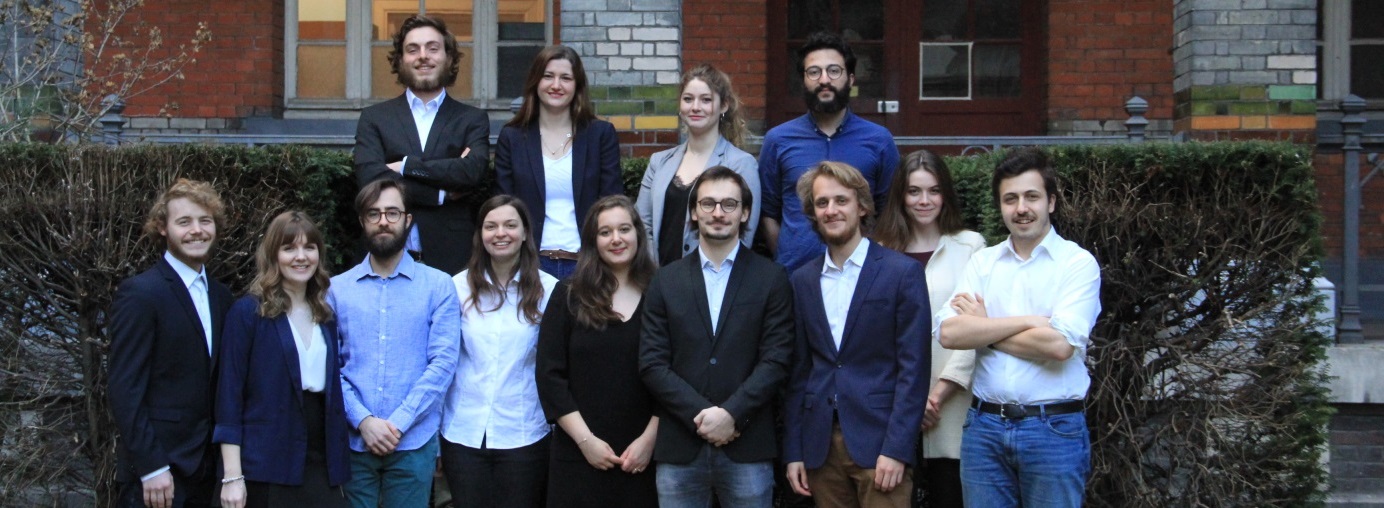
In April 2018, the board of directors ofAMJELille (Arts et Métiers Étude) met to elect its new representatives. Today, we have the opportunity to meet its new president, Romain Debraize, a first-year engineering student at the Arts et Métiers campus Arts et Métiers Lille.
The Voilz'arts association participates in Europe's largest student sporting event
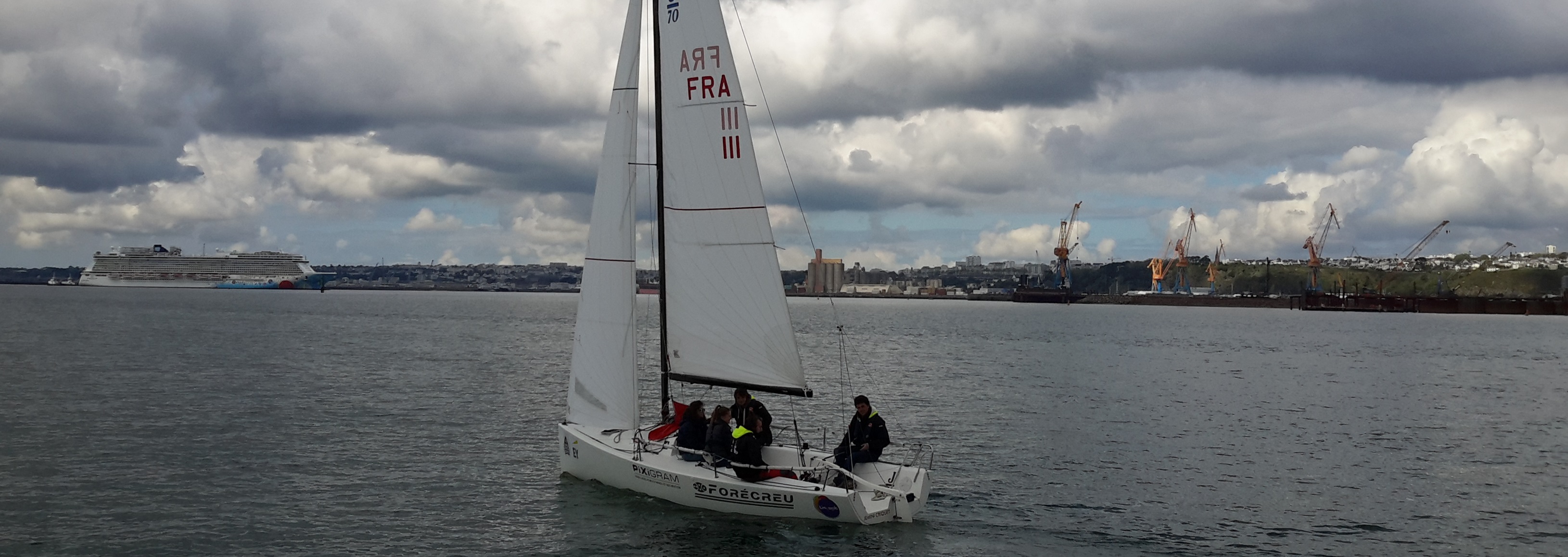
In April 2018, the Voilz'arts association from the Arts et Métiers campus Arts et Métiers Lille took part in the 50th edition of the EDHEC Cruise Race in Brest, the biggest student sporting event in Europe. It is a five-day regatta consisting of coastal races.
MTI3D IN Program - Management of Interactive 3D Technologies (MTi3D) - Digital Engineering.
Main image
CS MR MTI3D Digital Engineering
Headline
National Master of Science Degree Master of Science DNM) in 3D Interactive Technology Management (MTi3D) – Digital Engineering (MTI3D IN)
Main body text
Campus
Chalon-sur-Saône Institute Arts et Métiers
Objectives
Educational and scientific
- Become an expert in digital chain methods and tools for product lifecycle management
- Mastering the design of 3D interfaces and multisensory interaction for virtual immersion in all areas of application
- Mastering the integration of humans into the loop to ensure an effective user experience
- Knowing how to develop a scientific approach
Professionals and career opportunities
- Become a digital technology specialist for digital transformation and Industry 4.0
- Mastering the development of innovative digital projects
- Encouraging the creation of startups based on innovative ideas in the digital field
Skills acquired
- Knowing how to implement a virtual reality and augmented reality system
- Knowing how to implement an application that meets an industrial need
- Know how to implement an experimental protocol for validating virtual reality/augmented reality methods and tools (know how to develop a scientific approach)
- Know how to develop and manage a research and development project in collaboration with companies
Program
Structure (course semester, project/internship semester, etc.)
- Master of Science : 2 semesters of coursework totaling 677 hours, including 300 hours of independent projects, followed by a 3-month technical internship
- Master of Science : One semester of coursework totaling 457 hours, including 195 hours of independent projects, followed by a 6-month research internship
- For both years: weekly professional and scientific seminars
Master of Science
UE 1 - Software Tools (98 hours)
- Algorithms - Introduction to algorithms
- Object-oriented programming - Elements for programming in C++/C# useful for application development
- Image processing - Fundamental concepts of digital image processing and development in Python using libraries such as OpenCV
UE 2 - Engineering Sciences (69 hours)
- Electronics and rapid prototyping - Programming an Arduino electronic board and introduction to rapid prototyping tools
Introduction to Artificial Intelligence (AI) – Discover the fundamental concepts and areas of application of artificial intelligence and their practical implementation through Python programming.
Mathematics – Basic elements necessary for computer graphics, image processing, and AI.
- 3D Scanning - Introduction to 3D Scanning Techniques and Technologies
UE 3 - Virtual Environments (104 hours)
- 3D modeling - Use of virtual object modeling software for real-time rendering using dedicated software
- Real-time 3D programming - Creation of interactive real-time 3D applications using Unity3D
VR & AR interfacing – Development of interactive and immersive interfaces using VR/AR headsets, smartphones, and tablets.
Vision systems and virtual reality (VR) - The fundamentals of vision systems in the context of virtual reality
EU 4 - Methods (40 hours)
- Value analysis - Principles of a competitive, organized, and creative method aimed at satisfying user needs through a specific design approach that is functional, economical, and multidisciplinary.
- Design and innovation - Opening up to innovation through design
- Innovation Engineering - Fundamentals of creativity and methods for staying competitive through technological innovation
- Entrepreneurship - Principles for starting your own business based on an innovative idea
EU 5 - Management and Communication (66 hours)
- Technical English and TOEIC preparation - Advanced English for engineers
- Professional communication - Methods for selling yourself and convincing a customer
- Team management - Methods for taking the human aspect into account at work through relationship building
EU 6 - Projects
- Virtual Reality Project - Development of a simple coupled virtual reality interface.
- Junior Project - Development of a functional application on a defined topic.
- Chal'enge Project - Challenge consisting of developing a functional application in two weeks in partnership with a company in the Bourgogne-Franche-Comté region, presentation to a jury of companies and elected officials from Greater Chalon.
Additional body text
Master of Science )
UE 1 - Research Methodology (57 hours)
Scientific approach methodology - Definition and role of the researcher, definition of a scientific problem, understanding and presenting a scientific article
Experimental study for virtual reality - Setting up virtual reality experiments
Data analysis - Statistical analysis tools (mean, standard deviation, ANOVA, PCA, etc.) for analyzing data after user experiments
UE 2 - 3D Imaging and Immersion (45 hours)
Vision systems - Understanding the principles of vision systems and essential knowledge for augmented reality
Multisensory interactions - Studies of different sensory modalities that increase interaction in virtual environments
Virtual reality: principles and applications - Methods enabling the use of virtual reality technologies that are best suited to the desired application, taking into account human perception patterns.
Augmented Reality – Technical Principles of Augmented Reality and their implementation in Python
Image rendering – Digital image rendering pipeline and its implementation in Python
UE 3 - Digital modeling and tools (71 hours)
Artificial intelligence - concepts, methods, and tools in artificial intelligence, advanced level
3D modeling - Modeling of a virtual object for real-time rendering using dedicated software
Real-time 3D programming - Advanced use of Unity 3D, the 3D scene editor for creating interactive and immersive applications. Introduction to a second game engine, Unreal Engine.
EU 4 - Knowledge of the company and language (32 hours)
Business strategy and marketing - Demonstrate that marketing techniques are particularly useful to engineers in successfully managing recurring characteristics in technology markets.
Scientific English - Mastering English for Research
UE 5 - Projects (195 hours)
Senior project - Development of a functional application on a specific topic. Completed in pairs.
Chal'enge Project - Challenge consisting of developing a functional application in two weeks for a company in the Bourgogne-Franche-Comté region, presentation to a jury of companies and elected officials from Greater Chalon. Carried out in a group with M1 students.
EU C1 - Perception and interaction in a virtual environment (25 hours)
- Cognition of Perception-Action Coupling – General Introduction to Human Motor Control
- Sound interactions – Fundamental concepts related to sound and its use in interactive and immersive interfaces
- Interactive multisensory systems - Various interactive systems and studies of different sensory modalities to increase interaction in virtual environments
EU C2 - Industrial Virtualization (32 hours)
Production line – Application of AR/VR technologies to assembly lines.
Building construction – Application of VR/AR technologies in the building sector.
Key scientific and educational leaders in the field
- Faculty members of the Institute
- Development Engineers at the Institute
- External speakers specializing in digital technology, virtual reality/augmented reality
Related technology platform
- The Institute's technical platform: CAVE-type immersive system, virtual reality and augmented reality headsets, interaction and force feedback devices, 1 dynamic driving simulator
- Institute's team of development engineers
Assessment methods
- Oral and written exams
- Technical achievements in applying knowledge acquired during the course
- Project reports and defenses
- Internship reports and presentations
Validation procedures
Per year
- 10/20 average for each course unit (same for internships)
- 10/20 average for the whole year
Teaching methods
- In-person for theoretical courses
- Autonomy for projects with access to the Institute's facilities
Benefits of the training
- The only training program in France in a rapidly growing field
- Employment rate close to 95% at the end of training (profiles increasingly sought after by companies)
- Access to a wide range of technical facilities that are unique in France
- Project-based learning training
- Training with strong links to industry in a wide range of application areas
- Opportunities to study abroad for internships during both years of Master of Science program
- Reasonable student numbers (9 students in the first year and a maximum of 14 in the second year) allowing for personalized support and constant contact with the Institute's research and development team.
Career opportunities
- Virtual reality project engineer in design offices
- Virtual Reality/Augmented Reality Project Manager
- Research and Development Engineer
- Manager of a collaborative virtual immersion platform within large industrial groups
- Entrepreneur (creator of digital startups, with the support of Pépite BFC, DECa BFC, and theArts et Métiers incubator)
- Virtual reality/augmented reality business developer
- Doctor in the field of virtual reality
- Researcher or engineer in public institutions (CEA, INRIA, CNRS, etc.) or private institutions (large industrial groups, SMEs)
Partners
Manufacturers
- Renault, SAFRAN, Enedis, Suez, Areva/Framatome, AVSimulation, SNCF, AlfaLaval, ABMI, Arcom, Diota, Haption, EDF
Institutional
- Greater Chalon, Nicéphore City, UIMM, Nuclear Valley, Burgundy-Franche-Comté Region, Imaginove, French Institute of Horses and Riding, French Virtual Reality Association, CEA List, Cetim, Departmental Council 71, Dijon University Hospital
Academics
- France: CRVM, Collège de France, Inserm, INRIA, University of Burgundy, LEAD, LIRIS, UTCompiègne, Georges Charpak Institute of Human Biomechanics, LAMIH, Grenoble INP, I2M
- Foreign: Los Andes University (Colombia), University of Calgary (Canada), Macquarie University (Australia), Iowa State University (United States), University of Petronas (Malaysia), Karlsruhe Institute of Technology (Germany), Polytechnic University of Bucharest (Romania), Rey Juan Carlos University (Spain)
Targeted companies
- Large corporations (Renault, SAFRAN, Suez, etc.)
- Very small enterprises, small and medium-sized enterprises, mid-sized companies
- Various fields of application (Industry 4.0, automotive, aeronautics, construction, training, healthcare, social services, etc.)
Examples of internship opportunities offered / projects carried out
Internships
- Vertigo simulator for future electricians (with Enedis)
- Training simulator for doctors (with Dijon University Hospital)
- Virtual reality and augmented reality applications for student training
- Virtual immersion for design assistance (with I2M)
- Interactions and Collaboration in Mixed Reality (CapGemini)
- Augmented reality for aerospace maintenance (with SAFRAN)
Projects
- Application on raising awareness of energy poverty (with CD71)
- Virtual situation of the start-up process for a production line (with Gerresheimer)
- CACES virtual reality forklift training (with EFCO Formation)
- Application allowing users to choose packaging based on a photo of the item (with Groupe La Poste)
- Immersive application for raising awareness of risks in a factory (with Saint Gobain)
Admission criteria
Required level
- M1: Bachelor's degree or equivalent in a scientific field (computer science, design, applied mathematics) from a university, engineering school, or through validation of prior learning (VAE).
- M2: Master of Science (M.S.) Level Master of Science or equivalent in a scientific field (computer science, design, applied mathematics) from a university program, an engineering school, or through recognition of prior learning (RPL)
Equivalent international level
- M1: bachelor's degree level
- M2: Master of Science degree
French language level: Minimum level B2
English level: Minimum level B1
Practical information
Course language: French with course materials in English (courses adapted into English if international students are present)
Schedule (start and end dates)
- M1: Second week of September
- M2: 4th week of September
Number of hours
- M1: 845 hours of classes, including 340 hours of projects, followed by a 4-month internship
- Master's degree: 449 hours of classes, including 195 hours of projects, followed by a 6-month internship
ECTS credits: 60 per year
Training location(s): Chalon-sur-Saône Institute
Contact
Additional information
You can visit the Institute at any time (by appointment).
Keywords
#VirtualReality #AugmentedReality #3D #digital #modeling #ComputerEngineering #IndustrialEngineering #industry4.0 #maintenance #design
Useful links
3A Expertise - "Aeronautical and Space Engineering" Program
Main image
Search-news- parsifal
Headline
General engineer, student curriculum, third-year expertise in aeronautical and space engineering.
Main body text
Campus
Arts et Métiers Campus Arts et Métiers Bordeaux-Talence
Objectives
Educational and scientific
Provide students with fundamental and applied skills in:
- Propulsion systems in order to understand the influence of the various relevant parameters that contribute to the choice of a propulsion system, and to address the technical problems encountered during its design.
- The different families of aeronautical materials and the processes used to obtain structural parts, as well as the methodologies for calculating and dimensioning aeronautical structures. Particular attention is paid to composite structures and additive processes.
- The discovery of aircraft and space systems.
- Regulations and quality assurance, whose major role is illustrated through concrete applications from this sector.
Professionals and career opportunities
Civil and military aeronautics and space occupy an important place in the industrial fabric of the Nouvelle-Aquitaine region. Companies in this sector are associated with the Arts et Métiers campus Arts et Métiers Bordeaux through numerous partnerships: specialized teaching interventions, hosting engineering students on executive or industrial internships, final year projects, research projects, etc.
The Aeronautics and Space Engineering Expertise Teaching Unit aims to train students in this promising sector.
The positions targeted are those in R&D, design and calculation offices, and production.
Program
Conferences and themed company visits round out the training program.
- Structure (course semester, project/internship semester, etc.)
The year is divided into two semesters:
- The first semester is devoted to courses (30 ECTS credits in total), divided into three separate modules (see the detailed program below). In addition to the courses, the first semester provides an opportunity to carry out a 90-hour project (PJE09) on a specific topic proposed by the teaching staff of the entire Campus. These internships are closely linked to the activities of the I2M laboratory in cutting-edge fields and provide access to all of the campus's platforms.
- The second semester is devoted to a 24-week end-of-study internship in a company (30 ECTS). Internships generally take place in the field of expertise.
Detailed description of the modules
Module 1: Evolution of Propulsion System Design
- Analysis of the evolution of propulsion systems (14 hours)
- General information on innovation in aeronautics
- Analysis of a propulsion system using innovation support tools – MAL’IN
- Presentation of propulsion system families based on energy analysis
- Design process for a propulsion system – application to a twin-spool turbofan engine
- Practical application of assembly/disassembly for observing the technological solutions of a DGEN turbomotor from PRICE INDUCTION.
- Advanced design methods and optimization of complex systems (20 hours)
- local and global optimization, genetic algorithms
- methods for constructing optimization objective functions
- methods for sorting and classifying solutions (aggregation)
- cardinal assessment methods (interpretation)
- Aeronautical application: optimization of composite structures
- Aerodynamic guidance for high-speed rotating machines (8 hours)
- Implementation of thin film lubrication equations
- Case of compressible fluids (air)
- Static: development, optimization of aerodynamic stops: load capacity issues and technological solutions
- Vibration study of aerodynamic guides, stabilizing effect of internal friction
Module 2: Aeronautical materials and structures: development and dimensioning
- Aeronautical materials and processes for obtaining structural parts (19 hours)
- Nature of materials in an aircraft, criteria for selecting materials, specific characteristics of the materials used (composition and properties)
- Composite materials used in aeronautics: general information, components, characteristics, structural composite materials, aeronautical processes, repair
- Dimensioning of aeronautical structures (47 hours)
- Part 1 (30 hours, including 20 hours of digital project work)
- General considerations on aircraft structures
- Bending and torsion of thin open, closed, and multi-cell profiles: theory and applications
- Structural stability: buckling resistance and post-buckling behavior
- Composite plate behavior
- Digital Project: Sizing of the Delta4 launcher divergent
- Part 2 (5 p.m.)
- Fatigue crack initiation resistance
- Damage tolerance
- Part 1 (30 hours, including 20 hours of digital project work)
Module 3: Products and processes in the aerospace industry
- Discovering aircraft (12 hours)
- Regulations, Stakeholders, Maintenance
- Elements of flight mechanics
- Aircraft
- Introduction to Space Systems (18 hours)
- Solar systems
- The satellite system
- The launch system
- Space applications
- Space programs
- Elements of Space Mechanics
- Space environment
- History of Space Systems
- Quality approach in the aerospace industry (12 hours)
- Application of the quality approach to the three-dimensional conformity assurance process
- General principles
Key scientific and educational leaders in the field
Nicolas Saintier (Arts et Métiers )
Didier Egureguy (Arts et Métiers )
Teaching staff
Nicolas Saintier (Arts et Métiers )
Didier Egureguy (Arts et Métiers )
Pascal Le Roux (Arts et Métiers )
Jérôme Pailhes (Arts et Métiers )
Thierry Palin-Luc (Arts et Métiers )
Frédéric Dau (Arts et Métiers )
Ivan Iordanoff (Arts et Métiers )
Patrick Sébastian (Arts et Métiers )
Marco Montemuro (Arts et Métiers )
Thecle Alix (Arts et Métiers )
Sabrina Houdaibi-Olive (Arts et Métiers )
Stephane Abed (Polyshape)
Anissa Meziane (University of Bordeaux)
Patrick Martinez (IRT, Saint Exupéry)
Daniel Saint-Pe (External Consultant, QSE-FH)
Stephanie Lizy-Destrez (ISAE -SUPAERO)
Related technology platform
GAME platform, FUTURPROD additive manufacturing platform
Assessment methods
Written exam (continuous assessment and/or final exam) for courses, digital project, written report, and oral defense for PJE09 and SFE
Validation procedures
Passing the exam requires an average score of 10 out of 20 (Weighting: Module 1 = 0.3, Module 2 = 0.4, Module 3 = 0.3).
Teaching methods
- Lectures, tutorials, project-based teaching
- Presentations by recognized professionals in their respective fields.
- A day of meetings with companies in the aeronautics sector is being organized on campus. This day is an opportunity to discover career paths and ambitious projects in this sector.
Benefits of the training
The Aeronautics and Space Engineering Unit benefits from a promising regional context, marked by the dynamism of the global competitiveness cluster Aerospace Valley (http://www.aerospace-valley.com/), Europe's leading employment hub in the field of aeronautics, space, and embedded systems, with:
- the presence of major groups that are leaders in this market: ASTRIUM Space Transportation, the CEA, the CNES, DASSAULT Aviation, EADS, the SAFRAN group with TURBOMECA and HERAKLES, etc.
- the presence of a large network of international equipment manufacturers: THALES, Liebherr Aerospace, Messier-Dowty, etc.
- the development of a dynamic network of SMEs/SMIs
The program also benefits from its proximity to numerous laboratories and research networks on the Bordeaux campus linked to the aeronautics and space sector (I2M (https://www.i2m.u-bordeaux.fr/ ), ICMCB (www.icmcb-bordeaux.cnrs.fr/ ), LCTS (www.lcts.u-bordeaux1.fr/), Laser Road ( www.alpha-rlh.com/ )
Partners
- Industrial companies AIRBUS, IRT Saint Exupéry, POLYSHAPE, STELLIA, ASTRUM Space Transportation, CEA, CNES, DASSAULT Aviation, EADS, ARIANE GROUP, SAFRAN,
- Institutions Aerospace Valley Competitiveness Cluster, ICMCB, LCTS
- Academics University of Bordeaux, University of Bilbao, Laval University (Canada)
Targeted companies
The entire aerospace sector, major groups and supply chains, research and development centers such as CNES and ONERA.
Examples of internship opportunities offered / projects carried out
The vast majority of final-year projects are carried out in large companies in the aeronautics and space sector. Examples of final-year internships in 2017-2018:
"Continuous improvement of the supply chain" - Airbus Helicopters
"Simulation of metal additive manufacturing processes" - Lisi-Aerospace
"Design of structural parts for a drone with WiFi integration" - Parrot
"Factory of the Future – Non-contact Measurement Methods and Digital Chain" MDBA France
Digital mock-up of engine assembly lines Ariane Group
"Aerodynamic and thermal interactions on the transient operation of a compressor" Safran Aircraft Engines
Admission criteria
Required level: Master's degree in Mechanical Engineering (Mechanics - Design - Materials - Processes)
Practical information
- Course language: French (except for module 2, part of which will be taught in English)
- Period: Fall
- Number of hours 150
- ECTS credits 13
Contacts
Nicolas Saintier
Keywords
Aeronautics, propulsion, structures, materials, projects, composites, design, engineering, space, buckling, JAR/FAR, mechanics, thermodynamics, pro
SAR Course - Advanced Systems and Robotics
Main image
Visual spec MR Advanced systems and robotics
Headline
National Master of Science Degree Master of Science DNM) in Advanced Systems and Robotics (SAR)
Main body text
Campus
Arts et Métiers Campus Arts et Métiers Paris
Pedagogy
This program lasts two years.
M1: offered at the Arts et Métiers campus Arts et Métiers Paris as part of the "Factory of the Future - Mechanical Engineering" program.
Presentation
The national Master of Science degree is designed to advance the development of mechanical systems equipped with a degree of intelligence capable of providing the autonomy and automation necessary to:
- Improving production and reducing the drudgery of work
- Simplify people's lives and provide people with disabilities, in particular, with the means to live more comfortably.
With a strong focus on mechatronics (the synergistic and systemic combination of mechanics, electronics, and real-time computing), this course covers the following topics:
- The mechanics of multi-body (rigid) systems
- Control systems, sensors, and actuators
- Electronics and signal processing (image, localization, filtering)
- Engineering for health (biomechanics, surgical robotics)
Objectives
The goal is to train specialists capable of addressing issues related to the design, analysis, optimization, and control of complex systems and intelligent machines, among which robots occupy a prominent place.
This training program is designed to meet the wide range of research, development, and production needs related to these advanced "mechatronic" systems, which are of paramount importance in all areas of activity (transportation, manufacturing, robotics, home automation, health technologies, etc.).
Skills acquired
High-level skills will be acquired in solid mechanics, automation, signal processing, and computer science.
Program
The program is structured into two semesters: one semester of classes and one semester of internship (6 months). The semester of classes consists of 4 compulsory courses followed by 4 typical pathways that share several common teaching units:
- Advanced system control,
- Mobile robotics
- Social robotics
- Collaborative robotics
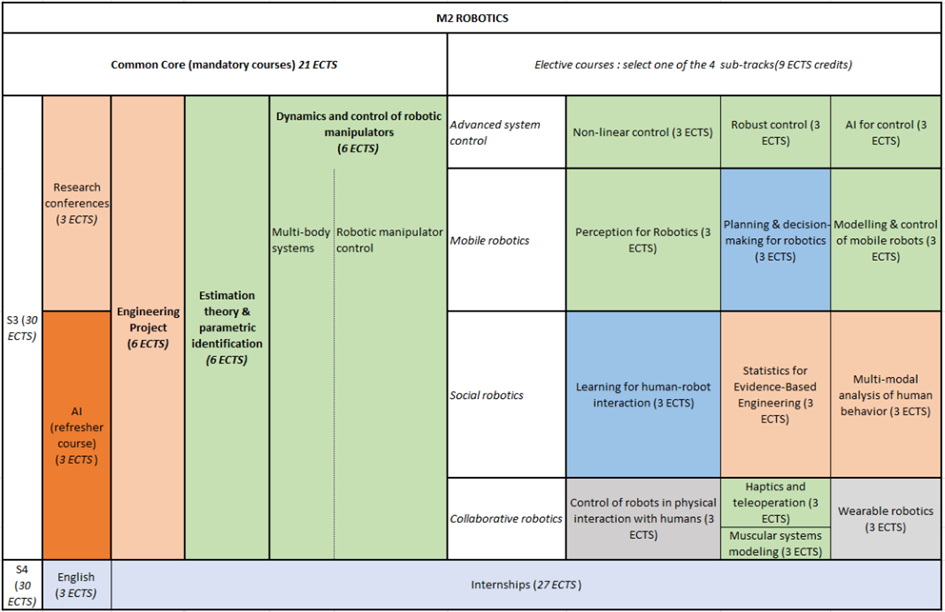
Additional course units may be taken outside of the study contract.
Validation
Traditional classes with documents and final exam.
Some courses use experimental and digital platforms as support for practical work or tutorials. In this case, practical work and tutorial grades are taken into account.
Benefits of the training
- Responds to strong industrial demand (robotics plan launched by the government to support the robotization of SMEs and SMIs), particularly in the development of embedded systems and robots where there is a need for increasing adaptability and autonomy (aeronautics, transportation, healthcare, etc.).
- Recognized in industrial and academic circles
- Original, topical, and multidisciplinary teaching and research areas
- Draws on renowned laboratories at partner institutions (Sorbonne University, ENSTA, Mines,)..
Career opportunities
The career opportunities for graduates of this program include research and development departments working on new products and processes, engineering departments, and mechatronics design offices in both the public and private sectors.
The areas of activity most specifically concerned by these opportunities are:
- mechanical and mechatronic engineering and manufacturing
- aerospace and aviation industry
- the automotive industry and transportation:
- the maintenance sector
- the education, research, and learning sectors
- the health technology sector
Continuing education
The training program is based on a set of Arts et Métiers laboratorieslaboratories, as well as partner institutions that enable students to prepare a doctorate within the framework of associated doctoral schools.
Admissions
Admission criteria
This program is intended for students with a background in engineering sciences who have completed their first year of the “ Master of Science ” program, as well as students in their final year at engineering schools as part of a dual-track program (particularly students from jointly accredited institutions: Arts et Métiers, ENSTA, Mines Paris, and Polytech-UPMC) or students who already hold an engineering degree. It is also open to international students who have received equivalent training.
- Required level
- Equivalent international level
- Level in French. If a test is required, specify which one and the minimum score to be obtained.
- English level. If a test is required, specify which one and the minimum score to be obtained.
Application deadline(s)
- Arts et Métiers student Arts et Métiers Bicursus: see internal assignment procedures
- Candidates outside Arts et Métiers June 30, 2021. The application form must be completed online
Arts et Métiers students Arts et Métiers dual degree programs must follow the internal application procedure and do not need to fill out the application form.
Partners
Industrial partners
PSA, Renault, EDF, Airbus Helicopters, ENGIE Ineo, CEA, SAFRAN, AIRBUS, Soft Bank (Aldebaran), Robotsoft, etc.
Academic partners
Sorbonne University, ENSTA, Mines Paris
Practical information
- Language of instruction: French
- Schedule: September through February: classes, followed by a Master of Science program
- Number of hours:
- ECTS credits: 60 ECTS
- Cost: See Tuition (Enrollment in Master of Science ) program)
- Training location(s): Paris (Arts et Métiers, Sorbonne University—Jussieu campus, École des Mines)
Contacts
- Arts et Métiers Campus Arts et Métiers Paris
- 151 Boulevard de l'Hôpital, 75013 PARIS
- Tel: 33 (0)1 44 24 64 58
Useful links
Renewing energy storage: Luca Rossini's challenge

After working in the oil industry, Luca Rossini became interested in energy storage and decided to pursue a Specialized Master's® in New Energy Management (SYSPEC) at the Arts et Métiers campus Arts et Métiers Lille.