Achieving successful industrial transformation through sustainable leadership
In order to train leaders in responsible industries, Arts et Métiers a comprehensive training program covering both scientific and technical fields as well as cross-disciplinary subjects. With the help of expert consultants in transformation support, through its subsidiary AMTALENTS, Arts et Métiers offers a customized training program to support industrial transformation in all its aspects by adopting a leadership stance: "Successful industrial transformation through sustainable leadership."
The objective of this unique course, "Successful Industrial Transformation Through Sustainable Leadership," is to strengthen your knowledge, techniques, and attitudes so that you can fully exercise your role as a leader of industrial transformation, creating lasting value for your company.
Training program: This program consists of an introductory module and nine optional advanced modules. It can be completed in its entirety or customized by selecting the modules that meet your needs.
Presentation of the modules
- Inaugural Module: INDUSTRIAL TRANSFORMATION AND SUSTAINABLE LEADERSHIP
- Module 1: LEADERSHIP, THE FOUNDATION OF SUCCESSFUL TRANSFORMATION
- Module 2: DEFINING AND IMPLEMENTING A COHERENT STRATEGIC PROJECT
- Module 3: BUILDING A SUSTAINABLE BUSINESS
- Module 4: ENGAGING YOUR ECOSYSTEM IN SUCCESSFUL CHANGE
- Module 5: DEVELOPING AND MAINTAINING THE RIGHT PACE FOR YOUR TRANSFORMATION
- Module 6: COMMUNICATING AUTHENTICALLY AND EFFECTIVELY
- Module 7: BUILDING WITH STAKEHOLDERS
- Module 8: NO SUCCESS WITHOUT THE RIGHT TEAM
- Module 9: MAKING FRUGAL USE OF NEW TECHNOLOGIES
Training objectives
Strengthen your knowledge, techniques, and attitudes (knowledge, know-how, and interpersonal skills) to fully exercise your role as a leader of industrial transformation, creating lasting value for the company.
Knowledge
- Mastering the culture and basic concepts of CSR
- Identify issues across the company's entire value chain: CSR opportunities, risks, and constraints and their impact on the industrial production chain.
- Understand the basic concepts of change management theory and organizational transformation.
Expertise
- Knowing how to leverage the various factors essential to the success of any transformation: technical, innovative, human, financial, sector-specific, governance, and organizational.
- Integrate feedback and best practices from digital transformation and immediately transfer them to industrial transformation in the context of energy and ecological transition.
- Enjoy an interactive learning experience where your own situations are explored among peers.
Interpersonal skills
- Get to know yourself better, identify your personal leadership style and areas for improvement
- Practice the six dimensions of leadership to be prepared for any situation.
At the end of the training, the trainee will have:
- Fully understood the role and function of a leader in industrial transformation in a CSR context.
- Identified relevant solutions, simple and effective tools.
- Experienced an interactive and educational experience where their own situations were explored and worked on.
- Developed an implementation plan with concrete milestones. Target audience and training access conditions:
Target audience
The training is intended for:
- Managers of very small businesses and small and medium-sized enterprises
- Senior executives of microbusinesses, SMEs, and mid-sized companies
- Industrial transformation project managers
Admission requirements
- Answer a questionnaire
- Attend one or two motivational interviews with the program managers.
Prerequisites: Have participated in a climate fresco and a 2-ton workshop (inaugural module).
In addition, to attend, it is recommended that you:
- Having held various positions in companies (public or private)
- Having managed a team
- Having managed a budget
- Have a good understanding of the business world
Duration and structure of the training program: The complete training program lasts 21 days, divided into 10 modules spread over 12 months.
Between each session, there is work to be done individually or in teams, on your own company and on case studies.
Training location
The training takes place in Paris, at theArts et Métiers ENSAM premises (151, boulevard de l’Hôpital, 75013 Paris). Learning expeditions will be organized in companies that may be located outside the Ile-de-France region.
Teaching resources
- The training will use the following teaching methods:
- Theoretical input in person and remotely (e-learning)
- Practical group workshops in person: sharing experiences, simulations, case studies, fun and educational group activities
- A digital platform for sharing experiences, work reports, additional content (articles, videos, etc.) and for maximum interactivity (digital community engagement tools).
- Individual progress plan
Formalization at the end of the training
At the end of the training, the trainee will have:
- An individual progress plan developed and launched, within one's own scope
- All course materials
- Implementation carried out individually and collectively.
Assessment: At the end of each module, a quiz will be administered.
SESSION DATE AND PRICE
- 1st session: November 20, 21, and 22, 2023
- 2nd session: December 12, 13, and 14, 2023
Price: €2,465 excluding tax
Speakers
 Isabelle Lefebvre: After 30 years in sales and general management roles in international communications groups, Isabelle Lefebvre has been a trainer at UPGY, a Qualiopi-certified organization for training activities. She is also a partner at Lugh & Co, a firm specializing in supporting executives and management teams.
She graduated from the Grande Ecole Engineering Programme at NEOMA Business School in1986 and earned her Coach & Team certification (RNCP Professional Coach through SIMACS) in 2010 from the Transformance Pro Institute.
 Xavier Baudard
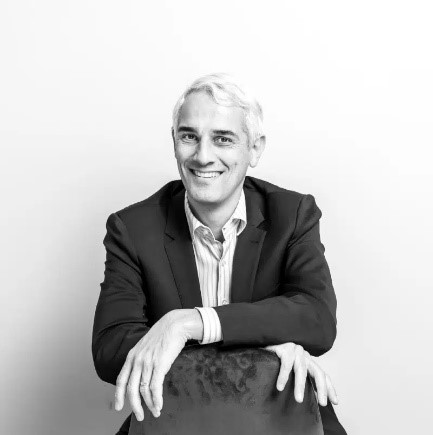
An Arts & Métiers engineer by training, Xavier Baudard began his career in the automotive industry (PSA, Valeo) in R&D. He then served as Technical Director (Sopemea), Director of Strategic Development (Alten), and BU Director (Segula Consulting). Since 2010, he has been supporting executives and management teams (coaching, training) in companies of all sizes and in all sectors.
He is co-founder and President of UPGY and Lugh & Co.
Disability
If you have a disability of any kind and would like to take this course, please contact us so that we can discuss what measures can be taken.
Registration link