Scientific coloring of campuses

Main image
Scientific coloring of campuses (banner)
Headline

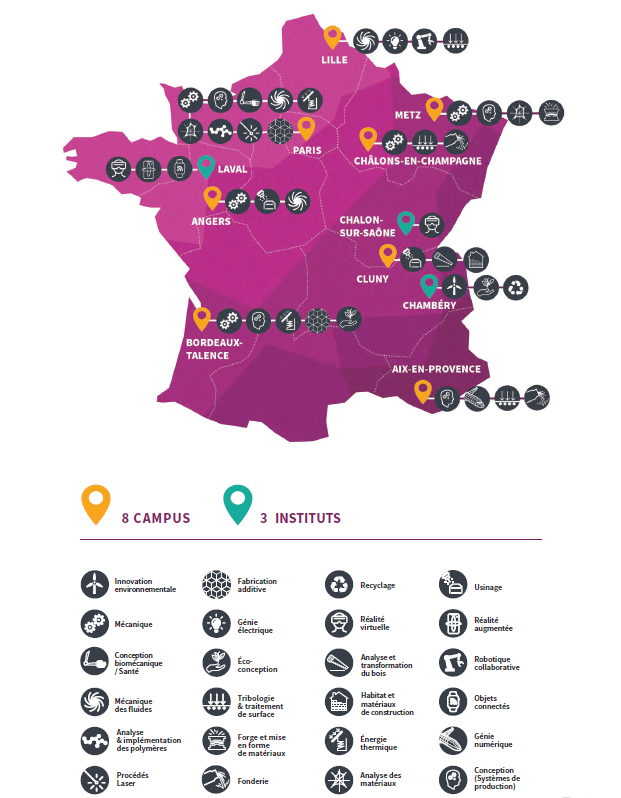
The color coding of campuses highlights the activities of the various Arts et Métiers sites in terms of research and commercialization. Each campus is designated as a leader in several key scientific areas forthe industry of the future, fromeco-design to foundry work, additive manufacturing, mechatronics, and materials analysis.

Main body text

"To increase our impact on manufacturers in each economic sector, we have carried out in-depth work on the scientific coloring of campus : a detailed mapping of campus skills that enables us to manage and develop their activities, in research and commercialization, and enabling the school to respond collectively and effectively to industrial issues that often require multiple skills,"explainsIvan Iordanoff

Eachcampus is designated as a leader in several key areas of expertise, such asmachining in Cluny, biomechanics in Paris, and forging in Metz. These areas of expertise are called upon to meet the needs of the five economic sectors. Around twenty key skills have been identified, representing 70% ofArts et Métiers scientific activities. Some of these are developing very rapidly, such as additive manufacturing, the digitization of processes and procedures, and collaborative robotics."

THE CAMPUS COLORING MAP

arts et métiers coloring card


Priority given to four economic sectors

Main image
Priority given to four economic sectors (banner)
Headline

Arts et Métiers positions Arts et Métiers as the preferred partner for four major areas of activity that make up the industry of the future, thereby contributing to the development of technological innovations. We discuss this with Ivan Iordanoff, Deputy CEO in charge of research and innovation.

Main body text

Transportation: "The transportation industry faces many challenges, both in terms of environmental efficiency and economic competitiveness. It is one of the sectors in which we are developing the most collaborations, in conjunction withthe Industry of the Future Alliance. Our research laboratories are involved in all aspects of modernizing processes and production lines, new materials, and the energy efficiency of new means of transport."

Energy: "Arts et Métiers extensive expertise in energy network management. This expertise is particularly useful in the case of energy sources with unpredictable output, which is characteristic of renewable energies such as wind power. Our scientific expertise also covers energy production machinery, with the aim of improving its efficiency. Energy storage is also a major challenge for this sector, and therefore a scientific challenge for our teams."

Health : "Health technologies are a particularly dynamic sector, rich in innovations driven by start-ups. Research activities focus in particular on the personalization of treatments for musculoskeletal disorders, which have obvious societal applications but are also, fortunately, issues that are increasingly being highlighted in an industry of the future that places people and quality of work at its center. Another key theme is tissue regeneration or restorative additive manufacturing, a futuristic topic that our teams are already working on."

Habitat:"Wood is one of the emerging materials for construction. It offers many advantages in terms of structure, thermal properties, and durability. Our research also focuses on additive manufacturing of materials. In concrete, for example, there is a need to create cellular microstructures capable of optimizing the thermal-mechanical combination."

Research in thearts et Métiers Network

Main image
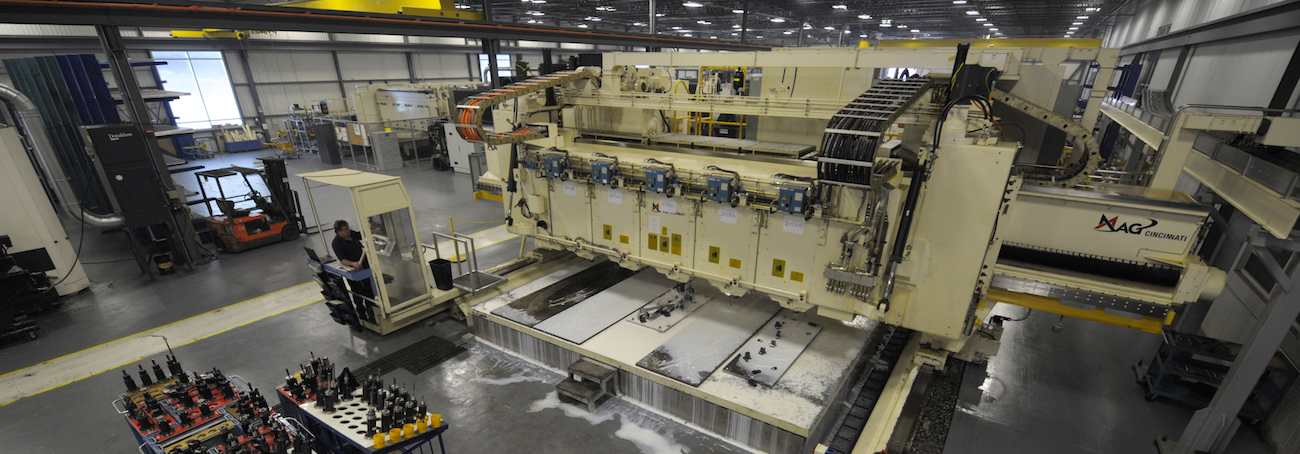
Image of a man operating a machine
Headline

In order to strengthen research in its fields of expertise, Arts et Métiers set up National Knowledge Networks. This initiative to pool skills aims to respond ever more effectively to the challenges of the industry of the future.

Main body text

Bringing together all relevant staff from the various Arts et Métiers campuses around a scientific theme developed across several sites Arts et Métiers this is the ambition of the National Knowledge Networks (RNC), launched by the institution in 2015.

The teams thus have an internal coordination structure on which to rely in order to pool their skills and work in synergy.

The 11 RNCs contribute fully to the development of Arts et Métiers research, both nationally and internationally. This enables the school to respond in a shared and consistent manner to research and partnership training projects (Openlab, Electric Aircraft, Industry of the Future, etc.) and to participate in initiatives planned within strategic partnerships—for example, with Safran, CEATech, Airbus, and KIT. The RNCs are thus at the forefront of large-scale technological and scientific projects.

Additional body text

RNCs at the heart of the school's international influence

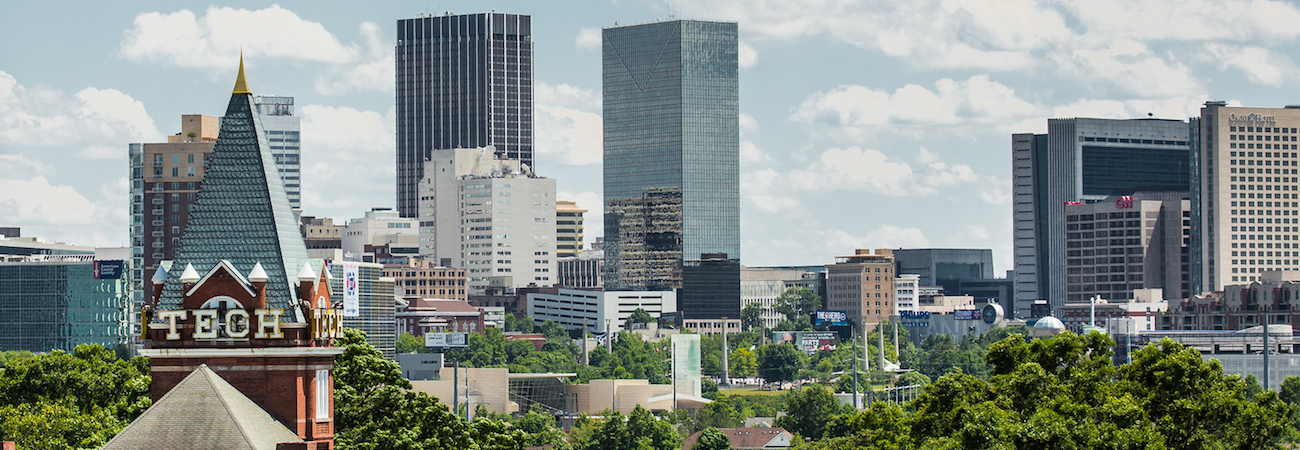
Arts et Métiers now Arts et Métiers on RNCs to promote its research at major scientific conferences. For example, at the end of October 2015, five RNCs participated in France-Atlanta, an event organized by the French Consulate and GeorgiaTech —the prestigious North American mechanical engineering university is a leading partner of the school. Several innovative topics were at the center of discussions between scientists and industrialists: innovative manufacturing processes, new materials for smart products, robots and humans, green factories and eco-responsibility, and digital factories.

The leading technology institution, in France and abroad

Main image
Leading technology institution, in France and abroad (banner)
Headline

Arts et Métiers strategy knowsArts et Métiers boundaries. International partnerships are formed on the basis of shared ambitions, for the benefit of students and research teams.

Main body text

Geographic mobility of students, welcoming foreign students and researchers to campuses campus , research projects conducted in collaboration with teams from other countries... Internationalism is experienced in many ways at École Arts et Métiers. This dimension is essential in order to meet the challenges of the industry of the future in terms of training and research. Students thus have the opportunity to enrich their skills by confronting different technological issues and placing their international mobility within the framework of their professional project, while research projects can benefit from complementary expertise.

Stronger relationships with top universities

Today, Arts et Métiers go even further by expanding its strategic project internationally. To achieve this goal, the school will strengthen its relationships with these leading institutions, focusing on the complementary nature of their areas of excellence.

This approach also benefits students participating in international exchange programs: they can choose the destination that best suits their academic program and career goals. International students, for their part, can take advantage ofArts et Métiers academic offerings, which are structured in accordance with international standards (Bachelor’s, Master of Science Ph.D.).

Meeting the challenges of the industry of the future

"We will also forge partnerships in geographical areas with significant innovation potential, such as Latin America and Southeast Asia. The focus will depend on the expectations of our laboratories, but also those of businesses, in order to meet their economic development challenges in these same areas."

The growth of the international network is therefore focused on student training, partnership-based research, and the expectations of industry. "The partnership between the Arts et Métiers campus Arts et Métiers Metz andthe Karlsruhe Institute of Technology in Germany is an interesting model. It is now being extended with the creation of a Franco-German institute for the Industry of the Future. Since 2016, research teams from both institutions have been meeting to identify common themes. The institute's objective is to strengthen the link between training and scientific production, and to provide a cross-border incubator and a Franco-German doctoral school."

More information

In figures

  • 145 partnerships with prestigious institutions in 38 countries
  • 88 dual degree opportunities offered to more than 400 students each year
  • 18 professors from around the world
  • More than 1,000 international students spread across the Arts et Métiers campuses