Paris campus incubator: GERARD FARM, an autonomous robot for green electricity thanks to animal waste!

Main image
Ethan VPP
Headline

Anne Gérard and her brother Jie Gérard co-founded GERARD FARM. Together, they designed a robot called Poopy, which helps outdoor farmers triple their income. How? The robot collects fecal matter so that it can be converted into energy through dry biomethanization, and this green electricity is sold. 

Main body text

Anne and her brother are NIMA (not from an agricultural background). They visited many farms, particularly dairy farms, with the initial idea of opening a cheese dairy. Good cheese requires good milk and a beautiful farm.

However, the reality is that farming and livestock breeding are currently difficult, low-paying, and unsustainable professions. The solution quickly became apparent: work on a project aimed at deploying autonomous green energy generation by utilizing the raw material resource that is animal waste from livestock farms.

Anne, an engineer from Grande Ecole Engineering Programme Arts et Métiers Grande Ecole Engineering Programme Arts et Métiers Class of 2021), has always been personally committed to fostering harmony between the animal and human worlds.

👉 Together with his brother, an artificial intelligence engineer, they are now incubated at the Arts et Métiers campus incubator Arts et Métiers Paris and recently won the Entreprendre pour demain award from the Sopra Steria Foundation-Institut de France!

Thanks to this award, the start-up GERARD FARM will receive €10,000 in funding, comprehensive support for the project and entrepreneurial methodology from Vianeo, and six months of incubation at Planetic Lab in Paris . A mentor from Sopra Steria will also provide support for the project throughout its duration.

Anne Gérard

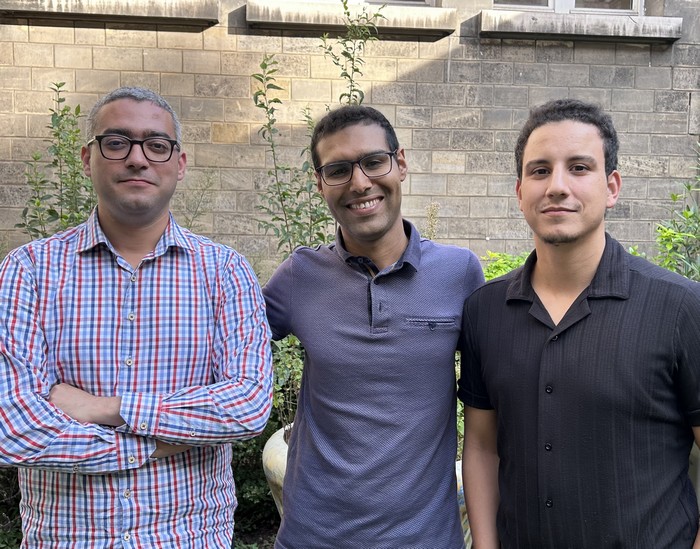
The GERARD FARM team

Additional images
Anne Gerard
Cycle-POOPY-ETHAN
Ethan-VPP
GERARD FARM Team
The GERARD FARM team

Postgraduate Specialization in Digital Industry & AI

Main image
AM Talents - Digital Industry & AI
Headline

Arts et Métiers Data ScienceTech Institute (DSTI) are combining their strengths and expertise to offer an innovative degree program focused on digital industry and artificial intelligence.

Main body text

This program responds to the observation that manufacturers currently need to be able to manage large amounts of data effectively, understand how data analysis and AI can contribute to business development, and know how to deploy these methods if they prove beneficial.

This program focuses on the practical application of data and AI in industry, combining theoretical knowledge with hands-on training. Students develop specialized skills in analytics, machine learning, and data management, preparing them for engineering roles in the digitalization of industry.

The aim of this program is therefore to offer training focused on the practical use of data and AI in industry, closely aligned with the issues faced by businesses, rather than training in purely technological aspects (how algorithms work, implementation, etc.).

The training takes place on a work-study basis, under apprenticeship or professional training contracts, with a theoretical component delivered through a hybrid teaching method combining distance learning and/or face-to-face teaching on campus, and a work placement component delivered according to the following schedule: 2 weeks at school / 2 weeks at the company, then 2 weeks / 3 weeks.

A significant portion of the courses are taught in English.

OBJECTIVES OF THE DIGITAL INDUSTRY & AI TRAINING COURSE

Upon completion of the training, graduates will be able to: 

  • Implement the steps necessary for the deployment of AI in industry:
    • Design and deploy distributed IT infrastructures to store and process massive amounts of data
    • Identify and evaluate the state of the art in artificial intelligence to develop innovative projects
  • Develop and justify specifications relating to the data, infrastructure, algorithms, and human-machine interactions involved.
  • Specify the characteristics of a digital twin and its potential contributions in a given context.
  • Build and develop a data analysis and processing approach for a defined objective.

Program structure

The Postgraduate Program in Digital Industry & AI is a one-year program designed for engineers nearing the end of their studies and practicing engineers who want to learn about the operational aspects of AI deployment. This program provides an overview of the necessary skills and key points of this deployment. It is delivered in an apprenticeship format, where students alternate between attending classes on campus or online for two weeks and working in a company for two or three weeks.

PREREQUISITES

  • Hold an engineering degree or an equivalent Master of Science degree Master of Science science or engineering. 
  • Minimum English level B2 according to the European reference framework

TARGET AUDIENCE

  • Engineers completing their studies
  • Engineer currently employed who wishes to learn about the operational side of AI deployment and gain a cross-functional overview of the skills and key points involved in this deployment.

EVALUATION METHODS

  • The training course lasts 400 hours.
  • Each course is assessed by means of an exam or an application project, depending on the context. 
  • Microsoft Industry Certification

OUTLETS

The program is pursued with a view to continuing a career as an industrial engineer and acquiring additional skills to perform one's duties, in order to be at the forefront of industrial digitization projects.

R&D Engineer - Data Scientist - Industry-Specialized Data Analyst - Design Office Engineer - Modeling & Simulation Engineer - Maintenance Engineer - Production Engineer - Quality Engineer - Logistics Engineer

RATE

  • Full course: €12,500
  • Training costs are covered by the company and/or the OPCO in the case of professional training and apprenticeship contracts.

CONTACT

ADMISSIONS

Accreditations

A leader in data and AI in France, DSTI School of Engineering offers a Bachelor's degree program at RNCP level 6. Our MSc programs are at RNCP level 7. They are also certified by 3IA Cote d'Azur. Finally, DSTI is Qualiopi RNQ accredited, confirming the quality of our training processes. The Qualiopi certificate can be downloaded by clicking on this link.

banner logo amtalents website arts and crafts

Remote video URL

AITech Ready Institutional Diploma

Main image
AITech Ready banner arts et métiers
Headline

Industrial systems are increasingly instrumented, and their digital twins enable real-time diagnostics and rapid, accurate predictions. These twins are built around complex models that often need to be reduced in order to be usable in real time.

Main body text

The AITech Ready program aims to develop the skills needed for model reduction and hybrid modeling of industrial systems in order to innovate in an international industrial business context.

After a period of theoretical training conducted remotely and in English, learners apply their knowledge in a mini-project supervised by an Arts et Métiers academic tutor. They are then mentored and monitored by the same tutor during a 4- to 6-month professional immersion program based on workplace training pedagogy (reflective analysis, progress monitoring, etc.).

AITECH READY TRAINING OBJECTIVES

Upon completion of the program, graduates will be able to develop water models of systems derived from engineering sciences, combining physical and data-based approaches, enabling real-time decision-making, rapid and accurate predictions, and preparation for the integration of the developed models into immersive environments.

To do so, he will need to: 

  • Acquire the scientific background, methods, and tools necessary to implement model reduction and machine learning techniques to build models.
  • Implement hybrid models, ready to be inserted into an immersive environment
  • Proposing innovations in an international industrial business context

PREREQUISITES

  • Holder of a Master of Science or equivalent) in science or engineering
  • Bachelor's degree (or equivalent) in science or engineering with at least 5 years of professional experience in the industrial field

TEACHING METHODS

The program employs a "learning by doing" approach, through academic projects and immersive placements in a company’s R&D department or a research laboratory. Distance learning courses and mini-projects at the Master of Science doctoral levels are offered alongside these immersive placements. All academic activities are conducted in English. 

  • The training will use the following teaching methods: 
  • Asynchronous distance learning (e-learning) theoretical input
  • Academic tutoring ( Arts et Métiers staff) and professional tutoring (host company and laboratory). One or more tutors will be assigned to each candidate to help them carry out their projects. 
  • A digital platform for sharing experiences, work reports, and additional information

TARGET AUDIENCE

  • Managers and technicians in need of upskilling
  • Recent graduates seeking their first professional experience

PROGRAM

The program is organized into four certificates. Two scientific and methodological certificates consist of at least 20 hours of distance learning and 30 hours of mini-projects supervised by an Arts et Métiers teacher-researcher Arts et Métiers in the field. The mini-project can be carried out in a company, research laboratory, or any other location chosen by the learner. 

  • Certificate 1: Model Reduction for Advanced Engineering, which aims to provide students with the methods and tools needed to implement model reduction techniques in engineering science systems. 
  • Certificate 2: Data-driven models for advanced engineering, which aims to provide students with the methods and tools needed to implement data-driven engineering science system models. 

Two certificates in personal and professional skills development consisting of a 4- to 6-month period of immersion in a company's R&D department or a research laboratory, supervised by an Arts et Métiers teacher-researcher Arts et Métiers in the field.

  • Certificate 3: Immersion period allowing students to discover a professional, cultural, and practical environment in order to develop the skills necessary to innovate through the implementation of the hybrid twin concept. 
  • Certificate 4: Same objective as the first immersion period, but the taxonomic level of the objectives is higher.

ASSESSMENT METHODS

Success in the certificates is validated by learning achievement assessment sheets.

CAREER OPPORTUNITIES

Corporate R&D engineers, doctoral thesis in the field of hybrid modeling...

DATE AND DURATION

Starting in September 2023 for 12 months.

TRAINING COSTS

  • Program registration (4 certificates): €12,500
  • Certificate enrollment: €3,900

CONTACT

ADMISSIONS

banner logo amtalents website arts and crafts