Joint laboratories

Main image
Joint laboratories (banner)
Headline

For Arts et Métiers, innovation is part of a collaborative dynamic. It combines the school's best scientific skills with the expertise of academic and industrial partners. These alliances are essential for meeting the challenges ofthe industry of the future.

Main body text

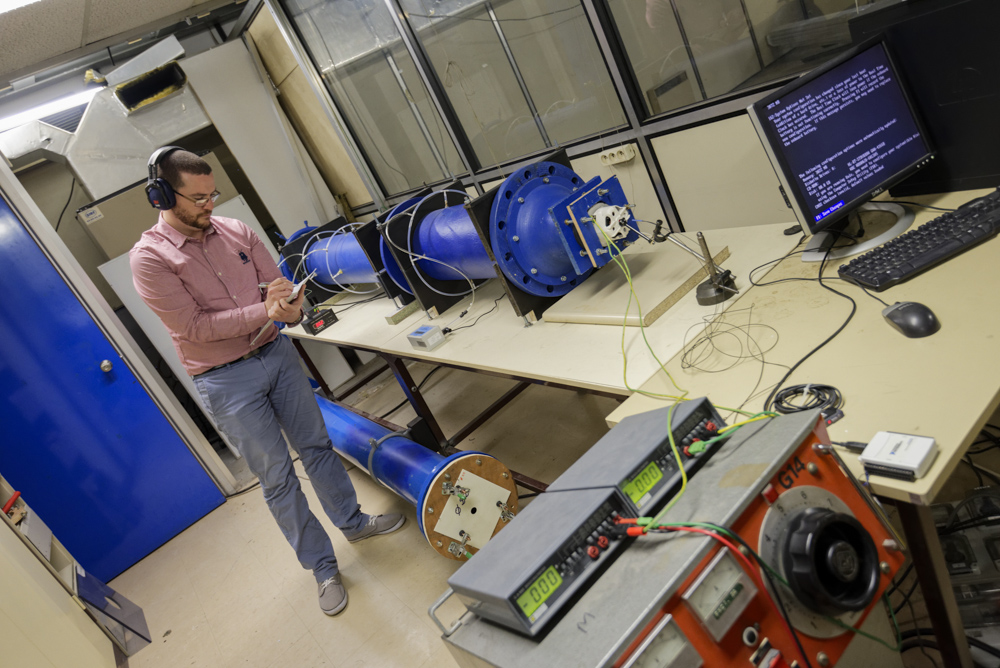
Pooling their strengths, several joint laboratories have been set up to develop research in cutting-edge fields: cutting tool machining techniques, with Saint Jean Industries (LUMIERE); beech wood peeling and veneering, with Brugère (BOPLI); an advanced electromagnetic modeling research code, with EDF R&D (Lamel); innovative materials and processes for the vehicle of the future, with PSA, CNRS, Georgia Tech, and the Luxembourg Institute of Science and Technology(OpenLab Materials and Processes); occupational risks, withthe National Research and Safety Institute (laboratory "Safe Design of Work Situations"); continuum mechanics, with the CNRS andthe Università Degli Studi Dell'Aquila (Coss&Vita); and automotive interactions and navigation, with Renault ( LiV).

Partnership-based research

Main image
Partnership-based research
Headline

The combination of expertise, at the heart of research.

Main body text

For Arts et Métiers, technological innovation relies on close and fruitful relationships with its academic and industrial partners. A collaborative strategy based on cutting-edge systems.

Transportation, energy, health, housing, production:Arts et Métiers scientific activitiesArts et Métiers dedicated to several challenges facingthe industry of the future, which are addressed by the institution's laboratories . "Our strategy is also based on complementary expertise," says Ivan Iordanoff, Deputy Director General of Research and Innovation. "In this context, Arts et Métiers partnerships with industry and educational and research organizations."

Strong involvement in competitiveness clusters

Seven joint laboratories have been created, dedicated to a variety of topics—from innovative materials and processes for the vehicles of the future to machining techniques and continuum mechanics. A teaching and research chair was created in 2014: Urban Mining. Bringing Arts et Métiers Chimie ParisTech, and Mines ParisTech, its work focuses on recycling and eco-design, specifically electrical and electronic equipment waste.

Thanks to its numerous locations, Arts et Métiers in many competitiveness clusters—thematic structures with international ambitions, located in the main innovation ecosystems. Several themes are prioritized, such as mechanics, energy, digital technology, and aerospace. The institution also partners with three technological research institutes (IRT) and an institute for energy transition (ITE).

Arts et Métiers devicesArts et Métiers industry

The partnership aspect of research is also based on the tools and systems put in place by Arts et Métiers. This is the case with technology platforms: all of its material and human resources in a specific field of engineering science are brought together in a single location, for the benefit of research teams and companies.

In order to meet the needs of industry, two structures within the institution play an essential role:the Carnot ARTS Institute (Research Actions for Technology and Society) and AMVALOR. The former draws on the expertise of 20 research laboratories—thoseArts et Métiers partner institutions—to offer a wide range of services, such as technological diagnostics and R&D studies. AMVALOR,Arts et Métiers research commercialization subsidiary, has been working since 2016 to identify the technological developments expected by companies in order to provide them with tailored solutions.  

Competitiveness clusters

Main image
Competitiveness clusters (banner)
Headline

The challenges facingthe industry of the future require the involvement of multiple players, combining their strengths around common objectives. Created in 2004 by the government, competitiveness clusters are fully involved in this drive for innovation.

Main body text

At the regional level, they bring together companies, research laboratories, and educational institutions around common themes such as energy, transportation, and digital technology. They thus play a key role in the development of innovative projects. Thanks to its diverse expertise and regional roots, Arts et Métiers of this collaborative approach as a member of several competitiveness clusters:

Dedicated to materials and processes, Materalia brings together more than 140 industrial and academic members. Located in the Grand Est region, the cluster has sites in Charleville-Mézières and Metz. Its projects focus on the materials of tomorrow, in terms of increased performance, weight reduction, functionality, and sustainable development. 

The only competitiveness cluster dedicated to global security, SAFE Cluster has nearly 600 members. Located in the Provence-Alpes-Côte d'Azur region, it focuses on several themes: resilient cities and territories, security and safety of sensitive infrastructure, defense, helicopters, satellites and airships, and autonomous systems.

Combining the Nouvelle Aquitaine and Occitanie regions, Aerospace Valley brings together a third of France's aerospace workforce and 8,500 researchers. Their skills are put to use in cooperative projects in several areas: aircraft, carriers, equipment and engines, energy, and autonomous aerospace systems.

Located in Loire-Atlantique, EMC2 operates in the field of advanced technologies, serving six sectors: aeronautics, naval, land transport, energy, boating, and equipment. The competitiveness cluster has close ties with a dynamic regional sector, that of mechanics and materials.

ViaMéca, located in the heart of the Auvergne-Rhône-Alpes region, is dedicated to innovation in the field of mechanics. With more than 150 members, the competitiveness cluster focuses its projects on four themes: surface engineering, advanced manufacturing processes, intelligent systems and robotics, and usage and service engineering.  

ASTech Paris Région is a key partner in several sectors—space launch, business aviation, propulsion, and equipment through innovation. With more than 260 members, it drives projects in various fields, including onboard energy, testing and instrumentation, materials and processes, propulsion, vehicle architecture, and equipment.

Located in Provence-Alpes-Côte d’Azur and Corsica, Capenergies draws on a network of more than 500 members to meet the challenges of the energy transition. The competitiveness cluster calls on their expertise in three areas: energy efficiency, energy systems adapted to islands and isolated areas, and carbon-free energy production.

iDforCAR is a competitiveness cluster covering the automotive sector in the Pays de la Loire and Brittany regions. Its focus is on vehicle electrification, sustainable development, and the diversification of forms of mobility. In particular, it supports the 3DMAT innovation platform to develop a digital sector dedicated to vehicles.

With a thousand members, Cap Digital aims to make the Île-de-France region a European benchmark for digital technology. It has two missions: developing R&D projects and creating an ecosystem that encourages start-ups and investors to meet. Cap Digital organizes the Futur en Seine festival, an annual event for the digital economy.

Located in Brittany, the Images & Networks competitiveness cluster focuses on digital technologies. Its members work on six themes: networks and the Internet of Things; big data and multimedia; digital security and trust; interactions, immersions, mixed realities; software and engineering; and the user as a collaborative producer.

The Burgundy Nuclear Cluster brings together more than 200 players in the French nuclear industry. It is active in several areas: eco-design and sustainability of nuclear components; testing of high-performance components; maintenance and decommissioning in hostile environments; nuclear concrete, civil engineering, and sensitive buildings.

In the Provence-Alpes-Côte d’Azur region, Optitec, with more than 200 members, drives innovation in the field of photonics. The technologies developed (lasers, optical fibers, imagers, light-emitting diodes, adaptive optics) are of interest to several sectors, such as energy, the environment, health, security, transportation, and space.

The SCS (Secure Communication Solutions) competitiveness cluster in Provence-Alpes-Côte d’Azur has more than 300 members covering the entire value chain of information and communication technologies. Its objectives focus on contactless technology, networks, mobile services, security, and digital identities.

Technology platforms

Main image
Technology platforms (banner)
Headline

Arts et Métiers high-level technology platforms at all of its sites. Each platform brings together all ofArts et Métiers material and human resources in a specific field of engineering science. The teams' skills are thus pooled around high-tech equipment, often on an industrial scale.

Main body text

Technology platforms contribute directly to relations between research laboratories and companies. The Inovsys platform ( Product and Prototype Design), located on the Aix-en-Provence campus, focuses on tackling a variety of industrial challenges, from optimizing a product or process to introducing new technology. It offers a wide range of cutting-edge equipment, including dynamic behavior analysis benches and virtual engineering tools.

Addressing industrial challenges

For example, seven Arts et Métiers research laboratories, spread across most campuses and with strong activities in the field of machining, have joined forces to form a National Knowledge Network called "Uppercut." The network is based on a multi-site platform that brings together resources dedicated to advanced machining technologies in order to better respond to industrial challenges such as the machining of difficult-to-machine materials, the development of machining aids, and analytical and digital modeling of the cutting operation. This platform enables the coordinated mobilization of resources for large-scale projects.

Another example among many is the Usine agile (agile factory) technology platform (industrial robotics), set up on the Lille campus: it was created to meet the challenges of flexible production in the automotive, aeronautics, and rail industries. Assistance with heavy lifting, collaborative work robots, and force measurement platforms are among the equipment available to researchers, students, and manufacturers.

14 technology platforms spread across the country

The Carnot ARTS Institute, which brings together 20 research laboratories—thoseArts et Métiers academic partners—now relies on 14 technology platforms.

  • Machining processes
  • Additive Manufacturing and Laser Processes
  • Foundry, Forge, and Plastic Deformation
  • Composites & Polymers
  • Wood
  • Surface treatments and functionalizations
  • Fatigue - shock - Service life
  • Product and prototype design
  • Simulators and virtual reality
  • Industrial robotics
  • Biomechanics
  • Turbomachinery - Energy systems
  • Electrical energy management
  • Large Wind Tunnels
  • Cassiopeia

SPECIALIZED MASTER'S DEGREE IN RISK MANAGEMENT

Main image
SPECIALIZED MASTER'S DEGREE® MGR - RISK MANAGER (banner)
Headline

Created in 2000 and the result of close collaboration with businesses, the Specialized Master's® in Risk Management is in line with the philosophy that guided its creation: only a cross-functional, multidisciplinary, and integrated approach to risk, based on solid scientific foundations, can enable us to face current uncertainties and support business development.

Download the training brochure - Arts et Métiers
Main body text
Download the training brochure - Arts et Métiers

Major uncertainties affect all economic sectors, in terms of the environment, society, and governance. As a result, risk and crisis management has become essential in all organizations seeking trained and skilled employees who are ready to face this emerging new world. The Specialized Master's in Risk Management trains these professionals.

Led by teacher-researchers, it draws on both the latest scientific findings in the field and the best professional practices of some forty contributors working in industry, banking, insurance, and consulting.

100% of its graduates are employed within six months of completing their training. 

PROGRAM

Content

The training program is structured into five skill sets, which are taught from early October to late March:

  • BLOCK 1 - Designing a comprehensive risk management policy consistent with the organization's strategy and activities
  • BLOCK 2 - Managing the organization's operational risks (industrial, professional, and environmental)
  • BLOCK 3 - Overseeing financial assessment and financial and insurance coverage of the organization's risks
  • BLOCK 4 - Leading crisis management and business continuity management for the organization
  • BLOCK 5 - Leading the rollout of a global risk management strategy

After each module, a roundtable discussion between practitioners and faculty members is organized on a specific topic. A field trip allows students to put what they have learned into perspective with the realities of the business world.
Trainees participate in the annual conference ofAMRAE (Association of Risk and Insurance Managers in Business). A week-long seminar in various companies is organized abroad.

CALENDAR

  • Duration: 420 hours of training
  • Teaching period: October/May – alternating between two weeks at school and two weeks in a company
  • Professional period: June/September – full-time in a company

ASSESSMENT METHODS

The assessment is based on the risk manager competency framework defined in the National Directory of Professional Certifications. It is based in particular on the following exercises:

  • Group projects
  • Professional scenarios
  • Written and oral summary exercises
  • Case study
  • Meeting facilitation
  • Thematic summary note in English on the seminar abroad
  • Professional thesis

Graduation rate: 87%

KEY FEATURES 

OUTLETS

Professions

  • Companies: Consulting firms, industrial companies, banking and insurance sector.
  • Functions: Risk manager, ERM consultant, Operational safety engineer, Risk management manager, HSE manager, Insurance underwriter, Operational risk officer, etc.

100% of graduates find employment within six months of completing their training. One-third of them work in industry, one-third in banking, finance, or insurance, and one-third in consulting.

Industrial partners

Aon, Groupe Bel, CEA, Crédit Agricole, Crisotech, Diot-Siaci, EDF, Electra, EY, Fresenius Medical Care, Hannover Re, HDI Global SE, INRS, IRSN, Kyu, onepoint, RATP Group, SCOR, Sonepar, Veepee.com, Verlingue, Verspieren.

Academic partners

Arts et Métiers, Ecole Normale Supérieure de Rennes, The American College of Greece, CNAM, University of Evry, PolyTech'Grenoble, University of Paris Est-Créteil

Employment rate: 100% after 6 months

Skills acquired

  • Formalize risk appetite and decision-making in uncertain situations, taking into account associated cognitive biases.
  • Identify the organization's risks (financial, industrial, environmental, and professional) and analyze them (risk mapping).
  • Design risk management processes with associated indicators
  • Propose risk management solutions (technical, organizational, insurance, or financial)
  • Managing crises and business continuity
  • Implement the risk management system 

ADMISSION REQUIREMENTS AND PROCESS

PUBLIC

  • Employees
  • Students
  • Job seekers

PREREQUISITES

  • Engineering or university degree (5 years of higher education)
  • Bachelor's degree with at least 3 years of professional experience
  • Equivalent foreign degree
  • Possible exemption

ADMISSION PROCESS

Recruitment panel

  • February 10, 2026: selection interview (1st session)
    • Deadline for receipt of applications: January 27, 2026
  • March 17, 2026: selection interview (2nd session)
    • Deadline for receipt of applications: March 3, 2026
  • April 20, 2026: selection interview (3rd session)
    • Deadline for receipt of applications: April 6, 2026
  • May 18, 2026: selection interview (4th session)
    • Deadline for receipt of applications: May 4, 2026
  • June 15, 2026: selection interview (5th session)
    • Deadline for receipt of applications: June 1, 2026
  • July 6, 2026: selection interview (6th session)
    • Deadline for receipt of applications: June 28, 2026

Teaching methods

The training is work-study (2025-2026 schedule) with an average of two weeks in the company and two weeks on campus until the end of May, followed by a four-month full-time period in the company between June and September. During the course periods, there are also company visits, participation in AMRAE meetings, and a seminar abroad.

Accessibility

This training course may be accessible to people with disabilities. If you are affected, please contact us to see if specific support can be provided.

TRAINING COSTS

  • €14,000 not subject to VAT
    These fees include classes, written materials, and educational support.
    Application fee: €75
  • Training may be eligible for funding depending on the trainee's situation and various criteria.
    Several solutions are available: Professional training contract, Apprenticeship contract, Transition Pro, CPF, Pôle emploi, etc. To find out what funding you are eligible for and how to access it, please contact us by email at:mgr@ensam.eu

Program language: English & French

ECTS credits: 75

RNCP: 38925

Contacts

  • Program Director: Marc Lassagne - Email:mgr@ensam.eu / Tel: +33 (0)1 44 24 63 03
  • Address: 151 Boulevard de l'Hôpital, 75013 Paris 

logo am talents arts and crafts specialized master's degrees

Remote video URL

SPECIALIZED MASTER'S DEGREE® MMQ - QUALITY MANAGER

Main image
SPECIALIZED MASTER® MMQ - QUALITY MANAGER (banner)
Headline

The first Specialized Master's® program created at Arts et Métiers 1985, its objective is to train operational managers capable of leading, implementing, and taking responsibility for a Quality Management system, combined with a continuous improvement program.

Eduniversal Ranking 2025 - Arts et Métiers
Main body text
Download the training brochure - Arts et Métiers

The Specialized Master's Degree in Quality Management, created in 1986 at ENSAM, is the oldest quality management program in France.
Beginning with a theoretical component during which master's students interact with more than 60 speakers from all sectors, the program allows them to develop their skills during a six-month professional thesis.
The program now has more than 700 graduates, working in all sectors of activity in France and internationally, ranging from industry to services and public bodies.

PROGRAM

Content

The training is full-time and takes place as follows:

A/ SKILLS ACQUISITION

From late September to late February: 400 hours of classes, taught in French at the Arts et Métiers campus Arts et Métiers Paris, followed by written exams:

  • MODULE A: QUALITY FUNDAMENTALS AND CERTIFICATION (78 hours)
  • MODULE B: LEAN MANAGEMENT AND SIX SIGMA: AN INNOVATIVE APPROACH TO QUALITY (48 hours)
  • MODULE C: QUALITY-BASED PROJECT MANAGEMENT (75 hours)
  • MODULE D: RISK MANAGEMENT AND QUALITY TOOLS (54 hours)
  • MODULE E: PEOPLE MANAGEMENT AND COMMUNICATION (48 hours)
  • MODULE F: QUALITY AND FUTURE PROJECTS (51 hours)
  • MODULE G: PROFESSIONAL PROJECT MANAGEMENT AND LEADERSHIP (46 hours)

B/ PROFESSIONAL THESIS

This is a full-time professional assignment in a company or organization. It involves writing a document and giving a presentation. The Master's student is mentored by a company manager and anArts et Métiers academic tutor. It takes place as follows: one week in November, one in December, and one in January, then full-time from March for six months.

No gateway is possible between the different blocks.

Educational objectives 

  • Train quality managers and functional and operational executives who are capable of leading and implementing a quality improvement program in a small or medium-sized enterprise or taking responsibility for a quality management activity in a large company (quality director).

CALENDAR

  • Duration: 400 hours of training
  • Teaching period: September/February
  • Professional period: March/September

ASSESSMENT METHODS

  • Written exam on theoretical knowledge (module-based exam)
  • Submission of a "Professional Thesis" document (approved by a supervisor)
  • Opinion of the partner company, support for the professional thesis
  • Defense of the professional thesis before a jury

Graduation rate: 96%

KEY FEATURES

  • Expertise of the faculty and numerous corporate partnerships
  • Ranked 2nd in the Eduniversal 2025 and 2026 rankings of the best Master’s, MS, and MBA programs in the quality category
  • Supervision/tutoring of the professional thesis project by a teacher from the LCPI laboratory
  • Very active alumni association
  • Organization of dedicated conferences and company visits each year
  • Diversity in promotion: recent graduates and experienced executives, international recruitment
  • The first French training course in quality management (1986)
  • Active teaching methods: group work, project-based learning
  • MS has been ISO 9001 V 2015 certified (since 2000).
  • Extensive network of companies: candidates are put in touch with numerous companies in all fields to help them choose their professional thesis topic.
  • 8.2/10 - Reviews of MS Quality Manager

OUTLETS

Professions

Quality management consultant, Quality manager within a company, Quality director, Project manager...

Industrial partners

Acergy. Actemium. AFNOR. Airbus. ALSTOM. Areva. BMW. Cartier. Palace of Versailles. Culligan. DGA. EDF. Faurecia. HR Access. Hutchinson. INSERM. IRSN. L’Oréal. Logica. Messier Bugatti. Ministry of Defense. Nuxe. Orange. Parrot. Plastic Omnium. PSA Peugeot Citroën. RATP. Renault. SAFRAN. Sanofi. Saint Gobain. SNCF. Stallergenes. Thalès. Valéo.

Partners

Employment rate after 6 months: 100%

SKILLS ACQUIRED

Quality Management Tools and Methods

ADMISSION REQUIREMENTS AND PROCESS

PUBLIC

  • Employees
  • Students
  • Job seekers

PREREQUISITES

  • Engineering or university degree (5 years of higher education)
  • Bachelor's degree with at least 3 years of professional experience
  • Equivalent foreign degree
  • Possible exemption

ADMISSION PROCESS

Teaching methods

In-person, 6 months of theoretical training and 6 months of immersion in a company through an internship or professional training contract, when conditions allow.

Accessibility

This training course may be accessible to people with disabilities. If you are affected, please contact us to see if specific support can be provided.

Bridge program and/or equivalency

Graduates can continue their studies at the doctoral level.

TRAINING COSTS

  • €12,500 not subject to VAT
    These fees include classes, written materials, and educational support.
    Application fee: €75
  • Training may be eligible for funding depending on the trainee's situation and various criteria.
    Several solutions are available: Professional training contract, Transition Pro, CPF, Pôle emploi, etc. To find out what funding you are eligible for and how to access it, please contact us by email at:ContactAMTALENTS@ensam.eu

Program language: French

ECTS credits: 75


Learn more

logo am talents arts and crafts specialized master's degrees

SYSPEC SPECIALIZED MASTER'S DEGREE® - MANAGER IN NEW ENERGY MANAGEMENT

Main image
SPECIALIZED MASTER® SYSPEC - MANAGER IN NEW ENERGY MANAGEMENT (banner)
Headline

Offered jointly by two engineering schools in Lille (Hautes Etudes d'Ingénieurs and Arts et Métiers), the Specialized Master's® in New Energy Management offers you the opportunity to acquire a high-level technical specialization in managing solar, wind, and marine renewable energies and their integration into smart grids .

Main body text

The program was ranked No. 9 in the Mobility and Transportation category of the EDUNIVERSAL ranking of the best Master's, MS, and MBA programs for 2024.

Program

Theoretical training (academic sequence) 

400 hours of training applied to case studies and site visits, including three specific modules and a mini-project, delivered at the Arts et Métiers campus Arts et Métiers Lille (from October to March).

> Module 1 – Decentralized production sources: wind, solar, and new energies (110 hours)

  • EU 1.1: Wind power systems (from blade to outlet)
  • EU 1.2: Solar thermal and photovoltaic systems
  • EU 1.3: Production of new energies (hydropower, marine renewable energies, biomass, methanization, and multi-source hybrid systems)

 Upon completion of Module 1, graduates will be able to:

  • Understanding how decentralized energy production technologies work and mastering them
  • Mastering the tools to design a decentralized energy production system
  • Propose technical and economic selection criteria based on specifications
  • Operate and maintain a decentralized energy production facility
       

> Module 2 – Energy transmission, distribution, and storage networks: towards Smart Grids (110 hours)

  • EU 2.1: Energy solutions, waste energy recovery, and multi-fluid networks
  • EU 2.2: Electricity transmission and distribution networks
  • EU 2.3 Energy Storage and System Services

Upon completion of Module 2, graduates will be able to:

  • Understanding how electrical energy transport and distribution networks operate, with or without decentralized production
  • Sizing a network and its protections for a given application
  • Identify the impact of decentralized production on networks
  • Sizing and selecting a storage solution in order to offer a system service within the framework of specifications
        

> Module 3 – Energy Management (110 hours)

  • EU 3.1: Continuous improvement methodology (Plan-Do-Check-Act) - Consumption measurement and control - Real-time energy management tools - Energy review and audit
  • EU 3.2: Energy supply solutions: networks, non-renewable and renewable energies
  • EU 3.3: Optimal energy consumption: Smart Energy Automation equipment

Upon completion of Module 3, graduates will be able to:

  • Apply a continuous improvement methodology to prepare for and support an ISO 50001-certified energy audit and implement energy management within the company (consumption measurement and control, real-time energy management).
  • Identify equipment with optimal energy consumption for the working environment (high-efficiency, energy-saving equipment and devices that enable Energy Demand Management).
  • Define an Energy Solutions Action Plan incorporating global energy architectures (electricity and multi-fluid networks, primary, non-renewable, and renewable energies) as well as optimized equipment management.

> Module 4 – Mini Project: Energy Production and Management (70 hours)

Practical training (industrial sequence) 

  • Six-month operational internship in a company from April to the end of September.
  • Completion or monitoring of a project leading to the writing of a professional thesis.

CALENDAR

  • Duration: 400 hours of training
  • Teaching period: October/March
  • Professional period: April/September

ASSESSMENT METHODS

  • Continuous assessment of knowledge and learning outcomes, written exams, and defense of a professional thesis before a jury.
  • Graduation rate: 96%

KEY FEATURES 

  • A program accredited by the Conférence des Grandes Écoles
  • A partnership with EDF R&D, Engie Green, and RTE
  • 45% of professional speakers
  • Innovative industrial resources to support training
  • Training backed by research from the L2EP laboratory
  • Ranked 6th in the Eduniversal 2026 ranking of the best Master’s, MS, and MBA programs in the Renewable Energy category
  • Company satisfaction rating: 4.2/5

OUTLETS

Professions

Most graduates join large corporations and their subsidiaries in the traditional, fossil fuel, and renewable energy sectors (solar, wind, etc.) and in energy efficiency, but also in SMEs and local authorities.

The new energy management specialist will work in all industrial sectors concerned with energy savings. They may be responsible for the following tasks:

  • Project manager and head of research centers, capable of designing and building multi-energy production facilities
  • Specialist engineers, operational center managers, likely to operate multi-energy production facilities and supervise these systems
  • Operational managers capable of leading and implementing energy management in a small or medium-sized enterprise (SME), or taking responsibility for optimized energy and equipment management in a large enterprise.
  • Advisors to institutional decision-makers on technological choices in a given economic or societal context

Companies that are hiring

EDF Group (EDF R&D, EDF EN, ERDF, RTE, EDF Optimal Solutions), the Euraénergie campus - ATEE (Association Technique Énergie Environnement - Technical Association for Energy and the Environment) - the ENERGIE 2020 regional center of excellence - the MEDEE research center on Energy Management for Electric Drives - Cluster of regional companies providing solutions for energy efficiency PM3E, Maïa Eolis

Employment rate: 90%

SKILLS ACQUIRED

Trained executives must be able to work in the various fields found in energy management and operations. More specifically:

  • Assess needs and perform technical and economic analyses of existing systems
  • Recommend changes with sustainable development and energy saving objectives by implementing Energy Management in the company.
  • Design all or part of these systems, integrating production, distribution, storage, and management.

ADMISSION REQUIREMENTS AND PROCESS

PUBLIC

  • Employees
  • Students
  • Job seekers

PREREQUISITES

  • Engineering or university degree (5 years of higher education)
  • Bachelor's degree with at least 3 years of professional experience
  • Equivalent foreign degree
  • Possible exemption

ADMISSION PROCESS

Teaching methods

In-person, 6 months of theoretical training and 6 months of immersion in a company through an internship or professional training contract, when conditions allow.

Accessibility

This training course may be accessible to people with disabilities. If you are affected, please contact us to see if specific support can be provided.

Bridge program and/or equivalency

Graduates can continue their studies at the doctoral level.

TRAINING COSTS

  • €12,500 not subject to VAT
    These fees include classes, written materials, and educational support.
    Application fee: €75
  • Training may be eligible for funding depending on the trainee's situation and various criteria.
    Several solutions are available: Professional training contract, Transition Pro, CPF, Pôle emploi, etc. To find out what funding you are eligible for and how to access it, please contact us by email at:ContactAMTALENTS@ensam.eu.

Program language: French

ECTS credits: 75

Contacts

François Gruson and Marcello Meldi, training managers: ms-syspec.lille@ensam.eu

Address: 8, Boulevard Louis XIV - 59046 - Lille

logo am talents arts and crafts specialized master's degrees

Remote video URL