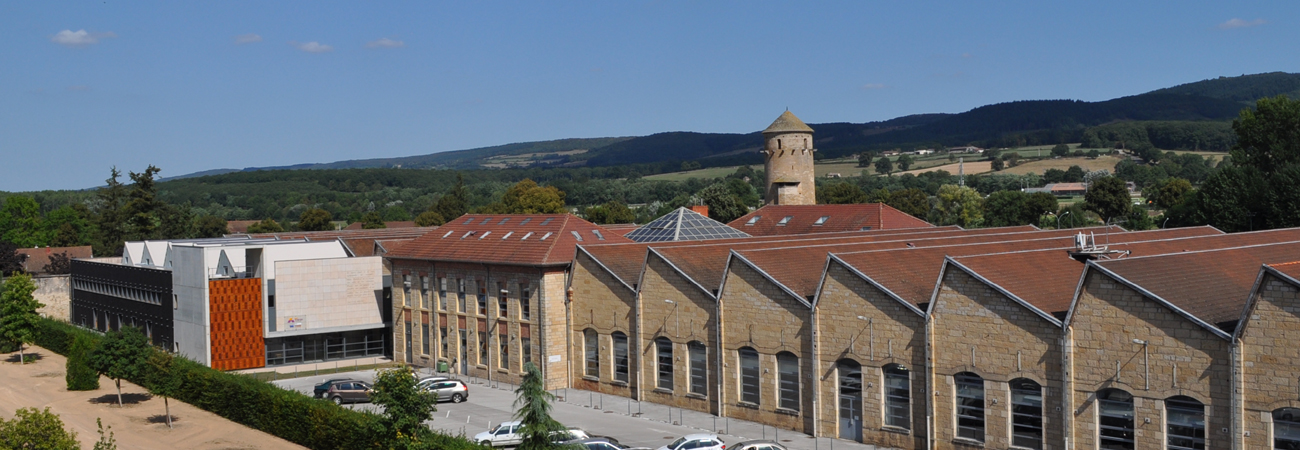
Arts et Métiers Engineer Arts et Métiers Environment and Risk Management (EGR) - Chambéry Institute

Main image
Arts et Métiers Engineer Arts et Métiers Environment and Risk Management (EGR) - Chambéry Institute (banner)
Headline

Engineer Arts et Métiers, specializing in Environment and Risk Management (EGR).

This program is accredited by the Commission des Titres d'Ingénieur (CTI) and has received the EUR-ACE label.

Main body text

EDUCATIONAL OBJECTIVES

Environmental and Risk Management Engineers (EGR) are responsible for preventing industrial and environmental risks (protecting infrastructure, property, and the environment) and occupational risks (health and safety in the workplace).
Their extensive scientific knowledge enables them to participate in manufacturing processes and product development, focusing on innovation and eco-design.

The EGR engineer is capable of:

  • Ensuring the safety of people and resources, respect for the environment and compliance with regulations.
  • Integrate risk management into overall management,
  • Act as a liaison between the company's various contacts,
  • Contribute to the development of production processes: energy management, clean processes, etc.
  • Integrate the product approach: innovation, eco-design approach, and life cycle.

PROGRAM

Theoretical training: 1,700 hours of academic training spread over 3 years in 5 teaching units:

  • EU 1 "Engineering Sciences": Chemistry, Mathematics, Biology/Biochemistry, Materials, Strength of Materials, Heat Transfer, Computer Science, Mechanics, Fluid Mechanics, Operational Safety, Probability and Statistics, Reliability Analysis
  • EU 2 "Specialized Sciences - Industrial Risks": Natural Risks and Industrial and Technological Risks, Environmental Analysis, Environmental Aspects, Environmental Law, Ecotoxicology
  • EU 3 "Specialist Sciences - Occupational Risks": Labor law, Occupational risks, Accident prevention, Ergonomics, Accident cost management, Work machinery and equipment, Exposure to chemical agents, Radiation protection, Acoustics, Vibration
  • UE 4 "Specialized Sciences - Circular Economy": Carbon footprint, Environmental control of processes, Life cycle analysis, Eco-design, End of life of products and recycling, Discharge into water, air, and soil
  • EU 5 "Management Sciences and Management," including English: Law , Economics, Business Organization, Cognitive Sciences, Communication, Project Management, Sustainable Management, Business Management, Quality Management, Integrated Management Systems
     
Hours of EGR teaching

TEACHING METHODS

Work-study program with periods spent in the workplace and periods spent at school. In-person lectures and tutorials.

In-company training with a gradual shift to work-study (one week/one week at the start of training, increasing to three weeks/three weeks in the final year), and periods of full-time study.
During these industrial sequences, three projects (Risk Analysis, Co-construction and Implementation of an Action Plan, Engineering Project) will be carried out. Each will be the subject of a thesis and an oral defense.
Combining technical, economic, and human components, these projects are part of a process of progress in risk management and prevention.

Admission

Training is available through apprenticeships or continuing education.

Find all the information you need about the admissions calendar, admission requirements, and eligible degrees at Admissions Specialized Engineering Programs | Arts et métiers

CAREER OPPORTUNITIES

  • Health, Safety, and Environment Engineer
  • Environmental and sustainable development engineer
  • Design, consulting, and audit engineer in risk management and prevention
  • Product and process eco-design engineer

Sectors of activity: metallurgy, electronics, energy distribution, chemicals, pharmaceutical production, agri-food, construction, transportation, etc.

STUDENT RESULTS AS OF SEPTEMBER 2025*

• Graduation rate: 75%
• Exam participation rate: 100%
• Extension rate (additional time to acquire missing skills): 21%
• Dropout rate due to changing employers: 33%
•    Rate of notifications of program completion/interruption during training: 8%
• Rate of continuation of studies: Figures to be released
• Rate of job placement: Figures to be released

*Find data on past promotions on the Data Observatory page:
https://artsetmetiers.fr/fr/observatoire-des-donnees 

BRIDGE PROGRAM AND/OR EQUIVALENCY

Graduates may continue their studies toward a Ph.D., MBA, Master of Science , or Specialized Master's.

INTERNATIONAL MOBILITY

12 weeks mandatory as part of the degree program.

ACCESSIBILITY FOR PEOPLE WITH DISABILITIES

This training course may be accessible to people with disabilities. If you are affected, please contact us to see if specific support can be provided.

TUITION FEES & CHARGES

  • Training cost: €11,000/year
  • Under the apprenticeship contract, tuition is free and apprentices receive remuneration. The cost of training is covered by the OPCO and the company, where applicable.

ACADEMIC PARTNERS

Students are enrolled at the apprentice training center (CFA), AMTALENTS, a subsidiary of the Arts et Métiers group Arts et Métiers to work-study programs and vocational training. 

INDUSTRIAL PARTNERS

Enedis - Framatome - Solvay - Eiffage - Saint Gobain - Tefal - Bayer - EDF CNPE Tricastin - Brioche Pasquier - CEA Alduc - Dassault Aviation - CEA INES - AERE - MTB Group - Compagnie Nationale du Rhône - Air Liquide - MND France - Schneider Electric Industries - Caterpillar - Arkema France - Tradival - PSM 73 - Sila - Grid Solutions- Crea - SATELC - Cogifluid - Montabert - Technolabo Services TLS - ANETT NBD - ADS - EDF - Orano CE Tricastin - Roch Mécanique- Adhex Technologies - Clyde Union Pumps - ARO Welding Technologies

RECRUITMENT - PREREQUISITES

The program is accessible through apprenticeship or continuing education.
Admission requirements:

  • Hold a DUT, BUT, or BTS degree in a scientific or technical field, or be a student in a scientific or technological CPGE program. For example: TSI preparatory class.
  • Or be an employee in a company to access this training through continuing education.
  • Be under 30 years of age on the date of signing the apprenticeship contract, unless an exception is provided for by law. law.
  • Be accepted by the jury after review of the application and interview.

Applications open on January 15, 2026


2026 recruitment calendar


>>  Inscrivez-vous en cliquant ici  <<

LOCATION

The theoretical training takes place atthe Arts et Métiers Institute Arts et Métiers Chambéry, with the exception of the second semester, which is held at the Arts et Métiers campus Arts et Métiers Cluny.
Arts et Métiers Institute in Chambéry
Savoie Technolac
4 rue du Lac majeur
73375 Le Bourget du Lac

Accommodation information and eco-mobility information

NUMBER OF CREDITS ALLOCATED

180 ECTS (including 80 ECTS for professional modules)

RNCP code - 39166

LEARN MORE


Remote video URL


banner logo amtalents website arts and crafts


logo - state-accredited engineering degree AND Master of Science degree

Engineer Arts et Métiers, specializing in Energy Engineering, Paris campus

Main image
Engineer, Arts et Métiers, specializing in Energy Engineering, Paris campus (banner)
Headline

The energy engineering program trains engineers in the fields of energy production, conversion, and supply over a three-year period, alternating between theoretical training and practical training in a company.

This program is accredited by the Commission des Titres d'Ingénieur (CTI) and has received the EUR-ACE label.

Main body text

Educational objectives

Energy engineers are energy generalists. They are involved in everything from drafting specifications for energy optimization studies to managing energy production systems and planning their operation. They also oversee project management.

Two options are offered in this program:

  • Nuclear engineering
  • Renewable energy

Program

Theoretical training: 1,800 hours

  • Engineering sciences
    • Applied mathematics, industrial computing, materials selection, mechanical systems dynamics, materials strength, electrical energy
  • Energy process engineering
    • Thermal engineering, thermodynamics, automation, applied acoustics, air conditioning, heat pumps, fluid mechanics, modeling, simulation, aerodynamics, turbomachinery, industrial risks, legislation
  • Management Sciences and Communication
    • Project management, contract law, general business organization, business management, industrial marketing
  • Nuclear Engineering Option
    • Materials, nuclear physics, neutronics, safety, radiation protection.
  • Renewable Energy Option
    • Hydropower, solar power, wind turbines, cogeneration, geothermal energy, biomass, smart grids

Practical training: 18 months of in-company training, subject to projects validating the acquisition of skills in line with the theoretical training program.

Teaching methods

Face-to-face, alternating between work experience and school, with lectures and practical work.

Assessment methods

Validation and certification based on: 

  • Continuous assessment (semester-based panels)
  • Appreciation of the period spent in the company
  • From the international exhibition
  • Final project (written report and oral defense) 

Career opportunities

Operations engineer, process engineer, planning engineer, network operations engineer, project engineer, design and consulting engineer,etc. TOEIC score (minimum 785) 

STUDENT RESULTS AS OF SEPTEMBER 2025*

• Graduation rate: 85%
• Exam participation rate: 100%
• Extension rate (additional time to acquire missing skills): 15%
• Dropout rate due to change of employer: 29%
•    End-of-training/training interruption notification rate: 0%
• Rate of continuing education: Figures to be released
• Employment placement rate: Figures to be released

* Find data on past promotions on the Data Observatory page at
https://artsetmetiers.fr/fr/observatoire-des-donnees 

Academic partners

Courses are taught by professors who are experts in their field, as well as by external lecturers recognized for their expertise in specialized scientific and/or technical fields.

Students are enrolled at the apprentice training center (CFA) of AMTalents, a subsidiary of the Arts et Métiers group Arts et Métiers to vocational training. 

Industrial partners

FRAMATOME, EDF, CORIANCE, CLIMESPACE

Admission

Training is available through apprenticeships or continuing education.

Find all the information you need about the admissions calendar, admission requirements, and eligible degrees at Admissions Specialized Engineering Programs | Arts et métiers

Admission requirements:

  • Hold a BUT MTEE, MP, GEII, SGM, or GMP degree
  • Or a Bachelor of Technology from A&M
  • Or Preparatory Classes for Grandes Ecoles PT/PC/MP and ATS
  • Or a Bachelor's degree in Physics
  • Or be employed by a company to access this training through continuing education.
  • Be under 30 years of age on the date of signing the apprenticeship contract, unless an exception is provided for by law. law.
  • Review of application, written tests, and interview.

Bridge program and/or equivalency

Graduates can continue their studies with a PhD, MBA, or Specialized Master's program.

International mobility

12 weeks mandatory as part of the diploma program

Accessibility for people with disabilities

This training course may be accessible to people with disabilities. If you are affected, please contact us to see if specific support can be provided.

Tuition & fees

  • Training cost: €11,000/year
  • Under the apprenticeship contract, schooling is free and paid for the apprentice, with the cost of training covered by the OPCO and the company, where applicable.

Location

Arts et Métiers Center in Paris
151 Boulevard de l’Hôpital - 75013 Paris

Number of credits allocated

  • 180 ECTS
  • RNCP code - 39170

Learn More


banner logo amtalents website arts and craftslogo - state-accredited engineering degree AND Master of Science degree

Arts et Métiers engineer Arts et Métiers industrial engineering - Paris campus

Main image
Arts et Métiers engineer Arts et Métiers industrial engineering - Paris campus
Headline

The industrial engineering department (opened in 1999) offers two options that meet the needs of manufacturing companies in the fields of industrial methods and logistics by training engineers with practical experience and industrial expertise tailored to professional life and its requirements.

This program is accredited by the Commission des Titres d'Ingénieur (CTI) and has received the EUR-ACE label.

Main body text

Program

Engineering degree from ENSAM (Ecole Nationale SupérieureArts et Métiers) specializing in Industrial Engineering in partnership with AMTALENTS.

Train field engineers capable of bridging the gap between design and manufacturing whil
ly optimizing industrial performance.

These engineers must be able to:

Use rational methodologies to identify and solve problems related to the industrialization of a product.

Leading industrial projects: defining the specifications for a production system and accepting delivery of that system

Theoretical training: 1,800 hours

Basic engineering sciences:

Mathematics, Mechanics and Strength of Materials, Mechanical Engineering, Electricity

Methods and Process Engineering:

Metrology, Machining processes, Casting processes, Forming and assembly processes, Unconventional processes, Knowledge of materials and Material properties, Polymers and composites, Automated production systems

General methods and organization of production:

General Methods, Flow Management – CAPM, Organization and Optimization Tools – Industrial Productivity and Performance, Logistics, IT, Automation, Maintenance

Management Sciences and Communication:

General Organization of the Company, Training in Company Life, Management, Quality Management and Assurance, Marketing, Project Management, Corporate Communication

Business-oriented industrial projects:

Practical training: 18 months of in-company training, subject to projects validating the acquisition of skills in line with the theoretical training program.

Educational objectives


The degree provides students with the skills needed to work as industrial engineers in production-
ctory sectors. The aim of the program is to train engineers to work in the fields of design, implementation, and production management.

At the end of the training, the IT engineer will have acquired the following skills:

  1. Design technical or technological solutions, collaborating with internal and external resources, simulating the behavior of the solution in its environment, evaluating technical options through partial or final testing, in order to develop a design that meets the client's specifications.
  2. Define, share, and implement a relevant innovation strategy tailored to the structure by encouraging the emergence of new ideas through creativity techniques and questioning, selecting innovation projects after risk assessment, and using the resources of the company or its environment to promote its sustainable development and that of its partners.
  3. Starting from the state of the art, study, validate, test, and develop new solutions in order to integrate new processes or improve the results of an existing production process.
  4. Manage production processes by relying on trained personnel who are responsive to unforeseen circumstances and reliable technical resources, implementing tools to improve industrial system performance, and adapting and evolving design choices in order to meet deadlines, quality, flow, and cost objectives.
  5. Lead technical teams to ensure projects are completed on time, within budget, and to the quality expected by the client, and manage people of different ages and cultures to achieve the best results, while being attentive to societal and environmental needs in order to ensure the company's long-term success in its core business.

TEACHING METHODS

Face-to-face, alternating between work experience and school, with lectures and practical work.

Assessment methods

Validation and certification based on: 

  • Continuous assessment (semester-based panels)
  • Appreciation of the period spent in the company
  • From the international exhibition
  • Final project (written report and oral defense)
  • TOEIC score (minimum 785)

Career opportunities

  • Project Engineer, Design Engineer, Methods Department Management, Production Management, Organization and Logistics Project Manager
  • Option to continue on to a Specialized Master's or a Master of Science .

STUDENT RESULTS AS OF SEPTEMBER 2025*

• Graduation rate: 96%
• Exam participation rate: 100%
• Extension rate (additional time to acquire missing skills): 4%
• Dropout rate due to changing employers: 10%
•    End-of-training/training interruption notification rate: 2%
• Rate of continuing education: Figures to be released
• Employment placement rate: Figures to be released

* Find data on past promotions on the Data Observatory page at
https://artsetmetiers.fr/fr/observatoire-des-donnees 

Bridge program and/or equivalency

Graduates can continue their studies with a PhD, MBA, or Specialized Master's program.

International mobility

12 weeks mandatory as part of the diploma program

Academic partners

Courses are taught by professors who are experts in their field, as well as by external lecturers recognized for their expertise in specialized scientific and/or technical fields.

Students are enrolled at the apprentice training center (CFA), AMTalents, a subsidiary of the Arts et Métiers group Arts et Métiers to work-study programs and vocational training. 

Industrial partners

Air France, Airbus Helicopters, Alstom Transport, Cl Brakes, Coca Cola, Dassault, Degremont, EDF, Faurecia, La Poste, Micronor, Naval Group, PSA, Renault, SNCF, Safran Aircraft Engines, Safran Nacelles, Souriau, Telma, Thales, Trophy Kodak, Valeo…

Admission

Training is available through apprenticeships or continuing education.

Find all the information you need about the admissions calendar, admission requirements, and eligible degrees at Admissions Specialized Engineering Programs | Arts et métiers

Tuition & fees

  • Training cost: €11,000/year
  • Under the apprenticeship contract, schooling is free and paid for the apprentice, with the cost of training covered by the OPCO and the company, where applicable.

Accessibility for people with disabilities

This training course may be accessible to people with disabilities. If you are affected, please contact us to see if specific support can be provided.

Location

Arts et Métiers Campus in Paris
151 Boulevard de l'Hôpital
75013 Paris

Number of credits allocated

  • 180 ECTS
  • RNCP code - 39167

Learn more

banner logo amtalents website arts and craftslogo - state-accredited engineering degree AND Master of Science degree


Arts et Métiers Engineer Arts et Métiers Mechanics and Mechatronics: Design and Operation of Industrial Equipment

Main image
Arts et Métiers and Mechatronics Engineer specializing in Industrial Equipment Design and Operation (banner)
Headline

Arts et Métiers engineer Arts et Métiers Mechanics and Mechatronics

This degree meets the needs of companies that need to design and build specialized machinery. We train future engineers dedicated to the field of industrial equipment design and operation, with hands-on experience and expertise tailored to professional life and its demands.

This program is accredited by the Commission des Titres d'Ingénieur (CTI).

Main body text

Educational Objectives

Train engineers capable of designing, developing, installing, and maintaining dedicated, specific, and unique equipment that is technically and economically effective and efficient.

Upon completion of this training, engineers will be able to:

  • Express the need (customer/supplier), define the requirements for the equipment throughout its life cycle in accordance with standards and guidelines, and draw up the specifications.
  • Design multi-technology equipment while meeting performance objectives and safety, quality, deadline, and cost constraints.
  • Install by testing, validating, and commissioning the equipment in its industrial operating environment.
  • Operate equipment using maintenance methods and continuous improvement tools.
  • Ensure the implementation of the production system during trials, tests, and acceptance procedures.
  • Lead, manage, and oversee the technical, technological, and economic aspects of the project from design to completion, including implementation.

Program

Theoretical training

  • Engineering sciences (25%)
    • Mathematics and computer science, methods and tools for mechanics, methods and tools for control systems, physics for engineers.
  • Engineering professions (40%)
    • Expression of needs, specifications and requirements, mechanical systems, measurement and actuation systems, integration, development, installation, and maintenance.
  • People and Organizational Management (21%)
    • Managerial methodology, business management methodology.
  • Communication and languages (14%)
    • Intercultural communication, relational methodology, modern languages.

Practical training
The in-company training program accounts for approximately 60% of the total training time.
It includes aninternational assignmentlasting at least 12 weeks and the completion of an engineering project defended at the end of the training program.

Methods used and evaluation procedures

Criteria for obtaining the diploma

Validation based on:

  • Continuous assessment (semester-based panels)
  • Appreciation of the period spent in the company
  • From the international exhibition
  • Final project (written report and oral defense)
  • TOEIC score (minimum 785)

Optional: dual degree in engineering and management

A course module specifically designed for future engineers allows engineering apprentices to obtain a dual degree in one year. The aim is to promote a culture of entrepreneurship and innovation through a dual degree partnership with IAE Metz.IAE Metz. Learn more about this dual degree and how to enroll.

Admission

Training is available through apprenticeships or continuing education.

Find all the information you need about the admissions calendar, admission requirements, and eligible degrees at Admissions Specialized Engineering Programs | Arts et métiers

Academic partners

Students are enrolled at the apprentice training center (CFA) of AMTalents, a subsidiary of the Arts et Métiers group Arts et Métiers to vocational training.

Industrial partners

Small and medium-sized enterprises and large contractors and subcontractors from various professional sectors.

Teaching methods

Face-to-face, alternating between work experience and school, with lectures and practical work.

Bridge program and/or equivalency

Graduates can continue their studies with a PhD, MBA, or Specialized Master's program.

International mobility

12 weeks mandatory as part of the diploma program

Accessibility for people with disabilities

This training course may be accessible to people with disabilities. If you are affected, please contact us to see if specific support can be provided.

Tuition & fees

  • Training cost: €11,000/year
  • Under the apprenticeship contract, schooling is free and paid for the apprentice, with the cost of training covered by the OPCO and the company, where applicable.

Degree obtained

Engineer in Special Machine Design, Industrial Robotics Engineer, Industrial Systems Engineer, leading to a Master of Science degree Master of Science equivalent to five years of higher education).

Career opportunities

  • Special machine design engineers,
  • Industrial robotics engineers,
  • Industrial systems engineers.

Graduates can continue their studies in an MBA or Specialized Master's program.

STUDENT RESULTS AS OF SEPTEMBER 2025*

• Graduation rate: 70%
• Exam participation rate: 100%
• Extension rate (additional time to acquire missing skills): 30%
•    Dropout rate due to changing employers: 15%
• Notification rate of program completion or interruption during training: 9%
• Rate of continuing education: Figures to be released
• Employment placement rate: Figures to be released

* Find data on past promotions on the Data Observatory page at
https://artsetmetiers.fr/fr/observatoire-des-donnees 

Duration

The training lasts three years and includes 1,800 hours of face-to-face instruction.

Location

Arts et Métiers Campus Arts et Métiers Metz

Number of credits allocated

180 ECTS

RNCP code - 39304

Learn more

Coordinator
Contact: fip.c2ei@ensam.eu

Testimonials

Michel, Guillaume, Julien, Benjamin, Antoine, and Corentin joined the C2EI Specialized Engineering Program in 2019:

Remote video URL
banner logo amtalents website arts and craftslogo - state-accredited engineering degree AND Master of Science degree


Mechanical Engineering and Robotics Specialization Program - Châlons-en-Champagne

Main image
Mechanical Engineering and Robotics Specialization Program - Châlons-en-Champagne (banner)
Headline

The Mechanical Engineering and Robotics specialization trains engineers to work in the field, capable of managing activities and/or projects in the areas of engineering and production and able to support companies in the deployment of digital technologies and new approaches to the industry of the future. These specialists are also capable of performing management functions in technical, societal, and organizational areas.

Programme development currently being evaluated by the Commission des Titres d'Ingénieur (CTI).

Main body text

Educational objectives

The training aims to acquire and apply the skills necessary to manage, operate, and develop an industrial production system:

  • Develop the architecture of a robotic system, define and size the mechanical components, integrating energy efficiency, performance, safety, and sustainability criteria.
  • Operate and optimize an automated production line, ensuring continuity of production, product quality and timeliness
    .
  • Manage or supervise the manufacturing, assembly, and continuous improvement of mechanical and robotic systems.
  • Manage or supervise the manufacturing, assembly, and continuous improvement of mechanical and robotic systems.
  • Leading a robotic engineering project by integrating the customer's mechanical requirements whi
    ly complying with internal constraints.
  • Design the functional architecture of an automated system and integrate it into the company's information system and production network
    .
  • Lead and coordinate a multidisciplinary project team, ensuring consistency between technical objectives,
    human resources, and deadlines, in a collaborative environment.
  • Manage relationships and interactions with all project stakeholders, taking into account intercultural, legal, and economic constraints and
    , particularly in a national and/or international context.

>>  Découvrez la formation  <<

Program

Theoretical training: 1,780 hours—40% at school and 60% in the workplace (time spent in the workplace increases during the course of study)

Criteria for obtaining the diploma

Validation based on:

  • Continuous assessment (semester-based panels)
  • Appreciation of the period spent in the company
  • From the international exhibition
  • Final project (written report and oral defense)
  • TOEIC score (minimum 785)

Professional integration

Engineers in design offices, methods offices, production managers, etc., capable of supporting the changes associated with the deployment of digital technologies and continuous improvement methods.

Sectors: metallurgy, automotive, rail, aerospace, space, energy, healthcare, etc.

STUDENT RESULTS AS OF SEPTEMBER 2025*

• Graduation rate: 72%
• Exam participation rate: 100%
• Extension rate (additional time to acquire missing skills): 28%
•    Dropout rate due to change of employer: 17%
• Notification of program completion or interruption during training: 5%
• Rate of continuing education: Figures to be released
• Employment placement rate: Figures to be released

* Find data on past promotions on the Data Observatory page at
https://artsetmetiers.fr/fr/observatoire-des-donnees 

Admission

Training is available through apprenticeships or continuing education.

Find all the information you need about the admissions calendar, admission requirements, and eligible degrees at Admissions Specialized Engineering Programs | Arts et métiers

Teaching methods

In person, work-study, in-company and school-based with lectures, tutorials, practical work (in workshops and on machines) and projects.

Bridge program and/or equivalency

Graduates can continue their studies with a PhD, MBA, or Specialized Master's program.

International mobility

This 12-week mobility program is a requirement for obtaining the degree.

Academic partners 

Students are enrolled at the apprentice training center (CFA), AMTalents, a subsidiary of the Arts et Métiers group Arts et Métiers to work-study programs and vocational training.

The entire program takes place on the Arts et Métiers campus Arts et Métiers Châlons-en-Champagne.

Accessibility for people with disabilities

This training course may be accessible to people with disabilities. If you are affected, please contact us to see if specific support can be provided.

Tuition and fees

  • Cost of training: €11,000 per year
  • Under the apprenticeship contract, tuition is free and apprentices receive remuneration. The cost of training is covered by the OPCO and the company, where applicable.

Location

Arts et Métiers Campus Arts et Métiers Châlons-en-Champagne
Rue Saint Dominique – CS 70508
51006 Châlons-en-Champagne

Number of credits allocated

Initial training: 180 ECTS
Continuing education: 150 ECTS

RNCP code - 39303

Learn more

Email: CFA.ArtsetMetiers@ensam.eu
Tel.: 33 (0)3 26 69 26 51

banner logo amtalents website arts and craftslogo - state-accredited engineering degree AND Master of Science degree

Arts et Métiers Engineer Arts et Métiers Industrial Engineering & Production

Main image
Arts et Métiers Engineer Arts et Métiers Industrial Engineering & Production (banner)
Headline

Mechanical Engineering Specialization, Industrial Engineering & Production Specialization, in partnership with ITII* Aquitaine.

This program is accredited by the Commission des Titres d'Ingénieur (CTI) and has received the EUR-ACE label.

Main body text

Admission calendar

  • Submission deadline: March 2, 2026
  • Interviews from March 23, 2026, to April 3, 2026
  • Admission results: mid-April 2026

>>  Inscrivez-vous en cliquant ici  <<

Objectives of the Industrial Engineering and Production Engineer training program

  • Organize and optimize production resources to improve the company's competitiveness.
  • Define maintenance activities with the aim of improving the reliability of production resources and controlling costs.
  • Justify the appropriateness of an investment and participate in the industrialization of means of production
  • Ensure compliance with regulations and QHSE requirements
  • Mastering project leadership and management

Option A - Continuous Improvement in Production & Maintenance:

  • Diagnose and define an industrial performance strategy
  • Implement and lead a continuous improvement process
  • Diagnosing and improving supply chain performance

Option B - Production & Maintenance in Sensitive Environments (Hydrogen & Nuclear)

  • Understanding the sectors (players, professions) and technologies
  • Ensuring compliance with the regulatory framework
  • Establish and implement preventive maintenance plans

Training program and content

Theoretical training at a training center: 1, 650 hours
Practical training in a company: 3,000 hours

International professional mobility: 12 weeks

OPTION A: Continuous Improvement in Production & Maintenance (180 hours)

  • Strategic diagnosis for performance improvement
  • Definition and management of improvement plans
  • Change management through a skills-based approach (forward-looking management of jobs and skills)
  • CAPM and production organization
  • Supply Chain

OPTION B: Production & Maintenance in Sensitive Environments (180 hours) Nuclear & Hydrogen (water electrolysis)

  • The players, professions, challenges, strengths, technologies
  • Operational safety principles and regulatory framework
  • Operating principles and maintenance organization
  • Nuclear power: technologies and scientific fundamentals

Lessons

  • Scientific subjects: mechanics, computer science, mathematics, thermal engineering, materials science, automation, electrical engineering, etc.
  • Engineering sciences: Production Organization and Management, Maintenance, Project Management, Quality, Safety, Design and Manufacturing Methods, CAD, Technical Data Management, etc.
  • Training in administration and management: Financial management, team leadership, meeting facilitation, law, etc.
  • Language: a minimum score in an institutional foreign language test is required to obtain the diploma.
  • Leading an industrial project in the host company

Career opportunities

Sectors

  • Aerospace
  • Automotive & Equipment Manufacturers
  • Electronics & Microelectronics
  • Processing industries
  • Chemical & Petrochemical Industries
  • Food & Agri-Food Industries

Professions

  • PRODUCTION: Engineer responsible for production and its improvement
  • MAINTENANCE: Maintenance Engineer, Business Engineer
  • METHOD: Engineer responsible for industrial process improvement
  • INDUSTRIALIZATION: Engineer responsible for the industrialization of products and processes
  • OPERATIONAL SAFETY: Engineer responsible for implementing an operational safety policy and managing industrial risks.
  • ENGINEERING AND CONSULTING: Design Engineer
  • Q.S.E: QHSE Engineer

Academic partners

  • The CFAI in Aquitaine (Apprentice Training Center for Industry)

Industrial partners

Union of Chemical Industries (UIC), Union of Metallurgy Industries and Trades (UIMM), and nearly 100 companies in the region

Admission requirements

  • Hold a Level 2 or 3 diploma in July: BTS, DUT, scientific or technical bachelor's degree, or a diploma deemed equivalent.
  • Be under 30 years of age on the date of signing the apprenticeship contract.
  • Pass the entrance exams and interviews
  • Sign an apprenticeship contract with a company

Registration on the website: itii-aquitaine.com or formation-maisonindustrie.com

For more information and registration forms: CLICK HERE

Location

Theoretical training takes place at the Arts et Métiers campus in Bordeaux-Talence and at the CFAI.

  • Arts et Métiers , Esplanade des Arts et Métiers 33405 Talence Cedex
  • CFAI d'Aquitaine (Industrial Apprentice Training Center), 40 avenue Maryse Bastié - 33523 Bruges Cedex

Number of credits allocated

  • 180 ECTS
  • RNCP code: 39168

Testimonials 

Chloe Cres 

"The Mechanical Engineering apprenticeship program provides access to a wider range of careers."
Read his interview on Facebook

William Dorville

"What I like most about this program is the diversity of the modules offered. We learn a little bit of everything we need to be engineers, managers, and project leaders, and we even get advice on how to start our own businesses!"

Learn more

  • Arts et Métiers Bordeaux
    , France Tel.: +33 (0)5 56 84 53 33
  • CFAI Aquitaine
     Tel.: 33 (0)5 56 57 44 50
  • ITII Aquitaine
     Tel.: 33 (0)5 56 57 44 44

*ITII: Institute of Industrial Engineering Techniques

banner logo amtalents website arts and craftslogo - state-accredited engineering degree AND Master of Science degree

Engineer, Arts et Métiers Electrical Engineering, Aix-en-Provence Campus

Main image
Arts et Métiers Engineer Arts et Métiers Electrical Engineering, Aix-en-Provence Campus (banner)
Headline

Engineering degree from the Ecole Nationale SupérieureArts et Métiers, specializing in Electrical Engineering, in partnership withITII Provence-Alpes-Côte d'Azur.

Main body text

CTI logo

This program is accredited by the Commission des Titres d'Ingénieur (CTI) and has received the EUR-ACE label.

Educational objectives

At the end of the training, the trained engineer must be able to:

  • Mastering a field of technical skills,
  • Managing all aspects of a project, from defining specifications to operating a facility, system, or product.
  • Integrate all modern energy components (renewable energies, smart grids, electric vehicles, etc.)
  • Manage a team

Program

The 1,720-hour academic program (1,790 hours for students with a BTS diploma who are taking refresher courses) is divided into four main sections:

  • Engineering sciences: 20%
  • Technological knowledge and expertise: 41%
  • Economics, humanities, and social sciences: 23%
  • Methodological knowledge and skills: 16%
     
  • One 200-hour expertise course to choose from among six topics:
    • maintenance in operational condition
    • production systems for Industry 4.0
    • mechatronics
    • aerospace systems engineering
    • energy flow engineering
    • business engineer
       
  • A parallel career path within the company
     
  • An engineering project representing at least 600 hours of work completed and defended at the end of the program.
     
  • A three-month period of international mobility (in non-French-speaking countries or regions) is included in the curriculum. This period is mandatory in order to obtain the engineering degree. For mobility within the European Union, students may be eligible for the ERASMUS+ program and its associated scholarship.

Career opportunities

  • Electrical engineering design engineer
  • Research and development engineer in industry
  • Energy production engineer
  • Electrical or electromechanical production engineer
  • Maintenance Engineer

The advantages of the training program

  • A company forum to help you find your host company and sign your apprenticeship contract
  • Free training
  • A three-year apprenticeship contract
  • Remuneration during training as an employee (no payroll costs for the apprentice)
  • 3 months of international mobility in a company
  • Easier access to employment thanks to professional experience gained in a company

Apply

Pre-register online at https://www.formation-industries-paca.fr/ 

Admission procedures calendar

Admission procedures calendar: More information

  • Application deadline: early March
  • Written tests (on campus): March
  • Admissions committee after reviewing the application: March
  • Oral exams (on campus): early April
  • Admissions committee: mid-April

Partner

The training is carried out in partnership with ITII-PACA.

Recruitment

  • Hold a BTS, BUT, scientific or technical bachelor's degree, or CPGE ATS
  • Be under 30 years of age on the date the contract is signed
  • Sign an apprenticeship contract with a company

This training program welcomes 25 apprentices each year. It is also available through continuing education.

Admission requirements

Based on review of application, written tests, and interviews with teachers and professionals.

Cost

Registration fee: 60 euros
Student life and campus contribution: 92 euros

Location

Arts et Métiers Campus Arts et Métiers
2, cours des Arts et Métiers
13617 Aix-en-Provence

Number of credits allocated:

180 ECTS

Learn more

Engineering Training Partnership Service – Continuing Education
Tel.: 33 (0)4 42 93 82 53

Contact: christine.habran@ensam.eu

Remote video URL
logo - state-accredited engineering degree AND Master of Science degree


Engineer, Arts et Métiers civil engineering, Aix-en-Provence campus

Main image
Arts et Métiers Engineer Arts et Métiers Civil Engineering, Aix-en-Provence campus (banner)
Headline

Arts et Métiers engineering degree, specializing in civil engineering, in partnership withECIR/ AFITP-PACA.

Main body text

CTI logo

*****

Starting in September 2025, ESTP, a prestigious engineering school specializing in construction, and ECIR APPRENTISSAGE will join forces to ensure the continued existence of the civil engineering degree program in Aix-en-Provence. 

*****

This program is accredited by the Commission des Titres d'Ingénieur (CTI) and has received the EUR-ACE label. 

Educational objectives

Training engineers in the Civil Engineering Specialization:

  • able to manage activities or projects,
  • capable of performing management functions in technical, organizational, and interpersonal areas.

Program

Academic training of 1,800 hours (34%):

• Scientific skills (mathematics, computer science, mechanics, energy, etc.): 18%
 
• Technical skills and technologies (materials, civil engineering trades, equipment, etc.): 27%
 
• Methodological skills (business management, site management, maintenance, etc.): 21%
 
• Management and interpersonal skills (English, law, management, communication, etc.): 34%
 

The program is supplemented by a 12-week period abroad and 3,500 hours (66%) of work experience. An engineering project (representing at least 600 hours of work) is carried out and defended at the end of the program.

Career opportunities

Site supervisors, site engineers, site managers

Partners

The training is provided in partnership with ECIR (School of Infrastructure and Network Construction) / AFITP-PACA (Association for the Training of Civil Engineers in Provence-Alpes-Côte d'Azur).

Recruitment

  • Hold a BTS, BUT, scientific or technical bachelor's degree, or CPGE ATS
  • Be under 30 years of age on the date the apprenticeship contract is signed.
  • Sign an apprenticeship contract with a company.

This training program welcomes 28 apprentices each year.

Admission requirements

Written tests - Review of application materials - Interviews with teachers and professionals

More information

Complete applications must be sent to ECIR by March at the latest.

Examination dates

Written exam: March
Eligibility: April (results available on the ECIR website)
Oral exam: April
Admission (subject to obtaining an apprenticeship contract): April (results available on the ECIR website)

Cost

Registration fee: €60
Student and Campus Contribution (CVEC): €92 (annual)

Location

Arts et Métiers
Aix-en-Provence Campus
2 cours des Arts et Métiers
13617 Aix-en-Provence cedex 1

Number of credits allocated

180 ECTS

Learn more

Engineering Training Partnership Service – Continuing Education
Tel.: 33 (0)4 42 93 81 35

Remote video URL
logo - state-accredited engineering degree AND Master of Science degree


Additional body text

Testimonial from Antoine ALBIN, apprentice from the P9 class

Remote video URL
Additional images
bridge

Arts et Métiers engineer Arts et Métiers Mechanical Engineering, Aix-en-Provence campus

Main image
Arts et Métiers Engineer Arts et Métiers Mechanical Engineering, Aix-en-Provence campus (banner)
Headline

Engineering degree from the Ecole Nationale SupérieureArts et Métiers, specializing in Mechanics, in partnership with ITII* Provence-Alpes-Côte d'Azur.

Main body text

CTI logo

This program is accredited by the Commission des Titres d'Ingénieur (CTI) and has received the EUR-ACE label.

Educational objectives

Training engineers in the field of Mechanics – Mechanical Engineering

  • Mastering a field of technical skills,
  • Conceptualize and implement methodologies,
  • Mastering the economic aspects of one's field of activity,
  • Able to manage activities or projects,
  • Able to perform management functions in technical, organizational, and interpersonal areas.

Program

The 1,720-hour academic program (1,790 hours for students with a BTS diploma who are taking refresher courses) is divided into three parts:

  • Scientific skills: 60%

Mechanical design, mechanical systems, dynamics, structural mechanics, finite elements, electrical engineering, electronics, automation, fluids and energy, materials science, materials processing, non-destructive testing, dimensional metrology.

  • Methodological skills: 20%

Business management, investment financing, business law, quality management, production management, maintainability, collaborative engineering.

  • Managerial and interpersonal skills: 20%

Communication, modern languages (English for business, negotiation, and travel), people and team management, project management, labor law, occupational safety and risk management, HR responsibilities for managers.


In the third year, the program offers six possible areas of specialization representing 203 hours of instruction:

  • Maintenance in operational condition
  • Industrial production for Industry 4.0
  • Aerospace Systems Engineering
  • Energy flow engineering
  • Mechatronics
  • Business Engineer (in partnership with ISEN Yncréa Méditerranée – Marseille Campus)

Academic training is supplemented by work experience, which accounts for approximately 60% of the apprentice's total working time. A professional project representing at least 600 hours of work is carried out and defended at the end of the training program.

A three-month period of mobility abroad (in non-French-speaking countries or regions) is included in the schedule. This period is mandatory in order to validate the engineering degree. In the case of mobility within the European Union, it is possible to benefit from the ERASMUS+ program and its associated scholarship.

Work-study program schedule

Three years of short-term work-study

  • First year: alternating between one week on campus and one week in a company
  • Second year: 2 days on campus, 3 days in a company
  • 3rd year: 2 days on campus, 3 days in a company

The advantages of the training program

  • A company forum to help you find your host company and sign your apprenticeship contract.
  • Free training (excluding a $60 selection fee and a $92 student and campus life contribution)
  • An three-year apprenticeship contract for 3 years
  • Remuneration during training as an employee (no payroll costs for the apprentice)
  • 3 months of international mobility in a company
  • Easier access to employment thanks to professional experience gained in a company

Number of credits allocated

180 ECTS

Career opportunities

Mechanical engineers are responsible for designing and implementing complex systems in a wide variety of sectors (aerospace, automotive, energy, construction, etc.) and fields (R&D, design offices, design, production, etc.).

They can hold any engineering position in the fields of mechanics, mechanical engineering, and industrial engineering: 
- Project manager
- Mechanical engineering design engineer
- Industrial R&D engineer
- Methods engineer
- Production engineer
- Maintenance Engineer

Partner

The training is carried out in partnership with ITII Provence-Alpes-Côte d'Azur.

Recruitment

  • Hold a BTS, BUT, scientific or technical bachelor's degree, or CPGE ATS.
  • Be under 30 years of age on the date the contract is signed.
  • Sign an apprenticeship contract with a company

This training program welcomes 75 apprentices each year. It is also available through continuing education.

Admission requirements

Based on review of application, written tests, and interviews with teachers and professionals

Apply

Admission procedures calendar: more information

  • Application deadline: early March
  • Written tests (on campus): March
  • Admissions committee after reviewing the application: March
  • Oral exams: early April
  • Admissions committee: mid-April

Online pre-registration
After registration has been validated, access to the content to be reviewed.

Cost

Selection fee (for the admission procedure): €60
Student Life and Campus Contribution (CVEC): €92 (annual)

Location

Arts et Métiers Campus Arts et Métiers
2, cours des Arts et Métiers 13617 Aix-en-Provence

Learn more

Student Services Department
, France Tel.: +33 (0)4 42 93 82 53

* ITII: Institute of Industrial Engineering Techniques

Remote video URL
logo - state-accredited engineering degree AND Master of Science degree