After a month of lockdown, we meet Charlotte Joseph, a second-year student on the Grande École program at the Arts et Métiers campus Arts et Métiers and student representative (DAP). She explains how students view the continuity of teaching, the difficulties they face, how they overcome them, and more.
In this very unusual context of lockdown and distance learning, what does your role as teaching representative involve?
There are six teaching representatives on the Angers campus. Our mission is to act as a link between teachers and students, reporting any teaching-related issues to both sides.
Our role is even more important at the moment because distance learning is new. We ensure that the courses set up by teachers are suitable for students and that no one fails because of this difficult situation.
What are the major changes for students?
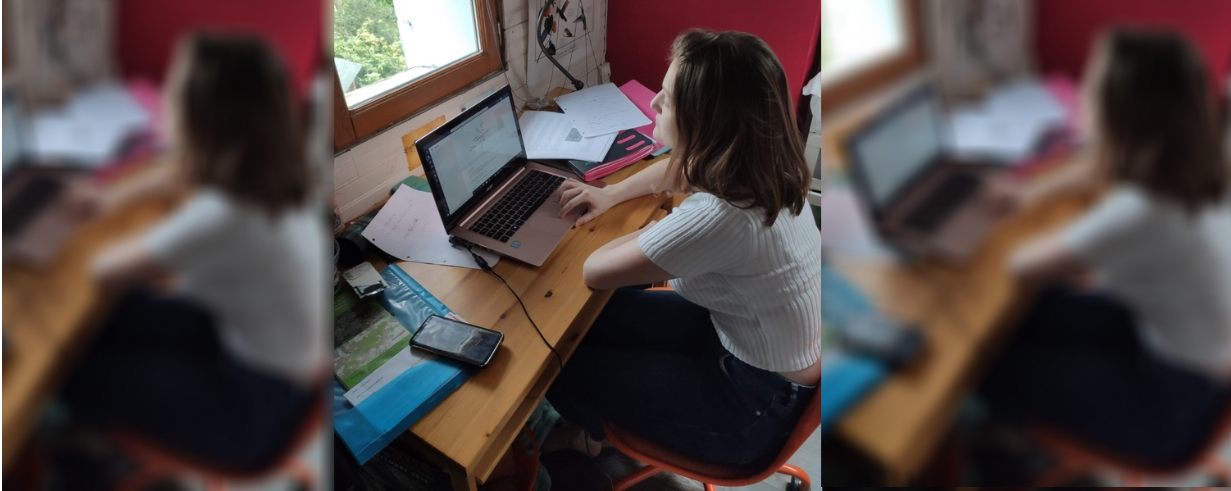
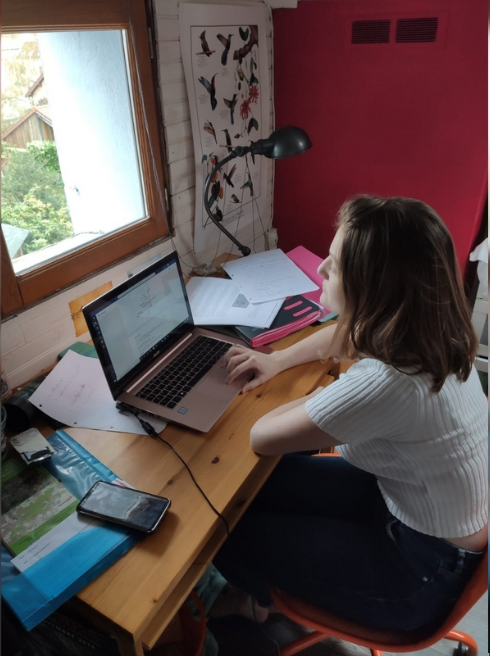
For individual work, the working method remains largely the same as before lockdown. The main difference is the working environment. Our personal environments are more or less conducive to work. Not all of us have the option of isolating ourselves.
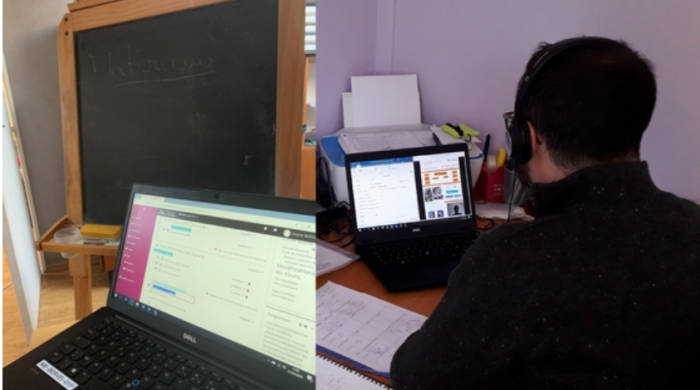
For group work, we use the Teams platform to pool our ideas. This period is forcing us to divide the work more clearly so that everyone can move forward on their own.
What kind of relationship do you have with teachers?
It depends on the course. Some teachers post their lessons on the Savoir platform and let us organize ourselves, being available by email in case of problems. So we don't have much interaction. This forces us to be more independent, to work through the lessons and do the exercises on our own, which isn't always easy.
For real interaction, others prefer live classes via Teams. This format brings us closer to traditional campus-based classes.
We even had oral exams via this platform.
For some practical work, the professors send us the values of the manipulations and we then extract the documents and perform the physical interpretations.
What feedback have you received from students regarding the measures implemented by teachers to ensure educational continuity?
Firstly, we would like to thank the entire teaching team, who responded very quickly to this crisis and who have been very available and open to feedback from students.
This unprecedented situation has given rise to ideas that will be worth keeping in the future. For example, some teachers have created PowerPoint presentations with audio commentary on their lessons, a system that has been very popular with students!
Otherwise, some students find that working alone on exercises with feedback by email is not enough to help them understand the course, while others find the Teams classes ineffective because they have trouble staying focused. It depends on each person's personality and also on the students' personal environment.
But overall, the students in Angers are satisfied with the measures put in place by the professors.
How do you maintain contact with your classmates, especially those who are struggling academically?
The teaching representatives and student representatives are trying to monitor everyone's morale by asking students to fill out questionnaires via the Facebook groups for each year group. The main difficulty is related to the working environment.
Some students are unable to isolate themselves, and the internet connection is not always optimal.
In this case, a student in the class is responsible for recording the live lessons and sending them to the student afterwards.
These factors can hinder work, even though the school is trying to smooth out these inequalities and offer the same opportunities to everyone.
Other personal issues are dealt with on a case-by-case basis.
We also ask students each week for their overall impressions and what they would like to see improved. We then discuss this at a weekly meeting with the teaching staff in order to make positive changes.
Finally, for academic difficulties, teachers monitor absences from live classes as a guide so that we can identify students who may be at risk of dropping out. The goal, together with the teaching team, is to reach out to these students as quickly as possible.
Describe a typical day in lockdown for an Arts et Métiers student.
The hardest thing about lockdown is that there is no such thing as a typical day. Sometimes we have five classes on Teams, and sometimes we have the whole day free. It's up to us to organize our own schedule and homework.
But lockdown also has its positive sides. The freedom to organize our own day allows us to work on the subjects we want and manage our time more efficiently.
Our workload is still quite heavy, but I still manage to find time to cook!