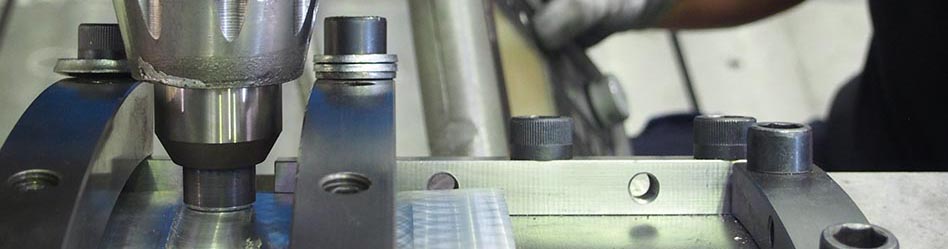
For more than 10 years, Arts et Métiers cutting-edge research on friction stir welding (FSW) withthe Institut de Soudure (IS). To this end, an international symposium will be held on the Arts et Métiers campus Arts et Métiers Metz from October 11 to 13, organized in partnership with the IS.
What is the FSW?
Friction stir welding is an innovative process invented in 1992. This technique involves welding the materials of the two parts to be joined in a solid state by mixing them locally. The major advantage is that welding can be carried out without reaching the melting point of the materials, which avoids problems associated with solidification and uses less material.
The resulting parts show little deformation and have good mechanical properties. In addition, it is a more environmentally friendly process (no gas or smoke emissions, low energy consumption).
Arts et Métiers the Institut de Soudure: two major players in FSW in France
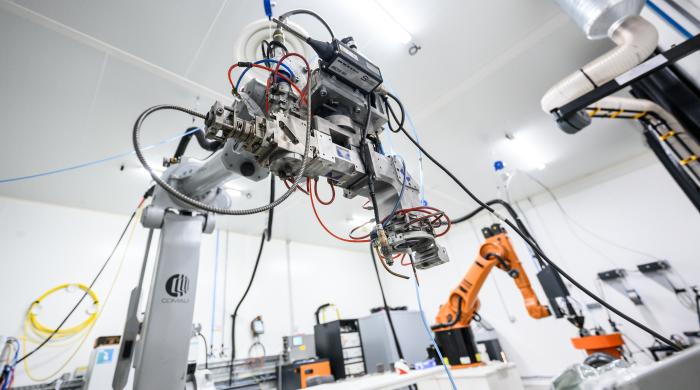
The Welding Institute currently has the largest European research center dedicated to FSW. Arts et Métiers, through its Design, Manufacturing, and Control laboratory, is working on two topics that are unique in the French higher education landscape: the industrialization and robotization of the process.
This assembly process is rapidly developing in the transport sector. It allows less raw material to be used to assemble two components, thereby reducing production costs and vehicle weight. In Europe, the Airbus A400M, certain Mercedes and BMW car models, and the battery tray of the Renault ZOE have been partially designed using this process.
Transfer to industry
The conference will bring together around 100 participants, more than half of whom are from the business world. This is a great way to advance the technology and increase its implementation in industry. The development of friction stir welding should enable us to meet the challenges of reducing energy consumption and pollution emissions, as well as reducing production costs and bringing innovation to products.