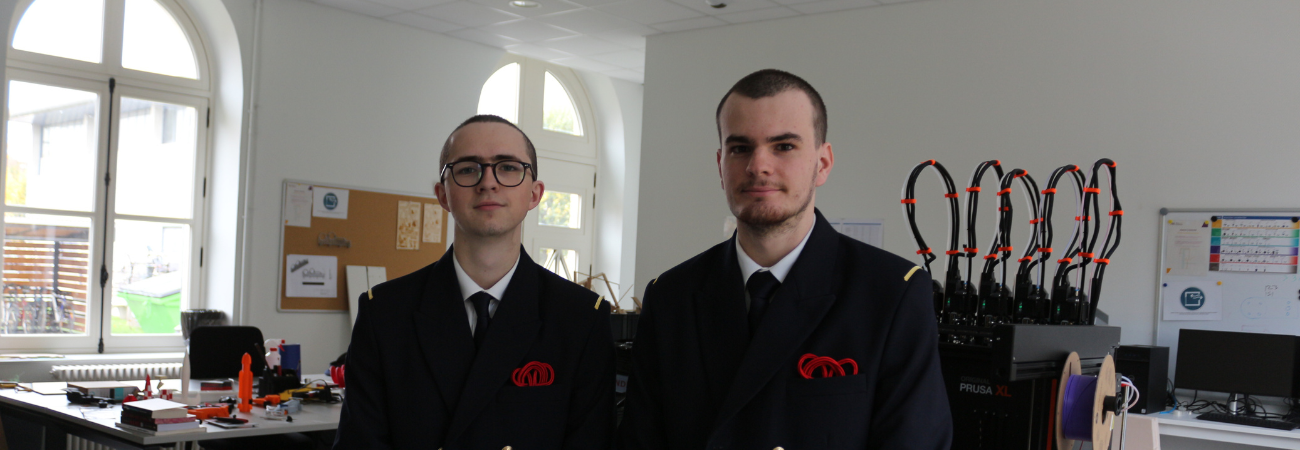
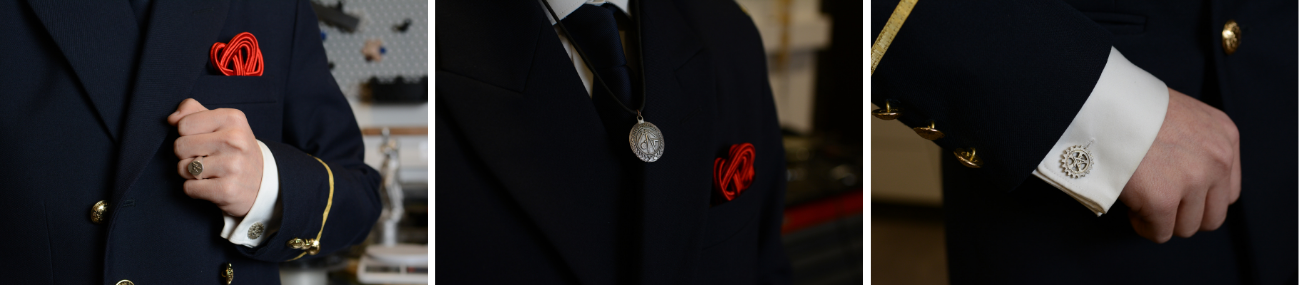
On the Châlons-en-Champagne campus, Samuel Diard and Jérémy Rousseau embarked on an entrepreneurial project by creating signet rings, cufflinks, and medals in solid silver.
A first step toward entrepreneurship
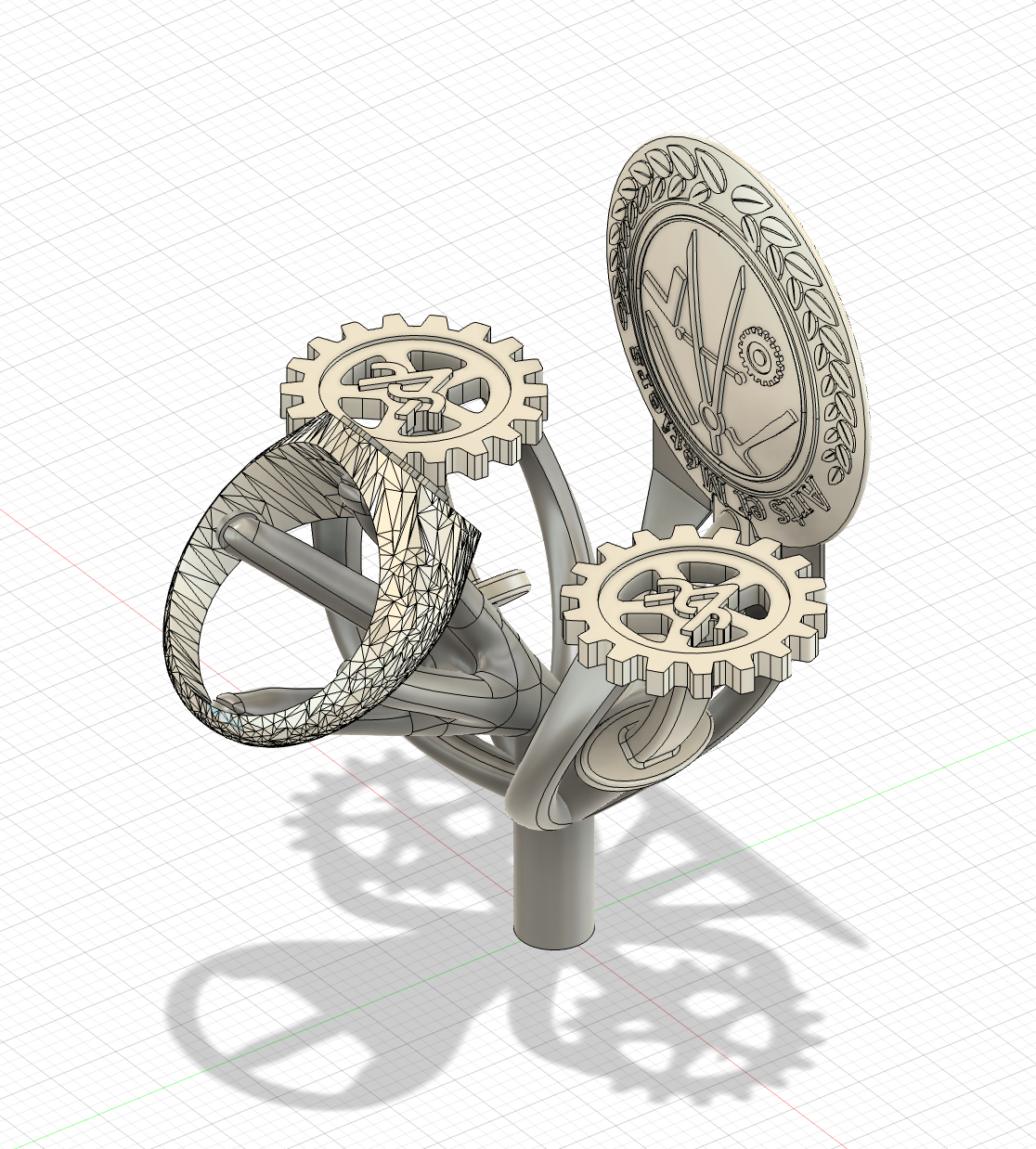
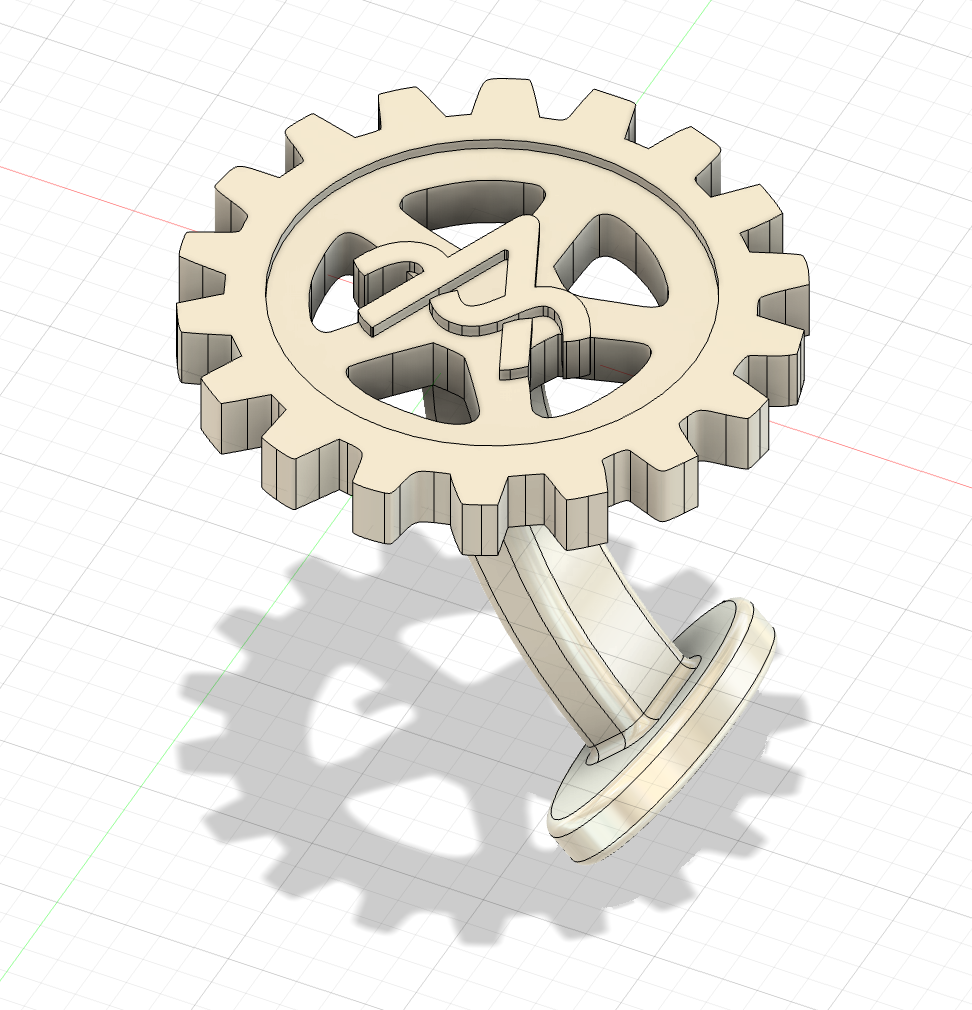
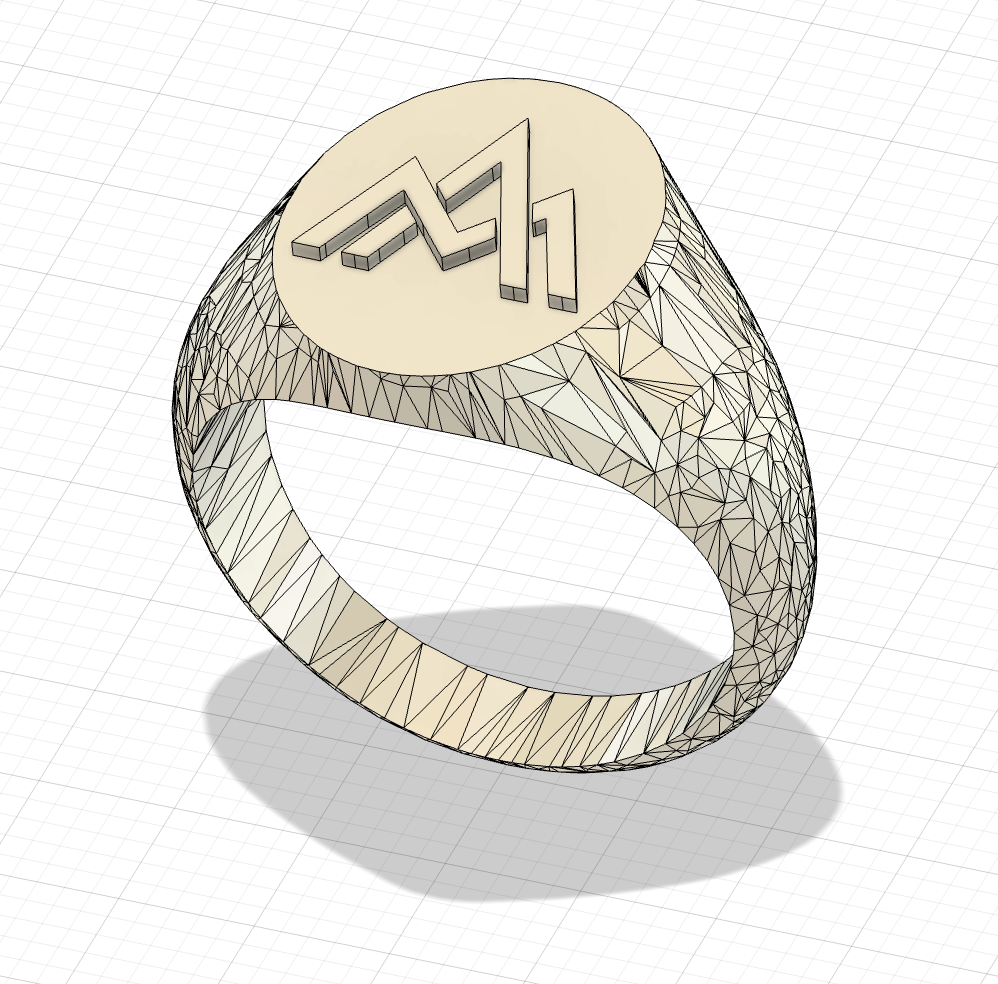
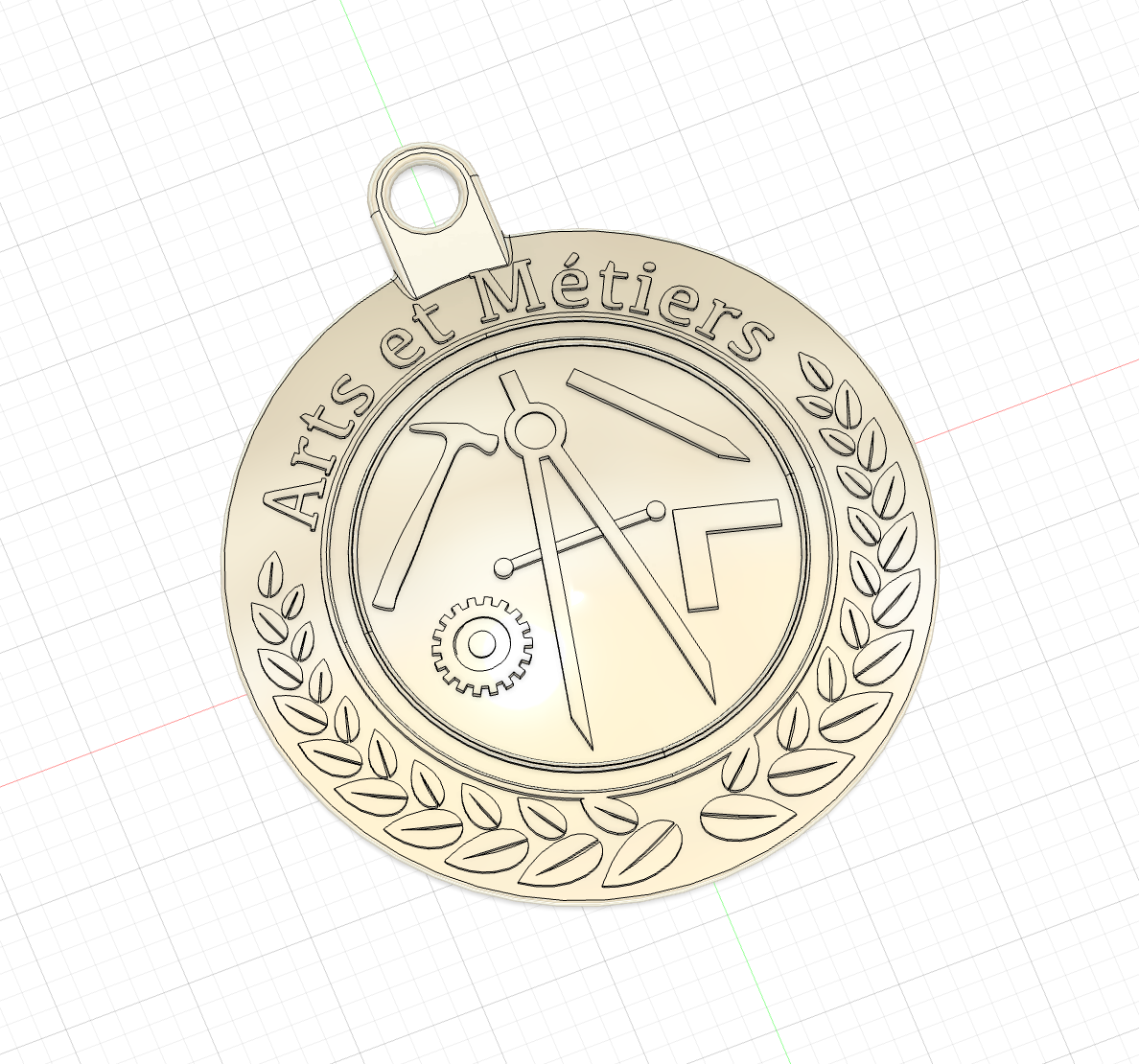
Last April, Samuel and Jérémy, currently second-year students in the Grande École Program on the Châlons-en-Champagne campus and permanent members of the Fablab, decided to embark on an entrepreneurial project by designing and manufacturing three types of solid silver jewelry: signet rings, cufflinks, and medallions. They started from scratch, with the desire to put their knowledge into practice. Jeremy explains, "Our goal was above all to enjoy creating, while learning and perfecting our manufacturing techniques."
From 3D modeling to casting
Each piece of jewelry follows a precise process involving several steps. After designing their models in 3D, Samuel and Jérémy make the pieces in wax, using silicone molding or 3D printing. Their refractory plaster mold is then fired at 750°C to remove the wax and prepare for casting 925 silver, an alloy composed of 92.5% pure silver and copper. The casting is done at over 1,000°C, then vacuum cast to ensure better quality. After demolding, cleaning, and acid bath treatment to remove oxidation, the jewelry is polished by hand for a better finish.
Following their various trials, the students managed to obtain high-quality pieces by controlling the temperature of the metal and the mold.
 |  |  |  |
Combining craftsmanship and industry
Beyond creation, Samuel and Jérémy are taking on a real challenge: industrializing their production while maintaining the artisanal quality of their jewelry. To achieve this, they drew inspiration from the principles they learned in their lean manufacturing class, taught by Jesus Ochoa Robles (Head of the Mechanical Engineering and Smart Manufacturing Specialization Program), to optimize each step and automate certain operations in order to increase efficiency while reducing defects.
"Producing in large quantities is complex, but it teaches us to rethink our organization and make our production more efficient," explain the two students. This approach combines craftsmanship with a focus on performance and continuous improvement, providing them with a real entrepreneurial learning experience.
Organize production and sales
Beyond the technical aspects, they are developing a genuine entrepreneurial approach. Thanks to their status as micro-entrepreneurs, they aim to start marketing their products in January, with a retail price ranging from €80 to €130 depending on the product. They aim to produce around 50 pieces to test the market and build up some start-up capital. These jewelry items will be offered to Gadz'arts and the general public.
To adjust their production to demand, Samuel and Jérémy have set up a pre-order website.
"This project allows us to understand all the stages, from design to sale," summarizes Samuel.
A formative and concrete project
Beyond the technical aspects, this adventure is above all a human one. "This project teaches us rigor, industrial process management, and attention to detail. But above all, it allows us to bring to life a concrete product that has meaning," Samuel emphasizes.
Their journey shows that it is possible to combine innovation, learning, and entrepreneurial spirit. Their project goes beyond a simple study project; it is the beginning of a true entrepreneurial adventure.