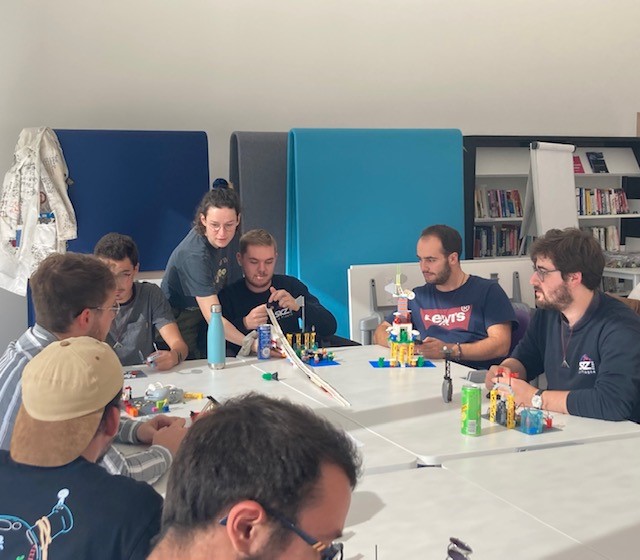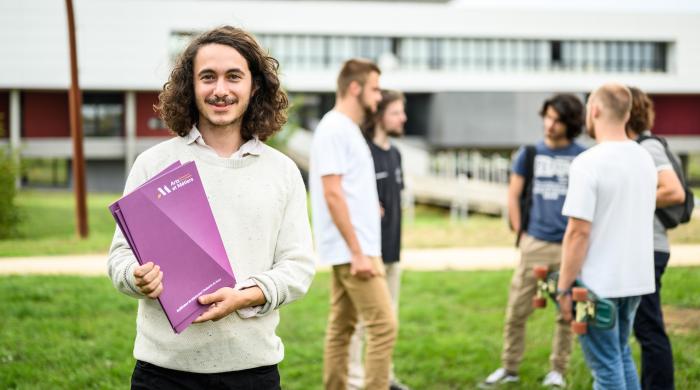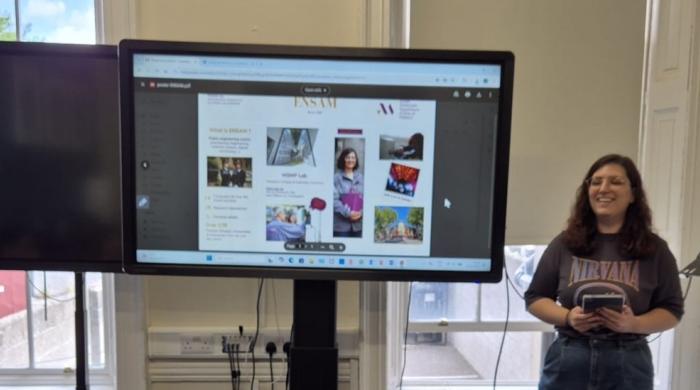
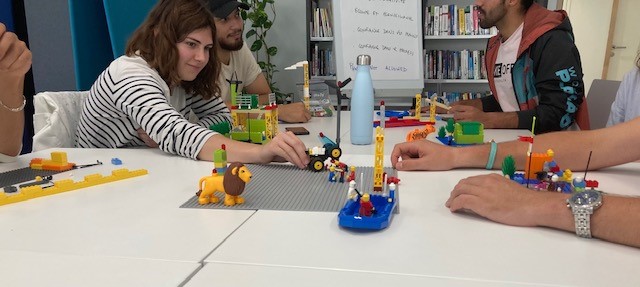
Magali Bertrand, a management professor at the Angers campus, organizesworkshops using the LEGO® SERIOUS PLAY® methodforthird-yearstudents in the Grande Ecole Engineering Programme.
Why did you decide to implement the LEGO® SERIOUS PLAY® method in your classes?
In their thirdyear, engineering students take a two-session module on decision analysis and collective intelligence. The aim is to understand the decision-making process and gradually grasp the importance of collective decision-making. There are many benefits: developing better relationships and strategies, increasing employee participation and involvement, creating new ways of thinking that promote creativity and innovation, and more.
I traditionally use the "case method," which involves using real-life professional situations for teaching purposes.
When it comes to collective intelligence, I wanted to take the experiential approach further and immerse students in a workshop that reflects best practices in business. The LEGO® SERIOUS PLAY® method is the most powerful method I know of in this area.
How were you trained in this method?
In February 2022, I had the opportunity to be trained by the only two French Certified Trainers at the Centrale Supélec school so that I could apply these insights to my teaching. This method was developed in the 1990s by Lego® employees when the company was struggling to innovate and facing fierce competition from video games. Since then, this method has been refined again and again to become a highly effective process that can be used in all sectors of activity and in many business applications. It is based on fundamental principles: people are the key to a company's success (leaders do not have all the answers) and the most sustainable economic model is one that allows everyone to contribute and express themselves.
Finally, the icing on the cake (and what makes this method more powerful than Post-It notes) is that our hands are 70-80% connected to our brain cells: building with Lego® awakens our senses and our knowledge. "The hand is the visible part of the brain," Kant told us.
What is the benefit of this innovative method?
Very often when decisions are made in meetings, 20% of participants monopolize 80% of the discussion and the decision taken is often counterproductive, with a lack of commitment. The advantage of this methodology is that everyone is on the same level, participants contribute and are 100% involved, and this unlocks knowledge. The results in business are spectacular.
How does this translate into your classes in practical terms?
In their thirdyear, our students participate in this four-hour workshop. This year's workshop objective was: "Contributing to major transformations as an engineer-manager." Divided into two groups of 10/12, they follow the process: they are asked a question, they construct and share their stories, and they reflect on what they and their peers have said. Many ideas emerge. Convergence is then achieved when the participants use their individual stories to create a shared story. This shared story can then be challenged by external agents. At the end of the workshop, broad guidelines are identified to meet the primary objective in a spirit of total cohesion.
What is the feedback from students?
The students found it fun and enjoyable; they became aware of certain issues even though they are not yet working in a company. They were able to experience a collective intelligence workshop and feel what it brings to a team: social bonding, emotional expression, cognitive development, and positive competition of ideas. I can only encourage them to continue along this path and develop this "facilitating manager" approach in the workplace.