The Institut Arts et Métiers Chalon-sur-Saône is participating in the TEAM-Sports project, which focuses on psychology and mental training to improve athletes’ performance. Jean-Rémy Chardonnet, a senior lecturer and director of the Master of Science , discusses this project.
Doubling the number of medals won by France at the 2024 Olympic Games in Paris is the goal of the “High-Performance Sports” call for proposals " (launched in 2019 by the Ministry of Higher Education, Research, and Innovation and the Ministry of Sports). The aim is to mobilize French scientific expertise to support elite athletes.
Six research institutions involved
In this context, six projects were selected, including TEAM-Sports, in which LISPEN/Institut de Chalon-sur-Saône is participating.
"What makes this project unique is that it focuses on team sports—such as rugby, handball, volleyball, basketball, and soccer—and uses psychology to optimize performance," explains Jean-Rémy Chardonnet.
TEAM-Sports, coordinated by the University of Burgundy Franche-Comté (UBFC), is led by the Psy-Drepilaboratory atthe University of Burgundy, which specializes in the social psychology of sport. The project brings together a total of six research institutions (University of Burgundy, Arts et Métiers, Inserm, CEA List, University of Rouen-Normandy, University of California, Santa Barbara) and five sports federations (rugby, handball, volleyball, basketball, and soccer).
What factors influence mental health?
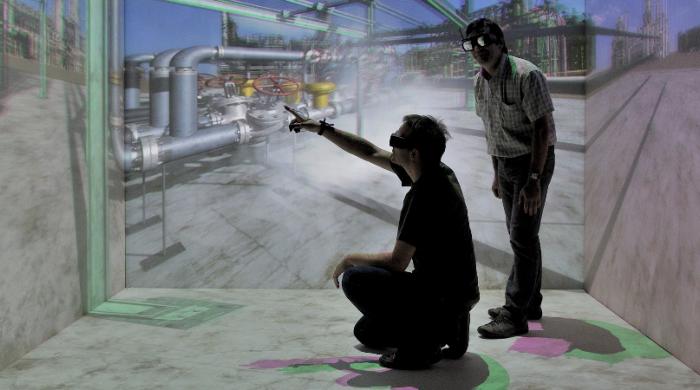
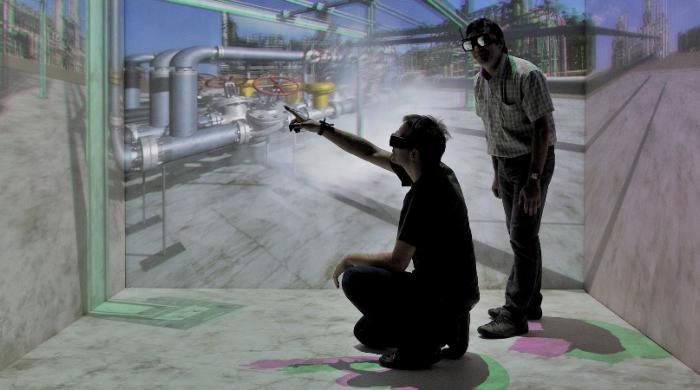
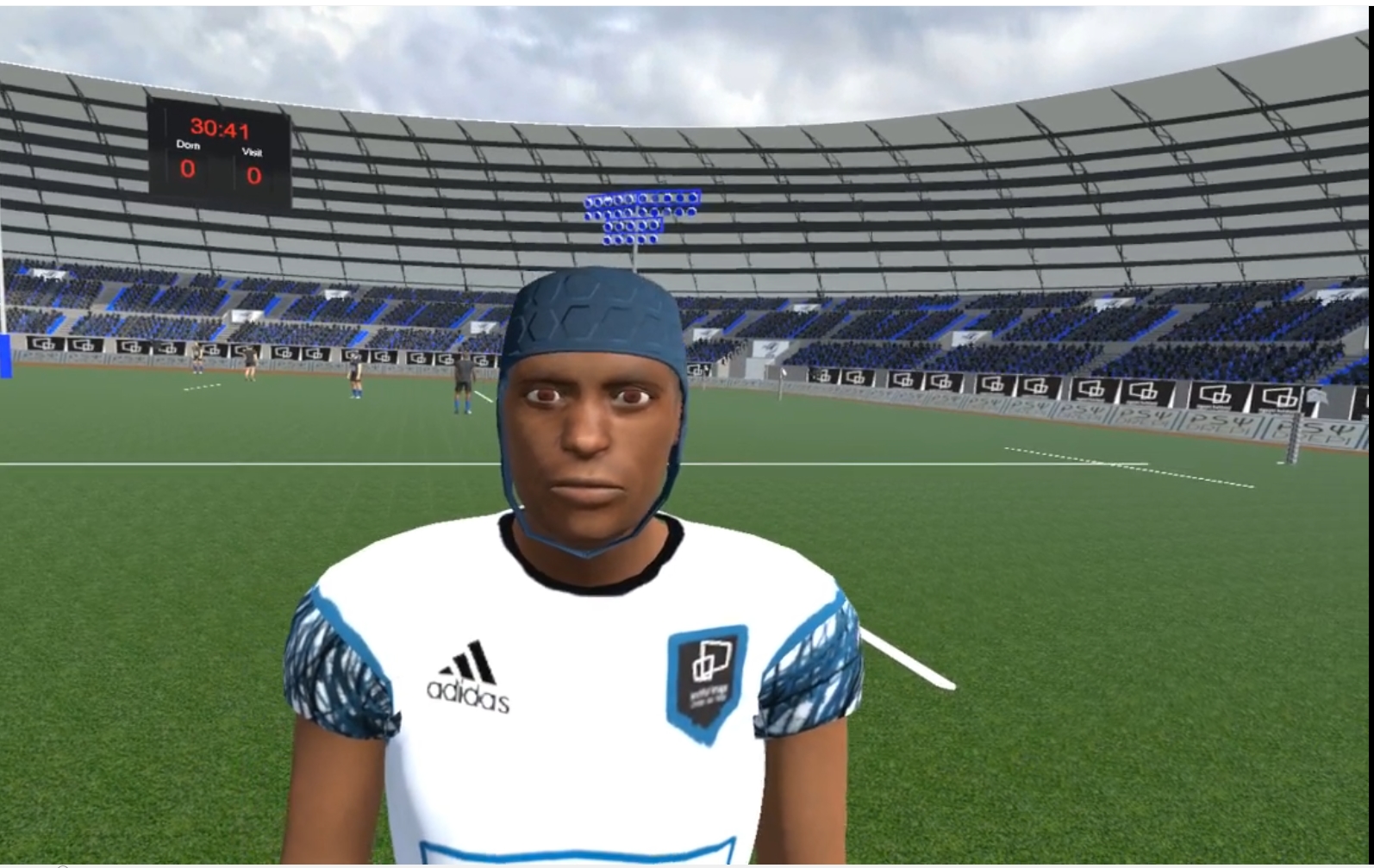
The goal is to understand how mental preparation tools can improve athletes’ performance. The Institute in Chalon-sur-Saône has been tasked with developing a virtual reality application to place athletes in conditions as close to reality as possible and to study which factors influence their mental state.
"The challenge isn't really technical," explains Jean-Rémy Chardonnet. "The hardest part is determining which factors are most relevant to include: ambient noise, the type of stadium, whether the crowd is supportive or not, sponsor logos…"
To that end,Solène Neyret, a postdoctoral researcher with expertise in both psychology and virtual reality, was hired last January for a one-year term.
Focus on key moments
"The app can focus on key moments, such as when a player scores a goal or makes a pass," adds Jean-Rémy Chardonnet. "The player sees the reactions of his teammates (disappointment, joy, etc.), the opposing team, and the referee. The crowd’s reactions are also visible." Virtual reality is a good tool for training in a more realistic way, learning to manage stress, and fostering what are called identity levels—for example, developing a collective mindset.”
The first tests are currently underway and will continue in September with players from the French national rugby team, among others. The Institute’s team will visit the French Rugby Federation with an immersive headset. Each player will have their own avatar, with a “physical appearance” similar to their own.
The app will be up and running by the end of 2021.