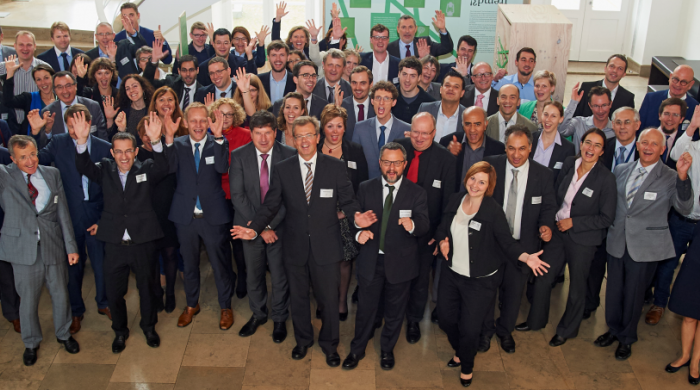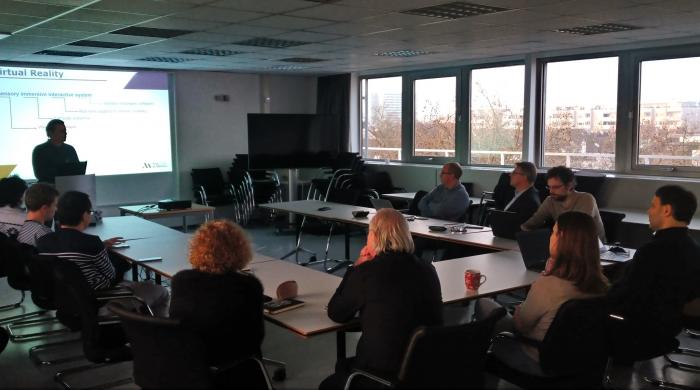
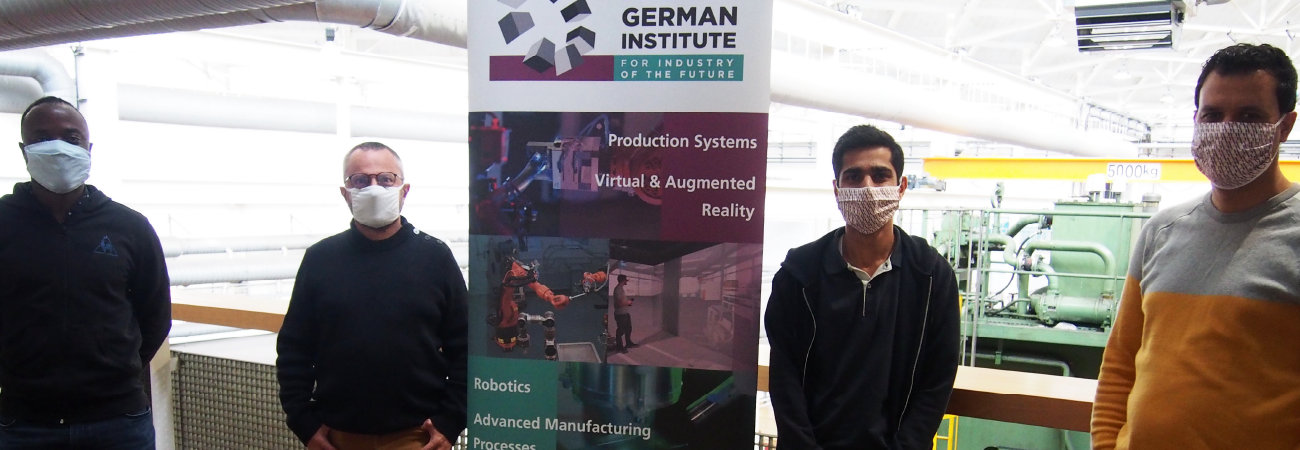
Conducted in collaboration withthe Karlsruhe Institute of Technology (KIT) as part of the Franco-German Institute for the Industry of the Future, the AdeQuaT research project began this year and will run for three years. It brings together researchers from the Design, Manufacturing and Control Laboratory (LCFC) at the Arts et Métiers campus Arts et Métiers Metz and researchers from WBK in Germany.
The AdeQuat project, which stands for Adaptive Quality Control in Tolerancing and Production Strategies for the Economic Production of High Precision Products, brings together researchers from the Design, Manufacturing and Control Laboratory (LCFC) at the Arts et Métiers campus Arts et Métiers Metz and researchers from WBK in Germany.
Managing product quality at every stage from design to manufacturing
The imperfections inherent in manufacturing processes can lead to the production of non-functional or non-assemblable products, forcing manufacturers to discard part of their production.
As a result, manufacturers have a dual incentive to improve control over the quality of their products: to improve quality and reduce costs. This is a major challenge when you consider that for some micro-products, tolerances are less than 5 micrometers (0.000005 m).
" We are working on adjusting process parameters and adapting tolerance allocation at each stage of the process, from design to finished product, " explains Lazhar Homri, a lecturer and researcher at the Metz campus. " The idea is to carry out control and measurement sessions between each stage of manufacturing in order to readjust production in real time. "
Simulation/experimental: a split between France and Germany
On Arts et Métiers side, work focuses on gear simulation: " These are complex products that meet high quality requirements and are used in all branches of mechanics, " explains Lazhar Homri. " And little work has been done on gears. In addition, our German partner had already carried out some work on the subject and had an industrial partner ready to collaborate."
Edoh Goka, a postdoctoral researcher at the Metz campus, is in charge of the simulation: " I am building a predictive model that links manufacturing defects to the functional characteristics of gears. To validate the model, I need the results of experiments carried out by our German partner. I correspond directly with them to define the test parameters and collect the results, which I then compare with those of the simulations in order to readjust the model."
The results also contribute to the work of Amir Khezri, a doctoral student Arts et Métiers is working on optimizing the tolerance allocation phase, enabling designers to specify their functional requirements while taking into account the impact of these requirements on manufacturing.
Ultimately, the work should enable the establishment of a meta-model that links parameters to functional characteristics at a specific point in time, allowing for real-time adjustments to be made to the design and manufacturing processes.
The Franco-German Institute: a framework for bringing projects to fruition
Founded in 2017 out of shared research interests between researchersArts et Métiers KIT and a desire to strengthen a 20-year partnership in training, the Franco-German Institute provides a framework for projects such as this one to flourish.
Two projects, including AdeQuat, are currently underway, but four were submitted last year: two European projects and two ANR/DFG projects (the German equivalent of the ANR). Following a workshop between researchersArts et Métiers KIT held last spring, others are in the process of being set up.