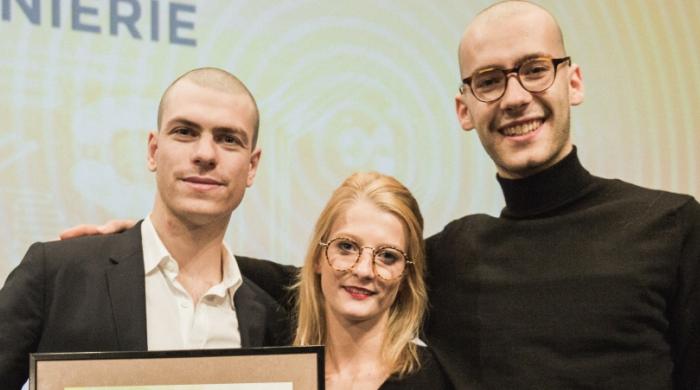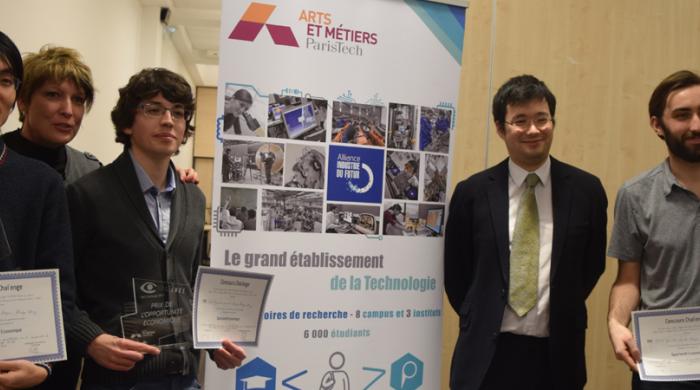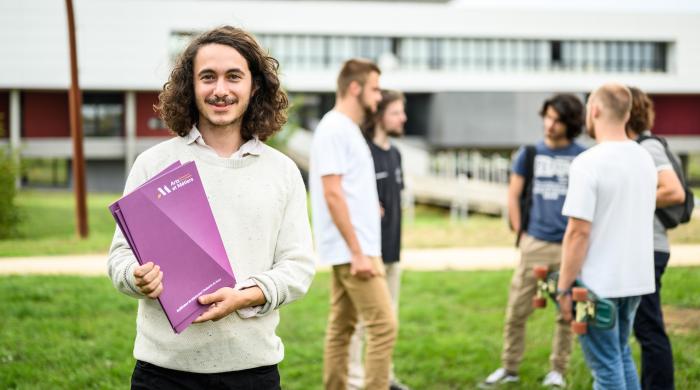
Julien Artur de la Villarmois is in his second year ofthe Arts et Métiers Grande École Programand has been granted National Student Entrepreneur Status (SNEE). The concept behind his entrepreneurial project is to provide individuals with stations for recharging hydrogen-powered vehicles. We talk to Julien about this project, which won an award at the Pépite France Challenge 2020.
What is the industrial and economic context of the AutonomHy project?
Julien Artur de la Villarmois: The current global context presents us with many challenges. Climate change and the finite nature of fossil fuels are forcing us to find sustainable alternatives, particularly in the automotive sector. The most widespread option at present is the battery-powered electric vehicle. Unfortunately, these batteries present many problems, from their manufacture to their recycling, not to mention their excessively long charging times.
A more environmentally friendly alternative is hydrogen, as it also allows electricity to be stored without the problems associated with batteries, offering a range of 600 km and a charging time of 5 minutes.
The industrial and political context is very favorable, as more and more car manufacturers are offering hydrogen-powered vehicles: Toyota, Hyundai, Honda, Mercedes, Renault... and notably Nikola Motors, which has an order book worth $14 billion for hydrogen-powered trucks.
As a result, the states are posting remarkable forecasts: 80,000 vehicles in Korea within two years, 2.8 million vehicles in China, California, and Japan within ten years, and 2,000 gas stations in California and Germany within ten years as well.
The main problem is the lack of hydrogen refueling stations: there are only 34 in France today, mostly for professional fleets. It is therefore impossible for individuals to use hydrogen-powered vehicles.
The solution offered by AutonomHy is a personal hydrogen production and refueling station for private individuals. It allows them to use their hydrogen-powered vehicle even in the absence of public filling stations (which remain compatible with the vehicle).
How does your project fit into your educational journey at Arts et Métiers?
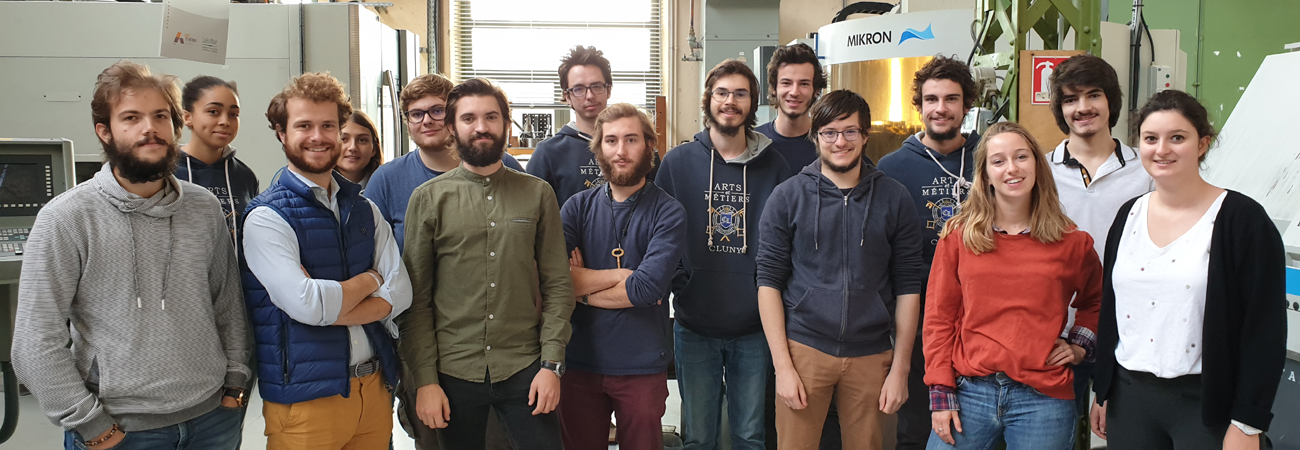
J. AV.: This entrepreneurial project was partially integrated into the teaching program. In the second year, 40 hours per semester are dedicated to student projects, with a call for projects and independent work. There are also educational projects that serve as course material for learning and practical application for most of the subjects taught. This has enabled us to cover almost all aspects of the project carried out with 15 of my classmates divided into four teams: documentary research, study of standards and patents, market analysis, business model, and above all, design and then manufacture or integration of technical components. All this has been facilitated by the newly created Entrepreneurship and Technological Innovation Course, in partnership withPépiteBourgogne Franche-Comté, the organization that awarded me National Student Entrepreneur Status in September 2019 and which supports me in my entrepreneurial project, in particular by organizing four boot camps per year dedicated to business creation methods and tools. I benefit from the help of Agnès Bourg, a teacher at the Arts et Métiers campus Arts et Métiers Cluny.
I find support and guidance from the school's teachers and technicians. Specifically, my project involves producing hydrogen and then compressing it in the vehicles' tanks.
How is your project coming along today?
J. AV.: Thisyear, we worked on both the overall design of the station and the detailed design of the compressor. It will be manufactured at Arts et Métiers the coming semester, and the parts will be machined using the machines at the Arts et Métiers campus Arts et Métiers Cluny. There are also certain technical challenges to overcome, such as sealing and communication between the station and the vehicle, which is highly regulated by standards and protocols that are poorly documented.