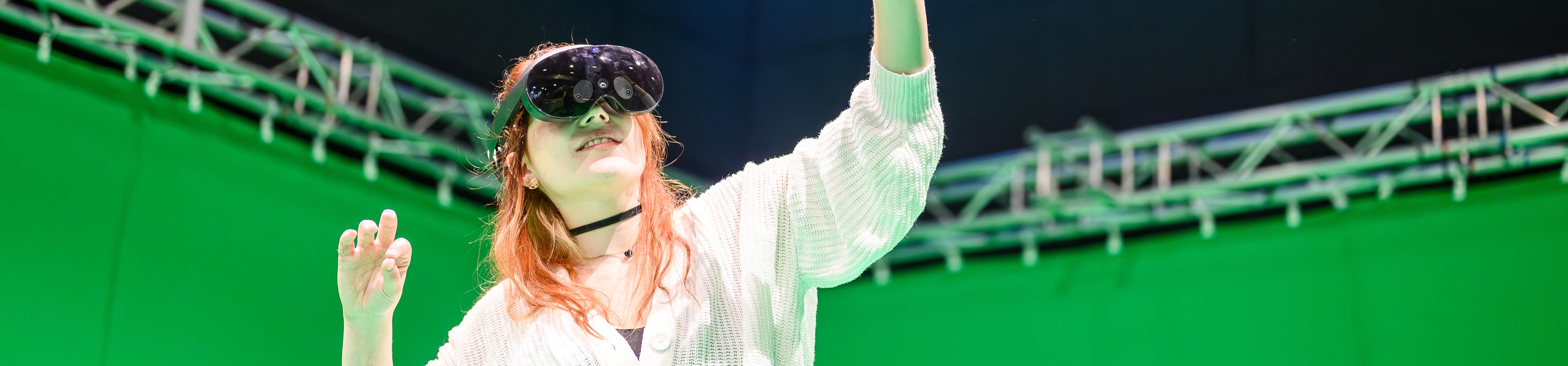
National Master of Science Degree Master of Science DNM) in 3D Interactive Technology Management (MTi3D) – Virtual Engineering and Innovation (MTI3D IVN)
The Master of Science and Master of Science in 3D Interactive Technology Management, with a specialization in Virtual Engineering and Innovation, are open to students enrolled in a professional training contract
Campus
Laval InstituteArts et Métiers
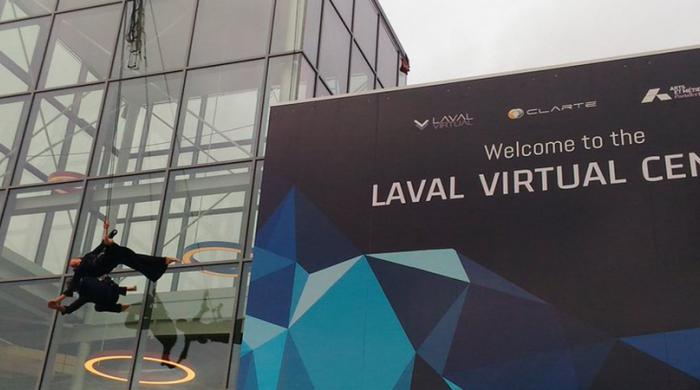
Laval Virtual Center
Rue Marie Curie
53810 CHANGE
Tel.: 33 (0)2 43 65 34 11
Objectives
The national Master of Science degree Master of Science 3D Interactive Technology Management (MTI 3D) includes the Master's in Virtual Engineering and Innovation (IVI) in Laval and Digital Engineering (IN) in Chalon-sur-Saône. This program, with its updated curriculum and supported by a renowned faculty, helps students become experts in 3D interactive technologies while maintaining strong ties to the professional and academic worlds.
Our culture is based on collaborative work and concrete projects. In a professional context, students combine laboratory research with practical application in the field. They are thus prepared and trained to become project managers, researchers (after a PhD), or engineers.
Skills acquired
Students thus acquire strong expertise in creating new products and services based on virtual technologies such as Virtual Reality, Augmented Reality, 3D, and connected objects.
They are able to apply their skills in the field of virtual reality (modeling, animation, real-time interaction, interfacing), they have a thorough understanding of innovation processes, and they are capable of managing a project and a team.
Given its research-oriented nature, the Master of Science program naturally provides students with a solid foundation of practical and theoretical knowledge in scientific research methodology, with a focus on emerging technologies:
- produce a state-of-the-art scientific review, after understanding a scientific issue, through bibliographic research;
- identify obstacles, present the research objective and the underlying hypotheses to be validated;
- develop an experimental protocol and carry out the transfers;
- observe the results, present them, and analyze them;
- write a scientific article in English.
Program
Theoretical training (30 ECTS)
The training consists of five modules common to all sites in Laval and Chalon-sur-Saône :
- Research methodology
- 3D imaging and immersion
- Digital modeling and tools
- Projects
- Knowledge of the company
The program in Laval includes three additional modules:
- Innovation management
- Engineering
- Advanced virtual reality
Practical training (30 ECTS)
Internship (5 to 6 months) in a research laboratory in academic partnership or in an industrial setting. The student writes a thesis and a public defense takes place in mid-September.
Detailed description of the modules
Research methodology: this module provides the knowledge and methods necessary to carry out research work, from bibliographic research, state-of-the-art reviews, and the design of experimental protocols to the statistical analysis of results and the writing of a scientific article. This module is divided into three courses:
- Research theory and methodology;
- Experimental study for VR;
- Statistical data.
This module, which cuts across specializations, involves setting up an experiment and writing a scientific paper to be submitted to a national or international conference.
3D imaging and immersion: this module covers "virtual reality and interactive technologies." The courses provide a comprehensive overview of the various fields of virtual and augmented reality:
- Visual interfacing;
- Haptic interfacing and brain-computer interfaces;
- Augmented reality research;
- Virtual reality principles and technologies;
- Human-machine interfaces;
- Image synthesis.
Digital modeling and tools: this module provides the software tools needed to create prototypes useful for setting up scientific experiments. This includes:
- Real-time 3D programming: reminders of object-oriented programming and real-time animation/interaction, application to Unity3D software;
- 3D modeling of 3D objects, texture production, lighting and rendering, material construction, 2D environment illustration, animation, 3D environments, mathematical principles, and meshing.
Projects: in this module, students work independently on four separate projects, with slots allocated in the timetable and support from members of the teaching team. Two of the projects involve working with companies or laboratories, giving students an insight into collaborative research:
- Virtual Reality Project (2 weeks): completion of a comprehensive project combining 3D modeling/texturing, real-time 3D programming, and interfacing.
- Senior Project (3 x 2 weeks): completion of an integrated project proposed by a company or laboratory. Similar to the Junior Project in M1, this involves working on a real-world problem. The emphasis is on finding innovative solutions, technology watch, and bibliographic research, rather than on technical implementation. It involves creating a "demonstrator" (functional model).
- Innovation Challenge (1 week): proposing innovative ideas based on emerging technologies to develop new products and services for partner companies.
- RV Team (2 weeks): an intensive collaborative project with Master of Science students aimed at participating in student competitions during Laval Virtual.
Knowledge of the company: this module introduces students to industry testimonials and professional training courses.
Innovation management: this module provides knowledge in the field of innovation and the design of products and services using emerging technologies, with a particular focus on methodological building blocks centered on creativity. The courses are complemented by an introduction to foresight and change management.
Engineering: this module provides methodological tools for project management and methods specific to the design of virtual reality systems. The lessons are supplemented by reminders about human factors and how to use simulation tools for serious gaming.
Advanced virtual reality: this module reinforces technical teaching by deepening knowledge of modeling and through practical work on the main virtual reality interfaces (data gloves, wired and infrared tracking, 3D cameras, haptic arms).
Key scientific and educational leaders in the field
The Master of Science led by two faculty members from the Presence & Innovation team at the LAMPA (Angers Laboratory of Mechanics, Processes, and Innovation – EA 1427):
- Simon Richir, University Professor
- Olivier Christmann, Associate Professor
Researchers and faculty members from outside the laboratory—recognized experts in their respective fields—are also part of the teaching team and deliver courses. This provides students with numerous opportunities to engage with the academic community. These researchers also assist in welcoming and supervising Master of Science interns. Whenever possible, the Master of Science program Master of Science on professionals holding doctoral degrees to better align with the program’s educational objectives.
Related technology platform
Master of Science students Master of Science access to all of the facilities at the Laval Institute, as well as the equipment at CLARTE, a technology resource center specializing in Virtual Reality, Augmented Reality, and emerging technologies, and finally to the facilities of the Laval Virtual Center, which currently houses a library of virtual and augmented reality equipment (interaction and visualization).
Assessment and validation procedures
Students are assessed through continuous assessment, personal and group projects, and individual exams.
Internships are evaluated based on the assessment of supervisors, a report, and a public defense.
Teaching methods
Project-based learning is the cornerstone of our training program. Students are confronted with the pace and constraints of completing projects within short timeframes, working in multidisciplinary teams on real projects linked to the local and national economy.
Students have access to a dedicated room, with one computer per student allocated for the entire year.
Our program is characterized by the close relationship between the teaching staff, support teams, and students, which allows for rich exchanges and a better understanding of each student's learning pace.
Benefits of the training
Exceptional resources available 24/7
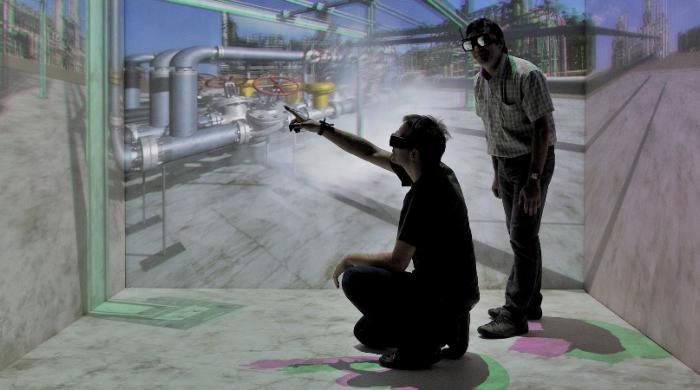
The Laval Institute is housed within the Laval Virtual Center, the leading international hub for Virtual Reality and Augmented Reality, and the leading catalyst for innovation in VR/AR technology applications. Students have complete autonomy and access to the most modern computer equipment and Virtual Reality interfaces: CAVE, immersive screens, immersion headsets, force feedback arms, position tracking, and more.
A teaching team made up of recognized experts
The MTI3D program allows students to be mentored by specialists in virtual reality and design, innovation, and creativity processes. With a focus on professional development, students work closely with companies and laboratories in all sectors (industry, transportation, healthcare, education, video games, etc.).
Career opportunities
The Master of Science designed to train:
- experts in the implementation of virtual technologies and innovation processes;
- research and development engineers;
- project managers with research experience, capable of setting up, managing, and evaluating innovative projects in the field of new technologies;
- future doctoral students in the field of interactive technologies
Partners
Manufacturers
Mann+Hummel, SNCF, Dassault, Vinci, Saint-Gobain Research, etc.
Institutional
Academics
Nantes Atlantique School of Design, Catholic University of the West Laval, School of Computer Science, Electronics and Automation, Kanagawa Institute of Technology, Japan Advanced Institute of Science and Technology, Cyberpsychology Laboratory at the University of Quebec en Outaouais, …
Targeted companies
L’économie numérique est un facteur de croissance pour l’économie française. Les nouvelles technologies étant un domaine transverse, les compétences en 3D font donc l’objet d’une forte demande et les débouchés sont très large, des grands groupes industriels (PSA, Naval Group, Airbus, Thales…) et des PME aux entreprises du numérique (Google, Ubisoft, …) en passant par les entreprises travaillant directement dans le domaine de la réalité virtuelle et augmentée (XXII, Immersion, Eon Reality…). Dans le domaine de la recherche, des grands instituts comme l’INRIA, l’INSERM, des comme l'IRT b<>com …
Examples of internship opportunities offered / projects carried out
Project examples
Creation of a virtual reality teaching sequence
Virtualization of training procedures in the context of rail transport
Flying on the ground, virtual reality art installation
Digital continuity: from virtual reality to CAD
Virtualization of prospective creativity methods
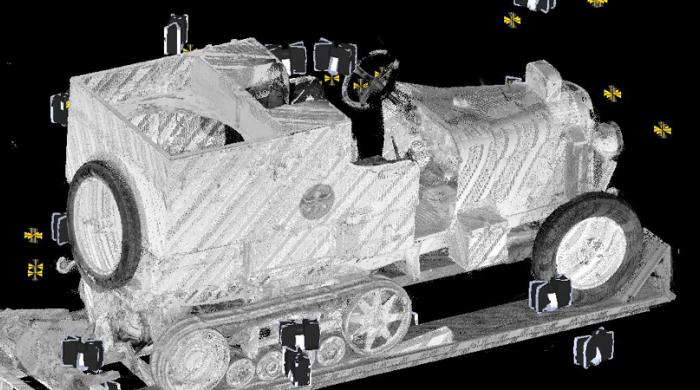
Construction of an IFC model using scanning
Examples of internships
Consciousness embodied in virtual reality
Creation of a VR skydiving simulation
Study of Hololens applications in industrial processes in the aerospace sector
The neurophysiological effects of avatar immersion during a self-observation flight situation
Low-cost whole-body control of human avatars for immersive VR systems.
Admission criteria
Recruitment is a two-step process, starting with a preliminary screening of applications, followed by an individual interview.
The initial screening of applications is based on the following criteria: whether the application is complete with respect to the required materials, the relevance of the applicant’s prior academic background to the objectives of Master of Science, the applicant’s motivation, academic performance, and letters of recommendation.
The individual interview is based on the following criteria: speaking skills and vocabulary, proficiency in English, proficiency in computer graphics and programming (candidates must have a solid foundation in at least one of these two areas), professional experience and projects completed in connection with the Master of Science, consistency in career goals, motivation for group work, general knowledge, and extracurricular activities.
Interviews enable candidates to be ranked, with applications either accepted directly or placed on a waiting list.
English language instruction is provided, along with TOEIC preparation, so that students can apply for positions that require a certain level of English proficiency. As a result, we do not expect a level of English certified by an exam score, but we do check that students have continued to take English courses throughout their post-baccalaureate studies and that the average grade obtained in these courses (shown on the transcripts requested elsewhere) is above 10.
Application deadlines
- For French students: mid-July 2023
- For international students: see the conditions at Campus en France, particularly for countries covered by the "Etudes en France" procedure: Algeria, Argentina, Benin, Brazil, Burkina Faso, Burundi, Cameroon, Chile, China, Colombia, Comoros, Congo Brazzaville, South Korea, Ivory Coast, Djibouti, Egypt, United States, Gabon, Guinea, India, Indonesia, Iran, Japan, Kuwait, Lebanon, Madagascar, Mali, Morocco, Mauritius, Mauritania, Mexico, Peru, Democratic Republic of Congo, Russia, Senegal, Singapore, Taiwan, Togo, Tunisia, Turkey, and Vietnam.
Practical information
- Course language: French
- Schedule: late September to early April for theoretical training + 5 to 6 months of internship (internship defenses in September)
- Number of hours: 300 hours + Projects
- ECTS credits: 60
- Cost: €250 excluding student health insurance
- Training location: The training takes place entirely at the Laval Institute.
Contacts
Additional information
Keywords
#VirtualReality #AugmentedReality #ConnectedObjects #Interfacing #EmergingTechnologies #Innovation #Creativity #ProjectBasedLearning #Research