The RéCLasSIF project (Network of Campuses Labeled Industry Solutions of the Future) aims to accelerate industrial transformation in France. This project, led by Arts et Métiers partnership with the Institut Mines-Télécom, currently helps finance around twenty projects across the eight Arts et Métiers campuses, Arts et Métiers three on the Angers-Laval campus.
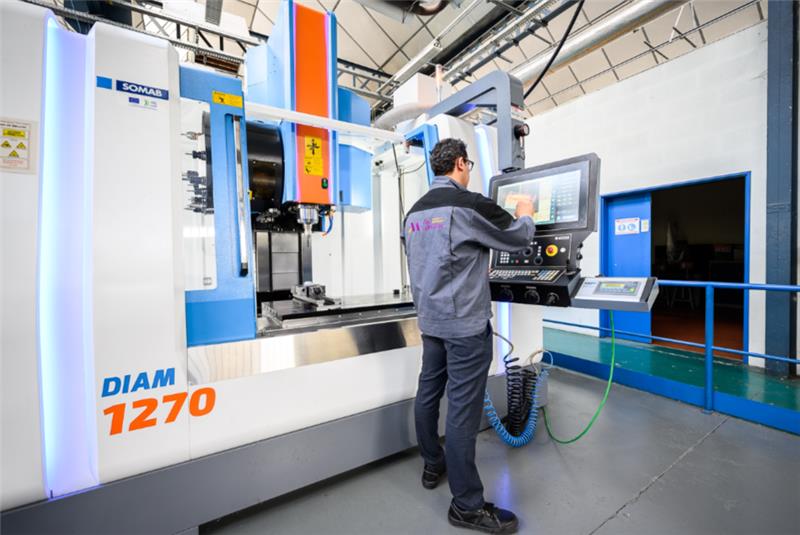
Three projects on the Arts et Métiers campus Arts et Métiers :
CAPINDUS (at the Laval Institute)
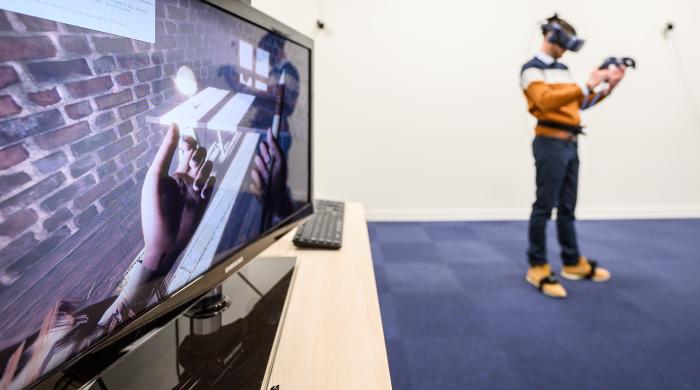
The project consists of studying and developing tools for designing educational content in immersive virtual environments linked to industrial digital twins, with a view to training future Industry 4.0 engineers. The project will address two scientific challenges in particular: (i) the design of an intelligent virtual assistant, configurable by the teacher, which the learner can question in natural language to have a concept explained again, and (ii) the design of a mobile system for capturing teachers and professional trainers, which can be deployed directly in industrial companies and schools. The entire project will follow a user-centered design approach and include testing with teachers who are potential future users. The project is backed by a CPER (Regional Economic Development Contract) obtained elsewhere, entitled CAPLAB, which aims to finance volumetric and multisensory capture equipment, and by the PIA JENII project (DemoES call) aimed at designing immersive and interactive digital twins for teaching.
Laval work team: Abdelmajid KADRI, Sylvain FLEURY, Benjamin POUSSARD, Simon RICHIR
METROPROD
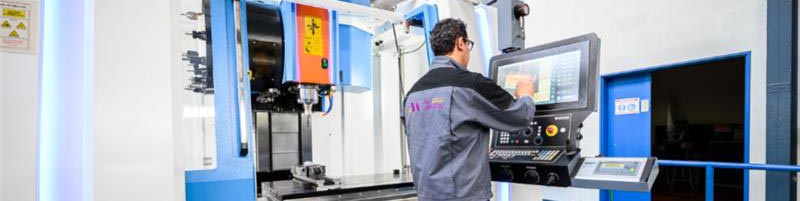
The project aims to create a platform implementing various metrology solutions for controlling energy consumption, pollution, and working conditions. The choice of relevant sensors will be made by limiting the amount of information collected and considering the uses from the design stage for production line management. The metrology to be integrated will cover four priority areas: electrical power consumption, machinery, production line, workshop; gas emissions at the workstation and on the production site; working environment factors such as noise, light, temperature, and humidity; working conditions and postures, and exposure to the risks of the operations to be carried out.
Working team in Angers: Julien ARTOZOUL, Yessine AYED, Guénaël GERMAIN, Bruno LAVISSE
REGAIN
As part of the acceleration in the use of high-performance recycled metal alloys, such as secondary aluminum alloys, which will soon be mandatory in Europe, the project aims to develop a new generation of material characterization tools. These tools will be designed to efficiently and economically link the microstructure of materials to their mechanical properties on a macroscopic scale. The project is structured around two complementary components. The first component (on the Metz campus) focuses on the development of an advanced characterization platform, integrating sophisticated physical models and cutting-edge numerical resolution techniques to characterize the behavior of sheets made from recycled steel of various thicknesses, including ultra-thin sheets, which are rapidly gaining popularity due to current trends toward miniaturization and weight reduction. The second part (on the Angers campus) of the project exploits artificial intelligence by adapting generative adversarial networks (GANs) to materials mechanics to predict the effects of process defects and microstructures on the fatigue response of materials and structures.
Working team in Angers: Camille BURTON, Linamaria GALLEGOS-MAYORGA, Pierre MEROT, Franck MOREL