National Master of Science Degree Master of Science DNM) in Mechanics, Materials, Structures, and Processes - Engineering, Mechanics, and Materials (MMSP - I2M)
Campus
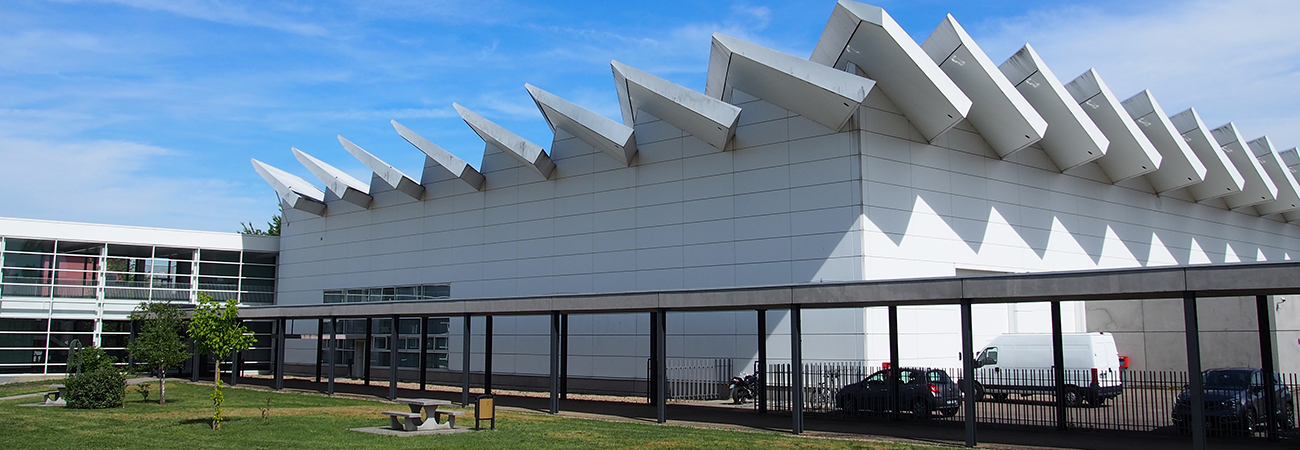
Arts et Métiers , Metz Campus.
Pedagogy
This program lasts two years.
M1: offered at the Arts et Métiers campus Arts et Métiers Paris as part of the "Factory of the Future - Mechanical Engineering" program.
Educational objectives
- Strengthen scientific knowledge and culture and provide high value-added expertise in technological innovation focused on innovative multi-materials, industrial systems, and smart manufacturing processes specific to the expectations of the industry of the future, including innovative additive manufacturing processes.
- Mastering and optimizing the combination of microstructure, materials, and processes through advanced multidisciplinary experimental and modeling approaches.
Program
This program runs over two semesters (S1 from September to the end of January and S2 from February to the end of June). For S1, students choose four core modules (4 x 30 hours) and three optional modules (3 x 30 hours), as well as a professional tertiary module (20 hours). Completion of S1 earns students 30 ECTS credits.
The second semester involves carrying out an R&D project in a professional setting or an industry-oriented research project, for a total of 30 ECTS credits. The applied internship begins in early February and takes place in the Master of Science program’s host laboratories Master of Science at a partner company. It lasts a minimum of 5 months and is supervised by a professor or an authorized faculty member. Furthermore, since the internship is assigned at the start of the academic year, students prepare the bibliography related to their internship during the first semester.
Core Curriculum
Students select 4 modules (out of 8) from the core curriculum. These courses provide general instruction in the three areas that make up the Master of Science program Master of Science Mechanics of Materials and Structures, Materials Science, and Forming Processes.
- EU TC1 Alloy processing
- EU-TC2 Deformation mechanisms and microstructure.
- UE-TC3 Experimental methods in solid mechanics.
- EU-TC4 Mechanical behavior of materials.
- EU-TC5 Thermomechanical behavior of heterogeneous materials and applications
- EU-TC6 Mechanics of continuous media.
- EU-TC7 Structural calculations.
- UE-TC8 Digital processing of partial differential equations.
Options: The elective modules correspond to specializations within the Master of Science program. Eleven modules, supervised by faculty members authorized to supervise research, are offered. Students also have the option of selecting these elective modules from the undergraduate programs offered by partner institutions.
- UE-OP1 Methods of microstructural analysis.
- EU-OP2 Texture and physical properties of materials.
- EU-OP3 New materials and processes for high temperatures.
- EU-OP4 Description of the behavior of biological tissues.
- UE-OP5 Fundamental concepts of fracture mechanics.
- UE-OP6 Micro-mechanics of crystal defects.
- EU-OP7 Vibration damping and control.
- EU-OP8 Characterization and modeling of materials under dynamic loading.
- EU-OP9 Experimentation and modeling in high-speed, dry machining.
- EU-OP10 Tribology, friction, dynamic interactions.
- EU-OP11 Module reserved for a guest lecturer.
- UE-OP16 Mechanics of Materials and Composite Structures
Tertiary module with a professional focus
- EU-T1 Scientific communication in English, paper writing, collaboration, lecturing
Major Courses
To help students choose their core and elective courses, five major tracks have been established that reflect the three themes of Master of Science Mechanics of Materials and Structures, Materials Science, and Forming Processes.
- Materials and experimental methods
- Mechanical behavior of materials
- Adaptive structures and materials
- Manufacturing processes and extreme conditions
- Material solutions for biomedical applications
Benefits of the training
- High-level scientific training organized into major courses of study.
- Research-based training providing scientific and technological innovation skills focused on innovative multi-materials, industrial systems, and smart manufacturing processes specific to the expectations of the industry of the future in a strong international context.
- Research training with a strong international focus thanks to close ties with the wider cross-border region and structural partnerships with renowned institutions and universities in the field of materials mechanics around the world: Texas A&M University, Georgia Tech, and Karlsruhe Institute of Technology (KIT), Beihang University, ...
- Internationally recognized teaching team made up of teacher-researchers with cross-disciplinary and multidisciplinary skills focusing on performance, weight reduction, functionality, and sustainable development of materials and structures for industrial applications.
- Internship closely linked to the industrial fabric thanks to numerous research projects carried out in partnership with companies involved in the industry of the future.
Validation
Knowledge assessments and written exams, report and defense for projects.
Career opportunities
Expertise in integrated product-process materials engineering, R&D engineer, innovation and process control project manager, international research and innovation professions, design and calculation office engineer, consultant, production, manufacturing.
ADMISSIONS
Admission requirements
Applicants must hold a Master of Science degree in mechanical engineering or materials science, an engineering degree, or have their prior learning and professional experience formally recognized. They must have a solid foundation in continuum mechanics, materials science, manufacturing technologies, and numerical methods for engineering.
Application to be submitted online
Partners
Industrial partners
VALEO, SOLVAY, PLASTIC OMNIMUM, CEA, Thyssenkrupp, EDF, Airbus, MEMOMECA, ZODIAC, ArcelorMittal, Renault, PSA Group, Schlumberger, CNES, UMICORE, ALSTOM, KIHN, SNCF, Medtronic, MBDA, Institut de Soudure, CETIM, IRT Jules Verne, Faurecia, etc.
Academic partners
- Master of Science specialization offered Master of Science partnership with the University of Lorraine (UL).
- Affiliation with a research unit accredited by the CNRS: LEM3-UMR CNRS 7239.
- Scientific cooperation within the framework of structural partnerships with Texas A&M University, Georgia Tech, Karlsruher Institut für Technologie (KIT), Beihang University, etc.
- Strong regional roots with engineering schools and universities in the Greater East region, Belgium, Luxembourg, and Germany.
Practical information
Program languages: French and English (starting in 2019)
ECTS credits: 60
Contact
Prof. Fodil MERAGHNI
Arts et Métiers Campus Arts et Métiers Metz
Laboratory for the Study of Microstructures and Materials Mechanics
Keywords
Mechanics of materials, Composite materials, Damage, Behavior laws, Fracture, Microstructure, Texture, Shape memory alloys, Micromechanics, Experimental mechanics, Computational mechanics, Structural mechanics, Computational simulation, Biomechanics, Manufacturing processes, Material-Process-Service Interaction, Additive manufacturing, 3D printing, Engineered materials.