National Master of Science Degree Master of Science DNM) in Energy Conversion Machinery Engineering (IMCE)
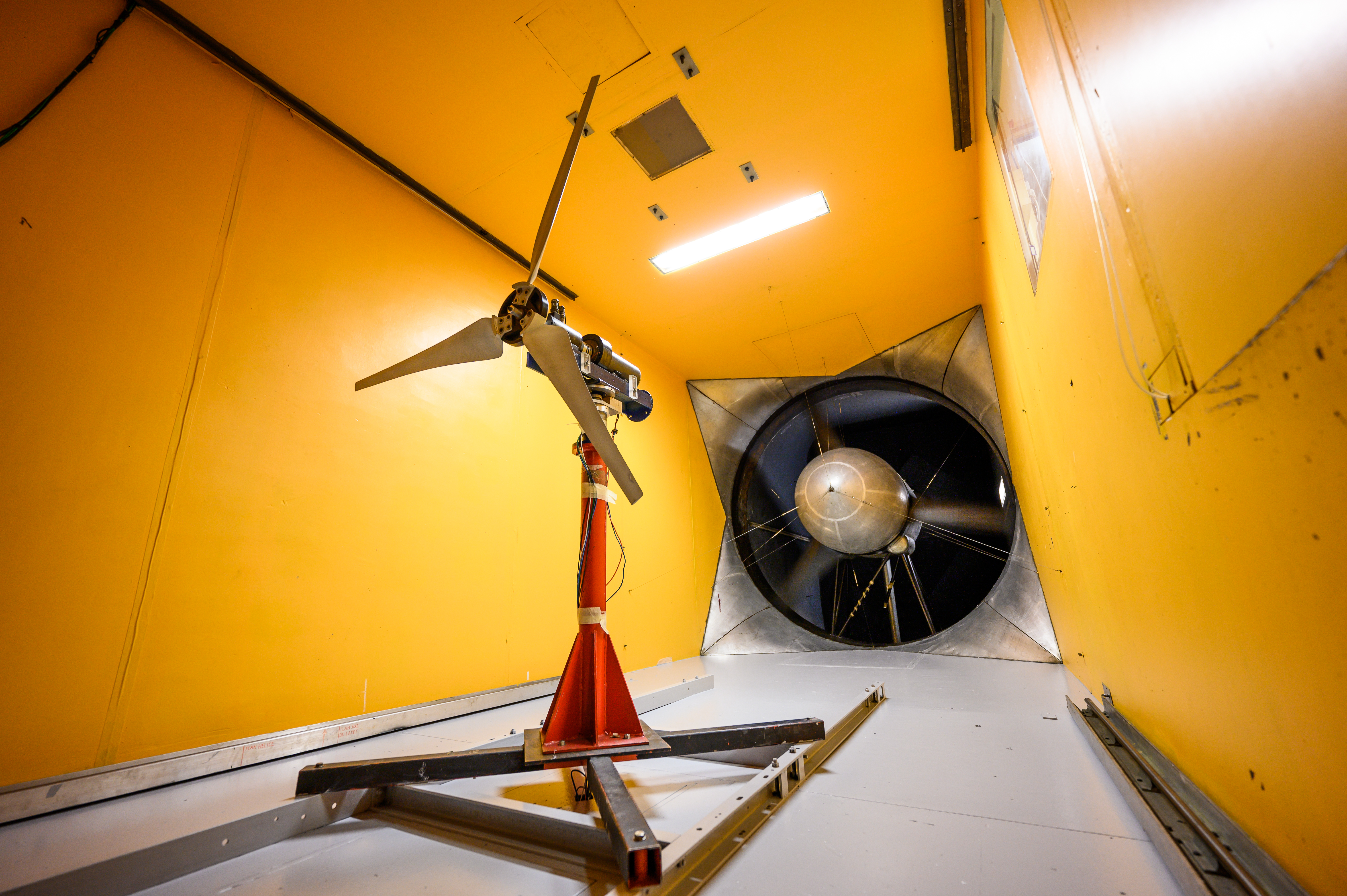
The Energy Conversion Machinery Engineering program is geared toward careers in aeronautics, automotive, transportation, energy production and conversion, petrochemicals, and agri-food, particularly in the research and development departments of industrial companies that rely heavily on optimized design, development, and control of rotating machinery (pumps, turbines, fans, compressors, volumetric machines, etc.) as well as energy systems that conserve natural resources. It provides knowledge of aerohydrodynamic and mechanical modeling, as well as the durability and performance optimization of these machines and assemblies.
Campus
Arts et Métiers Campus Arts et Métiers Paris
Pedagogy
Training schedule
This program lasts two years. The first year is offered at the Arts et Métiers campus Arts et Métiers Paris as part of the "Factory of the Future - Energy" course.
In the second year, the program includes a semester of classes from September to February. The second semester, starting in March, is dedicated to an internship lasting at least 20 weeks.
The first semester of the program is divided into two 8-week bimesters, each comprising 4 compulsory course units and optional course units (1 to be chosen), and associated with an exam session.
Program
- Energy Challenges of the 21st Century (60 hours - 6 ECTS)
- Decision-making analysis and risk management (30 hours - 3 ECTS)
- Scientific English (30 hours - 3 ECTS)
- Aerothermochemistry - Ground and aeronautical propulsion applications (67 hours - 6 ECTS)
- Aerohydrodynamics and turbomachinery efficiency (30 hours - 3 ECTS)
- Resource-efficient energy systems (30 hours - 3 ECTS)
- Optimization of turbomachinery efficiency (30 hours - 3 ECTS)
- Turbomachinery sizing (21 hours - 3 ECTS)
- Internship ( Master of Science thesis) (20 weeks – 30 ECTS)
Educational objectives
The academic and career-oriented objectives of this National Master of Science program Master of Science with careers in the aerospace, automotive, transportation, energy production and conversion, petrochemical, and agri-food industries.
These industrial sectors rely heavily on the design, development, and control of rotating machinery.
The acquisition of knowledge concerns both aerohydrodynamic and mechanical modeling, as well as the durability and performance optimization of these machines.
Assessment methods
Each module can be assessed through practical assignments, projects, reports, oral presentations, exams, and the assessment rules are explained at the beginning of the program. Each module is graded on a scale of 0 to 20.
- The final grade for S3 modules must be greater than or equal to 10, and there is compensation between modules.
- For the Master of Science thesis, the final grade must be 10 or higher.
Make-up exams are held at the beginning of the second semester.
Career opportunities
Sectors of activity and types of employment
Industries related to aeronautics, space, automotive, rail, marine, oil production and exploitation, housing, environment, etc.
Public and private laboratories or industrial technical centers.
Professions
Engineer/researcher in R&D in large companies or start-ups, in many sectors (industry, construction, services, consulting, etc.) and fields (automotive, aerospace, healthcare, IoT, etc.).
Continuing education
PhD student, in academia or industry (CIFRE), with the aim of becoming a recognized expert in the field of turbomachinery.
Admissions
Access routes
Retrouvez toutes les informations concernant les admissions à un Diplôme National de Master Arts et Métiers en cliquant >> ICI <<
Admission requirements
Admission to Master of Science granted to holders an M1 degree (Mechanics, Energy Engineering, Physics, MAF), or a French or foreign degree recognized as equivalent (Engineering Degree from certain schools in particular, or successful completion, with a high grade, of the second year of the program at the school, for schools associated with Master of Science), and a favorable decision from an admissions committee that meets twice a year (July and September).
Given the nature and objectives of Master of Science program, applicants must have a solid foundation in thermodynamics and continuum mechanics, particularly fluid mechanics.
An initial selection will be made based on the application. Candidates will be notified of the decision concerning them during the month of July. The jury will make one of the following decisions for each student:
- Rejection,
- Waiting list,
- Final admission.
The jury will meet again in September and, if places are available, will review the waiting lists and new applications. Candidates will be notified of the decision by letter, no later than the second half of September.
Partners
Academic partner(s)
Contacts
- Head of Education: Michael DELIGANT - michael.deligant@ensam.eu
- Administrative manager: Colin DAVRAINVILLE - colin.davrainville@ensam.eu