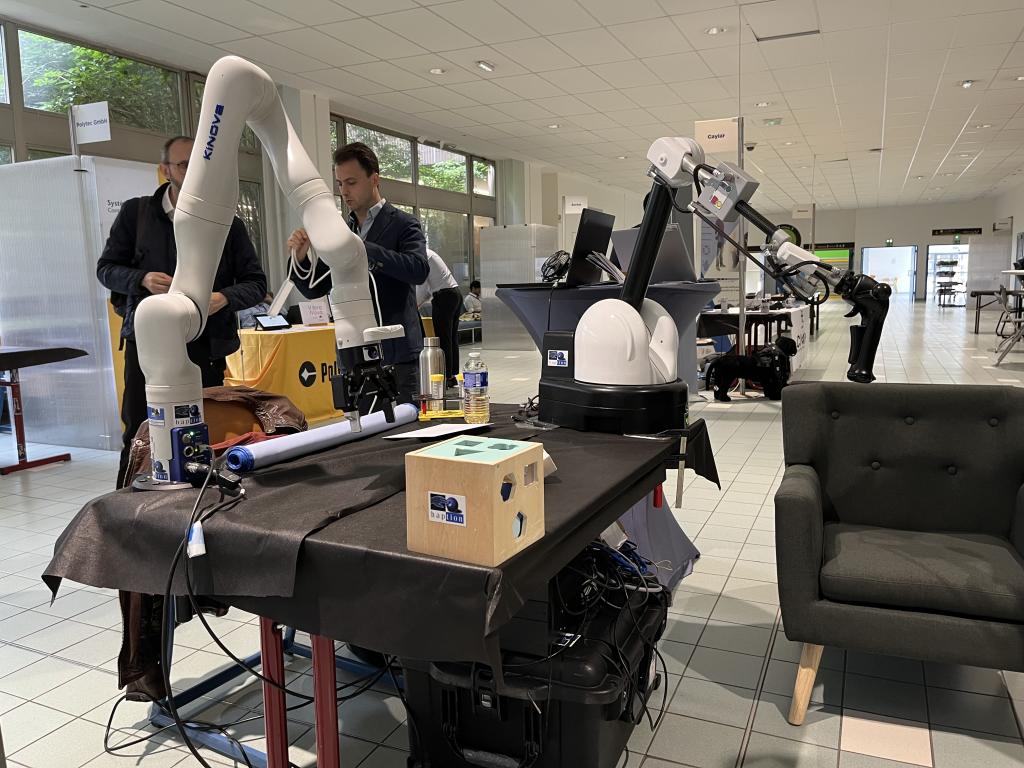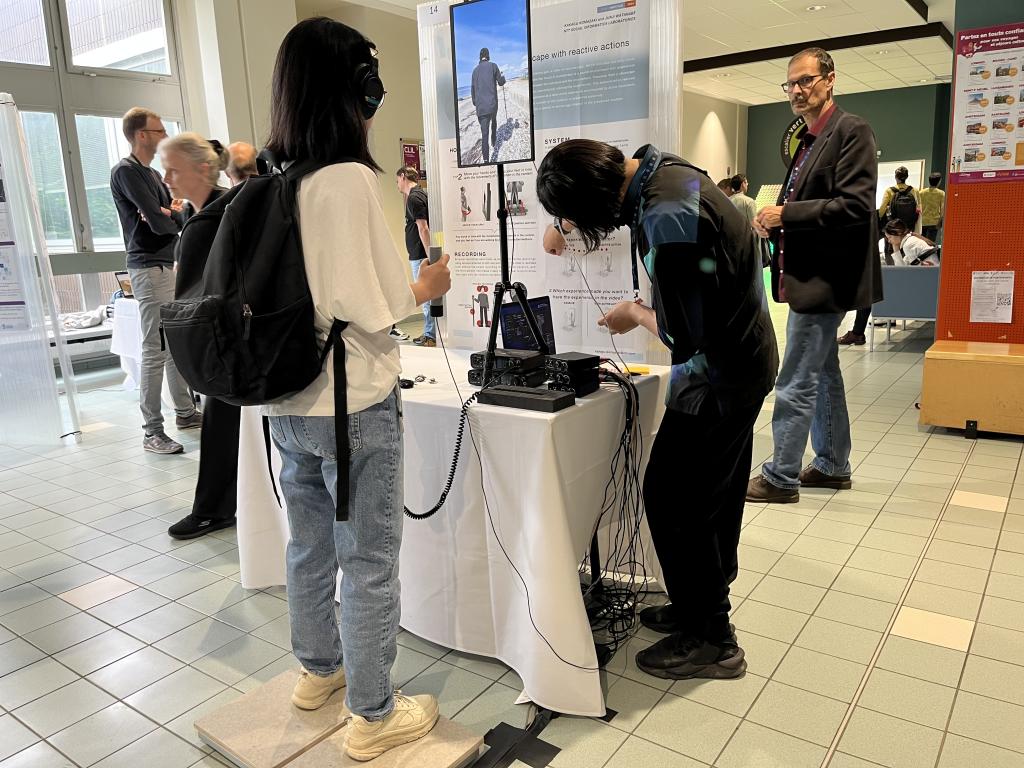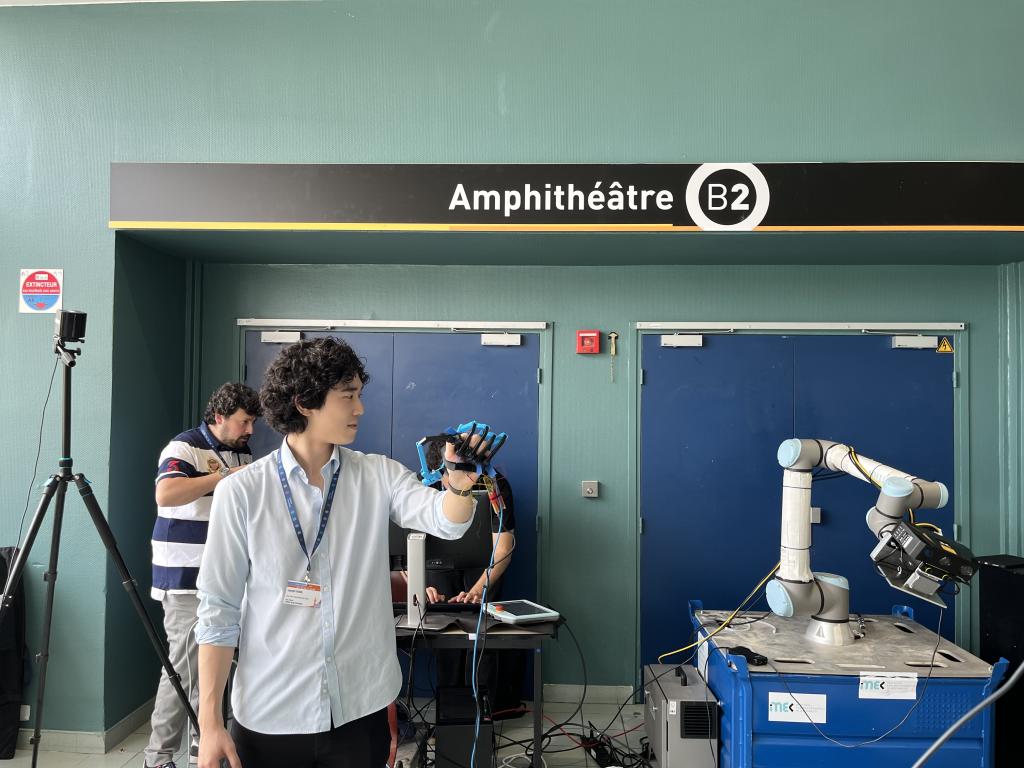
The L2EP laboratory at the Arts et Métiers campus Arts et Métiers Lille organized the EuroHaptics 2024 conference, which took place on July 1, 2, and 3, 2024, at the University of Lille. A look back at the event sponsored by Arts et Métiers, the Institut Carnot Arts, and the University of Lille, and a presentation of the field of haptics research.
Eurohaptics 2024: An event organized by L2EP
An event with a wide reach
Held every two years, EuroHaptics is a major international conference on haptics and tactile computing applications. It is the leading European event for researchers in this field. After Leiden in the Netherlands in 2020 and Hamburg in Germany in 2022, Lille hosted the 14th edition of the event this year.
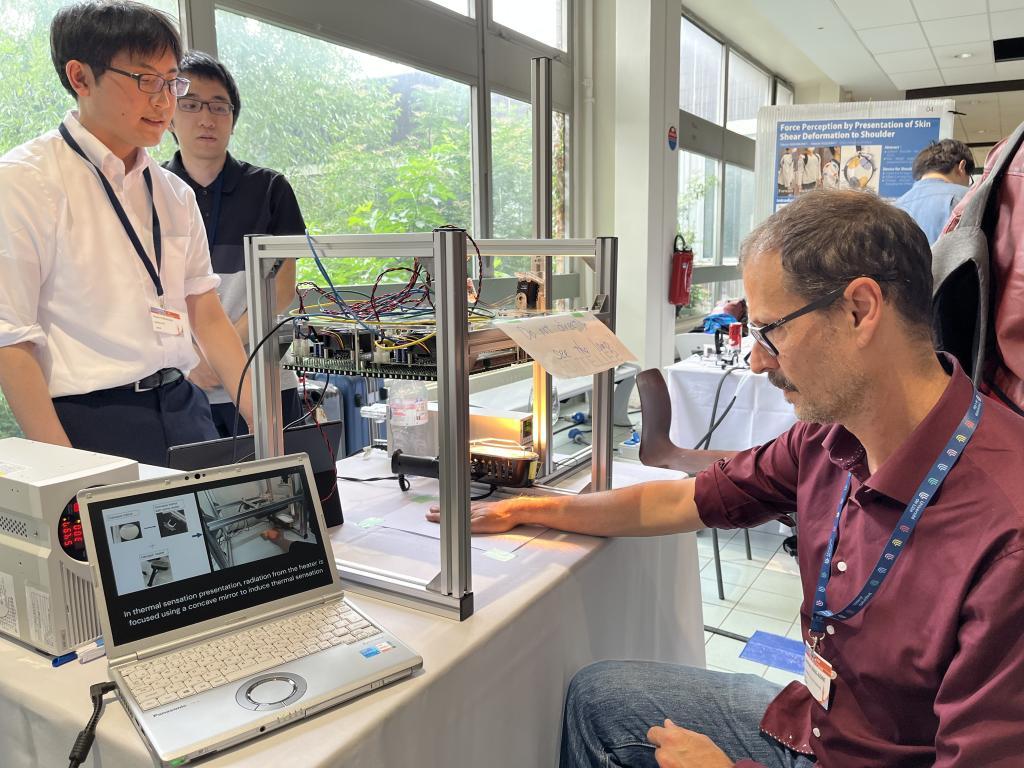
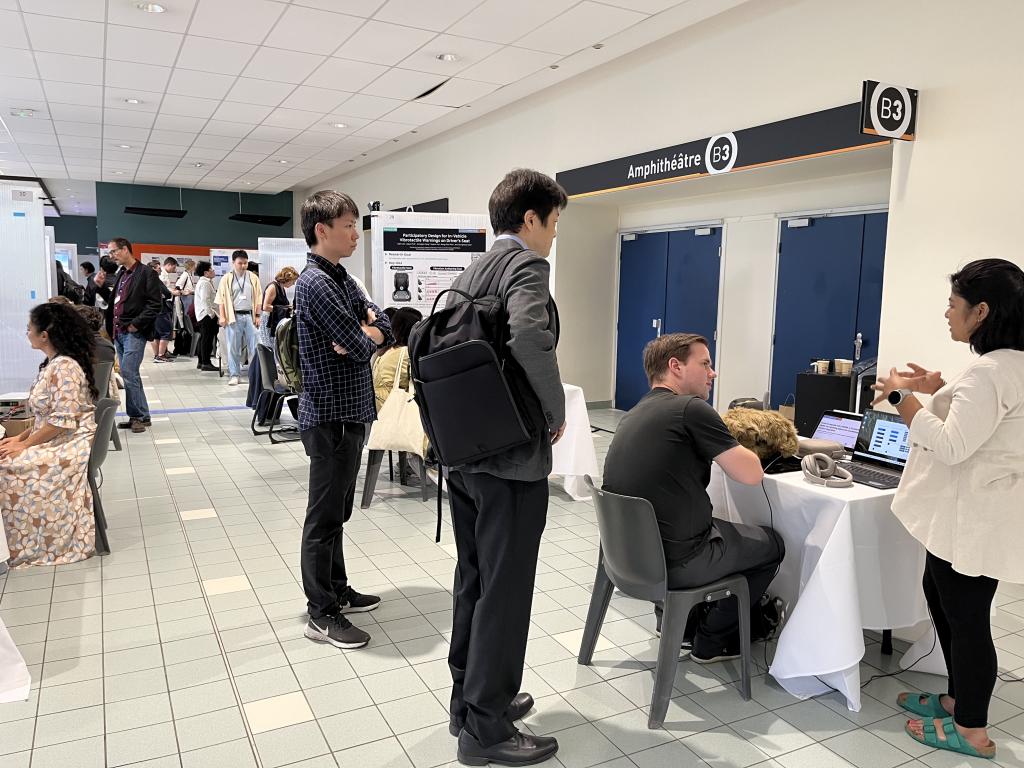
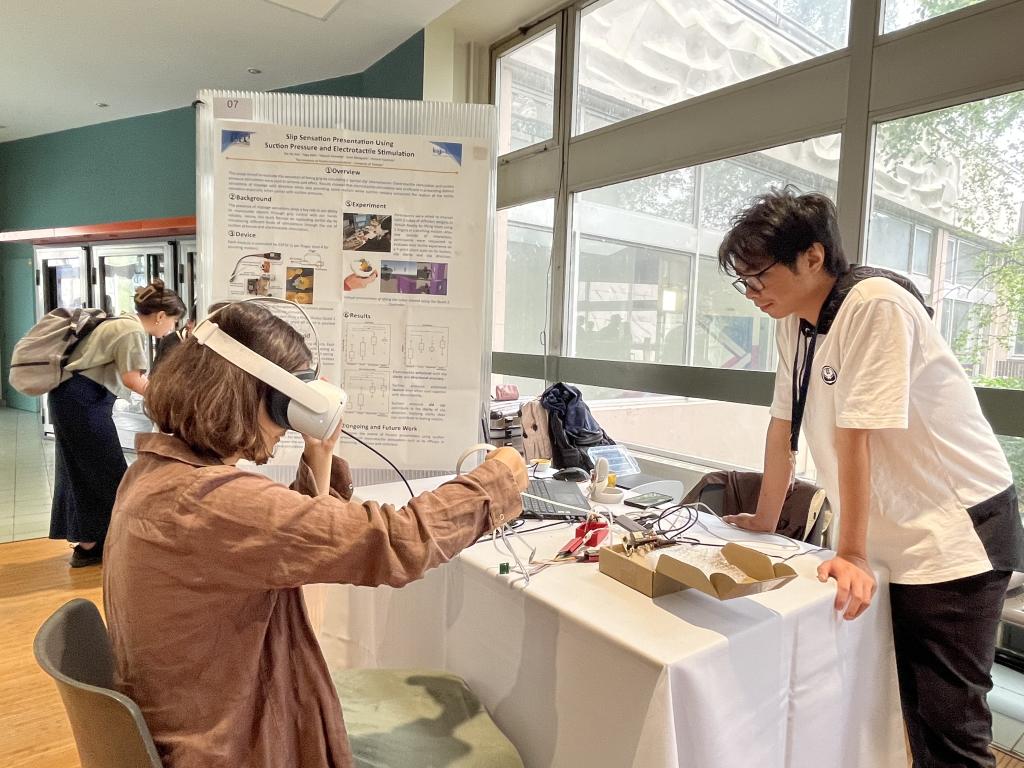
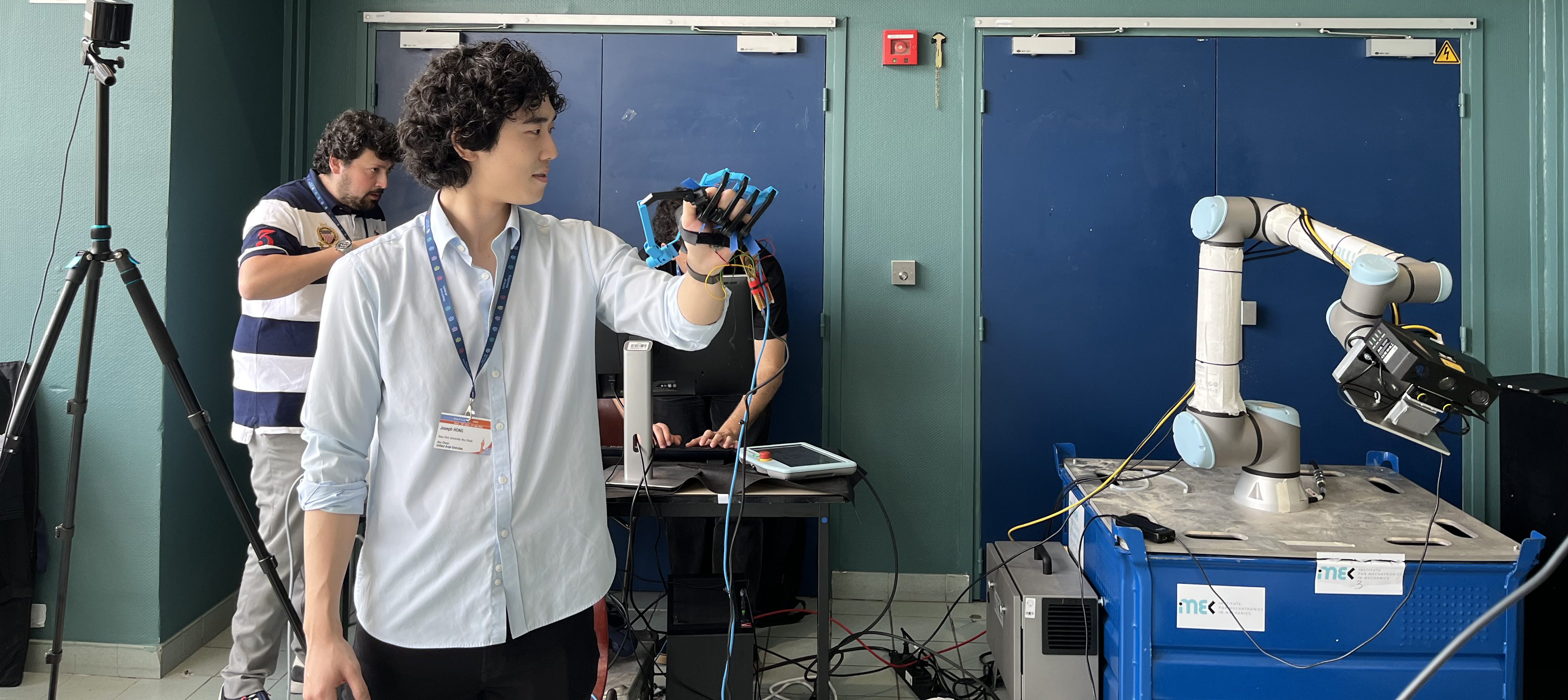
The program included conferences, workshops, and demonstrations, during which more than 350 participants were able to discuss the latest advances in haptics in various fields.
"The idea behind the event is to enable discussion around highly exploratory approaches. Participants exhibiting at stands are invited to put forward highly innovative and creative proposals," explains Christophe Giraud-Audine, head of the L2EP laboratory at the Arts et Métiers campus Arts et Métiers Lille.
"The opportunity to host such an event provides international visibility for L2EP in the field of haptics. We have been working in this field for around twenty years.
The last conference in France took place in 2014. Hosting the 2024 conference is an honor. We hope that this edition in Lille will leave a lasting impression, so that researchers and stakeholders in the field of haptics will remember that the L2EP laboratory in Lille, organizer of this fourteenth edition, is working on this topic.
Indeed, the more visible the activity is, the more we will be able to invest in it, particularly by creating new positions and recruiting new researchers.
Through this event, we were also able to attract people who don't usually attend EuroHaptics. The community is fairly homogeneous, and the fact that it was organized in France this year attracted more participants, following workshops. We are very proud of this! Thank you to the local and European student volunteers for helping to host the event," said Betty Semail, Director of the L2EP laboratory at the University of Lille.
Haptics—what are we talking about?
Haptic perception is a representation of the environment that involves both the sense of touch and proprioception. That is, the perception of one's own body.
A haptic device is a physical, mechanical, or robotic tactile-kinesthetic system that can create communication between humans and part of their environment. It allows users to design, model, and manipulate objects in a virtual environment with a certain tactile (touch) and kinesthetic (force feedback) sensation.
Thanks to haptics, researchers are developing new human-machine interfaces to improve interactions and coexistence between the two. The machine can be a computer, a robot, etc.
Haptics makes it possible to simulate the sensations that the user would normally experience in real-life conditions when in contact with the machine.
Several concrete cases are known, particularly among video game players, when a controller vibrates to simulate virtual contact, but also in everyday life, when a smartphone vibrates after a touch on the screen to indicate to the user that the action has been registered.
On the professional side, haptics has also developed in recent years in fields such as medicine and surgery. In fact, during operations lasting several hours, surgeons now operate while seated, with robotic assistance and joysticks, in order to better cope with fatigue. In this specific case, haptics allows them to maintain sensation when cutting tissue, for example.
A research topic that applies to an increasing number of fields
Beyond the examples cited above, which are now increasingly widespread, haptics is a research topic that is increasingly in demand across a wide range of fields.
"There is now a lot of research being done in the field of gaming, with, for example, the development of suits that reproduce the vibrations of a car: nothing moves, but everything is suggested. In fact, the brain tends to interpret sensations and attribute them to experiences it already knows. This is where the complexity of the research lies, since touch is a very subjective sensation. Humans don't feel the same thing depending on the development of their senses, but also depending on their culture. For example, the Japanese have a much more developed vocabulary than Europeans to describe texture," explains Christophe Giraud-Audine.
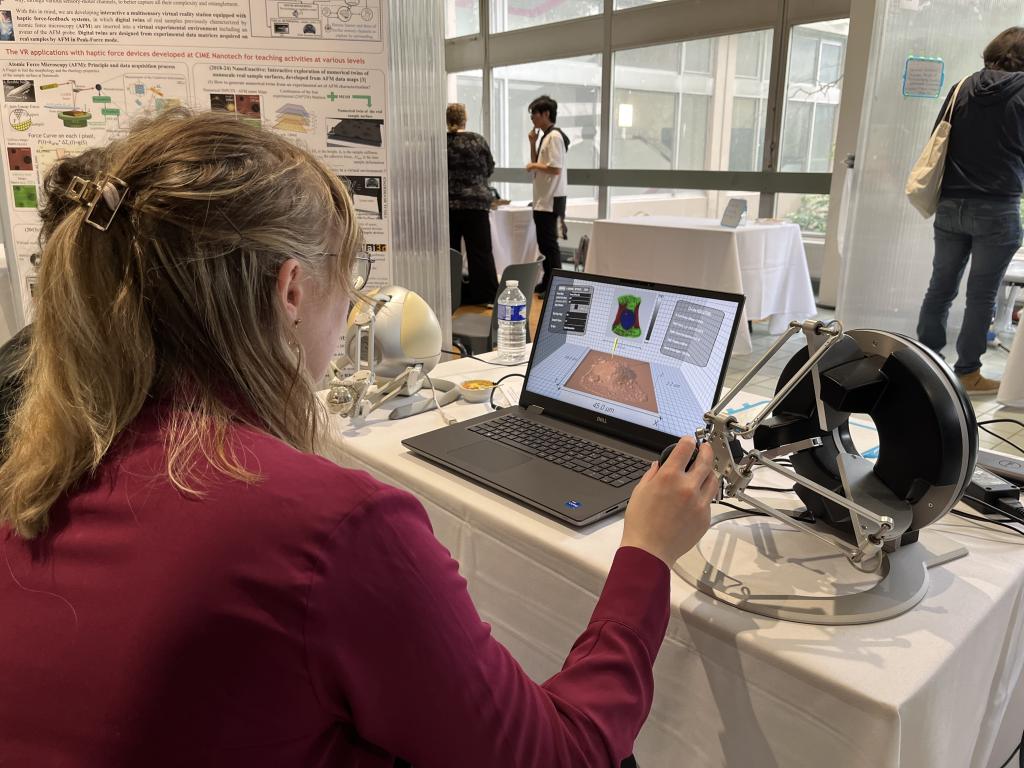
Haptics will also experience growth in education and research with the deployment of digital twins, which are no longer limited to visual aspects. For example, to enable users to appreciate the adhesion, stiffness, elasticity, or deformation of a material observed under a microscope, or to simulate the slippage, weight, or temperature of materials during virtual manipulations using an augmented reality headset.
At L2EP, teams are more specialized in vibration control with a view to developing sensations (on the research technologist side). We develop physical devices that are then used as a basis for manufacturers in various fields. For example, a ready-to-wear clothing company could one day sell its products remotely by reproducing the texture of fabrics, just as a cosmetics company could highlight the benefits of its products by reproducing the soft texture of hair," concludes Christophe Giraud-Audine.
An innovative combination of creativity and technology
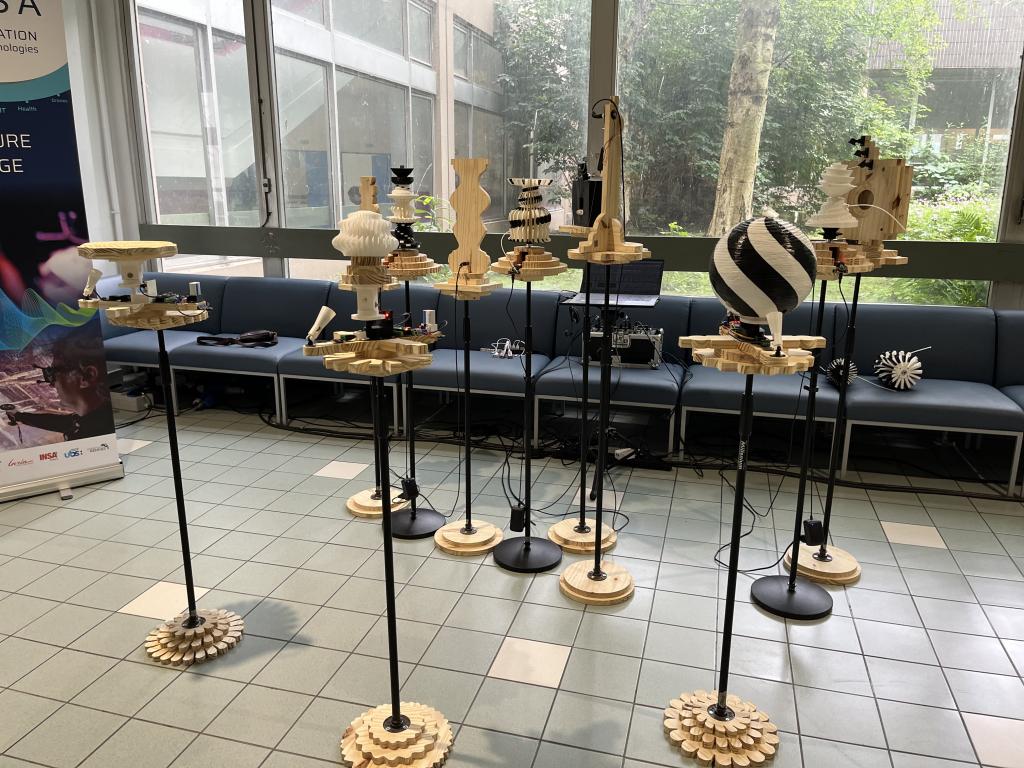
New this year: a call for projects aimed at creating an "Art-Design" trail was a huge success, with five proposals selected from a large number of entries to be presented during the three-day event.
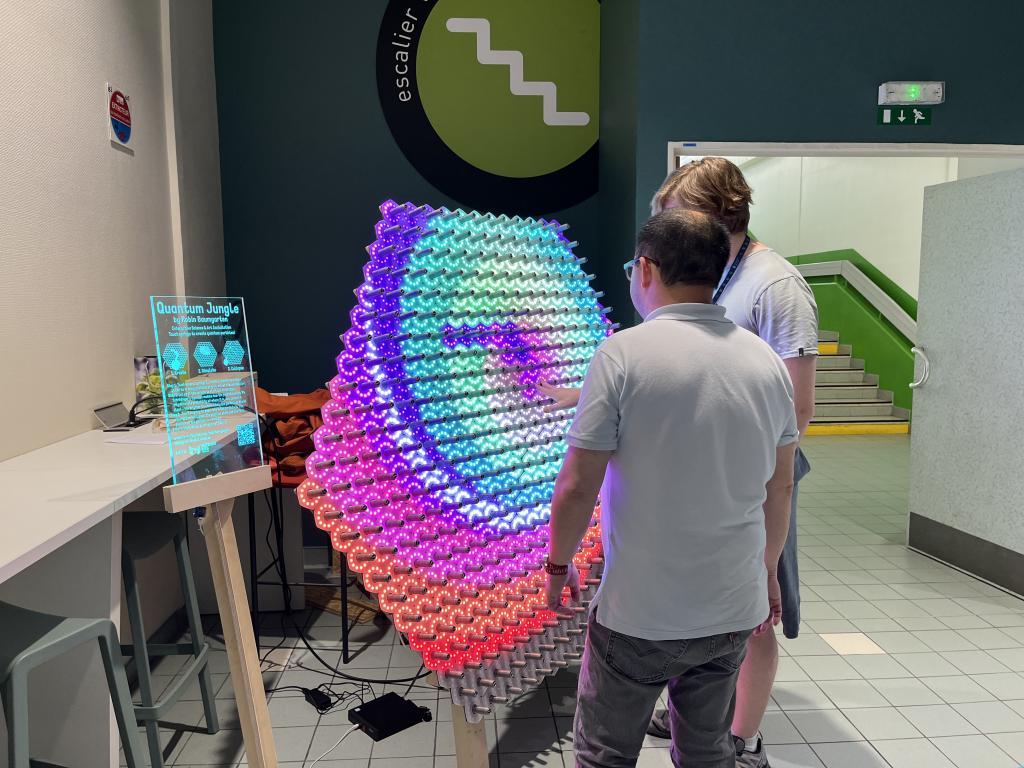
These include rotating landscapes of haptic sculptures by the digital art lab "Mille au carré, " the immersive, interactive, multisensory musical composition "Quetzalcoatl," and "Jungle quantique, " an interactive installation that playfully visualizes concepts of quantum physics on a wall of tactile metal springs and LEDs, by Robin Baumgarten, Wobbly Laboratories.
Congratulations to all participants for their ingenuity, creativity, and rich discussions! We look forward to seeing you at the next edition, which will take place in Pisa.