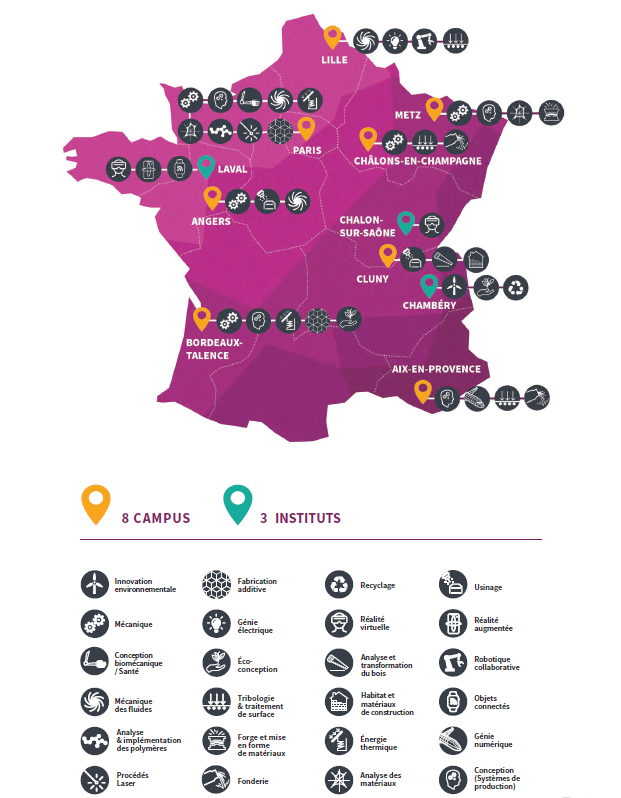
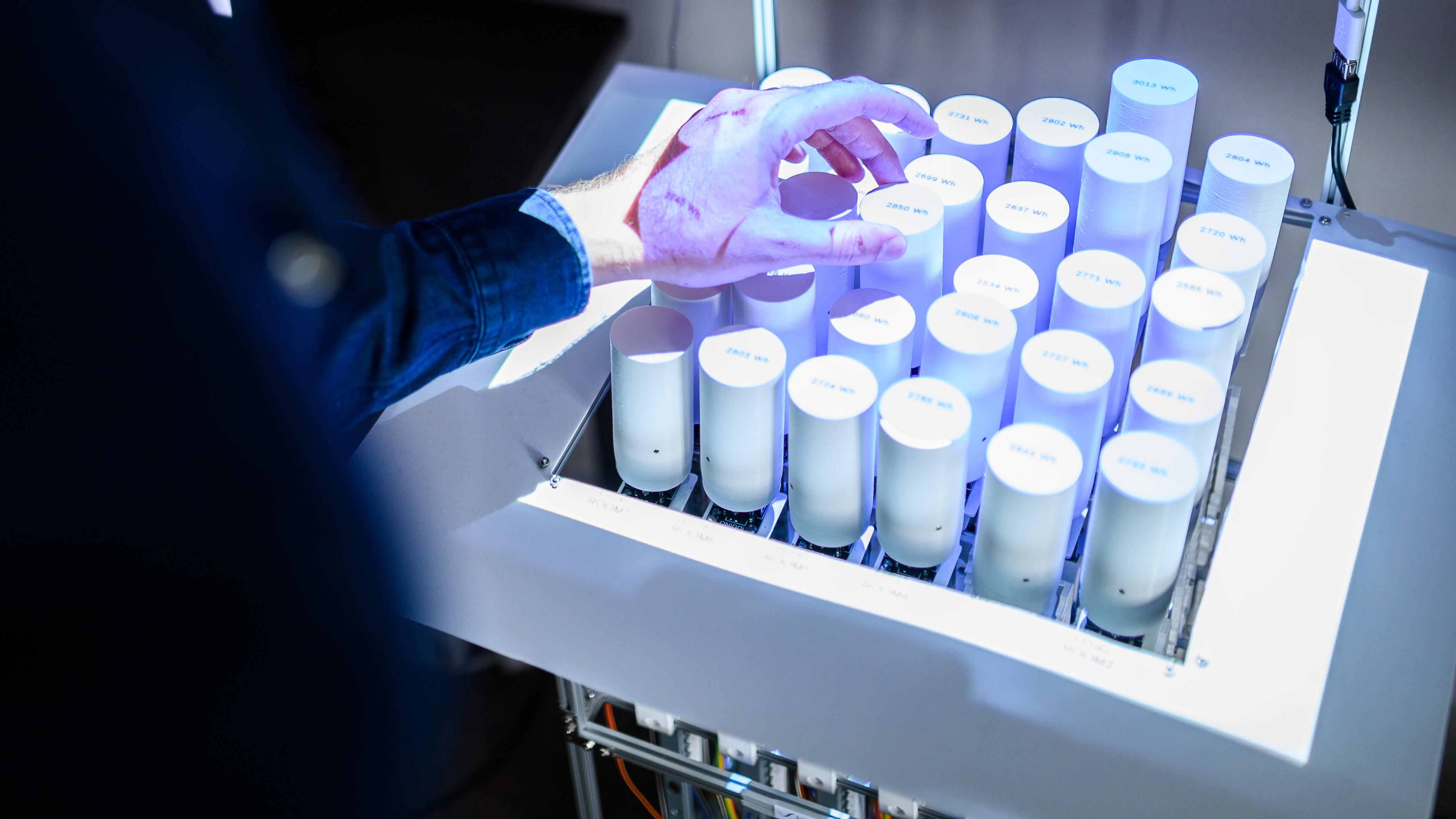
The color coding of campuses highlights the activities of the various Arts et Métiers sites in terms of research and commercialization. Each campus is designated as a leader in several key scientific areas forthe industry of the future, fromeco-design to foundry work, additive manufacturing, mechatronics, and materials analysis.
"To increase our impact on manufacturers in each economic sector, we have carried out in-depth work on the scientific coloring of campus : a detailed mapping of campus skills that enables us to manage and develop their activities, in research and commercialization, and enabling the school to respond collectively and effectively to industrial issues that often require multiple skills,"explainsIvan Iordanoff.
Eachcampus is designated as a leader in several key areas of expertise, such asmachining in Cluny, biomechanics in Paris, and forging in Metz. These areas of expertise are called upon to meet the needs of the five economic sectors. Around twenty key skills have been identified, representing 70% ofArts et Métiers scientific activities. Some of these are developing very rapidly, such as additive manufacturing, the digitization of processes and procedures, and collaborative robotics."
THE CAMPUS COLORING MAP