
General engineer, studentorprofessional training contract, third-year expertise in energy efficiency and ecological transition for industry: EFFIGENIE.
Campus
Arts et Métiers Campus Arts et Métiers Lille
Objectives
- Educational and scientific
EFFIGENIE's expertise aims to bring you to a level of expertise that will enable you to make informed decisions on issues relating to the design and management of energy systems in the context of the ecological transition applied to industry.
Thanks to this expertise, engineering students will be able to propose solutions that reduce energy consumption and minimize environmental impact for both industry (from SMEs to multinationals) and housing. They will acquire skills in understanding, designing, and implementing solutions that address multi-domain and coupled energy challenges (electrical, thermal, and fluid mechanics).
The L2EP (Laboratory of Electrical Engineering and Power Electronics) and LMFL (Laboratory of Fluid Mechanics) in Lille naturally joined forces to contribute their complementary expertise, which is essential for mastering this type of complex issue.
While primarily geared toward industry, this program also offers the opportunity to pursue a doctoral degree.
SPECIFICITY – 2 possible courses of study – PROFESSIONAL TRAINING CONTRACT and STUDENT status
The assessment can be carried out:
- in the form of a 12-month professional training contract. During this period, the learner is employed by a company (at a minimum of 80% of the minimum wage) and alternates between periods at the School and in the company (on average, 2 days in the company + 3 days at school per week in the 9th semester, then full-time in the company in the 10th semester).
- as a student.
Program
- Detailed description of the modules
The program consists of three specific modules: the first module focuses on the tools and technological resources needed for the energy transition. The second applies energy concepts in industrial and urban environments in the context of the ecological transition. The third module is devoted to energy management and optimization.
Module 1 - Tools and technological resources for the energy transition
- Wind power / Tidal power
- Solar thermal and photovoltaic
- Nuclear
- New carbon sources
- Transportation and electrical distribution networks
- Energy Storage and System Services
Module 2 – Energy applications in industrial and urban environments
- Positive energy buildings (BEPOS)
- Energy solutions for industry
- Carbon footprint assessment / Life cycle assessment (LCA)
- Environmental regulations and standards
Module 3 – Energy Management and Optimization
- Energy management
- Modeling and optimization tools
- Energy savings of projects
- Energy transition strategies
- EN 16247-1 normative energy diagnosis and ISO 50001 method
Key scientific and educational leaders in the field
Marcello MELDI, François GRUSON, Thomas ROILLET, Antoine DAZIN, Sophie SIMONET, Eric SEMAIL, Xavier KESTELYN
Related technology platform
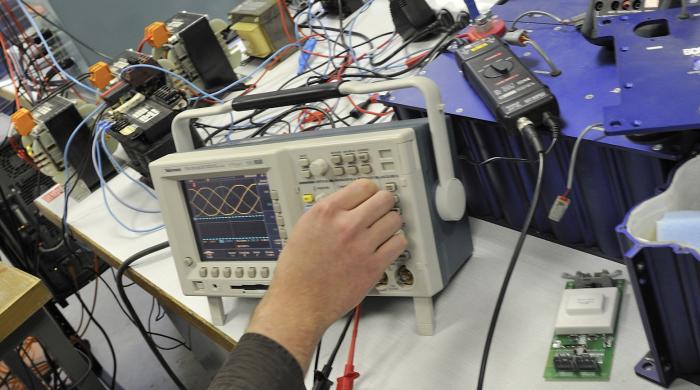
Part of the training is based on the "EPMLab" (Electrical Power Management Lab) technology platform at the Lille campus, in association with L2EP. This platform provides innovative industrial resources (real-time network simulator, converters, etc.).
Target sectors and jobs
- Energy industry (producers, network operators, storage)
- Sustainable building and construction
- Local authorities and urban planning
- Energy transition and environmental consulting
- Startups and innovative companies in cleantech
Examples of occupations
- Energy efficiency engineer
- Energy Transition Project Manager
- Carbon footprint consultant
- Energy manager in a local authority or company
- Smart Energy Systems Engineer
Some of the courses are shared with the Specialized Master's Degree in New Energy Management (SYSPEC), which benefits from contributions from industry players and organizations such as EDF, RTE, SAFRAN, INNOVENT, and ADEME.
Partners
EDF, RTE, Enedis, Safran, Engie, CWS, GE, Schneider Electric, Innovent – the MEDEE research cluster on Energy Management in Electric Drives
Practical information
- Required level: Knowledge of energy engineering/electrical engineering/maths and IT at M1 level (first year of Master's 2/second year Arts et Métiers)
- Level: Graduate
- Course language: French
- Period: Semester 9
- Number of hours: 150
- ECTS credits: 13