In a context of rapid digital transformation, the Aix campus is called upon to rethink its pedagogical and methodological approaches through the development of its technological platform "Interactive environments to increase collaborative work and collective decision-making."
It is one of 12 platforms integrated into theEvolutive Learning Factory (ELF) - Aix-based school factory.
A dual advance in uses and technologies
The integration of new collaborative digital environments into teaching is a strategic response to experiment with and structure the use of new technologies for training and decision-making in complex contexts.
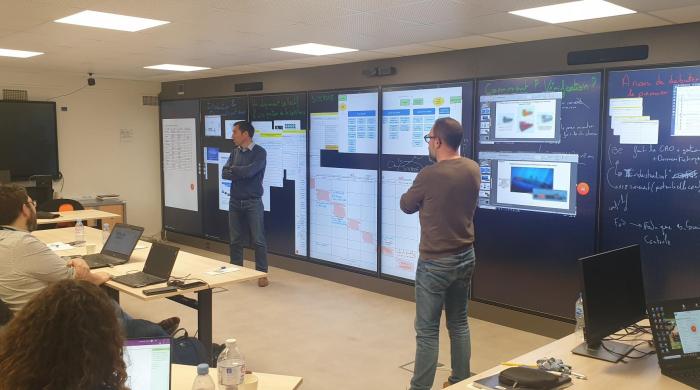
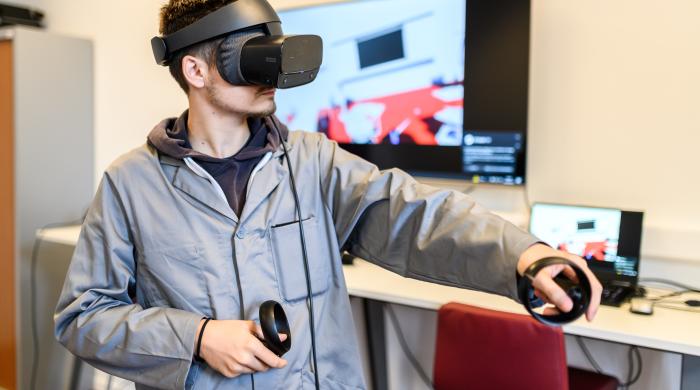
"This platform offers its users an interactive environment to increase collaborative work and collective decision-making, designed to support teaching and research activities, using innovative tools such as interactive screens, virtual reality, digital twins, and advanced collaborative interfaces," explains Prof. Lionel Roucoules, project leader.
The technologies used are part of a logic of innovation and bridge the gap between education and industry.
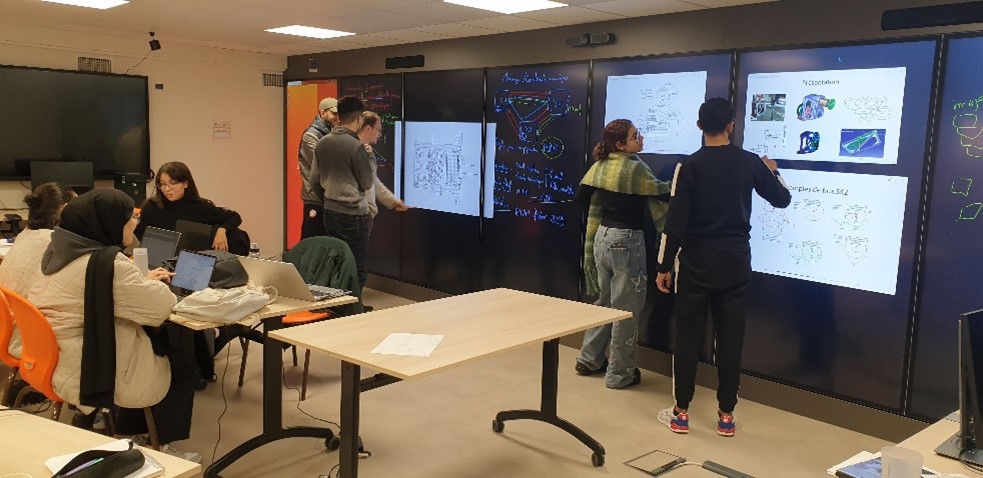
This technological platform is composed of interactive surfaces of different sizes depending on their use, immersive technologies (virtual and mixed reality headsets) and haptic technologies (gloves, arms, etc.). These technologies incorporate software or algorithms that are either commercially available or under development at the LISPEN laboratory for system modeling and supervision, data and process analysis, and information system interoperability.
Educational, scientific, and industrial objectives
The emergence of interactive digital environments represents a strategic opportunity for the campus.
The aim of this platform is to co-develop new uses and associated technologies for collaborative work, supervision, and collective decision-making activities.
It is closely linked to the current challenges of digital, energy, and industrial transition.
The project therefore aims to test the value of new technologies in two main fields of application:
- Educational activities can be presented differently through interactive whiteboards and the use of digital technologies (interactions, virtual reality, green screen, etc.). We combine the functions of a traditional whiteboard (writing, diagramming, etc.) with current projection methods (video projector, etc.) to mix all types of educational media (images, videos, text, etc.) and increase collaborative capabilities for annotation, reuse, and comodality.
We have noticed that students are more motivated in their training when the educational formats are innovative.
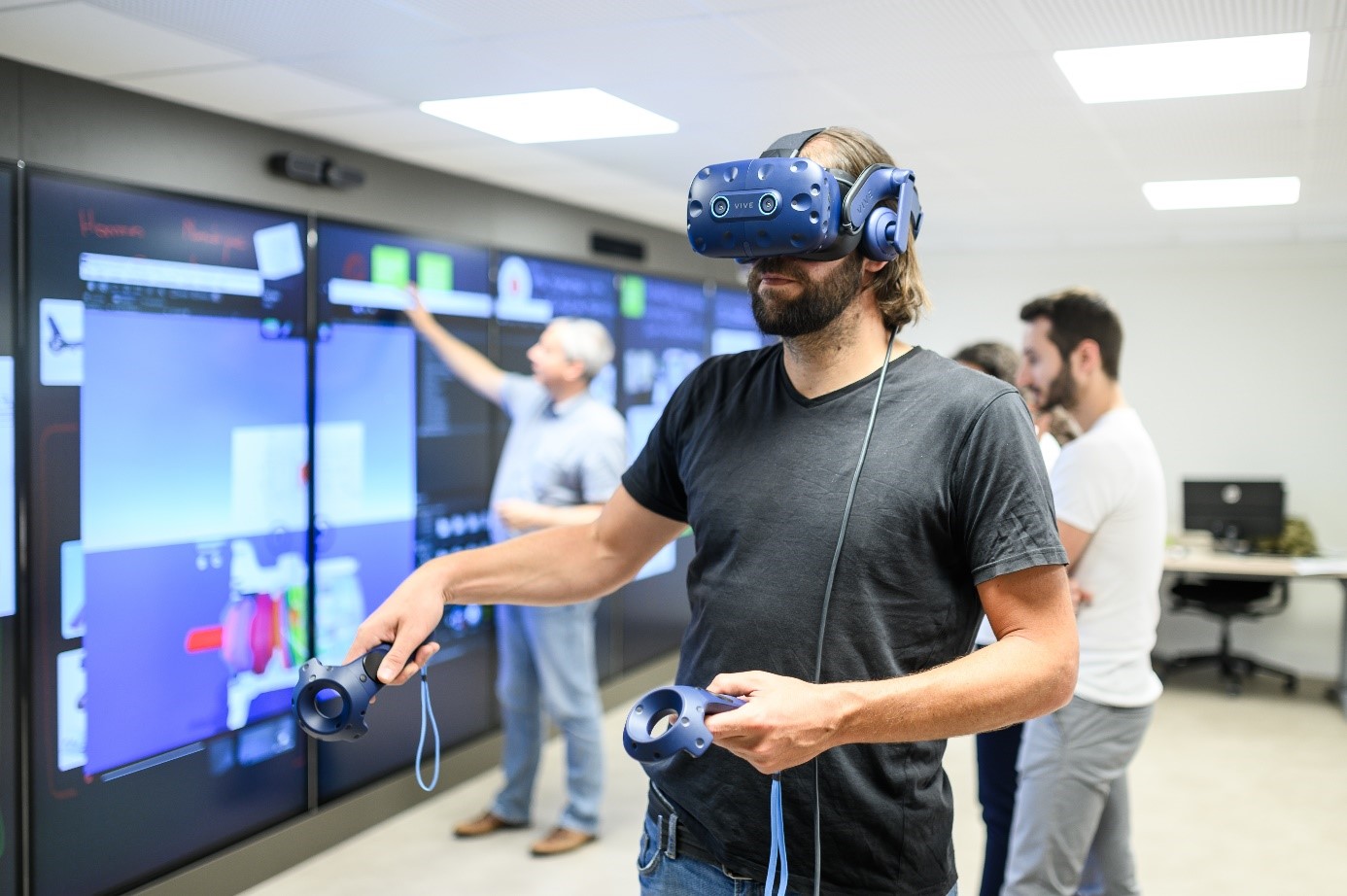
- Industrial and scientific research activities also benefit from the advantages mentioned above, enabling them to increase collaboration and decision-making by simultaneously displaying multiple sources of information.
This platform also serves as a medium for presenting scientific work related to digital continuity and the interoperability of information systems (*SINCRONE project). Other current scientific work is experimenting with these "large" surfaces for the supervision of complex systems and the analysis of cognitive decision-making phenomena based on dynamic data representation (**MACCOD project, ***SPHERE project), as well as for analyzing the drivers of technological and digital transformation in usage.
A diverse audience
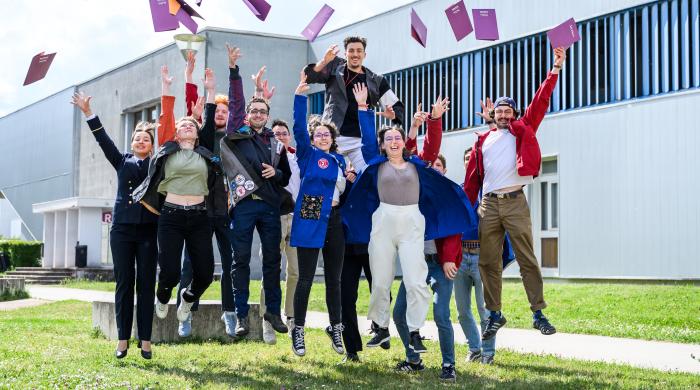
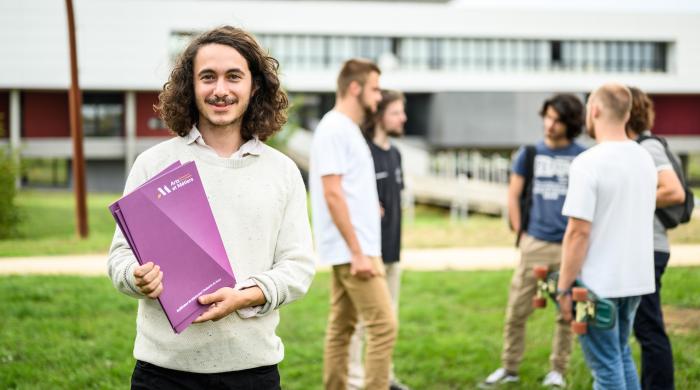
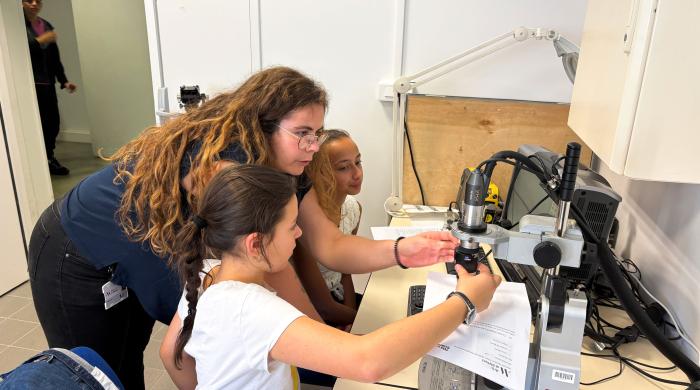
This initiative benefits students from various programs offered by the campus.
Each year, nearly 200 students experience these new learning and simulation environments, with the potential for expansion to other programs.
Some examples of applications:
• 2nd year of Grande Ecole Engineering Programme PGE): analysis of multi-criteria decision-making processes
• 3rd year PGE with INNUI specialization: digital transformation through the co-evolution of technologies and uses (digitization, AR/VR…)
• 3rd year PGE and nationalCPSE Master of Science program: Model-Based System Engineering (MBSE) & interoperability
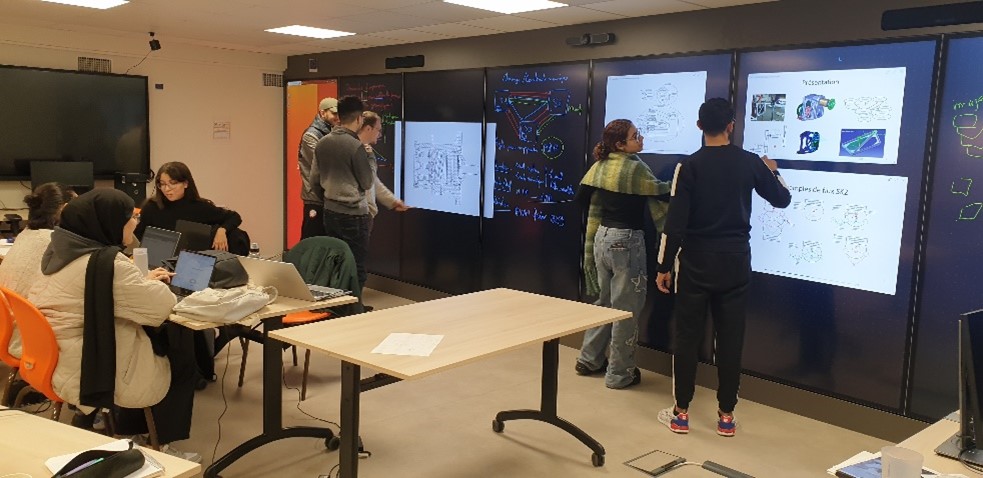
The platform is also open to manufacturers and other organizations for their current activities or to test new uses based on new technologies.
Funding and outlook
The project already has significant funding.
- €590,000 was obtained through the 2016-2020 State-Region Plan Contract, the PIA-PERF project (regional funding), and the ESF (European Social Fund) for calls for educational innovation projects.
- An additional €100,000 comes from the Equipex+ Continuum programs.
The project follows an evolutionary dynamic, integrated into student projects, research work, and industrial partnerships. Deployment is therefore gradual and adaptive, ensuring a controlled ramp-up.
Contact: Prof. Lionel Roucoules
* SINCRONE (funded by AMI CORIMER): 2024–2027: Innovative digital solutions for responsive and optimized shipbuilding and nuclear power projects
** MACCOD (submitted to ANR – PRC): Collaborative dynamic multi-analysis of decision-making contexts under uncertainty
*** SPHERE (funded by the DAE and submitted to the PACA region's technology platform call for tenders): supervision of mixed-energy systems installed in the Pôle des énergies décarbonées building.