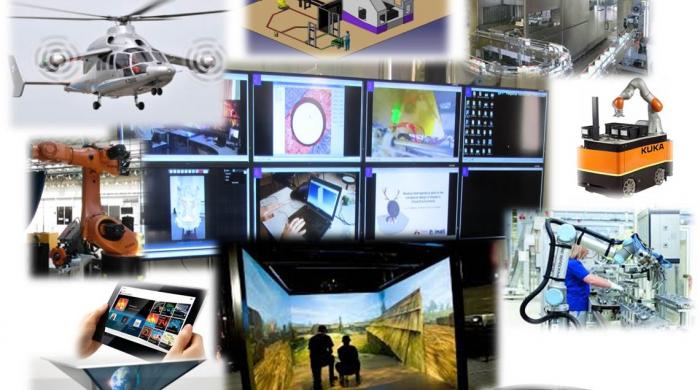
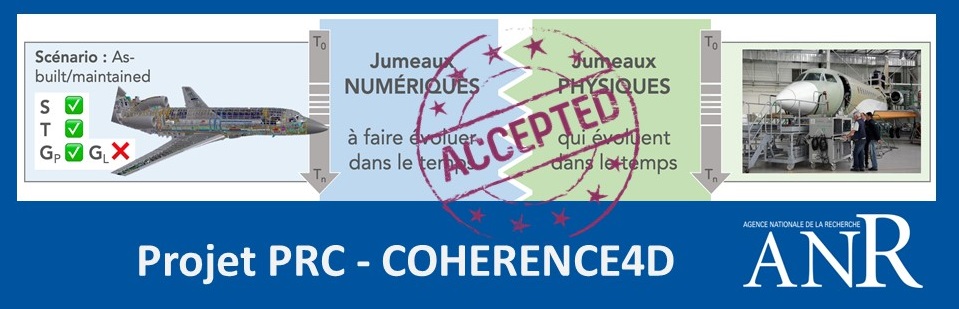
Lispen, a multi-site research laboratory, has just signed a contract with the French National Research Agency (ANR) for the COHERENCE4D collaborative research project. The aim is to help maintain the consistency of digital twins of complex systems in relation to changes in their physical twins within the Industry of the Future.
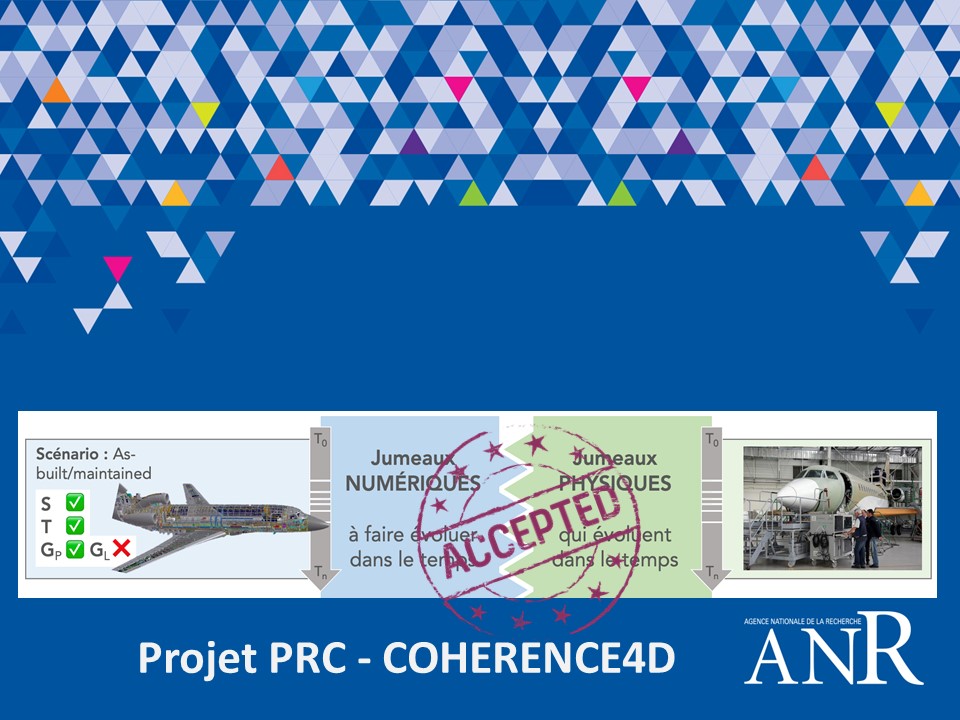
The COHERENCE4D project aims to develop a new paradigm for modeling, visualization, interaction, and maintaining the consistency of 4D digital twins interfaced with physical systems that evolve over time.
A real challenge for the Industry of the Future
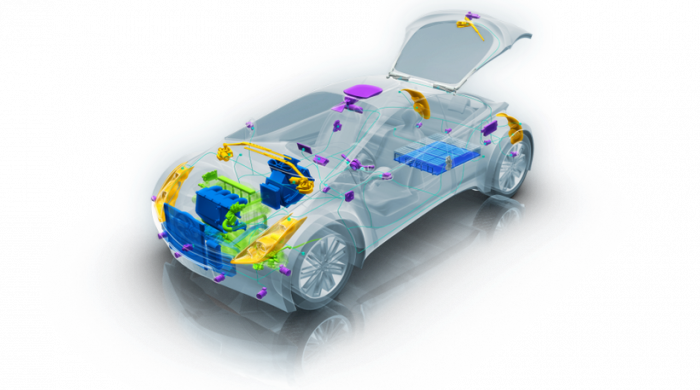
Digital twins, and in particular digital mock-ups, are among the leading technologies in the deployment of Industry of the Future.
It is thanks to its digital twin, and the possibilities offered by digital simulation, that the physical twin can hope to optimize its behavior in response to changes in the environment in which it operates.
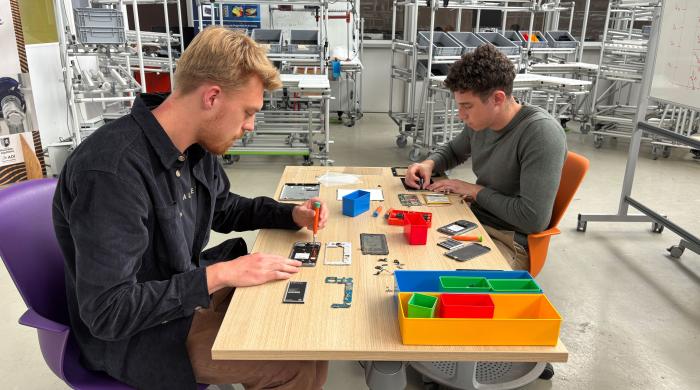
Today, there are many tools available for modeling, modifying, and tracking versions and configurations of digital models. However, this "as-designed" model does not reflect the physical system as it is actually manufactured or maintained over time. As a result, "as-built," "as-manufactured," "as-maintained," and "as-is" models are very rarely reconstructed. Once the physical system has been manufactured, its changes (e.g., manufacturing and assembly deviations, aging, damage, maintenance) are not reflected in the model, which quickly becomes obsolete. This break in the digital chain is a real obstacle to the deployment of Industry of the Future.
The originality of the COHERENCE4D approach lies in:
- in defining a model with geometry and topology that vary over time,
- on the development of mechanisms to maintain consistency between the digital twin and the physical twin,
- on defining a methodology for specifying and integrating acquisition interfaces,
- on the development of a decision support system using artificial intelligence capable of analyzing real/virtual discrepancies to decide which updates to make,
- on the specification and experimentation of new metaphors for visualization and interaction with the digital twin through augmented reality/virtual reality devices.
Consistency will therefore be maintained across four dimensions (4D) to take into account the spatio-temporal nature of changes. The three-dimensional (3D) digital twin will adapt to follow the temporal changes (fourth dimension) of the physical twin, either synchronously or asynchronously.
Impacts and repercussions for the Industry of the Future...
The ability to have a digital twin that is kept up to date with changes to its physical twin will have a major impact on many industrial processes.
These advances will make it possible to harness the full power of digital technology to perform simulations and optimizations and make decisions quickly in order to be more agile, more accurate , and more autonomous.
The methodology developed for the instrumentation of the physical twin will be a real step forward, enabling companies to be supported in the practical implementation of the digital twin for greater digitization of organizations.
The results obtained will clearly improve the digital maturity of companies, ultimately making them more competitive and enabling them to meet the challenges of the Industry of the Future.
... and for the campus
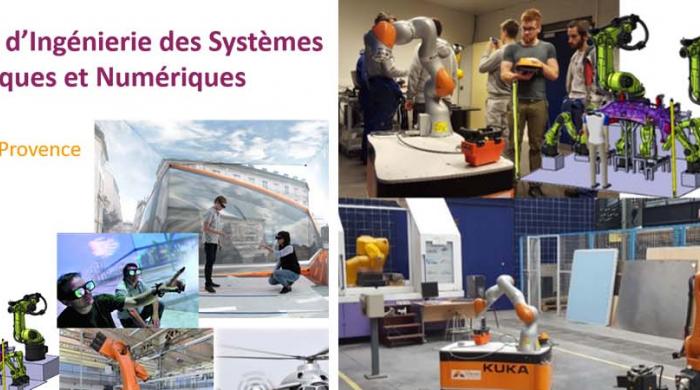
The results of the COHERENCE4D project will naturally feed into training courses on the Aix campus through the Digital and Collaborative Engineering platform, but more generally within the Learning Factories, which will draw on these digital models, methods, and tools.
A consortium with multidisciplinary expertise
This collaborative project brings together four public research laboratories: the Lispen, scientific leader of the project on the Aix-en-Provence campus, the G-SCOP laboratory at INP Grenoble, the LIS laboratory at Aix-Marseille University, and the Roberval laboratory at UTC.
On campus, Jean-Philippe Pernot, university professor and project leader, will contribute his expertise in digital modeling, reverse engineering, and artificial intelligence. The project will also draw on the expertise of Arnaud Polette, senior lecturer, in the field of machine learning and geometric modeling.
With what funding?
The ANR is one of France's research funding bodies. Through calls for projects, it targets all academic and private scientific communities. It thus enables Lispen to supplement its funding in order to advance its research themes around digital twins and digitization within the Industry of the Future.
For Arts et Métiers, the budget allocated to COHERENCE 4D will enable the funding of a doctoral thesis and an engineering position on the Aix-en-Provence campus.
Contact: Prof. Jean-Philippe PERNOT
COHERENCE 4D project profile
- Project start date : January 1, 2021
- Project duration : 48 months
- ANR project type : Collaborative Research Project (CRP)
- ANR research focus : CE10 - Industry and factories of the future: People, organization, technologies
- Technical readiness level (TRL) : Transition from level 3 to 5
- Scientific leader of the project: Jean-Philippe Pernot for the Lispen laboratory (Aix-en-Provence campus)
- Institutional partners of the project : Grenoble INP, AMU, UTC
- ANR funding : Over €600,000