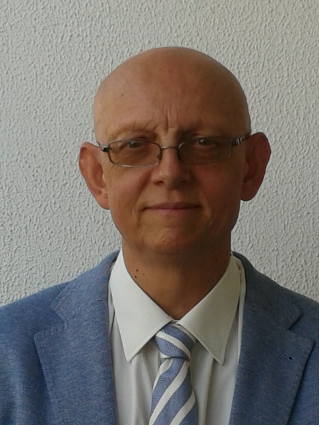
Mathematician and specialist in reduced modeling, Tomas Chacón Rebollo looks back on his collaboration with I2M, his Franco-Spanish career, and the challenges of applied research.
What captivated me was mathematics' ability to accurately represent the real world.
What were the reasons that led you to accept this position as visiting professor at Arts et Métiers
We have been collaborating with Prof. Majdi Azaiez on reduced modeling applied to partial differential equations for over ten years. We have had numerous exchanges between my laboratory at the University of Seville and the I2M. This invitation is a continuation of this fruitful collaboration and allows us to move forward on several projects. Short stays are ideal: they enable me to make real scientific progress without straying too far from my responsibilities in Spain.
We began collaborating with Prof. Azaiez in 2014, when I was a visiting professor at Paris 6. Introduced by mutual colleagues, he suggested that I work on reduced modeling, a technique I was unfamiliar with at the time but found very promising, as it combines mathematical rigor with practical applications. Since then, we have co-supervised a thesis, published several articles together, and organized exchanges between our teams. It is a solid and lasting collaboration.
How do you feel after a month since your arrival?
I feel perfectly at ease. I have a long history with France: I did my thesis there in the 1980s and lived there for about six years, including several periods in Bordeaux. I know the city, the laboratory, and the environment well, which makes this stay particularly enjoyable.
In your opinion, what is the main advantage of international research collaborations? Is there anything in particular that you appreciate about your collaborations with France or with Arts et Métiers
International collaborations are essential for renewing topics and staying up to date scientifically. Always working in the same place greatly limits creativity. Arts et Métiers also Arts et Métiers a very favorable environment: the administration is simple and efficient, which contrasts with the cumbersome nature of certain procedures in Spain.
Finally, I2M stands out for its close ties with industry, which guides our research toward concrete applied issues. For example, we are currently working on optimizing phase change heat storage devices, a complex problem that benefits from the use of scale models.
What sparked your interest in mathematics and reduced modeling?
Since high school, I have loved science in general and was torn between physics and mathematics. In the end, I chose mathematics and wrote a thesis in Paris on turbulence modeling.
What captivated me was mathematics' ability to accurately represent the real world and predict the behavior of complex systems. Reduced modeling came later, thanks to my encounter with Prof. Azaiez, and opened up new perspectives for solving previously inaccessible optimization and engineering problems.
When did you decide to become a researcher?
After studying mathematics, I first taught for a year, then decided to pursue a PhD. I received a joint scholarship from the French and Spanish governments, which allowed me to come to Paris 6 and work at INRIA. That's when my career as a researcher really began.
I loved teaching, but I felt that something was missing: research provided me with that essential complement.
What advice would you give to students interested in a career in research, whether in your field or another?
Research is an exciting field that is constantly evolving: there are always new challenges to tackle. It also offers great human enrichment, with opportunities to travel, meet researchers from around the world, and exchange ideas. Of course, it can sometimes take a long time to secure a stable position, but it's worth it. My advice is simple: give it a try, because it's a very motivating and rewarding career.
Thank you to the Arts et Métiers Foundation Arts et Métiers its support in hosting visiting professors.
About Tomas Chacón Rebollo
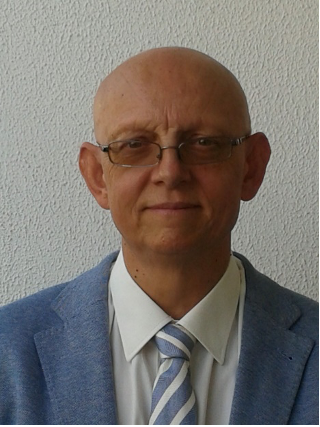
Tomas Chacón Rebollo is a mathematician specializing in numerical analysis and applied modeling. He obtained his bachelor's degree in mathematics in Spain in 1981, before continuing his studies at Paris 6 University. There, he completed a DEA (postgraduate diploma) in numerical analysis, followed by a thesis at INRIA in Rocquencourt between 1982 and 1985, under the supervision of Olivier Pironneau. His thesis focused on the mathematical modeling of turbulence, a subject at the crossroads of theory and applications. Upon his return to Spain, he joined the University of Seville, where he spent his entire academic career.
He is now a professor of applied mathematics. His work focuses on partial differential equations, numerical simulation, and reduced modeling. His research is closely linked to industrial applications and European projects. He is heavily involved in international cooperation and actively collaborates with France, particularly with the University of Bordeaux and Arts et Métiers.