As a visiting professor at Arts et Métiers, Yaoping Hu looks back on ten years of scientific collaboration with Frédéric Merienne. She shares her career path and her vision of science without borders.
What made you decide to accept this guest position at Arts et Métiers Can you tell us about your collaboration with Frédéric Merienne?
It all started in 2014 when we applied with Dr. Merienne to the Franco-Canadian Research Fund (FCRF). We were fortunate enough to obtain funding, and that was the starting point for our collaboration. It enabled us to exchange students and publish several joint papers. Unfortunately, the COVID-19 pandemic interrupted our activities. We resumed our collaboration as soon as possible with the ambition to go further and began organizing this visit. I am very happy with the progress made so far. We are currently working on several projects: we published a joint article this summer and submitted another manuscript just before Christmas. We are also organizing research workshops between our respective doctoral students. These workshops are very stimulating because they allow us to exchange ideas and explore new potential projects. We plan to apply for the "FCRF Plus" program in 2025, which is a continuation of the initial funding but targets more ambitious projects. We have also discussed the possibility of setting up European projects, particularly within the framework of the Horizon Europe program. These discussions are very promising, and we hope to carry out these projects in the near future.
How are you feeling one month after your arrival?
I feel great. The climate is much milder than in Canada, and I enjoyed discovering the Christmas markets and local culture. I also visited several Arts et Métiers laboratories Arts et Métiers Paris, which impressed me greatly. It has been an enriching experience both professionally and personally. In terms of research, we have made good progress, and exchanges with students and colleagues have been very fruitful. On a personal level, I have had the opportunity to discover the cultural richness of the region, particularly by visiting cities such as Dijon, Beaune, and Lyon. I also really enjoy the food and wine of Burgundy. Overall, this experience has been very positive and I am delighted to be here.
In your opinion, what is the main advantage of research collaborations with other countries? Is there anything in particular that you appreciate about your collaborations with France or with Arts et Métiers
Cultural exchanges are essential for research, and I am very happy to immerse myself in this culture. I think my French has improved a little. In terms of research, we have progressed as planned, and I am satisfied with the results obtained so far. We have also talked with doctoral students to understand their work and help stimulate their thinking. I have noticed that interactions in physics, such as shared lunches, are very enriching and allow us to discuss a variety of topics, which is difficult to replicate online. I think we lost that sensitivity during COVID-19, and I am happy to have it back.
What sparked your interest in evaluating interactions between humans and digital systems? Was it the result of a particularly memorable conference or personal reading?
It was a combination of circumstances and passion. In the mid-1990s, my husband got a job at a Canadian university and we moved there. I started working as a programmer for a neuroscience professor, which sparked my curiosity about research. I then decided to pursue a PhD, combining my interest in engineering and neuroscience. This decision was influenced by my desire to understand and replicate human behavior through technology. My career path has been marked by encounters and opportunities that have led me toward research. For example, while working on virtual reality and robotics projects, I discovered the importance of interdisciplinary collaboration and the impact that research can have on our understanding of the world. It is this passion for innovation and discovery that motivates me every day in my work.
When did you decide to work as a researcher?
I was very young when my high school physics teacher had a big influence on me. He gave me extra homework and asked me difficult questions, believing in my potential. This encouragement pushed me to pursue engineering studies. Later, when I advised my daughter in high school, I emphasized the importance of choosing a field she enjoyed, as this would make her career fulfilling. She chose biology, focusing on cell development, motivated by the idea that basic research is the engine of innovation. High school teachers play a crucial role in shaping students' thinking and perspectives, which can have an impact on their entire lives.
What advice would you give to students interested in pursuing a research career in your field or in any other field?
In three words: curiosity, perseverance, and enjoyment. Be curious, explore new ideas, and never stop learning. Perseverance is also essential because research is a field where you often encounter failure before success. It is important not to get discouraged and to keep moving forward despite obstacles. Finally, you have to find pleasure in what you do. Research is a journey with ups and downs, but it is this passion and determination that will enable you to succeed. It is essential to remember that every failure is an opportunity to learn and improve. By keeping these principles in mind, you will be able to overcome challenges and find satisfaction in your achievements.
About Yaoping HU
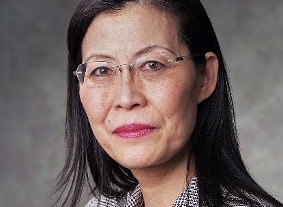
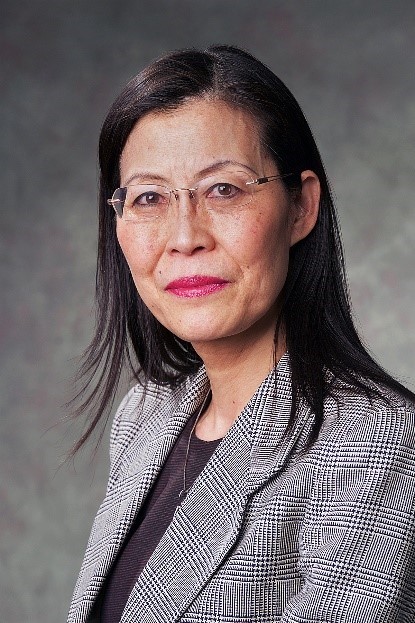 Born in China, Yaoping Hu earned her PhD in robotics and neuroscience from the University of Western Ontario in 2000. She then completed a postdoctoral fellowship in Japan before joining the National Research Council of Canada. Since 2004, she has been a professor at the University of Calgary, where she currently directs the Schulich Momentum Program on the Hyperconnected World and Our Digital Future. She is also an associate member of the Hotchkiss Brain Institute and has received several awards for her research on human-machine interaction and virtual environments.