This short training course for businesses aims to improve production system performance by integrating machine learning techniques into continuous improvement, operational excellence, and Six Sigma initiatives.
Training objectives
- Mastering the purposes of machine learning techniques
- Use and refine essential machine learning techniques to analyze and optimize the performance of production systems.
Applications
- Optical process monitoring for Laser-Powder Bed Fusion (L-PBF) – use of SVM classification techniques, neural networks
- Quality management of production systems using classification techniques (analysis of the impact of measurement uncertainties)
- Development of a flexible tool/system for predictive maintenance—detection and diagnosis of process and machine deviations, etc.
Target audience
This training course is aimed at all those involved in manufacturing processes and systems and related to overall performance: engineers and production managers in the manufacturing industry, quality engineers, manufacturing process and systems managers, etc.
The level of the training course is aimed at employees with knowledge of Python programming (a one-day refresher course is available).
Program
Discovery and analysis of the purposes of machine learning techniques based on different scenarios.
1 - Estimation, estimator, bias, etc. (key statistical concepts).
2 - Scenarios for deploying machine learning techniques to improve the performance of production systems (illustrated with a case study).
- Identify the key parameters of my production system and my products
- Identify strategies for adjusting the production system
- Predicting Product Non-Compliance Rates
- Identify the causes of product non-compliance or process failure.
Data preprocessing
3 - Prepare data to make better use of it.
- Cleaning missing values
- Coding of non-numeric values
- Data transformation and scaling
- Dimensionality reduction; reducing the number of parameters based on their relevance
- Applications based on a case study – implementation with Python
Discovering and mastering association and classification techniques
4 - Reduce the volume and/or dimensions of data to be processed, extract adjustment rules.
- Dimension reduction and study of correlations between parameters: Principal component analysis, etc.
- Extracting rules that govern a dataset: Decision trees, Random Forest
- Logistic regression
- Applications based on a case study – implementation with Python
Discovering and mastering classification and clustering techniques
5 - Predict non-compliant/faulty production; Identify the causes of non-compliance or failure.
- Identification of similar data groups (e.g., production ranges): K – MEANS
- Prediction of non-compliance: KNN & SVM
- Applications based on a case study – implementation with Python
Discovering neural network design
6 - Predicting the performance of production systems.
- Basics of designing a neural network for classification and regression
- Improved predictions (by configuring network hyperparameters)
- Applications across multiple case studies – implementation in Python and TensorFlow
Teaching resources
The training is based on time dedicated to database cleaning techniques, followed by the practical deployment of a machine learning tool.
The deployment of concrete cases involving discovery and tool manipulation can be done using generic data provided by trainers.
Speakers
Jean-Yves Dantan Professor of mechanical and industrial engineering developing research, development, and innovation projects with SMEs and industrial groups on quality control, production system design, and performance improvement. |
A lecturer in industrial engineering, he obtained his doctorate in 2020. His research activities focus on the quality management of production systems based on AI techniques. | |
Lecturer in computer and industrial engineering at the Design, Manufacturing, and Control Laboratory. He obtained his PhD in industrial engineering in 2007. His research focuses on AI, variability management, and human factors applied to product and production system design. |
A lecturer in mechanical and industrial engineering since 2015, he earned his Master of Science applied mathematics in 2011 and his Ph.D. in mechanics and engineering in 2014. His research focuses on uncertainty management in product design and AI-based quality control in production systems. |
 Wahb Zouhri
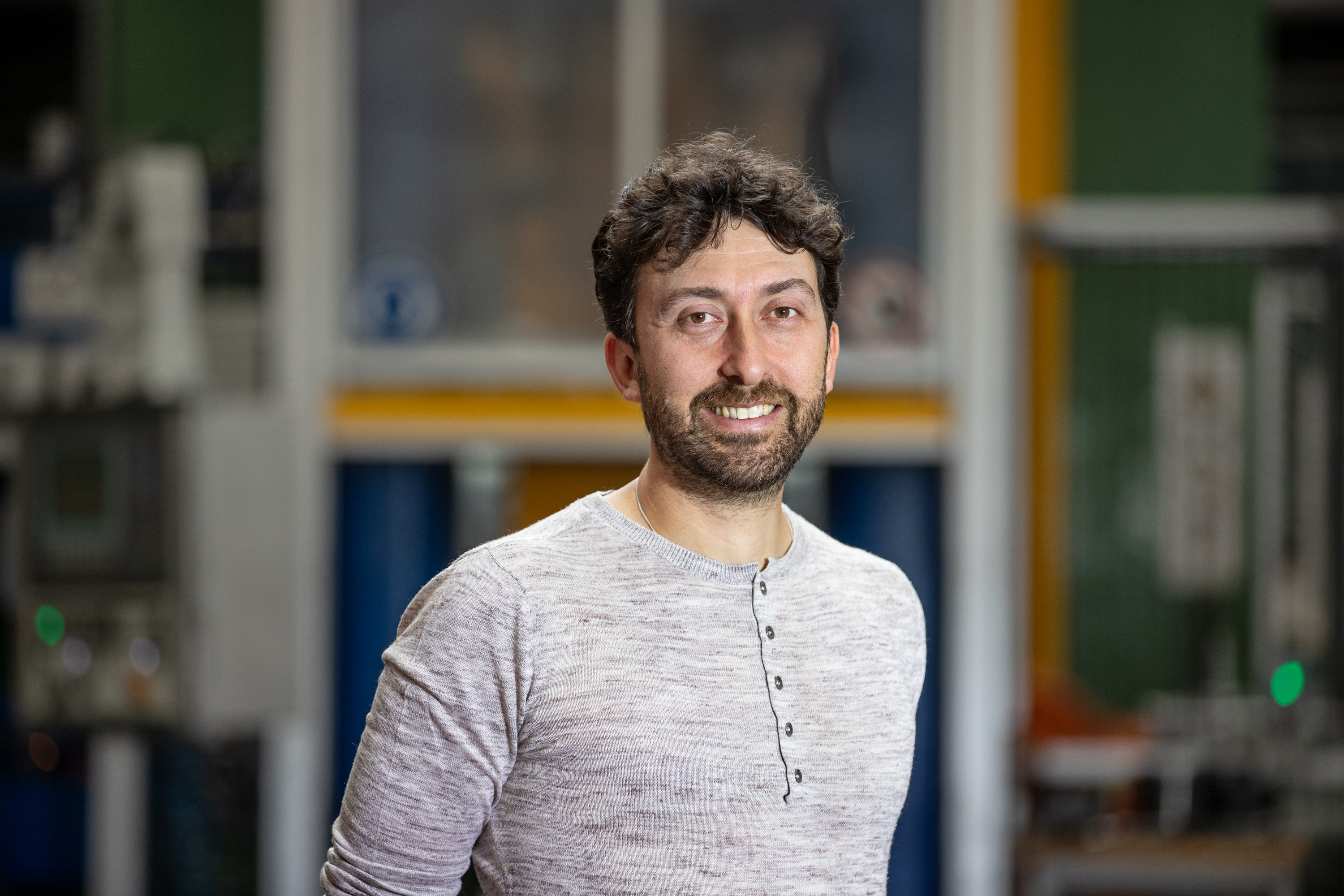 Alain Etienne
 Lazhar Homri
Practical information
Training location
Arts et Métiers Campus Arts et Métiers Metz - 4 rue Augustin Fresnel - 57070 Metz (building accessible to people with reduced mobility).
In the case of internal training within a company, the training may be relocated.
Duration of training
3 days
Dates
Next session:
- Wednesday, April 23, 2025
- Monday, April 28, 2025
- Tuesday, May 6, 2025
Disability
If you have a disability of any kind and would like to take this course, please contact us.
Contact
John Fritsch, Continuing Education Manager.
Testimonial
Pascal Dietsch, R&D engineer and department manager at ArcelorMittal Research, looks back on the data science training he took at the Metz campus:
This training program is run by AMTalents, a subsidiary of the Arts et Métiers group Arts et Métiers in 2021 to provide continuing education for companies, work-study and apprenticeship programs (Grande École Program, Specialized Engineering Program, and Bachelor's Degree), as well as Specialized Master's degrees.