Discover the four calls for projects at the Metz campus as part of the Evolutive Learning Factories initiative. The goal: to modernize processes to shape the future!
A more precise tool for more environmentally friendly use of steel
Sophie Berveiller, a professor and researcher at LEM3, is leading the "Green Steels" project, which aims to make steel more environmentally friendly.
Two avenues are being explored: the use of recycled steel and the use of a new, lighter steel. The goal is to optimize their properties for shaping and performance, which requires the modernization of material testing equipment.
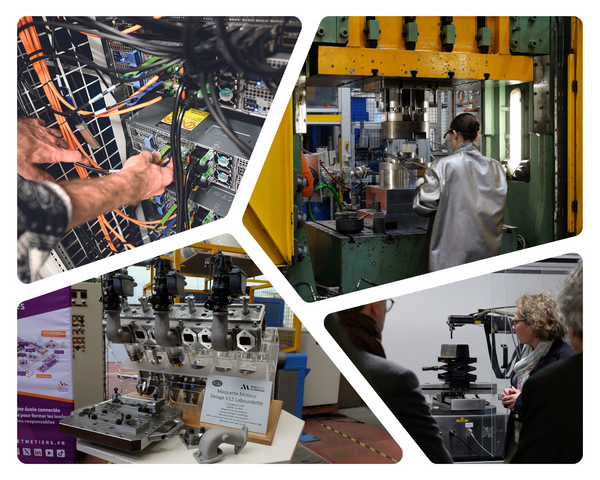
The acquisition of a thermomechanical simulator is planned for 2025, financed in part by the ELF project. It will enable the behavior of steels to be studied in small samples under conditions as close as possible to industrial conditions. It will be complemented by an automated measurement system for parts representative of industrial structures. This will enable the entire parts to be studied, from the choice of material to the finished part.
The estimated cost of this project is approximately €600,000 excluding tax.
A modern hydraulic press that is comfortable for its users
The campus's second ELF project involves modernizing the hydraulic press dating from 1975, which is used for metal forming. This modernization includes replacing heavy components such as hydraulic units and control systems.
Led by Cyrille Baudouin and Régis Bigot, teachers in Metz, this project will reduce energy consumption by 10% to 20%, enable communication with the digital twin, and reduce noise during operation. The latter will significantly improve user comfort on a daily basis.
The cost of this project is €800,000 excluding tax.
EcoHPC project: controlling the carbon impact of calculations generated by Cassiopée
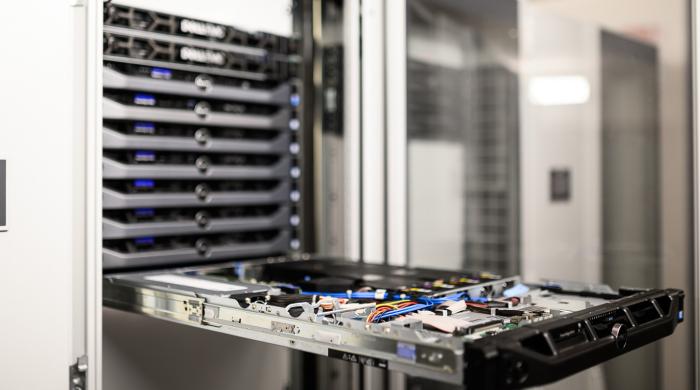
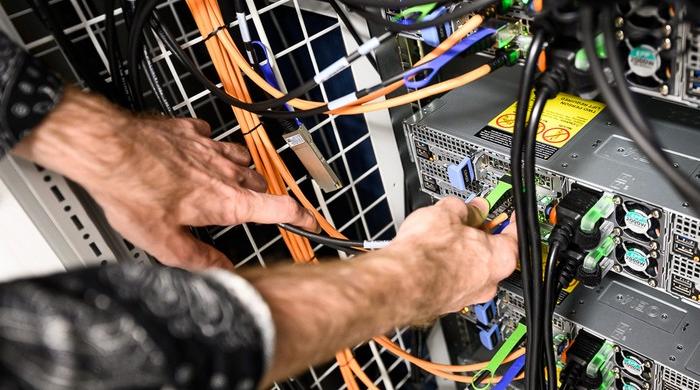
Cassiopée is a shared high-performance computing center that offers 2,500 computing cores to staff and students. Although centralizing computing resources reduces overall consumption, it is crucial to control it. Led by Mohamed Jebahi, senior lecturer at LEM3, the ELF EcoHPC project aims to link computing parameters to final electricity consumption.
Ultimately, each user will know the carbon impact generated by their calculations and the parameters that influence this figure. In response to these needs, an open-access database has been developed in partnership with CaMéX-IA Grand Est. It is used in particular during practical work in fluid mechanics based on the operation of Cassiopée's air conditioning system.
The funding required for this project amounts to €58,400 excluding tax.
Reverse engineering of the Delage V12 Labourdette
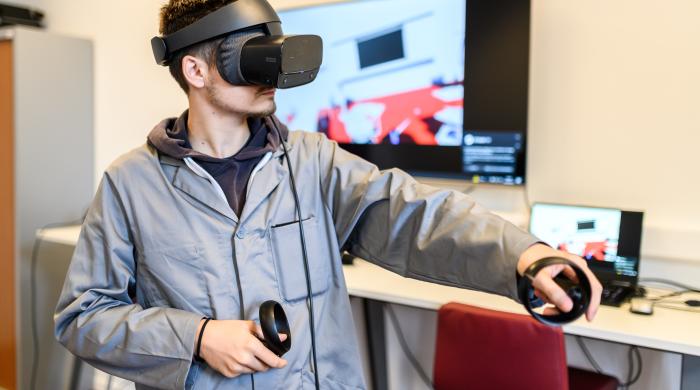
The Delage V12 project is an inter-campus project aimed at rebuilding the famous Delage V12 Labourdette car using reverse engineering and all the modern tools of the digital chain (simulation, computer-aided manufacturing, virtual and augmented reality, etc.). In Metz, students and teachers are currently focusing on redesigning the V12 engine.
This project was initiated by the Association des Amis de Delage, in partnership with Bertrandt, Glasurit, Zeiss, Renault, Stellantis, Isat, Auto Classique Touraine, ArcelorMittal, and 3D Metal Industrie.
Nicolas Bonnet and Olivier Bomont, teachers on campus, are the national coordinators of the project.
As part of this project, the acquisition of a multi-process machine capable of producing complex parts is planned for 2025. The financing, between €400,000 and €500,000 excluding tax, is partly covered by donations collected for the ELF project.