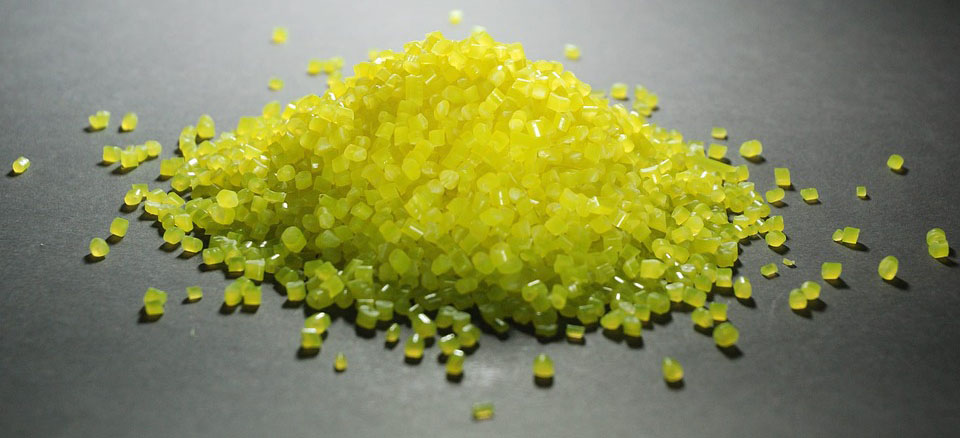
The expertise of the Arts et Métiers Paris campus in "Polymer and Composite Parts Development" (Pa2) trains generalist engineers by providing them with specialized skills in the life cycle of polymers and composites. This expertise meets a strong industry need:the 2020 IESF survey shows above-average salaries for young Arts et métiers graduates Arts et métiers in the relevant sectors (plastics, chemistry, etc.).
Polymers, composites, and industry
Polymers and composites are materials that combine lightness, strength, aesthetics, and numerous functional properties (piezoelectricity, shape memory, etc.).
Many schools train "polymer chemists," but the industry also needs generalist engineers who are familiar with the various aspects of their implementation," explains Emmanuel Richaud, head of this field of expertise. The PA2 program thus prepares engineers who are capable of organizing and managing the production units for these technical parts.
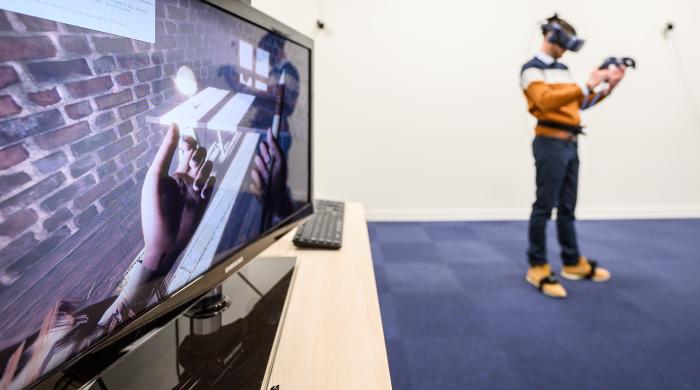
Alongside the theoretical courses needed to acquire essential concepts, the wide range of equipment available at the PIMM laboratory—used in particular during the manufacturing project—exposes students to the actual processing methods used in industry.
What do students think about this expertise during and after their training?
- Interview with Hugo Peridy (An220)
Why did you choose this area of expertise?
I was already drawn to material-oriented expertise and I am passionate about aeronautics. Composite materials are widely used in this field (>50% in the case of recent aircraft), so this choice seemed natural to me at the time.
What would you like to do and/or learn there?
Above all, I would like to learn about the processes involved in creating polymer and composite materials, as well as their field of application, because I know that this is not limited to aeronautics.
To what extent do you think that the life cycle of polymers and composites studied in this course will be useful to you in your professional career?
Polymer and composite materials are mostly recyclable (the entire range of thermoplastics). However, as this aspect is still underdeveloped, I believe that understanding their entire life cycle is crucial for the future.
- The career of Tanguy Choupin (Me211)
After earning an engineering degree from the Grande Ecole Engineering Programme Arts et Métiers a Ph.D. with Airbus Group on composite materials, Tanguy Choupin went on to hold leadership roles in the innovation departments of various major corporations (Airbus, SNCF, Hexhel).
He is currently Materials Project Manager at SNCF within the SNCF Innovation Department and plans to move into operational roles in the future, for example in a train maintenance technical center.
A success that is close to his heart: the introduction of a new TGV nose for improved aerodynamics and resistance: TGV gets a new nose (sncf.com)
His advice to students: "Believe in yourself, don't be afraid of new challenges, and reach out to others!"
Contact: Emmanuel Richaud, professor and researcher at the PIMM Laboratory and head of expertise.
More information:
Development of polymer and composite parts | Arts et métiers artsetmetiers.fr)