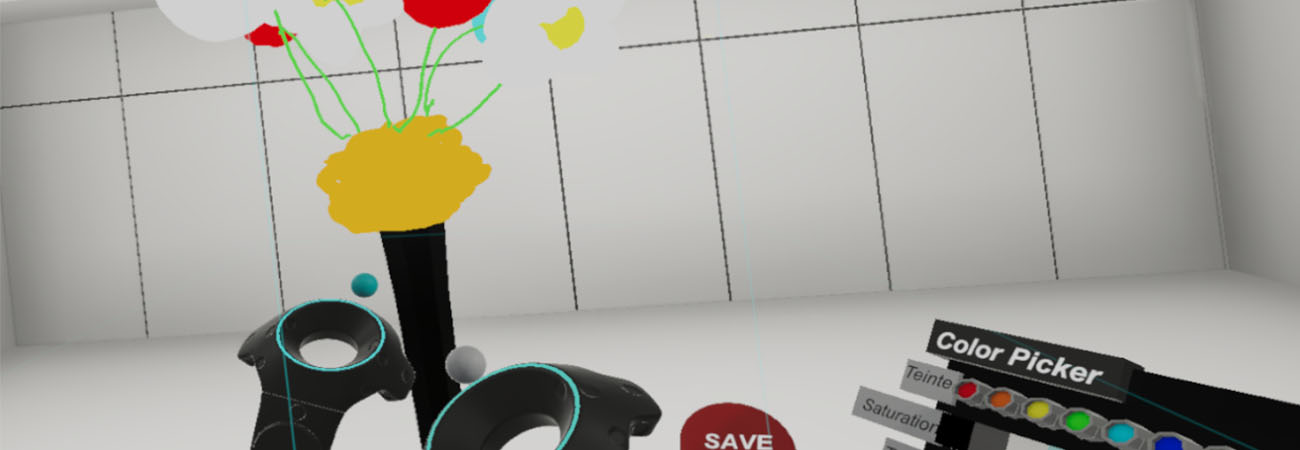
Charles Mille, a doctoral student at the Arts et Métiers Institute Arts et Métiers Laval, within the LAMPA, defended his thesis on February 8 on the impact of digital tools and immersive technologies in supporting innovation and creativity. Focus onhis research, which offers several recommendations to boost creativity!
Charles, a "cognitive" journey: when computer science aims to be human-centered
 Even as a teenager, the interest of Charles Mille IT was very much part of his career plans.
After a technical university degree Electrical Engineering, Computer Science, and Industrial ComputingHe doesn't want to leave it at that.
He was attracted to the engineering profession, but less so to the industrial side of things. He enrolled in an engineering school l'ENSC – Bordeaux National School of Cognitive Science, which gradually guides him towards user-centered design issues for new technologies.
Many courses in computer science, statistics, and project management, of course, but also courses in cognitive psychology, neurobiology, and ergonomics.
With this dual expertise (cognitive science and computer science, which defines cognitive science), Charles Mille flourished during an internship at INRIA in Rennes, working with Anatole Lecuyer's team* on the development of a brain-computer interface.
Immersed in research on this new technology, virtual reality, Charles is convinced that research will be part of his career path. He began his thesis in 2017 at the Arts et Métiers institute Arts et Métiers Laval.
A thesis on the impact of digital tools on creativity and the early stages of design
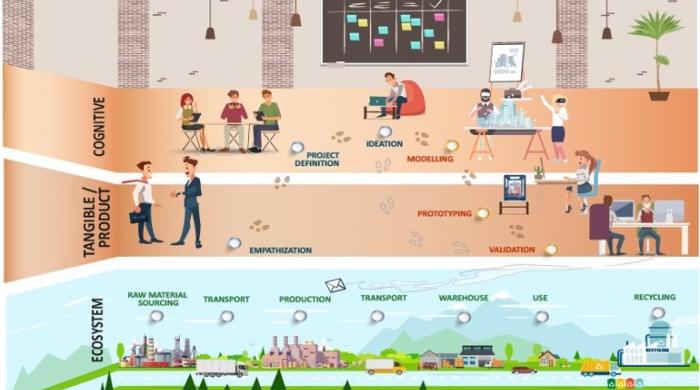
Innovation and the early stages of design are crucial issues for companies. They represent a competitive advantage that enables them to strengthen their position in their market. Innovation and creativity often go hand in hand. Charles' research offers several recommendations for choosing and developing tools for creative activities.
A good choice of tools and digital environment for creativity and ideation stages is essential to promote the success of a project.
This thesis sheds light on how to foster creativity, enhanced by virtual and digital tools, without these tools hindering the initial idea. It provides scientific answers on the influence of our environment on our experience of creativity and on the impact of tools on our ability to communicate ideas.
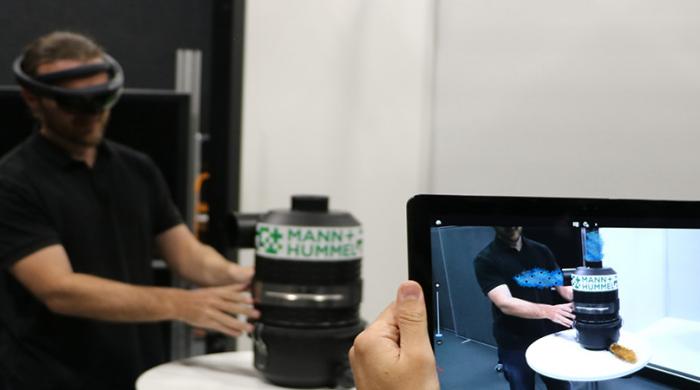
Research into immersive technologies, notably from Charles' thesis, has benefited MANN+HUMMEL, the main partner of the "Time to Concept" Chair, in the experimental phase of a new filtration product.
Not ruling out the possibility of pursuing a postdoctoral fellowship, Charles intends to put his skills to use in human-centered projects, as the words of a professor he fully agrees with still echo in his mind: "Work should adapt to people, not people to work."
* Director of Virtual Reality Research at Inria and author of the book "Your Brain is a Superhero." Charles didn't know it yet in 2016, but he would cross paths with Anatole Lecuyer again, as he was the chair of his thesis committee on February 8, 2021.