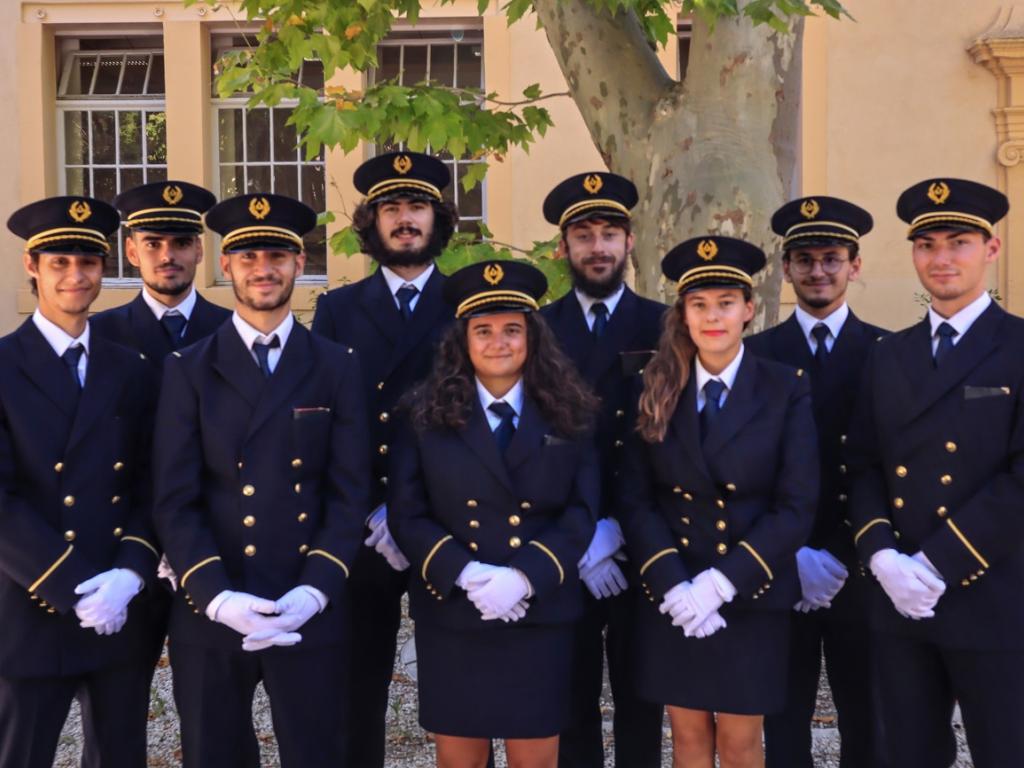
After a highly successful first edition and a promising second year despite the health crisis, the new HydroGadz student team is taking over with even more ambitious projects.
HydroGadz, choosing a clean energy source
The project’s origins date back to 2017, when two first-year students in the Grande Ecole Engineering Programme to enter the international “Monaco Energy Boat Challenge . Thanks to their determination and total commitment, a group of students joined them. With guidance from campus faculty, this group successfully carried out the project—partly within the academic framework and partly through community involvement—leading to the successful launch of a boat and its pilot in July 2019.
The challenge stimulates the creativity of engineering students and professionals around mobility that uses clean energy. It involves working on the energy efficiency of innovative powertrains and presenting a single-seater prototype that complies with constraints limiting mass and onboard energy, while achieving sporting performance in terms of handling, endurance, and speed.
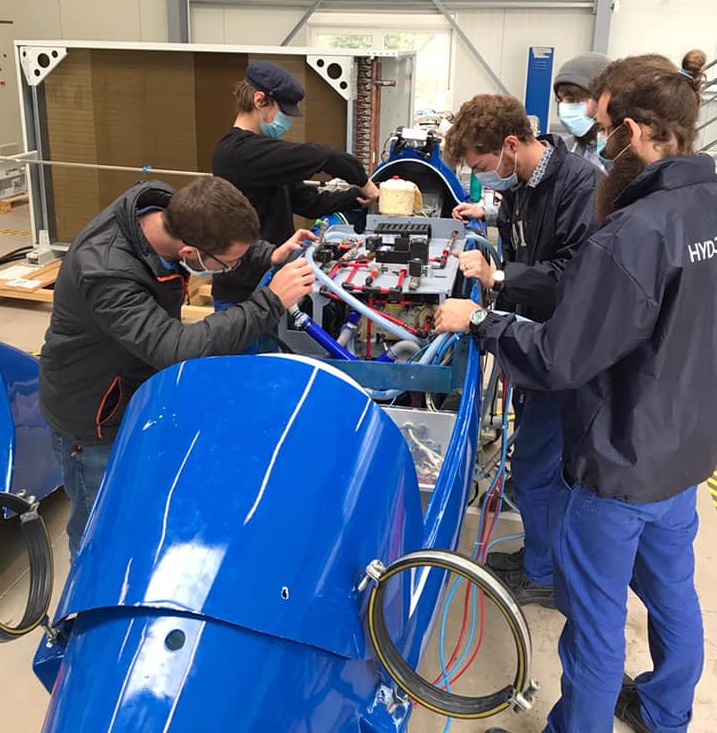
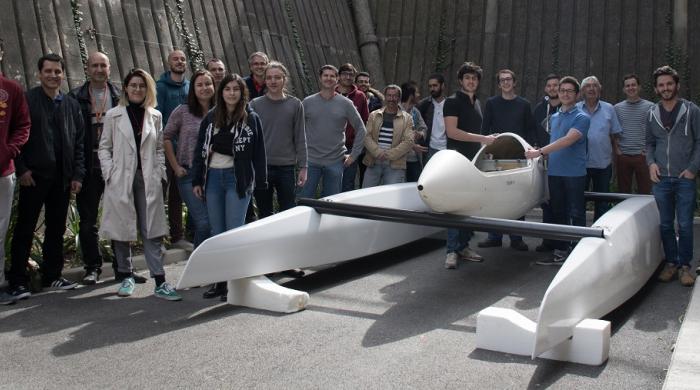
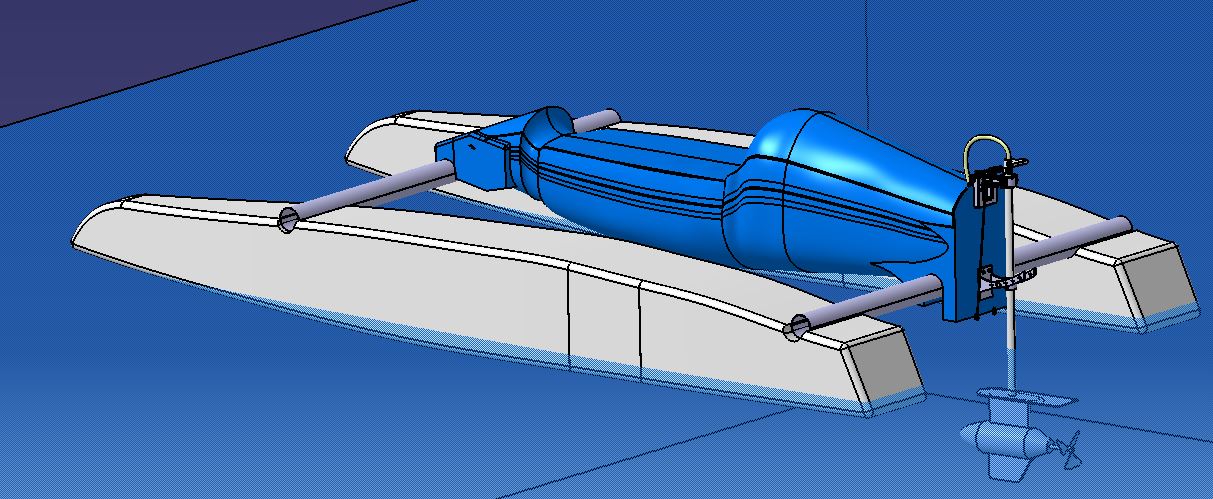
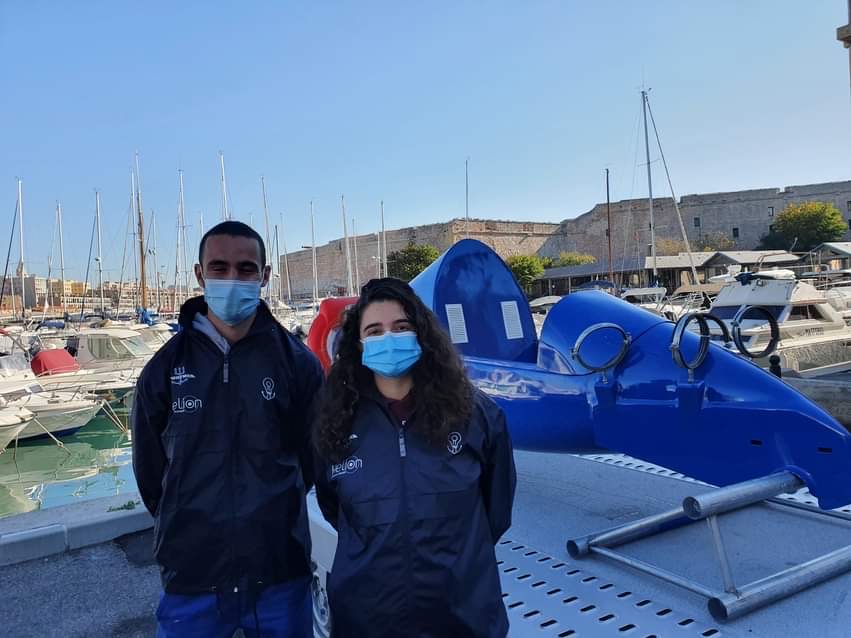
This is how, from the cockpit to the pilot and engine compartment, a single-seater catamaran with electric propulsion and hydrogen storage has been developed. cockpit to the pilot and engine compartment, a single-seater catamaran with electric propulsion and hydrogen storage.
We are all convinced that hydrogen is the energy source of the future. It is therefore important for us to work towards making it more widely available," say Marianne Julien, president of the HydroGadz association, and her team.
HydroGadz's challenges for 2021
The cancellation of the challenge in 2020 does not call into question HydroGadz's ambitions. A double challenge is at stake.
A technological challenge
The quest for performance, particularly in terms of maximum speed and range, requires optimization of certain boat equipment in order to achieve first place in the overall ranking of the 2021 Monaco Energy Boat Challenge, while retaining the title of winner in the Hydrogen category.
HydroGadz is preparing for the 2022 edition by designing a new boat, based on the Formula 1 model. When the boat competes in year N, it is already ready from year N-1, leaving a year's margin to ensure its reliability. This year, the team is therefore working on two boats in parallel.
A sales and marketing challenge
To grow, HydroGadz continues to seek new private and public financial sponsors to help bring the project to fruition (€30,000 raised last year).
The team is also looking for cutting-edge technical partners to help design and build the boat (contributions of equipment such as fuel cells, technological support in consulting and innovation).
The team also continues to participate in forums and competitions aimed at raising awareness of HydroGadz.
In 2020, HydroGadz received the Innovative Technology Award for Energy Transition from the Arts et Métiers Foundation Arts et Métiers €5,000). It was also among the finalists in the Sports and Innovation categories of the Classement des associations, a competition that recognizes the best student associations.
An ambitious technological and academic project
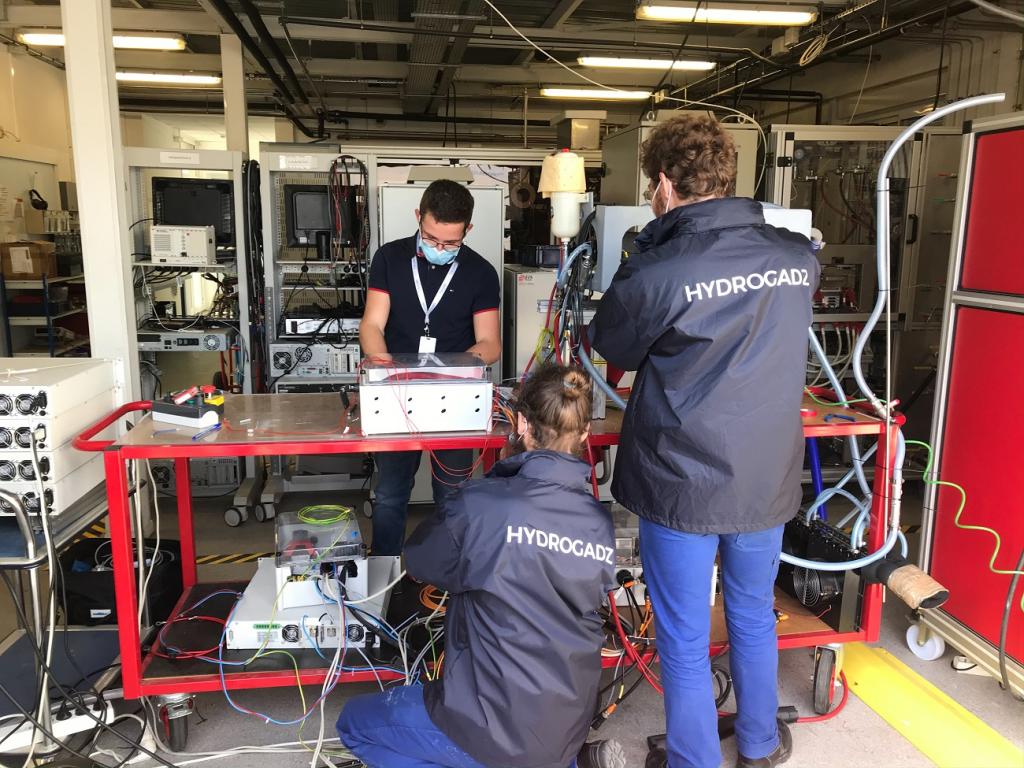
In order to meet the technological objectives set, the new team's project consists of creating an energy chain based on a hybridization of sources. The main energy source is the fuel cell. However, it is necessary to have a small amount of energy stored in batteries in order to adapt electricity production to consumption and avoid wasting energy.
The student teams that have followed one another over the past three years can count on both material and human support from the campus, which is modernizing teaching methods by fully integrating project-based learning focused on current industrial issues.
The educational projects included in the Arts et Métiers engineering program enable Arts et Métiers to achieve all of their objectives:
- Redesign a lighter, more functional, and more attractive cockpit.
- Install an auxiliary power source to compensate for the limitations of the fuel cell by "absorbing" sudden power variations and to power the on-board electronics.
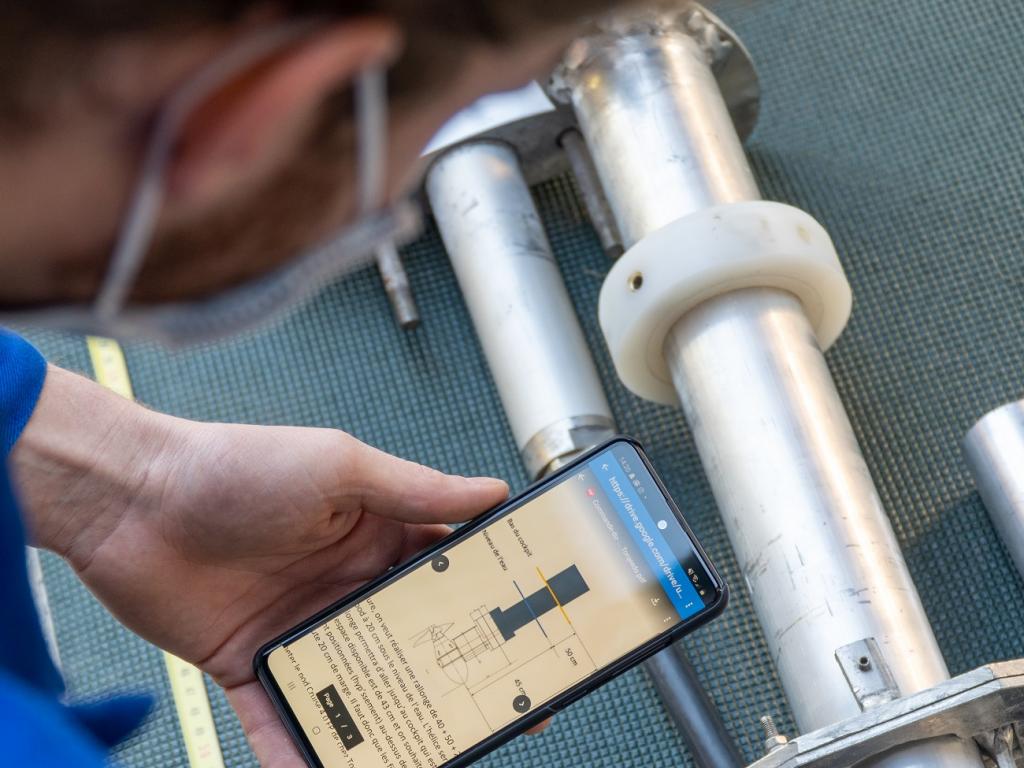
- Sizing a new engine and installing a foil to reduce hydrodynamic drag,
- Choose a new steering system that matches the new cockpit geometry in order to achieve better responsiveness during slalom events.
- Improve the connection with the ground to transmit data measured on the fuel cell and engine, communication between the pilot and the ground crew, and the pilot/boat interface.
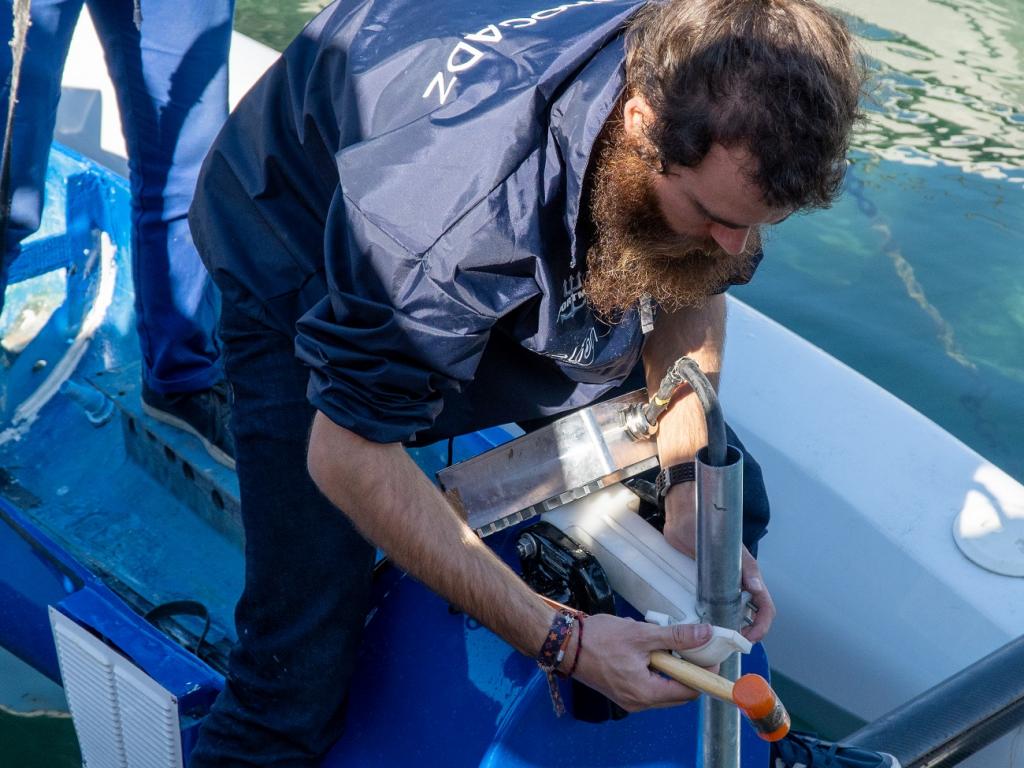
Sea trials of the prototype boat have already begun. sea trials of the prototype boat took place this summer and early fall. This allowed the fuel cell to be installed and the newly implemented technological improvements to be tested. No significant problems were encountered.
Adrien Rodriguez, Vice President of Hydrogadz, explains, "This competition is an opportunity for us to strengthen our knowledge and experience, while contributing to the development of tomorrow's energy sources."