Nicolas Ranc, senior lecturer at PIMM on the Paris campus, has just secured €1.87 million in funding from theEuropean Research Council.
For which project did you obtain this funding?
This is a project on the fatigue of metallic materials. It is very ambitious, as it aims to predict their behavior beyond one billion cycles, whereas current standards are set at 10 million. The stakes are high because many structures are subjected to more than 10 million cycles, particularly in aeronautics (10 billion), rail transport (1 billion), and the automotive industry (100 million). Better prediction of their behavior will increase safety while reducing maintenance costs.
But this poses a scientific, technological, and technical challenge. We will need to develop high-frequency tests and take measurements with time scales in the order of microseconds.
What will such financing enable you to achieve?
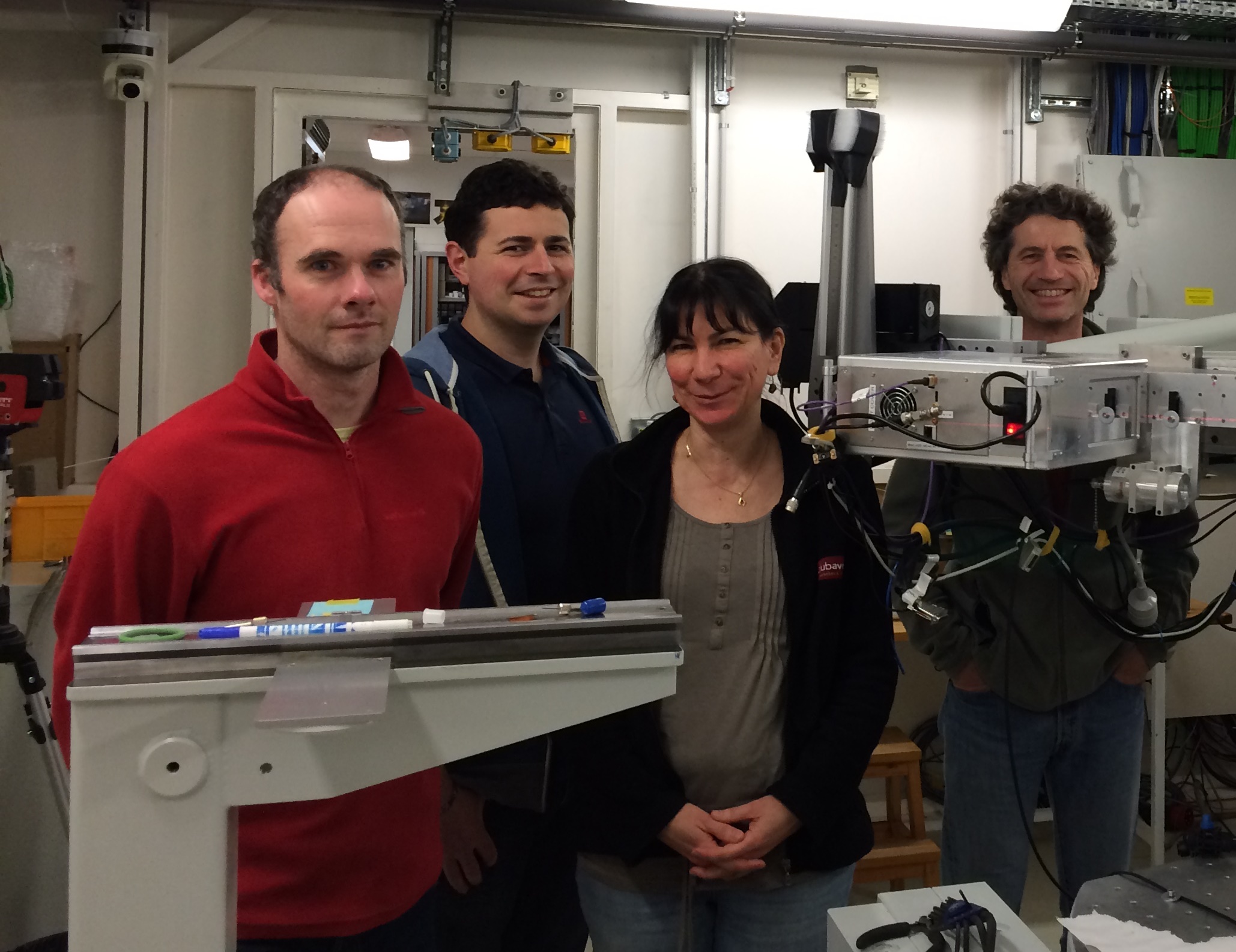
Putting together a team and having time to devote to this research! I will be working with Véronique Favier, Olivier Castelnau, and Vincent Michel from PIMM (Processes and Engineering in Mechanics and Materials Laboratory), as well as Marc Fivel from Simap (Science and Engineering of Materials and Processes Laboratory). To complete this team, an engineer, a post-doc, and two PhD students will be hired for the five years of the project. In addition, to develop fatigue testing, we are investing in experimental resources.
What advice would you give to someone seeking funding from the ERC (European Research Council)?
You have to be bold! Few people believed in my chances when I presented a project on material fatigue. You also have to be well prepared. The eligibility criteria are high and the selection process is very difficult. It took me more than six months to prepare and write my application.
"Better prediction of material behavior will increase safety while reducing maintenance costs."
Learn more
The European Research Council
The ERC's mission is to encourage the highest quality research in Europe through competitive funding and to support exploratory research initiated by researchers in all disciplines on the basis of scientific excellence. There are three main types of funding:
- ERC Starting Grants: grants for researchers with between 2 and 7 years of experience since obtaining their PhD (or equivalent degree);
- ERC Consolidator Grants: grants for researchers with between 7 and 12 years of experience since obtaining their PhD (or equivalent degree);
- ERC Advanced Grants: grants for experienced researchers in all scientific fields, engineering, and academia.