
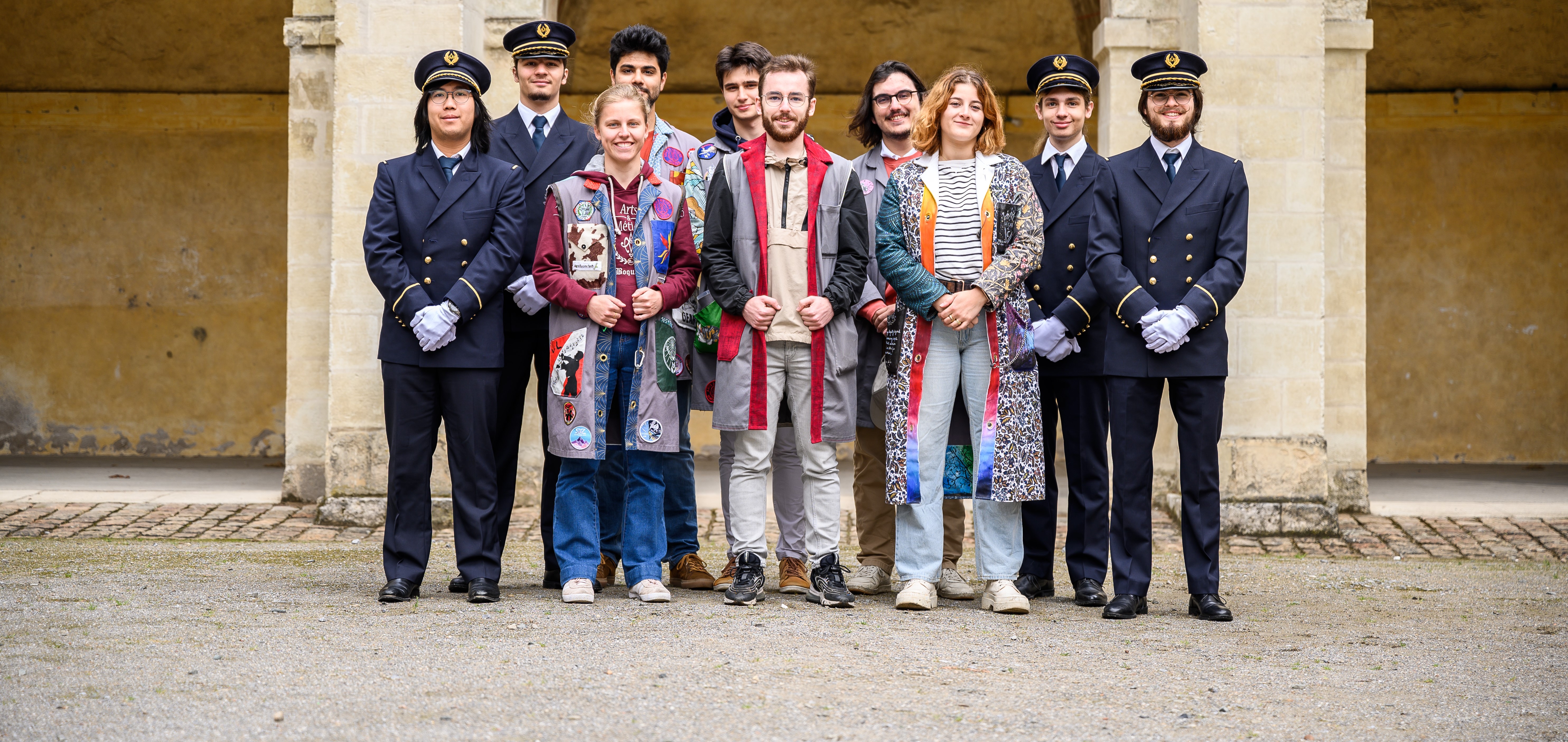
Graduate Program
Opening up to all industrial and technological sectors
The Challenges of the industry of the future call for pragmatic engineers who combine technological knowledge, a spirit of innovation, and teamwork. The Grande École Program Arts et Métiers meets these needs by offering students a wide variety of academic tracks.
What is the hallmark of Arts et Métiers engineers Arts et Métiers “The companies appreciate their multidisciplinary perspective, their pragmatic approach, their technical and soft skills, and their human values,” says Xavier Dufresne, director of undergraduate education atArts et Métiers. The three-year program is thus designed to develop or strengthen these skills. “Each campus tailors the curriculum to its regional challenges,” adds Xavier Dufresne, who also highlights another strength of the school: leveragingArts et Métiers research activitiesArts et Métiers train students in the technologies of the future.
Regular immersion in the workplace
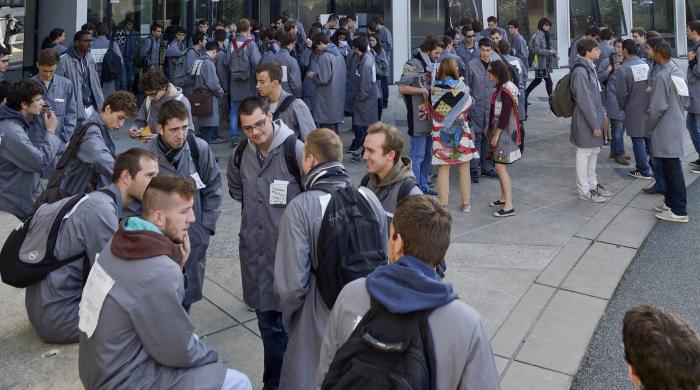
An essential complement to the curriculum is involvement in community organizations: it helps develop project management skills.“Engineering students play an active role in organizing events, such as the career fair ,” says Xavier Dufresne. This experience is valuable for future professionals who, as managers of large-scale projects, will be called upon to coordinate multidisciplinary and multicultural teams.
Professional development and international exposure are at the heart of the program. The three-year curriculum is structured around periods of work experience: a four-week introductory internship in the first year, an optional industrial internship in the second year, and finally a six-month capstone internship, which provides an opportunity to apply all acquired skills to lead an industrial project or solve a technological problem. International experience, which plays an increasingly important role in corporate challenges and engineering careers, is offered in the form of a two-month to two-year exchange, either as an internship or an academic stay. Among all international options, students can pursue a Franco-German dual degree starting in the first year.
Multiple training options
Students can prepare for the Grande École Arts et Métiers Program's " " diploma through several statuses:
 |  |  |
Throughout the three years, each engineering student builds their training program according to their professional goals. After the first two years, which focus on experimentation and mastery of technologies, they benefit from a course chosen from a wide range of possibilities.
- If the goal is rapid integration into the world of work, 32 areas of expertise are offered, such as new energies for sustainable development, aeronautical and space engineering, and technological innovation management in the automotive industry.
- Those passionate about research and development can choose from one of the 27 specializations offered in the Master of Science National Master of Science Degree Program —which prepares students for careers in research or allows them to continue on to the Doctoral Training Program.
- Engineering students who wish to pursue a career abroad can choose from approximately 100 dual-degree and dual-specialization programs.
Finally, those who wish to broaden their skills will enroll in a prestigious specialized school (in civil engineering, energy, civil aviation, or management), which are partnersArts et Métiers, offering the possibility of a dual degree.
Continuing education
- This training course is available as part of continuing education.
- All information
The five strengths of the Arts et Métiers Grand École Program Arts et Métiers
- A degree recognized by companies
- The most powerful graduate network in Europe
- A personalized study program with strong international potential
- Access to innovative technology platforms
- A diverse and dynamic community life
How do Grande Ecole Engineering Programme apply to theArts et Métiers Grande Ecole Engineering Programme Arts et Métiers
TheArts et Métiers Grande École ProgramArts et Métiers open to students at various levels of study, from Bac+2 to Bac+4, through several admission pathways tailored to each applicant’s educational background:
- After completing a Preparatory Class for the Grandes Écoles (CPGE): Admission is primarily based on competitive entrance exams (notably the Banque PT exam, the Centrale-Supélec exam, and the ENSEA-ATS exam). Applicants must hold a baccalaureate or equivalent and pass the entrance exam.
- After completing a third-year bachelor’s degree or a Master of Science : University students may be admitted to the school based on their academic credentials through the GEI-Univ joint admissions process. Admission is granted following a decision by the admissions committee.
- After completing a BUT (2nd or 3rd year), a BTS, or a Bachelor’s degree: Admission is possible through the AMBition Ingénieur entrance exam (intended primarily for holders of a Licence or a Bachelor of Technology Arts et Métiers).
- As part of a dual-degree program: Open to students who have completed at least the L3 level, subject to the admission committee’s decision.
- Through the Validation of Prior Learning: The school offers specific programs for recognizing prior learning through VAE (Validation of Prior Learning) and VAP (Validation of Professional Experience).
What Grande Ecole Engineering Programme the potential career paths after Grande Ecole Engineering Programme theArts et Métiers Grande Ecole Engineering Programme Arts et Métiers
As a general engineer with a degree in technologyArts et Métiers, the skills acquired cover the entire life cycle of products and production systems. This versatility leads to exceptionally rapid entry into the workforce: 82% of recent graduates who are employed find their first job in less than two months.
The Main Business Sectors
- Consulting, Research, and Engineering: 30.5%
- Information and Communication Technologies (ICT): 10.5%
- Industries (Automotive, Aerospace, Shipbuilding, Rail): 9.5%
- Construction and Civil Engineering: 9.5%
- Metalworking and plastics processing: 8%
- Energy, Mining, and the Environment: 7.5%
- Other sectors and industries: 20%
- Scientific and technical activities: 4.5%
Professional Profiles and Positions Held
Graduates hold key positions within companies to address the challenges of the industry of the future:
- R&D and Innovation: 23%
- Production, Operations, Methods, Quality Control, QHSE, and Maintenance: 35%
- Research, Consulting, and Expertise: 16.5%
- Computer Science and ICT: 6%
- Marketing, Sales, Logistics, Purchasing, and Procurement: 9%
- Teaching, Research, Management, and General Administration: 10.5%
Arts et Métiers also Arts et Métiers a specialized military program. Graduates of this program are assigned directly to the Defense Infrastructure Service (SID) with the rank of lieutenant.
The Grande École Program is offered at the following locations:
- Aix-en-Provence Campus
- Angers Campus
- Bordeaux-Talence Campus
- Châlons-en-Champagne campus
- Chambéry Campus
- Cluny Campus
- Lille campus
- Metz Campus
- Paris Campus
- Rabat Campus
 |  |

Want more information?
Useful links
See also
Student associations
Want more information?
Latest news
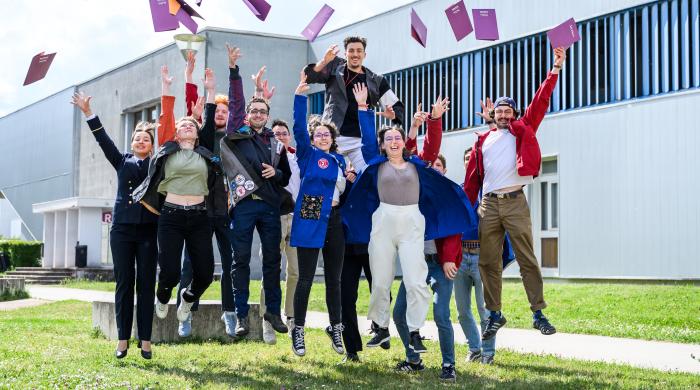
In 2027, the Arts et Métiers campuses and institutes will open their doors to you, inviting you to discover the programs, careers, and innovations that are shaping the industry of tomorrow!
News, Training
In 2026 and 2027, come talk with the staff and students fromArts et Métiers at college fairs to learn about our programs, explore careers in engineering, and build your pr
News, Training
Ensuring the success of an event like the “ Arts et Métiers ” forum requires meticulous organization—a challenge that the student team leading the 2026 edition is taking on with ease.
News, Company
Find all the information you need about the start of the 2026–2027 academic year for each Arts et Métiers campus and institute Arts et Métiers
News, Training