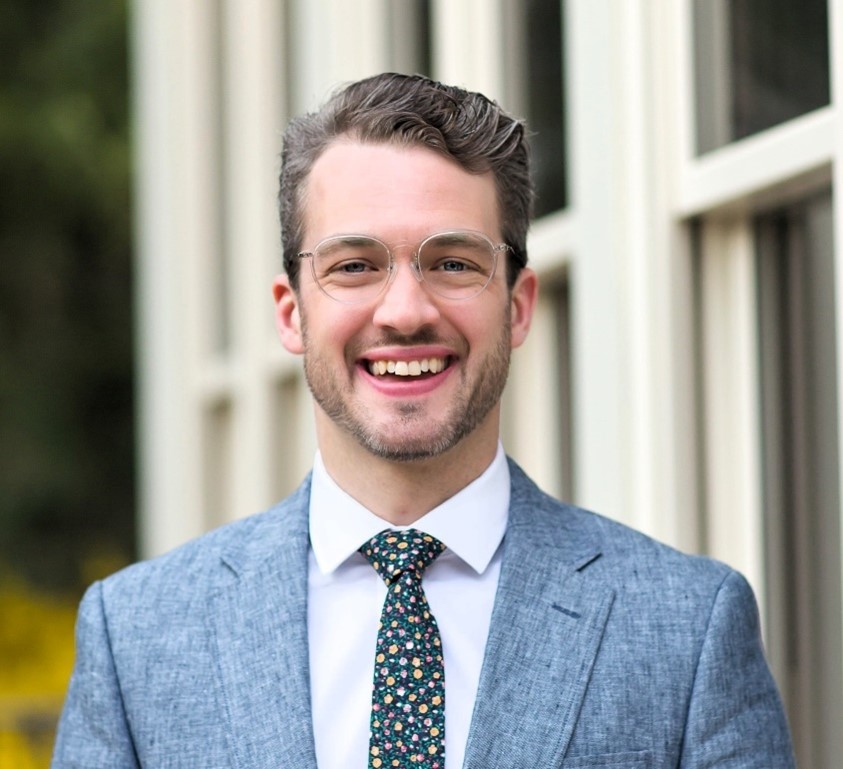
As a visiting professor at Arts et Métiers, Benjamin Wheatley discusses his collaboration with Pierre-Yves Rohan and how the complementary nature of their work has enriched their research in the field of skeletal muscle biomechanics.
When I realized that Pierre-Yves and I were asking ourselves the same fundamental questions in biomechanics, it confirmed the relevance of our work.
What were the reasons that led you to accept this month as a visiting professor at Arts et Métiers
My main motivation is the richness and potential of my scientific collaboration with Pierre-Yves Rohan in the field of skeletal muscle biomechanics. Our collaboration began quite fortuitously during the COVID-19 pandemic in 2020–2021, when Pierre-Yves contacted me to use experimental data published by my laboratory. At that time, he and his team were developing a numerical model of muscle tissue behavior and were facing limitations in collecting new experimental data due to health restrictions.
He had identified in my publications a set of mechanical characterizations that perfectly matched the requirements of his model. What began as a simple exchange of data turned into a genuine collaboration. Through numerous exchanges, we realized that we were both seeking to understand the structure-function relationships in skeletal muscles. That is, how mechanical behavior at the tissue level is governed by underlying biological and architectural characteristics, and how to model it.
What did you gain from this collaboration?
What made this partnership particularly exciting was the complementary nature of our research approaches. In my lab at Bucknell University, I focus on the experimental biomechanics of soft tissues, using material testing and finite element modeling (FEM) to quantify properties such as anisotropy, nonlinearity, and viscoelasticity in biological tissues. Pierre-Yves and his team, meanwhile, brought a clinical and in vivo perspective, with expertise in human data collection and medical imaging to support their own FEM research. This collaboration is a unique opportunity to bridge the gap between basic science and clinical translation—a particularly crucial issue for musculoskeletal health.
We co-authored a publication combining experimental and numerical approaches to better understand the passive mechanics of muscles. We then submitted a funding application to the Transatlantic Research Partnership (formerly the FACE Foundation, also affiliated with the Albertine Foundation), which supports collaborations between young American and French researchers. Our project aimed to extend our previous work towards a more advanced framework for understanding muscle degradation, adaptation, and failure, including in cases such as pressure ulcers and atrophy due to muscle disuse syndrome.
Although our application was not accepted in the first year, it was funded when we resubmitted it. Thanks to this support, we have launched a new series of studies that now combine my laboratory's expertise in high-resolution mechanical testing with Pierre-Yves' team's access to in vivo data and clinical populations. More specifically, we are currently working on the development and validation of multiphysics finite element models of healthy and pathological muscle tissue, incorporating elements such as fiber orientation, strain-dependent hardening, and contact mechanics, which are essential for modeling the development of pressure ulcers or the effects of extreme mechanical loads.
What did this month at Arts et métiers enable you to do Arts et métiers
My extended stay at Arts et Métiers allowed Arts et Métiers to move beyond asynchronous communication and isolated datasets. It gave us the time needed for in-depth scientific work: a slow, deliberate, and focused effort, which is increasingly rare in an academic environment full of distractions. We also organized practical sessions on collaborative modeling, joint classes with Master of Science students Master of Science numerous discussions that gave rise to new avenues of research.
In conclusion, this invitation was not only an opportunity to strengthen an already fruitful scientific collaboration, but also to contribute to the creation of a truly integrated biomechanical research platform linking experimental data, numerical modeling, and clinical relevance across borders.
How did you feel during this exchange?
The experience was extremely positive. The laboratory is dynamic and collaborative, with biomechanics engineers from various backgrounds working together. I was made to feel very welcome, and despite some language barriers, technical and informal conversations flowed easily.
This month has been very productive: we finalized a manuscript, submitted three abstracts for conferences, and started a new article. But above all, we laid the foundations for a solid long-term collaboration. If I could come back every year, I would do so without hesitation.
In your opinion, what is the main advantage of international research collaborations?
International collaborations offer a broader perspective on research practices and methodologies. Although institutional and cultural differences exist, fundamental research questions often converge. When I realized that Pierre-Yves and I were asking the same fundamental questions in biomechanics, it confirmed the relevance of our work.
What I particularly appreciate in France—and at Arts et Métiers particular—is the concentration of biomechanics experts within a single laboratory. In the United States, biomechanics research is often scattered across various engineering departments. Here, having researchers with varied skills but a common biomechanical goal creates a dynamic interdisciplinary environment that enriches collaborations.
What sparked your interest in biomechanics?
In high school, I was torn between studying physical therapy and engineering. I was passionate about sports and health, but I didn't want to become a doctor. I chose engineering because of my interest in math and physics, thinking that I could always switch to physical therapy later on.
During my undergraduate studies, I discovered biomechanics—a field that perfectly merged these two interests: it was a revelation! The human body remains the "final frontier" of complexity, and studying it through engineering is both intellectually stimulating and personally rewarding.
When did you decide to become a researcher?
I became genuinely interested in research during my second or third year of college. Observing my professors, I realized that being a researcher meant exploring fascinating questions while teaching and mentoring students. I found that very appealing. The unpredictability of research and the excitement of discovering something new are the two aspects that attracted me and still fascinate me today.
What advice would you give to students interested in a career in research, in your field or another?
Stay curious. Curiosity fuels resilience, which is essential in research. Things don't always go as planned, experiments fail, models break down, articles get rejected. Curiosity helps you see these setbacks as part of the process.
Develop in-depth expertise in one area while remaining open to exploring other fields. For me, that expertise is finite element modeling. Whether I'm studying muscle tissue, animal impact behavior, or human gait, it anchors my work. I encourage students to be "jack-of-all-trades but masters of one." This offers great flexibility while maintaining a solid foundation.
About Benjamin Wheatley
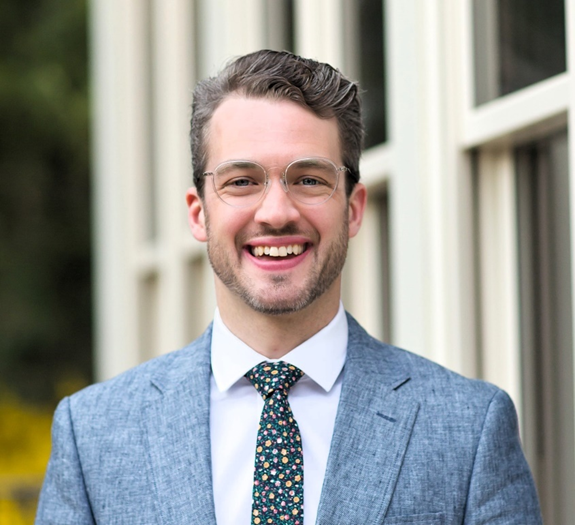 Benjamin B. Wheatley has been an associate professor of mechanical engineering at Bucknell University since 2023, after serving as an assistant professor from 2017 to 2023, following the completion of his PhD at Colorado State University. In 2023, he became a research associate at the Geisinger Musculoskeletal Institute. He has led several funded research projects, including a current NSF grant (2023–2025) focused on multiscale modeling of muscle stiffness. In 2019, he was a visiting scholar at Stanford University as part of the OpenSim program. He is the author of more than 25 scientific publications, particularly in muscle biomechanics and bio-inspired materials, and received Bucknell's President's Award for Diversity & Inclusion in 2023. He teaches solid mechanics and finite element modeling.