
Reducing workplace strain, preventing musculoskeletal disorders (MSDs), and anticipating accident-prone situations: these are just some of the health issues being addressed by researchers at the Design, Manufacturing, and Control Laboratory (LCFC) at the Arts et Métiers campus Arts et Métiers Metz, which specializes in production systems.
Correcting postures that promote the onset of MSDs using Artificial Intelligence
The principle is simple: use four standard cameras to analyze the posture of operators in factories. Using the images captured, the system will be able to detect excessive pressure on certain joints and suggest corrective postures to operators. The aim is to prevent the onset of occupational MSDs, which result from the repetition of certain movements or postures, often on a daily basis.
This work, led by doctoral student Jindong JIANG, combines the expertise of the LCFC in production systems with that ofthe Georges Charpak Institute of Human Biomechanics, based on the Paris campus, in biomechanical modeling of the neuromusculoskeletal system.
To get a functional system up and running, Jindong Jiang must overcome several challenges between now and the completion of his thesis in 2023:
- adapt motion capture to conventional cameras in an industrial environment,
- Develop the algorithm and train the AI neural network so that it adapts to the complex movements of operators.
Cobotizing strenuous workstations to reduce MSDs
LCFC researchers are committed to taking humans into account in production systems and in the design of cobotic systems, i.e., industrial robots that share the same space as humans.
This led Mouad Bounouar to develop his thesis in collaboration with ergonomists and sociologists specializing in the workplace as part of the ANR Hecttor project (Humans Engaged by Cobotization in the Transformation of Work and Organizations in the Factories of the Future). Using two case studies provided by manufacturers, the doctoral student developed a decision-making methodology to take human conditions into account during the design of cobotic systems.
Both case studies focused on demanding workstations requiring significant or prolonged physical effort. The tasks were repetitive, and the company wanted to prevent the onset of MSDs by introducing cobots into the workstations. In collaboration with the project partners, including researchers from LISPEN based at the Arts et Métiers campus Arts et Métiers Lille, the workstations were analyzed, assistance scenarios were developed jointly with the operators, and functional technical solutions were proposed to the manufacturers.
Reduce situations that put operators at risk through better control of machines and robots
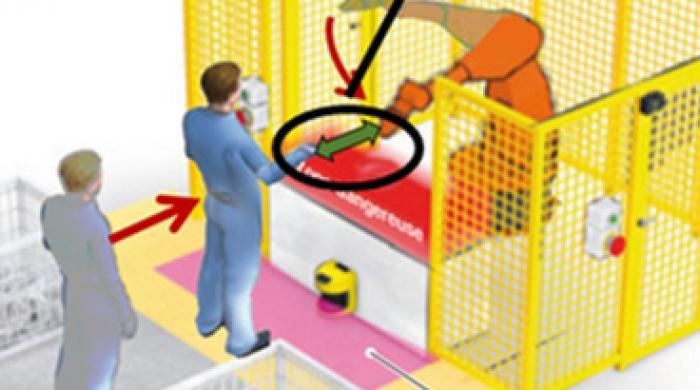
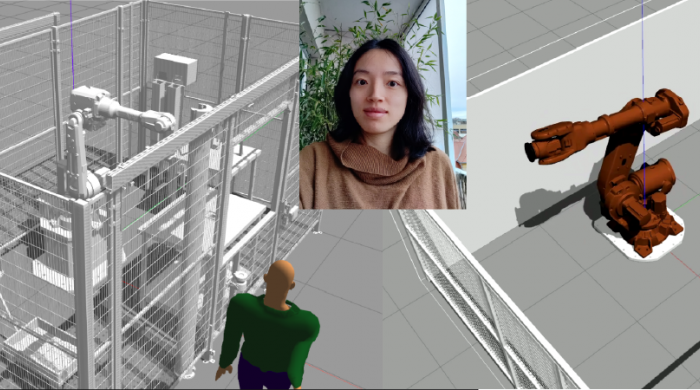
Numerous projects carried out with INRS (the French National Research and Safety Institute) aim to design workstations that better prevent the risk of accidents to operators. This is the case, for example, with simulation work on robot trajectories to enable operators to work in the same space.
This is also the case for work carried out over several years on the safe design of machines. On the one hand, the work focuses on studying risky behavior by operators with a view to implementing systems that prevent accidents.
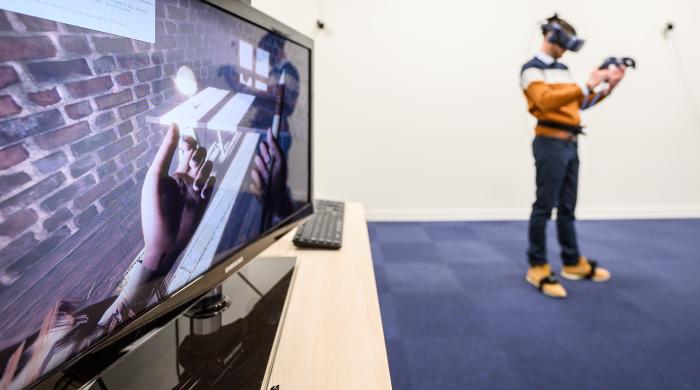
On the other hand, the work aims to equip machine designers to take into account all aspects of operator safety and health from the design phase onwards: risk analysis during the design phase, methodology, simulation, etc. Renjie Zhang's recently started thesis work will enable the use of virtual reality so that designers can immerse themselves in their systems and take the place of users.
The Design, Manufacturing, and Control Laboratory (LCFC)
- The human element of the system: monitoring and anticipation, high-level control,
- The flexible and agile factory: robotization of manufacturing processes,
- Innovative processes and means of production: innovative manufacturing and assembly technologies,
- The virtual factory: digital models, innovative methods of simulation and product-process optimization, system reconfiguration.
Deeply rooted in a methodological and technological research approach, their work draws on industrial-scale technology platforms. Most of it is carried out in close collaboration with industry in various sectors of activity.
The LCFC is a joint laboratory Arts et Métiers the University of Lorraine (ENIM).