First meeting of the Grosne Watershed Territorial Cooperation Laboratory: an initial step toward sharing perspectives and exploring common avenues
Unprecedented mobilization around the Grosne watershed
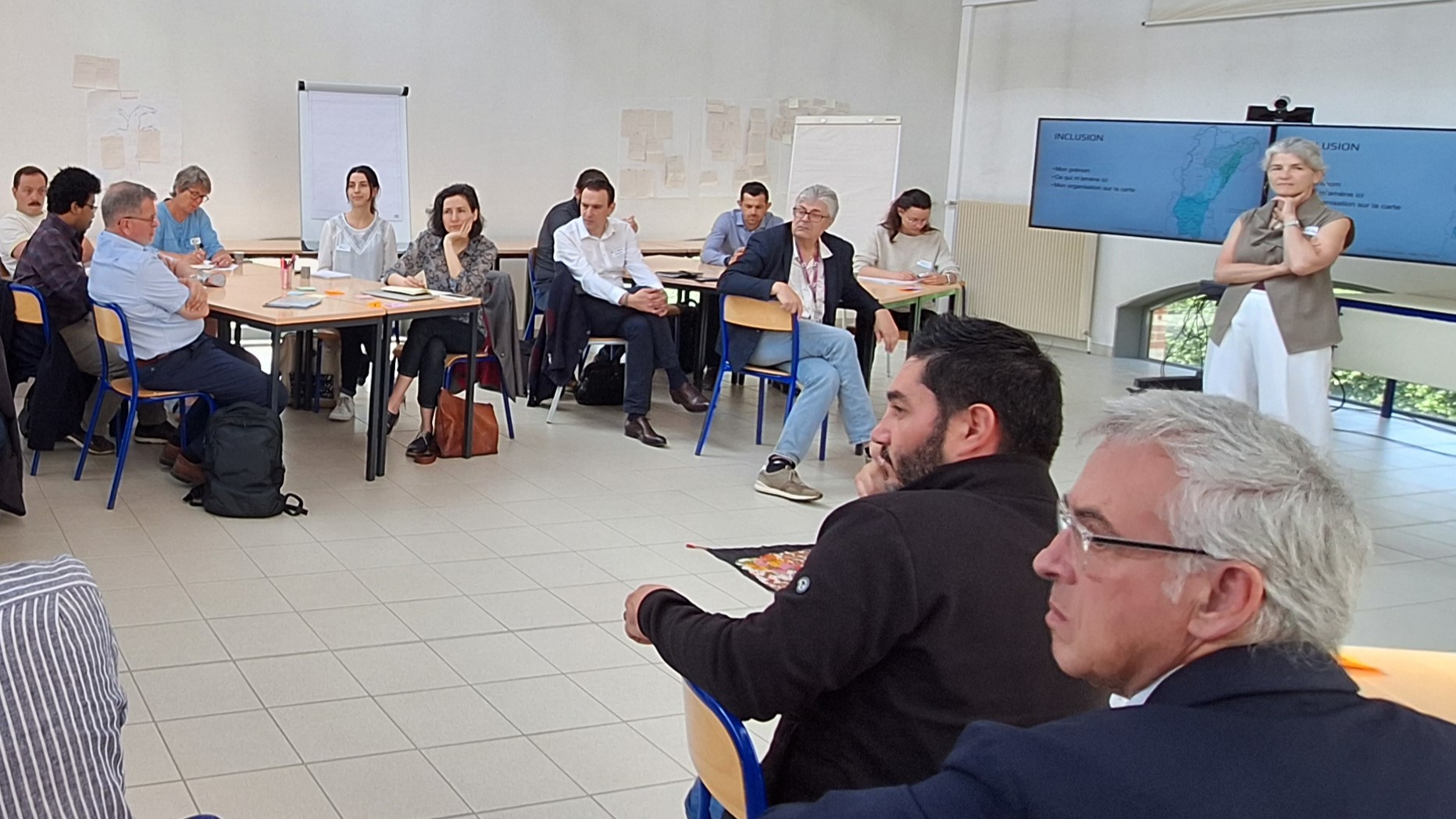
On Thursday, June 12, the Arts et Métiers Campus Arts et Métiers Cluny hosted the first workshop of the Grosne Watershed Territorial Cooperation Laboratory. Around forty participants accepted the invitation from Michel Jauzein, Director of the Campus, to attend this morning of work and discussion: executives and CSR managers from industrial companies, elected officials and representatives from the communities of Clunisois, Saint-Cyr Mère Boitier, and Beaujolais-Grosne, as well as researchers involved in the "Water Sharing in Clunisois" action research program.
After Michel Jauzein opened the meeting and presented the specific characteristics of the Grosne watershed, Jean-Luc Delpeuch, president of the Clunisois Community of Municipalities, outlined the initiatives currently underway in the region and emphasized the importance of strengthening cooperation between economic, institutional, and scientific stakeholders.
Inspiring stories from companies in transition
Several leaders involved in the Business Climate Convention then took the floor. Nicolas Chevalier (SoBag), Dominique Moreau (Keops Conception), Jean-Baptiste Plénard (Isovoo), and Éric Mulat (Blondeau) candidly shared their experiences of transforming their businesses. All emphasized the importance of cooperation in shifting their models toward regenerative practices, in line with the limits of natural resources and the specific characteristics of the region.
Led by Sylvie-Nuria Noguer and Sophie Parent, the second part of the morning session fostered rich and constructive discussions. Encouraged by active listening and a shared desire to take action, participants identified their main challenges and needs related to the impacts and dependencies of their activities on the natural, human, social, and economic capital of the watershed.
Concrete avenues for enhanced territorial cooperation
These discussions helped to identify opportunities and concrete avenues for cooperation in response to the needs identified by businesses and local authorities. All participants praised the quality of the exchanges and the relevance of this collaborative approach. A second session is already planned for fall 2025 to continue this momentum and explore the avenues identified in greater depth, with a view to strengthening the region's resilience.