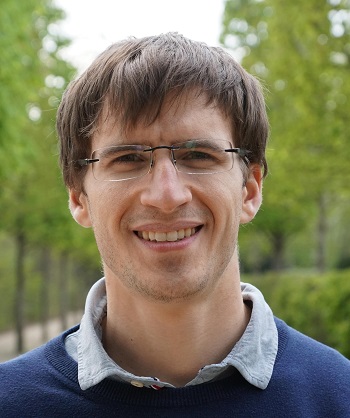
Josua Guerid graduated at the end of 2020 with a Specialized Master's Degree® in Change Management and Sustainable Innovation. He completed his internship at the CEA and was then offered an 18-month contract to assess the environmental impact of 5G-related technologies.
From traditional engineering to eco-design
 Joshua did Lille Central School, specializing in mechanical waves, particularly ultrasound. He then worked for several years in Paris in this field for a company that develops industrial ultrasound scanners used to characterize the integrity of materials for non-destructive testing.
His environmental awareness has grown over time, but he knows that he has little opportunity to promote green initiatives in this sector, and his company does not take these issues into account.
In addition, he wants to leave Paris and its surrounding area.
He then sought out training in eco-design that would allow him to build on his initial career path, as he believes that eco-design is another string to the engineering bow.
I could clearly see what we could have implemented in my company to promote eco-design, it appealed to me... and the mountains appealed to me too!
He then turned to the Chambéry institute for a year-long specialized master's degree inin Change Management and Sustainable Innovation.
It was areally great year with a very close-knit class with whom I still have good ties.
An internship in an eco-innovation team at the CEA center in Grenoble
He finds it difficult to choose an internship in the middle of the year, without yet knowing the different professions related to the training, but he is lucky enough to find an offer at CEA-Liten in Grenoble, an innovation laboratory for new energy technologies and nanomaterials run by the French Atomic Energy and Alternative Energies Commission.
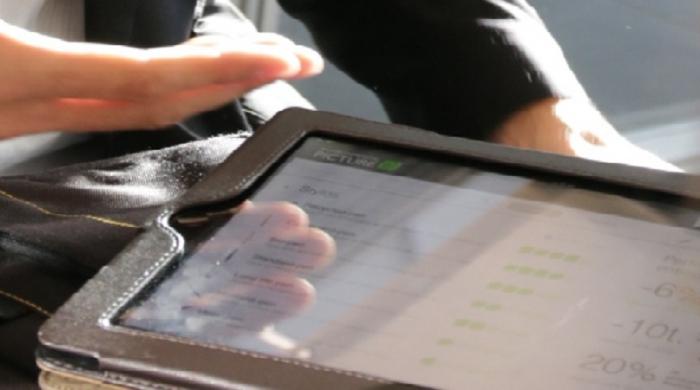
He is doing his internship with a team that has been working on eco-innovation for around ten years. He is responsible for setting up a tool to assess the progress made towards a circular economy in the department concerned, which has around 200 employees. Research projects on the theme of the circular economy have been underway for several years, but the idea is to assess how these topics are progressing internally, how researchers are appropriating them, and what they are achieving in terms of limiting environmental impact. He is providing a tool that will be used by the department's management to visualize the directions taken and adjust its strategy. Project managers will use it to assess the value of projects in terms of the circular economy.
Josua completed his internship at the start of the 2020 academic year and got in touch with Léa Di Cioccio, a scientific advisor who was looking for someone to help her implement implement an eco-innovation approach at CEA-Leti. His initial training as an engineer is crucial for this position, which is highly technical in nature.
A mission that begins with assessing the environmental impact of 5G antennas
CEA-Leti, a laboratory specializing in electronics and information technology, is one of the leading centers for applied research in micro and nanotechnologies, located at the CEA center in Grenoble.
Technologies are developed there for transfer to French or European industry in microelectronics, optics, telecommunications, artificial intelligence, health, bioproduction, etc.
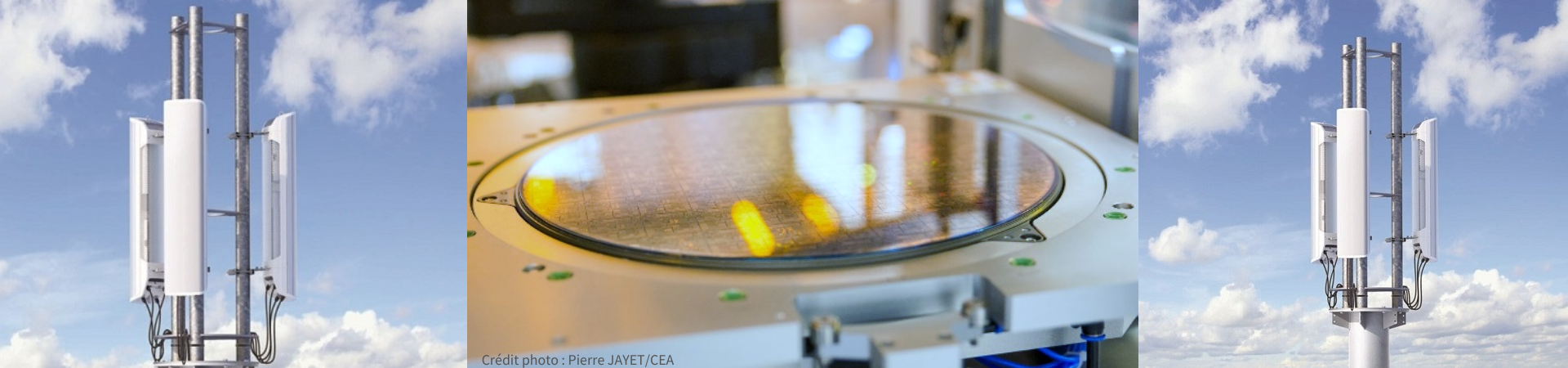
Josua will therefore begin an 18-month assignment in January. He will participate in an eco-innovation initiative that begins with the design of antennas for 5G technology. The CEA is not working on the deployment of 5G but is participating in research projects on related technologies as part of its telecommunications activities. Josua is responsible for assessing the environmental impact of these technologies, seeing how eco-design can be integrated, and thus participating in the implementation of a comprehensive eco-innovation initiative that will ultimately enable the right questions to be asked in the research process.
CEA-Leti in particular has expertise in antennas. Josua is therefore currently conducting a life cycle assessment (LCA) of the radiating elements of a 5G millimeter-wave antenna, which is the component that converts the electrical signal into an electromagnetic wave.
This will enable CEA-Leti to develop its expertise in this area, as it seeks to benefit from the latest university training programs in order to integrate eco-innovation processes from the R&D launch phase onwards.
He works in tandem with Léa and is surrounded on a daily basis by engineers and researchers who provide him with technical information on antennas, components, algorithms, etc., including the head of the 5G project, Jean-Baptiste Doré. For the moment, he has conducted a bibliographic study on digital technology and 5G and is making progress on the LCA study of the antenna's radiating elements. Other topics await him, such as participating in the selection of LCA tools adapted to the specific scope of CEA-Leti.
There is everything to build, which is different from joining a team with proven methods. It's really very interesting.
And Léa Di Cioccio assures us...
Josua will bring to CEA-Leti the methodologies he acquired during his training, particularly in eco-design, which is why I chose him. He has a specific focus on 5G and at the same time supports me with a more general vision.
This is in line with the CEA's eco-innovation approach, which aims to be comprehensive and go beyond proposing relevant technological solutions by including, for example, the question of usage: how technologies are used or how they can be used to reduce their environmental impact.