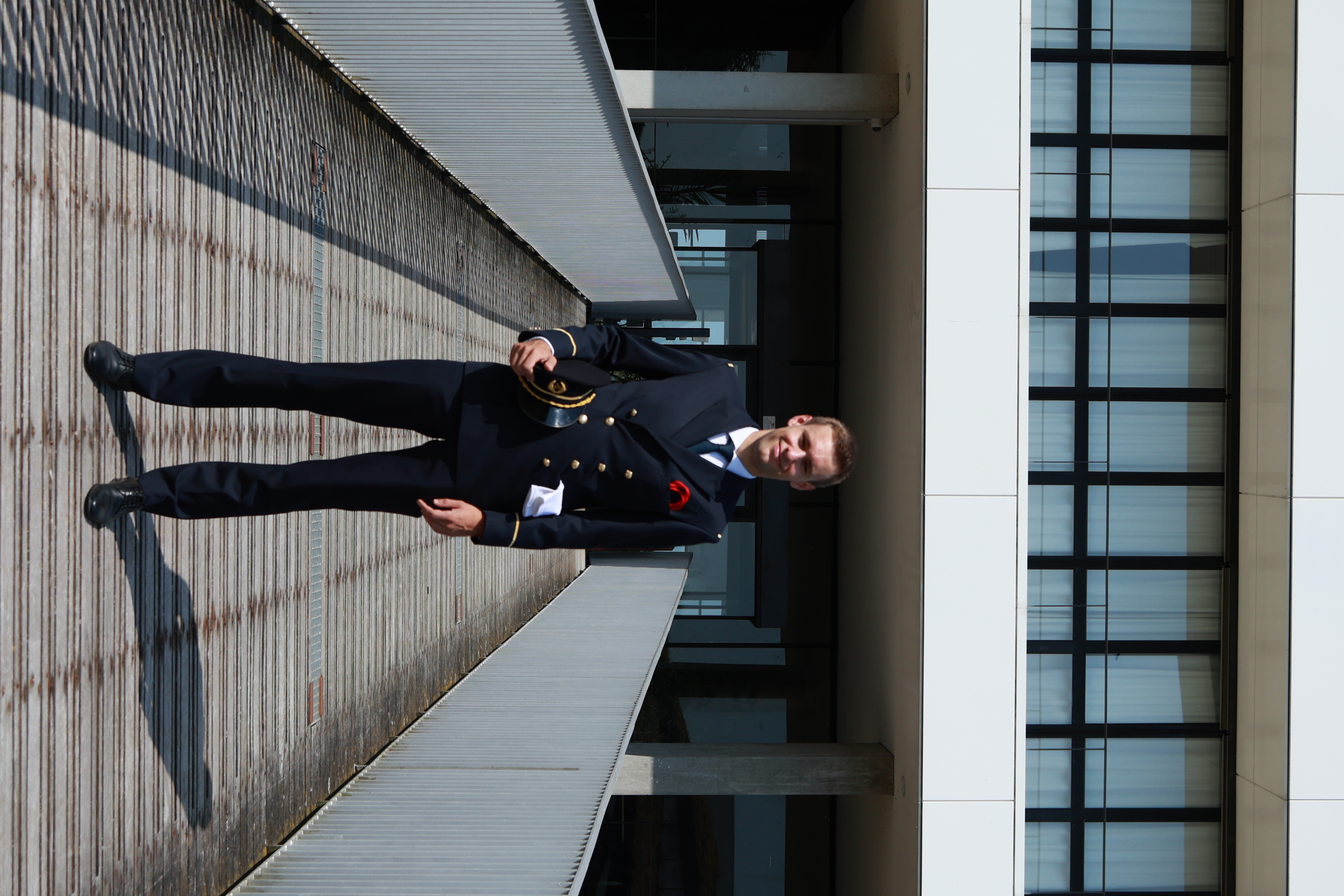
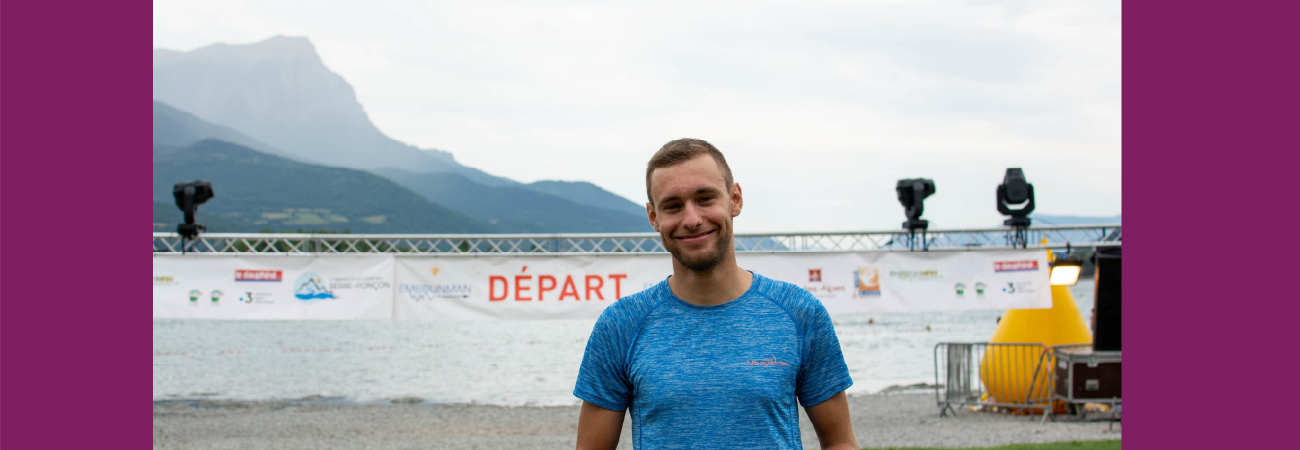
A year ago, Erwan Lambert was a student in the Grande École Program. He was beginning intensive training with the goal of completingthe Embrunman, an Ironman-distance triathlon, while finishing his final year of studies on the Metz campus. He will soon graduate Arts et Métiers is a finisher of this legendary international triathlon, considered one of the most difficult in the world.
The Metz Marathon sparked a taste for long distances
A swimmer since childhood, Erwan took up running during the first lockdown. He ran with friends, mainly to maintain social ties. When he started his first year at the Arts et Métiers campus Arts et Métiers Metz in 2021, he took advantage of the momentum created by his teachers to sign up for the 10km Metz Marathon, which took place a month later. The following year, he signed up for the marathon. His love of long distances was born.
Alongside his studies, he joined the Metz triathlon club and took part in a series of races: marathons, triathlons, and bike and run events.
The desire to challenge oneself
Despite his races and training sessions, Erwan wanted to make better use of his appetite for endurance. After completing an M triathlon (the distance practiced at the Olympic Games), he decided to tackle the longest format, the XL triathlon:
- 3.8 km swim,
- 180km of cycling,
- to finish with a marathon, or 42.195 km.
He then needs to find a race that will take place in August of the following year to give him time to train.
The legendary Embrunman
Only the Embrunman meets his criteria. But here's the thing: it's world-renowned for being one of the toughest in its category, with a nighttime open-water swim start, more than 5,000 meters of elevation gain for the bike leg, and 400 meters for the run.
This did not deter Erwan, who embarked on a year of training alongside his final year of studies, which he completed as part of an apprenticeship in Factory of the Future Management (now known as Global Performance Management).
Diligence and organization: one year of training
As a good scientist, Erwan leaves little room for improvisation and plans a rigorous training program. He consults a sports nutritionist to understand how to provide the energy needed for the efforts he is preparing to make. He buys a training plan that he adapts to his ambitions.
For a year, alongside his studies, he did an average of fifteen hours of sport per week: three swimming sessions with his triathlon club, plus cycling and running sessions. He gave up evenings out with his classmates and weekends with his family.
Swimming: a mere formality
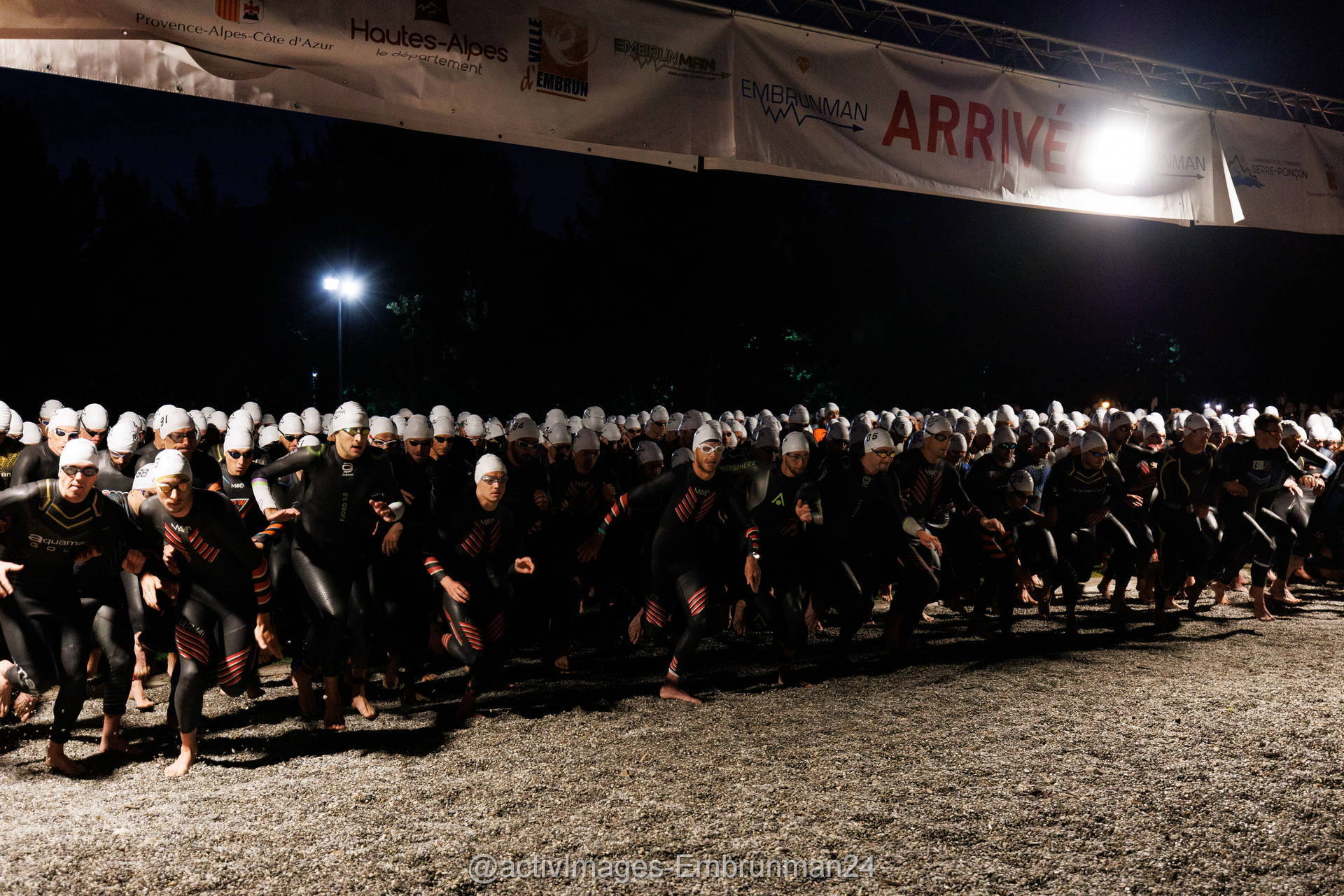
On the big day, Erwan sets off on the race accompanied by his family and a few friends. At 6 a.m., he stands in his wetsuit on the shores of Lake Embrun alongside 1,100 other participants. The start, in the dark, is quite intense, but he finds his rhythm and finally emerges from the water satisfied:
When I get out of the water, I'm in my own world. I think about what I need to do to make my transition as quickly as possible.
 Cycling: the mind comes to the rescue of the legs
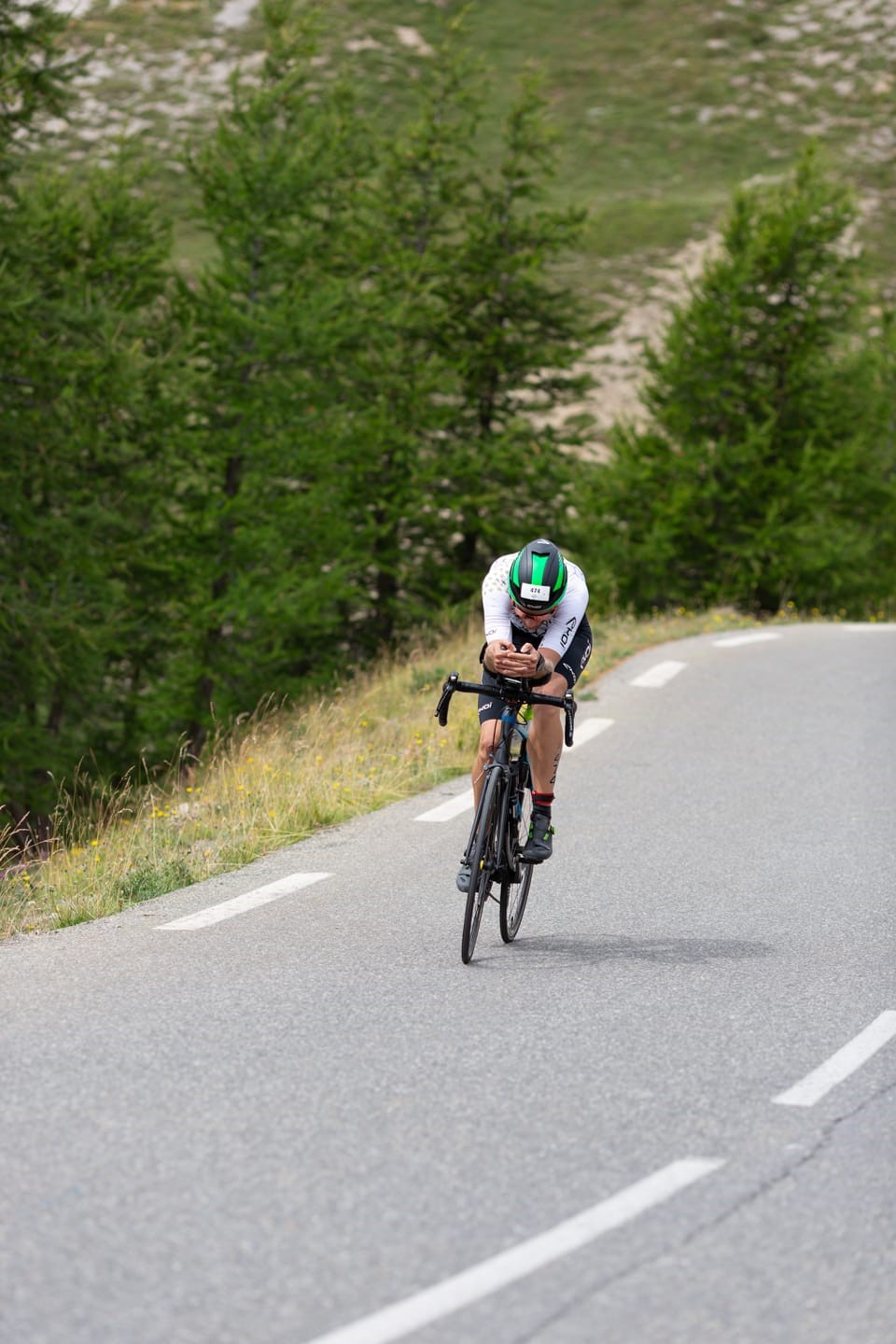
After the first few kilometers, Erwan realizes that his derailleur has a problem, which could slow him down on descents and flat terrain. However, he soon has little time to worry about it, as gusts of wind and a knee injury sustained in a fall slow him down.
Next comes the legendary Col de l'Izoard, which proves to be a tough challenge. He is forced to make several stops to massage his legs, whose muscles are cramping up. Fortunately, his family, friends, and a ham and butter sandwich are waiting for him at the top. This is enough to lift his spirits for the beautiful descent that lies ahead.
Give up? Never!
Despite everything, other climbs await him. And at the bottom of one of them, a seasoned Dutch athlete confides in him that he wants to give up the race because it is too difficult. Sympathetic, Erwan understands. But despite the difficulty, he does not consider giving up for a single second.
I had never cycled up a mountain pass before, and it was a tough experience. I finished my 180 km bike ride in pain. But luckily, two physical therapy students offered me a massage, which was a lifesaver and provided some relief.
The marathon: calculate well to finish well
To finish within the allotted time, Erwan now has 6.5 hours to run a marathon. Taking into account his physical condition and the risks involved (dehydration, hypoglycemia, or even aggravating the sprain he suffered during training four weeks earlier), Erwan calculates the pace he needs to maintain to cross the finish line on time without endangering his health.
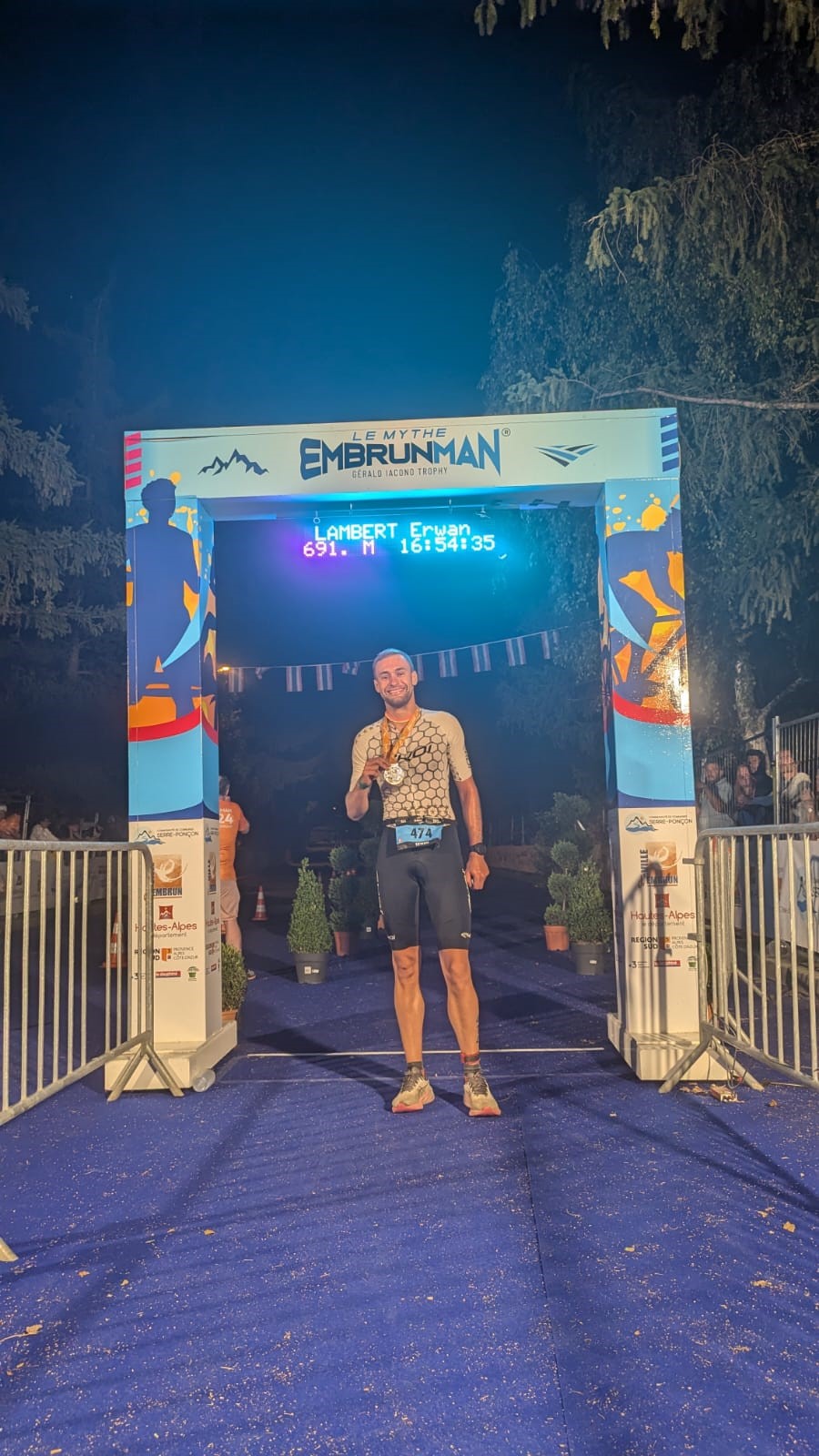
Tired but proud of his achievement, Erwan arrives after just under six hours of racing and more than sixteen hours of effort. Emma Bilham, the winner of this edition, presents him with his finisher's medal.
In the end, I didn't have any muscle soreness or cramps in the days that followed.
Sports, yes, but at a more leisurely pace
Although his year of preparation and his race were rich in lessons, Erwan plans to resume triathlon at a more relaxed pace.
Knowing that I finished one of the toughest races in the world gave me a lot of self-confidence. Especially when you consider that four years ago, I could barely run for twenty minutes. We are capable of doing things that are much more difficult than we think.