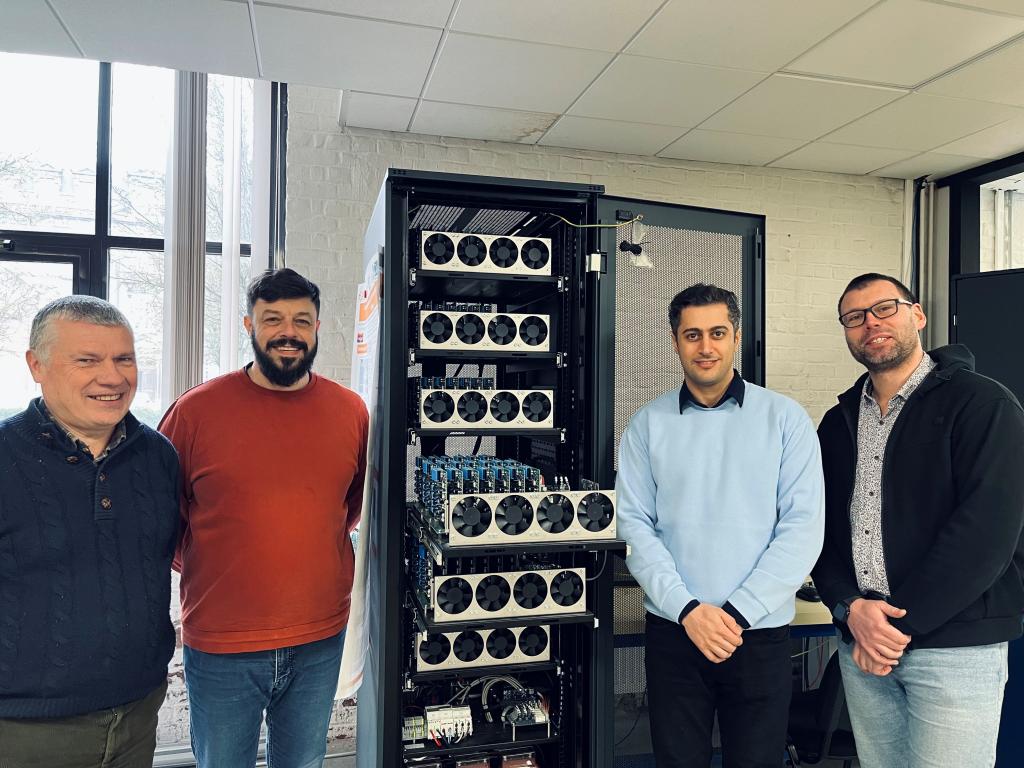
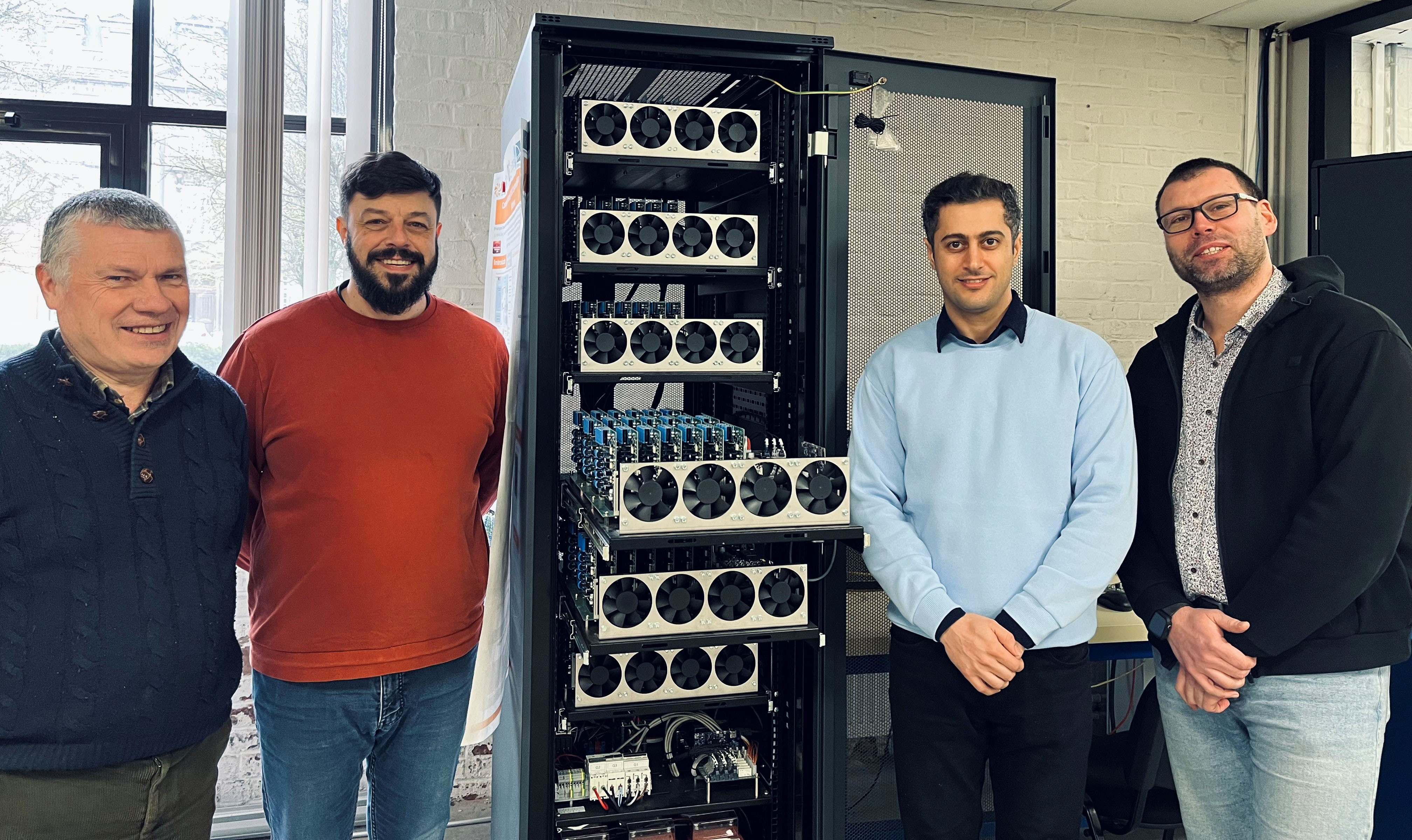
Since July 1, 2024, when the project was launched, two teams from L2EP (Network and Power Electronics) have been involved in a brand new research project as part of the European Horizon Europe funding program: the "Prosecco" project (DC PROtection, SECurity, Control and Optimization).
The objective? To study the interaction between high-voltage direct current and alternating current electrical networks.
Two teams from the L2EP at the Arts et Métiers campus Arts et Métiers Lille and AMVALOR are working on a new research project: Spotlight on the Prosecco project
Since July 1, 2024, when the project was launched, two teams from L2EP (Network and Power Electronics) have been working on a brand-new research project under the European Horizon Europe funding program: the “Prosecco” project (DC PROtection, SECurity, Control and Optimisation).
What is the goal of the Prosecco project? To study the interaction between high-voltage direct-current and alternating-current power grids
Against the backdrop of the transformation of energy production to meet Europe’s 2050 climate goals—including the goal of decarbonizing its energy mix—the Prosecco project will address the need for monitoring and protecting the power grids, which are essential to this energy transition.
Frédéric Colas explains: “Currently, the power grid operates primarily on alternating current. However, certain physical constraints require the use of direct current for power transmission, particularly when connecting offshore wind farms or for underground connections. We’re talking here about significant power flows, on the order of gigawatts, which will be fed into the European power grid as direct current. Given their magnitude, these flows will have a significant impact on the existing alternating current grid. This is precisely the focus of the Prosecco project: to analyze these impacts in order to maintain and improve the stability of both the alternating and direct current power grids.”
François Gruson adds , “As part of this project, the L2EP laboratory will be responsible for a Work Package (WP3) dedicated to studying control methods and the impacts of faults—such as a direct current (DC) short circuit—on the alternating current (AC) grid. In other words, we aim to assess the potential consequences of DC/AC malfunctions so we can better anticipate them and address them quickly in cases where they cannot be avoided. For example, a ship could accidentally damage an undersea cable connecting an offshore wind farm to the grid.”
This project is led by KU Leuven and, in additionArts et Métiers the following partners: AMVALOR, Centrale Lille, Technische Universität Braunschweig, TU Delft, INP Grenoble, Tennet, RTE, UPC, and UGA Grenoble Alpes.