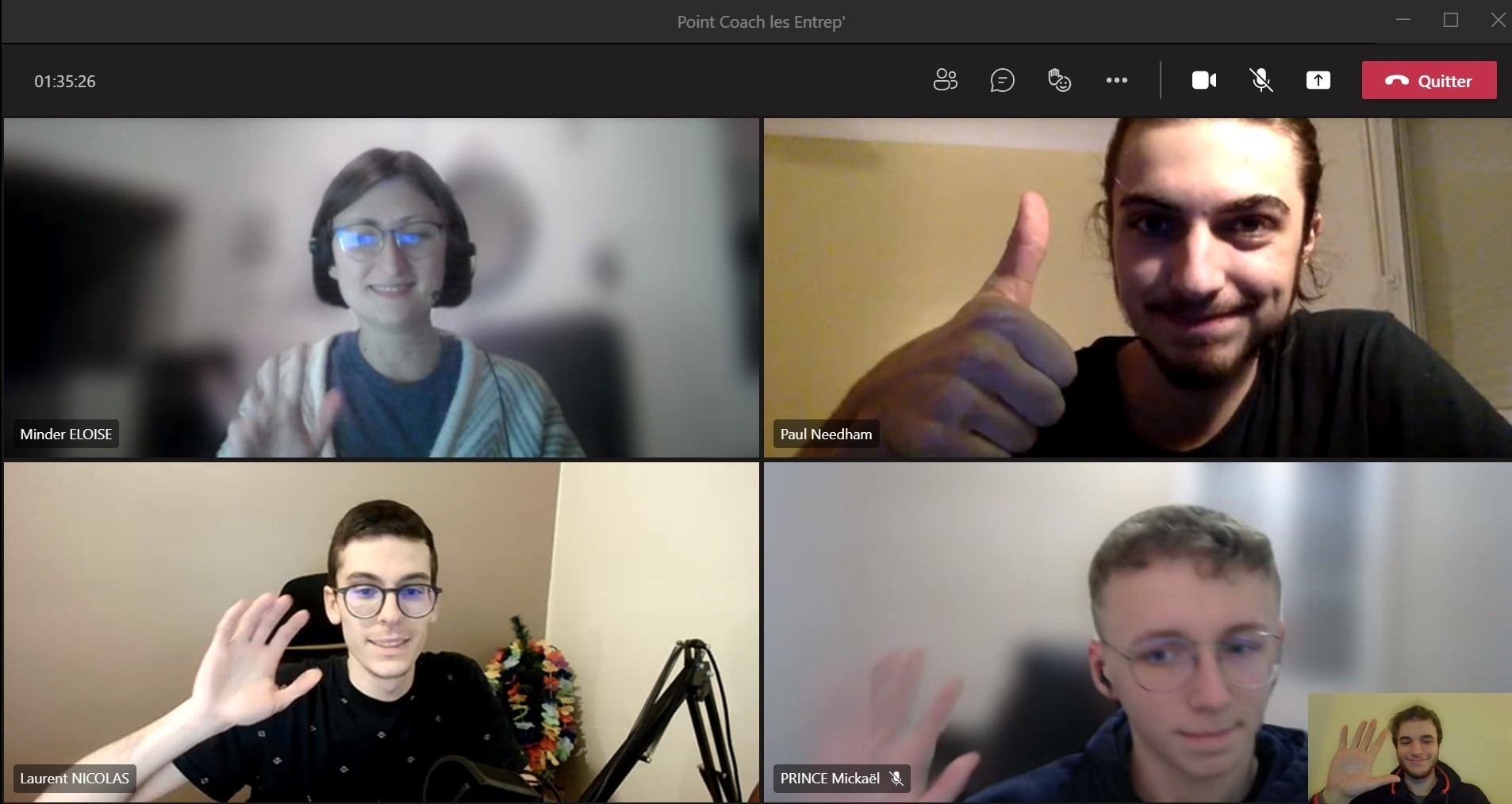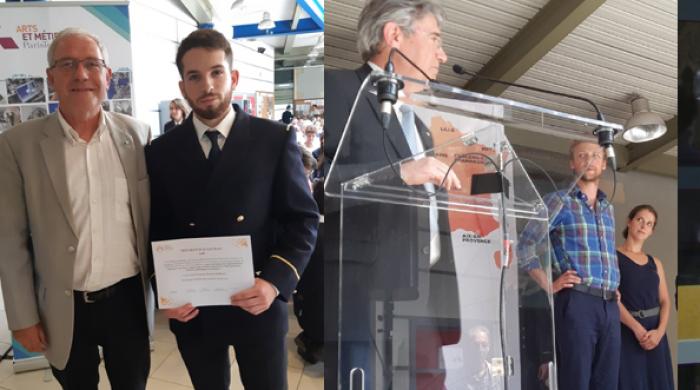
Eloïse Minder, a first-year student in theMTI3D Master of Science , and her team won theDigital – Connected Worldawardatthe latest edition ofEntrep’ en Bourgogne.
Deliver a viable business model
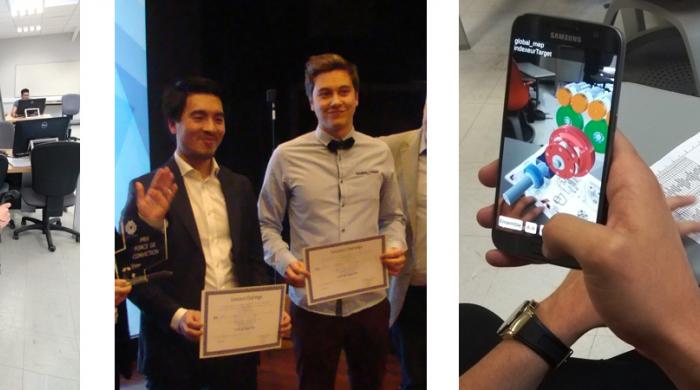
Eloise saw her talents as a designer of an Augmented Reality (AR) and Virtual Reality (VR) demonstrator for Framatome rewarded with theEconomic Opportunityprize at the recent Chal'enge challenge. Now, her ability to make her business viable around a Virtual Reality product has been recognized by the Entrep' jury in Burgundy.
Unlike the Chal’enge Challenge, where we had to design an AR and VR prototype, the goal at Entrep’ was to deliver a viable economic model for our product and the company marketing it, complete with a business model and business plan.
A team of five students, with a coach and sponsor
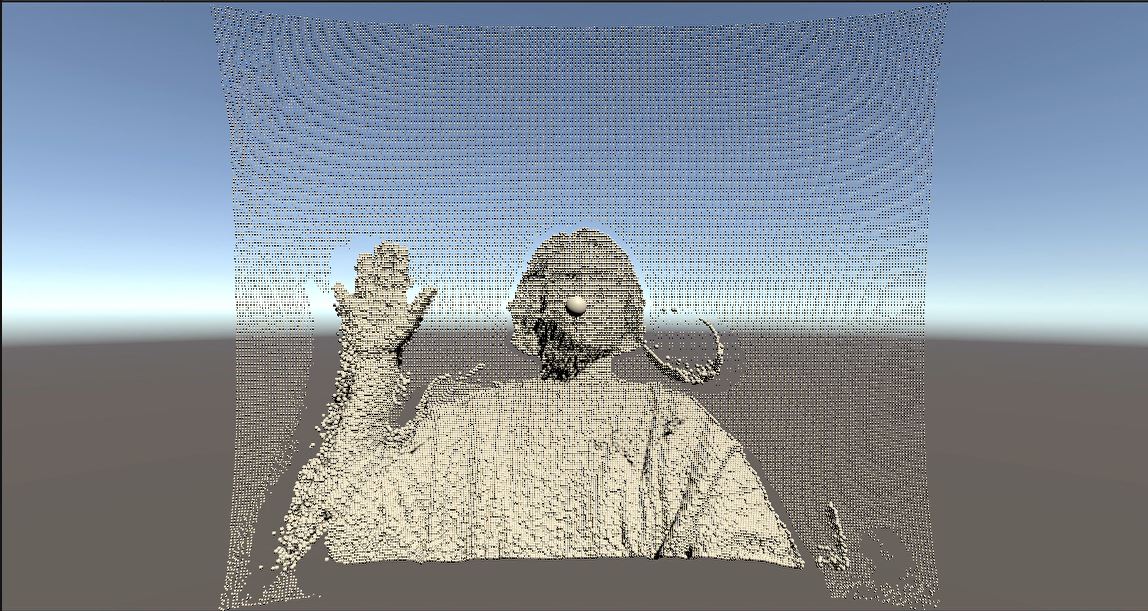
Initially, Éloïse's idea was to offer an interactive virtual reality meeting application. No need for a webcam or customizable avatar, or even a hologram—meeting participants are scanned and their virtual twin is dressed in a cloud of dots that accurately reflects their body shape. Based on this idea, Éloïse put together a team during the October 2020 speed-dating events organized at the start of Entrep’, which includes five students: Nicolas Laurent, also an MTI3D student, Mickael Prince, a computer science undergraduate atthe CNAM in Bourgogne Franche-Comté, Rémy Maillard and Paul Needham, second-year students in the DUT Marketing Technology program atthe University of Le Creusot.
The team benefited from the support of a coach and a mentor during the competition.Delphine Begat, an expert in business development, took on the role of coach and met with them every two weeks.Edouard Choplain, co-manager and sales director at c2ip, shared his professional experience as a mentor.
The ability to interact with the same object
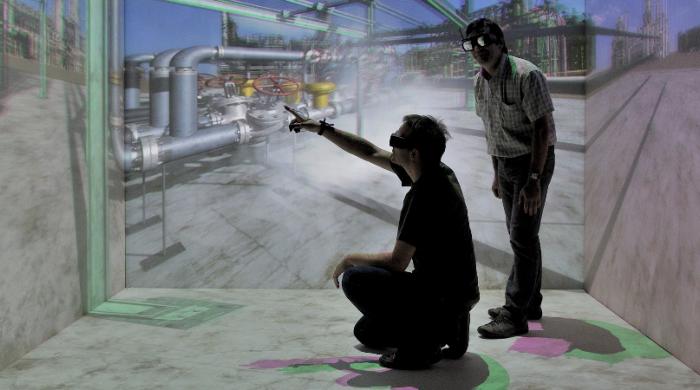
The company envisioned by Éloïse and her team would sell its customers a package consisting of an application, a Kinect camera, and an Oculus headset connected via Bluetooth. Their customers would log on to a website and upload CAD models to the drive connected to their account. There would no longer be any need for meetings, but instead they would be able to review projects where participants, represented by their digital clones generated from their point clouds, would interact on the same 3D object, similar to CAD (computer-aided design).
For example, a company that sells furniture could conduct its ergonomic reviews directly via the application. There is no longer any need to create prototypes, as the latter is present in the virtual space and can be modified by all project collaborators or even by the customers placing the order.
Towards a grand slam?
Today, Éloïse plans to register for the next editionof Open4StartUP, a competition organized byNicéphore Citéthat offers winners assistance and support in setting up a business within their business incubator. Paul and Rémy, students at the University Institute of Technology, are continuing the adventure with her.