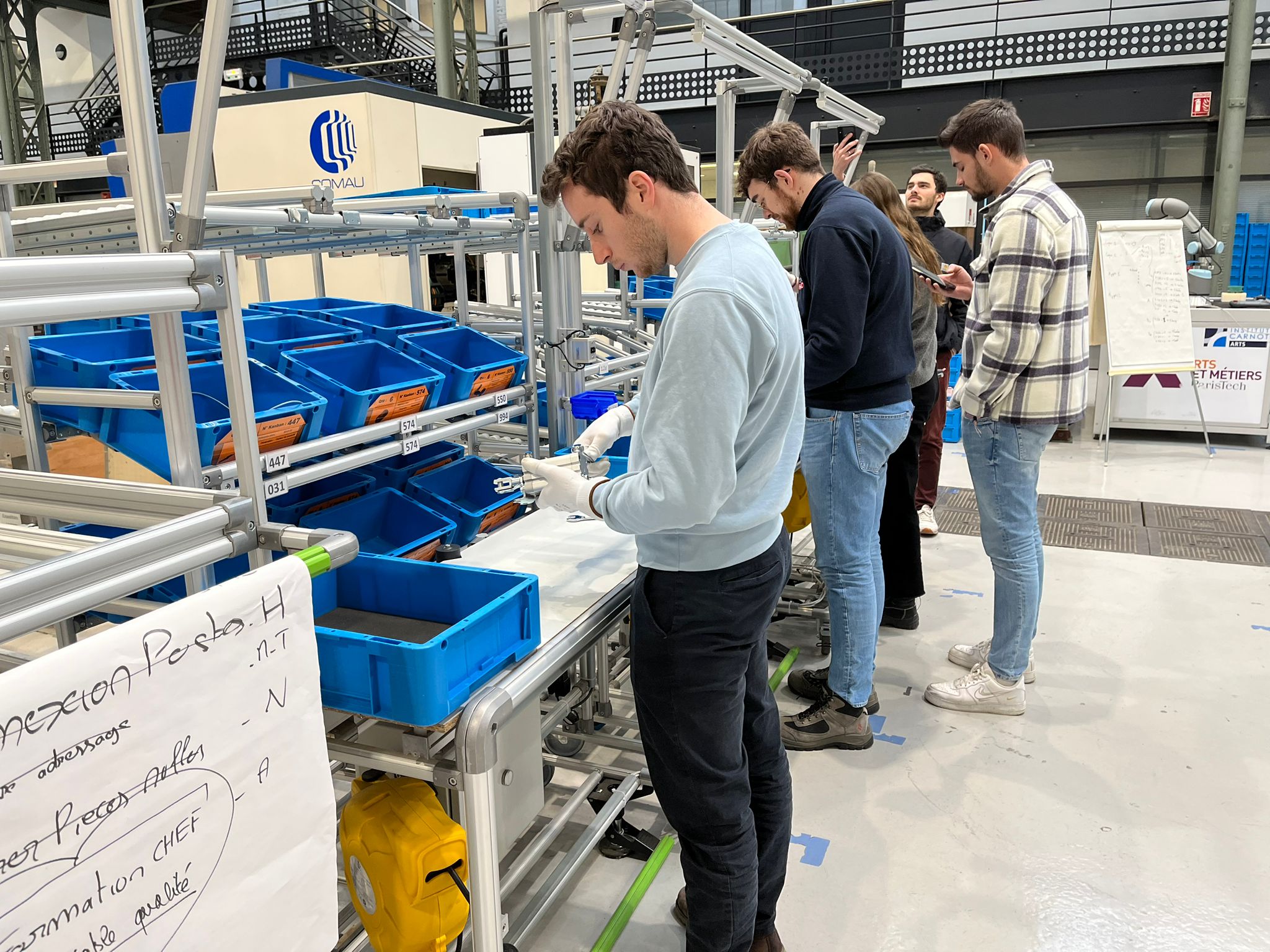
The Arts et Métiers Institute Arts et Métiers Chalon-sur-Saône integrates Usinerie, a regional hub dedicated to the digital transition of industrial companies.

The Arts et Métiers Institute Arts et Métiers Chalon has joined forces with Usinerie, a regional hub dedicated to the digital transition of industrial companies, in Chalon-sur-Saône.

Specializing in virtual and augmented reality, the Institut Arts et Métiers Chalon-sur-Saône is joining this 4,000 m² space alongside three other co-founders: Cnam BFC, UIMM 71, and Usinerie Partners, contributing its expertise in training, research, and innovation, as well as its cutting-edge equipment related to Industry 4.0.

How is additive manufacturing rethinking objects?

Main image
3D polymer printing using fused filament fabrication
Headline

In the PA12 report, Materials and Additive Manufacturing (MadMan), the goal is to train students in Grande Ecole Engineering Programme additive manufacturing technologies by teaching them the fundamentals of design principles and the associated digital approaches. This course introduces a rapidly evolving process that enables flexible and rapid prototyping as well as customized products.

Main body text

Industry-related prototypes

3D printing, or additive manufacturing, is a relatively recent process that involves adding layers of material one by one to create complex geometric parts that can be made lighter. Various technologies exist and are suitable for a wide range of materials (metal, polymer, wax, ceramic, plaster, etc.). "These processes are very interesting for the design and production of prototypes and are increasingly being used in industry (aeronautics, automotive, healthcare, etc.) to produce complex, customized parts or parts that can no longer be manufactured in any other way, particularly through reverse engineering," says Sébastien Roland, head of expertise and lecturer-researcher at the Laboratory Processes and Engineering in Mechanics and Materials (PIMM).

Materials and Additive Manufacturing (MadMan) expertise is aimed to a limited audience of students whose semester is staggered (from February to the end of June). Its objective is to showcase additive manufacturing technologies associated with materials, each of which requires specific techniques.

In this expertise, the teaching modules are organized in such a way that the entire digital chain associated with additive manufacturing is covered. For example, this ranges from surface or free-form design, through reverse engineering and topological optimization, to surface reconstruction and distortion calculation. Manufacturers are now moving towards process automation, a challenge that would improve its industrialization.


Innovative projects on several fronts

Last year, students specializing in this field studied the design of a topologically optimized bridge. The challenge set for the students was to maximize the rigidity of a bridge using as little material as possible. The structures printed on the school's printers are tested on mechanical testing machines to assess their weight resistance.

Arts et Métiers students alsoArts et Métiers part in an international competition organized by NIIAM (National Institute of Innovation of Additive Manufacturing, based in Xi'an, China) on the theme of "green living." They presented an innovative composting pot, which was clearly appreciated by the jury, earning them second place in the competition.


Testimonials from former students of the program

Antoine Raffray (Class of 218)

  • What did you appreciate most about this expertise?

I really liked the way this expertise was approached. We had theoretical classes that allowed us to acquire the knowledge necessary to fully understand additive manufacturing. We also had regular practical sessions that allowed us to put the concepts studied in class into practice.

  • Which project did you like best?

I preferred the project on the topological optimization of a bridge. The goal was to build a bridge that had to be both:

  1. as strong as possible (by compression testing);
  2. as light as possible (by weighing the deck);
  3. as aesthetically pleasing as possible (by preference vote of 10 people chosen at random).

This project interested me because the issue seemed very interesting, but also because it allowed us to actually print our own physical product. It allowed us to carry out a project from its creation to its completion.

  • To what extent is the additive manufacturing studied in this program useful to you in your professional career?

I am currently a student in Master of Science Entrepreneurs Master of Science program, and my long-term goal is to start my own business.

Still considering the sector of this company, I am particularly interested in the healthcare, energy, and circular economy sectors.

 If I go into healthcare, additive manufacturing could be particularly useful to me, as this manufacturing process allows innovative products with complex shapes to be designed quickly.

I am thinking, for example, of the start-up Bone 3D, created by an engineer from Arts et Métiers, which uses additive manufacturing to produce medical devices and surgical simulators for training healthcare professionals.


Armand Kail (Ch. 218)

What did you appreciate most about this expertise?

For me, the group dynamic was the highlight of this semester. In this course, we were a fairly small group of students, brought together around an emerging family of processes and supervised by enthusiastic professors. This created a movement that encouraged cooperation on projects in an atmosphere that was enjoyable for everyone.

Which project did you like best?

The design of a bridge model combining CAD, process knowledge, and Abaqus's topological optimization module made the biggest impression on me. The goal was to print a bridge that would maximize the ratio between its resistance to a bending test and its weight. The design and documentation aspects made this project a fairly comprehensive summary of what is expected in design and prototyping in additive manufacturing. It was an exciting challenge. What's more, getting together to put our bridges through the press, anticipating and analyzing their failure, was a great finale: the broken bridge I made on that occasion is still on my desk!

To what extent will the additive manufacturing studied in this program be useful to you in your professional career?

In my opinion, the main aspects that the expertise develops are found in the articulation of design and processes. For design, this is done through courses on creativity and prototyping methods. With advanced CAD and calculation courses, you acquire a good foundation for a design office. Of course, once the object has been designed, it must be produced. In addition, the expertise project provides a real mastery of processes, polymer materials, as well as the constraints and quality of 3D printing. In general, this expertise provides the knowledge and skills necessary for an industrial engineer (especially if they want to work in an SME).


More information:

Materials and additive manufacturing (MadMan) | Arts et métiers artsetmetiers.fr)

Additional images
Armand Kail
Antoine Raffray

Identify stiffness and dissipation properties

Main image
Methods, experimental devices, and data obtained according to the frequency regime.
Headline

The Processes and Engineering in Mechanics and Materials (PIMM) laboratory winner of the 2022 Coup de pouce call for projects: Ultra-wideband identification of viscoelastic properties

Main body text

The project focuses on pooling experimental resources associated with characterizing the viscoelastic behavior of materials, traditionally used in separate scientific communities: dynamic mechanical analysis (DMA) for polymer materials, modal analysis in structural dynamics, guided waves for non-destructive testing, and multi-element probes for ultrasonic imaging.

The merging of different experimental data should enable the identification of stiffness and dissipation properties over an extremely wide frequency spectrum, covering approximately ten orders of magnitude, from 0.01Hz to 10MHz. The intrinsic multi-modality of this characterization and its spectral range would make it a relevant tool for dialogue between scientific communities, providing multi-scale and/or multi-physical information with the aim of advancing knowledge of materials and validating associated theories.

The Coup de Pouce 2022 project, which addresses this issue and is supported by the laboratories of the Fédération Francilienne de Mécanique (F2M), is funding a postdoctoral fellowship that will seek to demonstrate the feasibility of this ultra-wideband analysis on quasi-homogeneous materials obtained by 3D printing using photopolymerization. This initial proof of concept should make it possible to consider applying the approach to heterogeneous structured materials, with the aim of highlighting the influence of different scales on the macroscopic behavior of these metamaterials.


Carriers

Pierre Margerit (PIMM – Arts et Métiers Campus Arts et Métiers Paris)

Nicolas Bochud (MSME – University of Paris-Est Créteil)


Employees

PIMM: Jorge Peixinho, Marc Rébillat

MSME: Giuseppe Rosi


Funding: Coup de Pouce 2022 from the Fédération Francilienne de Mécanique (F2M)

Full-width image
Methods, experimental devices, and data obtained according to the frequency regime.
Additional images
Methods, experimental devices, and data obtained according to the frequency regime.

TEDxArtsEtMétiersParis2022, or the art of tricking the brain

Main image
TEDx room
Headline

Melinda Boulajaj, president of the TEDx Arts et Métiers student association, looks back on the event she organized with her team on Thursday, October 6, 2022, at the Grand Amphitheater on the Arts et Métiers campus Arts et Métiers Paris. More than 300 people attended, and the feedback was very positive.

Main body text

Founded in 2015 , TEDx Arts et Métiers a student association licensed by TEDx at the École Nationale Supérieure des Arts et Métiers the Paris campus.

The TEDx Arts et Métiers team organizes an annual conference on scientific or societal topics, which are apolitical and approached in an innovative way.


On Thursday, October 6, 2022, from 7:00 p.m. to 10:30 p.m. in the Grand Amphitheater of the Arts et Métiers campus Arts et Métiers Paris (155 Bd de l'Hôpital 75013 Paris), the association organized a conference entitled "The Art of Tricking the Brain" with a diverse range of speakers varied and high-potential :

  • Lydwine MOTTE Certified Trainer-Coach in Relational Excellence
  • Jonathan BEL LEGROUX, Hypnosis practitioner and trainer, mental coach for athletes, author
  • Syrine KAOUANE, Student at Arts et Métiers
  • Amine DIOUANE, Violinist and engineering student specializing in urban planning
  • Justine PILUSO, Chef and culinary presenter
  • Jacques TRENTESAUX, Editorial Director and President of Mediacités
  • Mohamed BOCLET, World Speed Reading Runner-up

More than three hundred people attended this conference, which was a great success and received very positive feedback.


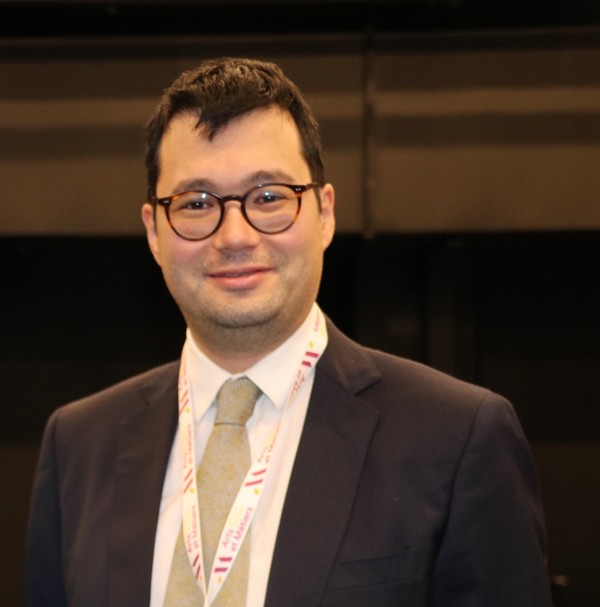
We met with Melinda Boulajaj, president of the TEDx Arts et Métiers association and a second-year student in the Specialized Engineering Program at the Arts et Métiers campus Arts et Métiers Paris.


  • Melinda, could you introduce yourself?

My name is Melinda, and I am a second-year student in the Energy Engineering Specialization Program at the Arts et Métiers campus Arts et Métiers Paris. I am completing my work-study program at VINCI Énergies as an apprentice methods engineer. I am also president of the TEDx Arts et Métiers association.


  • Why did you want to become President of the TEDx Arts et Métiers  association Arts et Métiers

Organizing a TEDx conference is a real challenge and a very stimulating experience. Our goal as TEDx organizers is to inspire, bring people together, and highlight passionate speakers from different fields. The role of president has given me an overview of the project and allowed me to define the steps needed to bring it to fruition.


  • How was the theme for this TEDx talk chosen?

Choosing a theme is a crucial step in organizing a TEDx event. It sets the tone for our organization and our event. After several team brainstorming sessions, we chose the theme for the 2022 edition: "The Art of Tricking the Brain," which was proposed by our treasurer, Ajith KUMAR. The event consisted of showcasing the ideas and passions of seven speakers, all from different fields, who were ready to tackle the same theme. The goal was to inspire and "spread ideas worth spreading."


  • After this wonderful TEDx event, what are your plans for your association and your career?

I have committed to serving as president of TEDx for two years. I will draw on the experience I have gained this year to work with the new team to make TEDxArtsEtMétiersParis 2023 an even more memorable event.  The experience of working with an association is a real added value. It allows us to develop skills, both on a human and technical level (project engineering, management, interpersonal skills, negotiation skills, use of new work tools, etc.). On a professional level, I am continuing my training at VINCI Énergies and exploring various opportunities to complement my training.


More information:

Instagram: @tedxamparis

LinkedIn: TEDxArtsEtMétiers

YouTube: TEDX Talks

Facebook: TEDx Arts et Métiers


The TEDx Arts et Métiers  office Arts et Métiers


Additional images
TEDx Team
Audience and TEDx conference
TEDx talk
TEDx2 Team
Melinda Boulajaj

Making composites at Arts with style

Main image
Polymer
Headline

The expertise of the Arts et Métiers Paris campus in "Polymer and Composite Parts Development" (Pa2) trains generalist engineers by providing them with specialized skills in the life cycle of polymers and composites. This expertise meets a strong industry need:the 2020 IESF survey shows above-average salaries for young Arts et métiers graduates Arts et métiers in the relevant sectors (plastics, chemistry, etc.).

Main body text

Polymers, composites, and industry

Polymers and composites are materials that combine lightness, strength, aesthetics, and numerous functional properties (piezoelectricity, shape memory, etc.).

Many schools train "polymer chemists," but the industry also needs generalist engineers who are familiar with the various aspects of their implementation," explains Emmanuel Richaud, head of this field of expertise. The PA2 program thus prepares engineers who are capable of organizing and managing the production units for these technical parts.

Alongside the theoretical courses needed to acquire essential concepts, the wide range of equipment available at the PIMM laboratory—used in particular during the manufacturing project—exposes students to the actual processing methods used in industry.


What do students think about this expertise during and after their training?


  • Interview with Hugo Peridy (An220)

Why did you choose this area of expertise?

I was already drawn to material-oriented expertise and I am passionate about aeronautics. Composite materials are widely used in this field (>50% in the case of recent aircraft), so this choice seemed natural to me at the time.

What would you like to do and/or learn there?

Above all, I would like to learn about the processes involved in creating polymer and composite materials, as well as their field of application, because I know that this is not limited to aeronautics.

To what extent do you think that the life cycle of polymers and composites studied in this course will be useful to you in your professional career?

Polymer and composite materials are mostly recyclable (the entire range of thermoplastics). However, as this aspect is still underdeveloped, I believe that understanding their entire life cycle is crucial for the future.


  • The career of Tanguy Choupin (Me211)

After earning an engineering degree from the Grande Ecole Engineering Programme Arts et Métiers a Ph.D. with Airbus Group on composite materials, Tanguy Choupin went on to hold leadership roles in the innovation departments of various major corporations (Airbus, SNCF, Hexhel).

He is currently Materials Project Manager at SNCF within the SNCF Innovation Department and plans to move into operational roles in the future, for example in a train maintenance technical center.

A success that is close to his heart: the introduction of a new TGV nose for improved aerodynamics and resistance: TGV gets a new nose (sncf.com)

His advice to students: "Believe in yourself, don't be afraid of new challenges, and reach out to others!"


Contact: Emmanuel Richaud, professor and researcher at the PIMM Laboratory and head of expertise.

More information:

Development of polymer and composite parts | Arts et métiers artsetmetiers.fr)

Additional images
Photo by Tanguy CHOUPIN
Photo by Hugo Peridy