National Master of Science Degree Master of Science DNM) in Mechanical Engineering and Energy in the Naval Environment (MEEN)
Campus
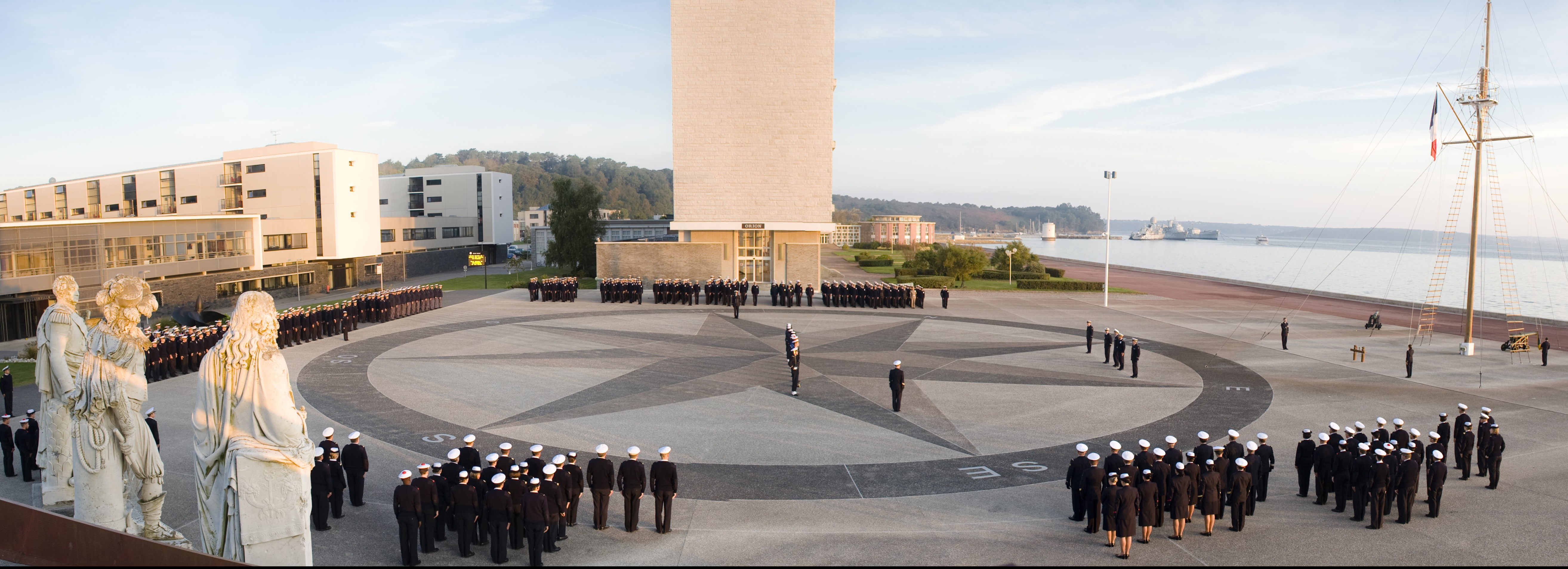
Naval Academy, 29160 Lanvéoc, France
Pedagogy
The objective of this training program is to provide in-depth knowledge and the tools necessary for the development of research and development activities applied to the fields of naval and nautical engineering.
Training schedule
This training program lasts two years.
Master of Science :
The first year is offered at the Arts et Métiers campus Arts et Métiers Paris through the "Factory of the Future - Energy" program.
Master of Science :
In the second year, the program includes one semester of classes.
The first semester of the M2 is organized according to a standard academic program consisting of 8 modules (to be chosen from a total of at least 30 ECTS):
- "Introduction to Research" 120 hours (in English, compulsory) 12 ECTS
- Applied Naval Hydrodynamics 81 hours (compulsory), 5 ECTS
- "Advanced Physical Hydrodynamics" 46 hours, 5 ECTS
- "Numerical Hydrodynamics" 26 hours, 4 ECTS credits
- Energy Conversion / Marine Renewable Energy, 22 hours, 2 ECTS
- "Sustainable Development and Marine Environment Monitoring" 51 hours, 2.5 ECTS
- "Advanced Signal Processing" 30 hours (4 ECTS)
- English 8 p.m. (compulsory) (1 ECTS)
The program is based on various practical exercises carried out using IRENav's advanced experimental research and modeling resources.
The introductory research module takes the form of an individual research project. The aim of the module is to tackle a research topic under the guidance of a teacher-researcher, allowing students to immerse themselves in the laboratory and gain practical experience of research work.
The second semester is devoted to an immersion research internship lasting several months (approximately 5) in a company or research unit (school or university). It is possible to complete this semester abroad.
Objectives
- Cutting-edge expertise and experience in the fields of naval engineering, boating, and the maritime environment
- Conducting R&D on an industrial problem, identifying a topic, and developing a research project
- Present (orally and in writing), disseminate, and communicate research findings
Key scientific and educational leaders in the field
The training is mainly provided by teachers, teacher-researchers, and staff from the Naval Academy Research Institute (EA 3634 – Naval Academy laboratory under the supervisionArts et Métiers):
- 3 University professors in mechanics, hydrodynamics, and information systems.
- 2 Associate professors with HDR (Habilitation à Diriger des Recherches, or accreditation to supervise research) in electrical engineering and signal processing.
- 10 Senior Lecturers in Mechanics, Hydrodynamics, Signal Processing, Acoustics.
- 6 Experts in mechanical engineering and hydrodynamics
Related technology platform
The training program draws on the research and experimentation resources ofthe Naval Academy Research Institute:
- Hydrodynamic platform: cavitation tunnel, Taylor-Couette device
- Nautical platform: instrumented sailboat
- Digital platform: fluid and structural calculation software
Assessment and validation procedures
Each training module is assessed by means of a written exam or the drafting of a study report.
The introductory research module is assessed through the writing of a scientific article and an oral presentation, as might be required for an international scientific conference.
The research internship is assessed by means of a written thesis (approximately 50 pages) and an oral defense presented before a jury composed of faculty members from the Naval Academy.
A panel of faculty members from the Master of Science program Master of Science a midterm and final evaluation: this includes a review of grades and the approval of course modules and the internship.
Career opportunities
Doctorate, R&D in the maritime and nautical sector
Targeted companies
Large corporations and SMEs in the maritime, energy, and boating sectors
Admissions
Admission requirements
- Required level: Master's degree or equivalent – Mechanics, energy, engineering sciences
- Equivalent international level
- Level of French: be able to follow a science course in French
- English proficiency: ability to write scientific papers and present findings orally in English
Application deadline(s)
- French students: June 15
- International students (especially those who need a visa): end of April
Partners
Industrial partner(s)
- Naval Group (formerly DCNS), THALES, numerous SMEs, sailing race teams
Institutional partner(s)
University partner(s)
- University of Auckland, University of Edinburgh, Chalmers University of Technology, University of Michigan, Politecnico di Milano, University of Western Brittany, ENSTA Bretagne, IFREMER, Ecole Centrale de Nantes, Paris Sud University, Ecole Polytechnique
Practical information
- Course language: French, English for the English module and the research initiation project presentation
- Timeline: early September 2021, internship starting in early March 2022, internship defense in September 2022
- Number of hours: 246 hours of lectures/tutorials, 24 hours of practical work, 126 scheduled project hours
- ECTS credits: 60 ECTS
- Cost: see university registration fees (ENSAM)
- Training location(s): Naval Academy, Lanvéoc (plus visits and boarding of French Navy vessels, conference in Brest)
Contacts
Magalie LAMANDE : +33 (0)2 98 23 41 41
 |  |