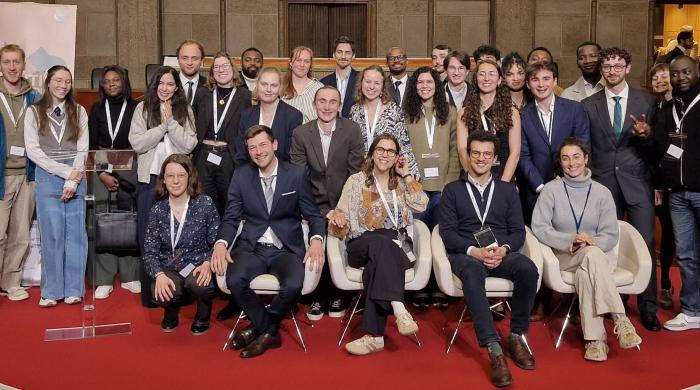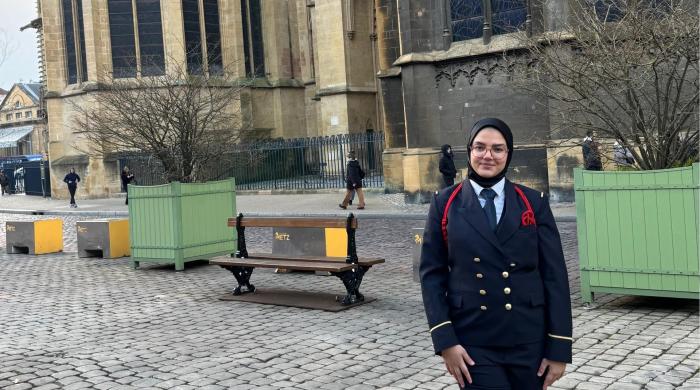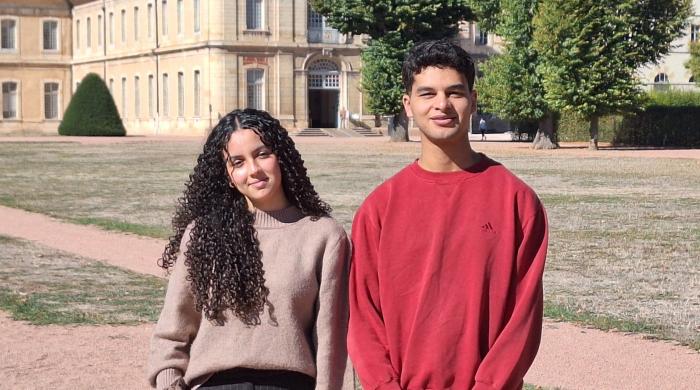
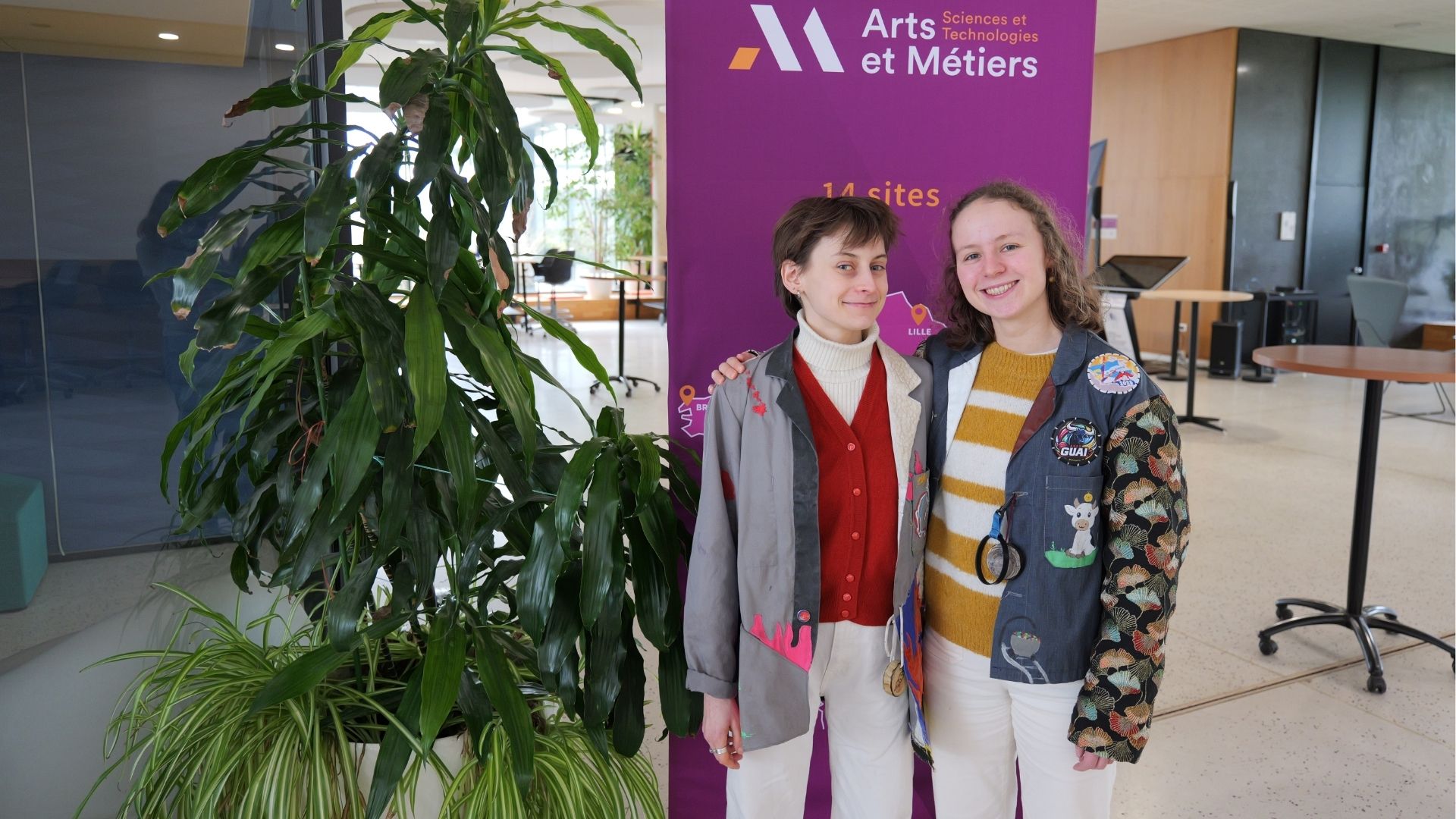
Alongside five other Arts et Métiers students, Léontine Laurent and Solène Molimard took part in the Student Scientific Convention on the decarbonization of cement-concrete construction, organized by the IESF. This was a way for them to get actively involved in the decarbonization of industry.
"We wanted to take action on an issue that has a real ecological impact."
Léontine and Solène, both students in the Grande Écoles Program on the Metz campus, applied to participate in this scientific convention without knowing exactly what to expect. After submitting a letter of motivation and attending an interview, they were selected from nearly two hundred candidates to join a panel of fifty students from all over France (including five other students from other Arts et Métiers campuses Arts et Métiers read the dedicated article).
Their commitment stems from a strong motivation: to contribute to the fight against climate change, even in a field they were not yet familiar with.
Solène recalls: "I knew nothing about construction, but I was immediately interested in the sustainable development aspect."
Understanding to better transform
For four months, one weekend per month, participants work in Paris, in exceptional locations, alongside researchers, industrialists, and public figures. The goal: to gain an in-depth understanding of the environmental impact of cement and concrete in order to formulate scientifically sound recommendations.
"The first weekend was spent setting the scene," recalls Solène. "We learned everything there is to know about cement: how it's made, its CO₂ emissions, the major climate issues associated with it, and so on."
Gradually, Léontine and Solène are becoming aware of the complexity of the issue and the scale of the changes needed: "We realize that there is no miracle solution and that it is not just a question of technology or carbon capture," says Léontine.
Sobriety as a guiding principle
One of the key messages emerging from the convention's work is that of moderation. This concept is sometimes less visible than technological innovation, but it is central to the final recommendations.
"The first idea is to ask yourself whether you really need to build," summarizes Léontine. "There are a lot of existing buildings that are hardly used. Renovating rather than building new can have a huge impact."
Solène also emphasizes this questioning of practices: "We often push for overperformance with very strict standards and high safety coefficients. But we can also rethink the way buildings are designed and find alternatives to concrete."
This issue also requires a change in mindset among professionals in the sector and users.
Debate, listen, build together
Beyond the scientific content, the convention was an intense human experience. Working with fifty people with very different backgrounds forces you to confront different points of view and learn to listen.
"During the specific and highly technical sessions on concrete, I found it difficult to follow, " admits Léontine."But while others had this very detailed and technical vision, we brought a more holistic approach. Our skills complemented each other!"
Solène particularly remembers the richness of the collective: "The diversity of viewpoints is essential. It was a real hive of ideas, with debates that were sometimes long, but always constructive."
Under the guidance of a firm specializing in collective debates, each recommendation was discussed, (re)worked, and then voted on, within a rigorous methodological framework.
"It gives us some initial experience before joining a company where we'll have to make decisions with people from different backgrounds,"says Léontine positively.
A commitment that goes beyond convention
The final presentation of the report, organized at the Economic, Social, and Environmental Council, marked an important symbolic milestone. But for the collective, the commitment does not end there.
"The goal now is for this report to be heard by decision-makers," explains Solène. "If public procurement evolves, it could really encourage the adoption of more sustainable practices."
Both have grown from this experience:
"The weekends spent working were exhausting, but I would do it all over again,"concludes Léontine.
"It was an extremely rewarding experience, " recalls Solène. " It was exhausting, but it's so amazing to have been able to write such a report collectively in just four weekends!"